–J.S. Mill, Utilitarianism (Illustrated), II, 1863
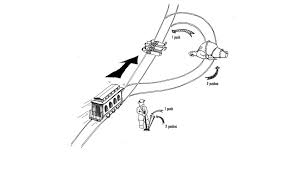
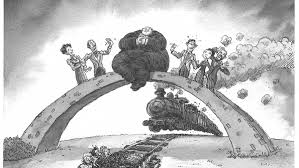
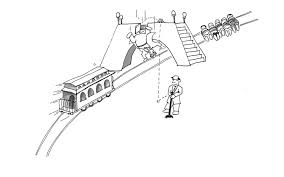
Utilitarianism is one of the leading consequentialist ethical theories––that is, the morality of an act should be judged only based on its consequences.
At Glasgow University, Adam Smith’s inspiring teacher Francis Hutcheson (1694-1746) coined the phrase “The greatest happiness of the greatest number.” Jeremy Bentham (1748-1832) in particular made this the cornerstone of his utilitarian philosophy as outlined in his Introduction to the Principles of Morals and Legislation, published in 1789.
According to Bentham, the battle in life is not between good and evil, or between reason and passion, but between pleasure and pain: “Nature has placed mankind under the governance of two sovereign masters, pain and pleasure. He proposed we weigh up the net pleasure against the net pain (what he termed “felicific calculus”).
The goal of society should be the “greatest happiness principle”––that is, “the greatest happiness of the greatest number.” The concept of utility (utils), cost-benefit analysis, and the progressive income tax (e.g., an extra dollar to Bill Gates is worth less than to a homeless person), has its origins in this theory.
Some refer to utilitarians as hedonistic since they believe that any act that maximizes pleasure or happiness is right.
Kantian Ethics
Always recognize that human individuals are ends, and do not use them as means to your end.
–Immanuel Kant
Rather than analyzing the consequences of actions, another philosophical theory holds that one should do what is right. This is known as deontology, a Greek term meaning duty.
Deontologists believe in universal principles (thou shall not steal, etc.) and consequences should not be the only criteria used to judge moral behavior. The leading deontologist is the German Philosopher Immanuel Kant (1724-1804).
In other words, one should do what is right, for the right reasons. If one is honest only because they believe honesty pays, it’s not as moral as those who are honest because it is the right thing to do.
Virtue Ethics
Virtue is its own reward.
–Cicero, De finibus, III, c. 50 B.C.
Greek philosophers spoke of good habits and bad habits. The good habits were called “virtues” and the bad habits “vices.” Every person develops a unique combination of both habits, known as character. This formulation allows us to predict human behavior, as is done, for instance, when we say someone acted “out of character.”
The Greeks thought that character was destiny.
Rights Theories
Rights theorists hold that human rights are independent of citizenship in a state or any other social organization, unlike legal rights that may vary from place to place. As formulated by John Locke, David Hume, and Edmund Burke––among others––natural rights consist of rights to be free from state interference.
Of course, with these rights come certain obligations, or duties, not to interfere with the rights of others. These are known as negative obligations, meaning one does not interfere with the liberty of others. Positive obligations, on the other hand, require some persons (or institutions) to provide for others (medical care, or welfare, for example).
True rights exist simultaneously among people. The exercise of a right by one person does not diminish those held by another and imposes no obligations on others.
For example, my right to free speech does not inhibit yours, nor does it oblige you to listen to my views. Furthermore, natural rights theorists believe that without freedom there is no virtue, since a coerced virtue is no virtue at all.
Other Ethical Considerations
Morality and Law
I have spent my whole life under a Communist regime, and I will tell you that a society without any objective legal scale is a terrible one indeed. But a society with no other scale than the legal one is not quite worthy of man, either.
– Alexander Solzhenitsyn, commencement address, Harvard University, 1978
The University of Pennsylvania’s motto is: Leges sine moribus vanae, “Laws apart from moral habits are empty.”
Just because a particular law is voted on by a majority does not make it moral. Apartheid, Nazism, and the Fugitive Slave Act of 1850 were all supported by a majority. Legal remedies can sometimes preclude ethical remedies. For example, how would you be able to tell what is the right thing to do without a legal precedent?
What About “Business Ethics”?
It is common today to speak of “medical ethics,” “bio ethics,” “accounting ethics,” and so forth.
In his 1981 article in The Public Interest, “What is Business Ethics”?, management thinker Peter Drucker challenges the concept of a separate ethics for business:
What difference does it make if a certain act or behavior takes place in a “business,” in a “non-profit organization,” or outside any organization at all? The answer is clear: None at all.
…”business ethics” may be good for politics and good electioneering. But that is all. For ethics deals with the right actions of individuals.
Altogether, “business ethics” might well be called “ethical chic” rather than ethics––and indeed might be considered more a media event than philosophy or morals.
Summary and Conclusions
Character is ethics in action, it is what and who you are. Reputation is what people say you are.
Abraham Lincoln likened character to a tree and reputation to its shadow.
The Josephson Institute of Ethics lists Six Pillars of Character:
Trustworthiness
Respect
Responsibility
Fairness
Caring
Citizenship
Other books and resources mentioned
Arthur Andersen’s Website. Oscar Wilde warned: “No man is rich enough to buy back his past.”
The Rule of Nobody, the book mentioned by Ron. It’s an excellent read!