Episode #80 - The Future of the Legal Profession

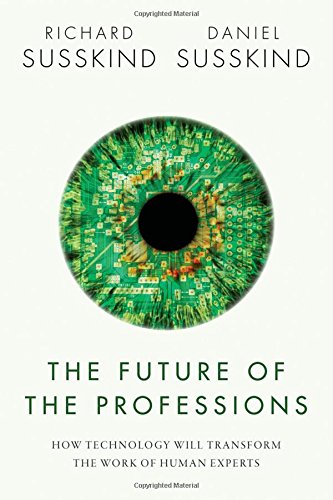
Ed and Ron were honored to interview three Australian lawyers, two who practice, and one consultant to the profession. The topic was the future of the legal profession, as set forth in the Richard and Daniel Susskind book, The Future of the Professions.

David Wells is Managing Principal of Moores. David is an Accredited Specialist of the Law Institute of Victoria in Commercial Litigation and is a Law Institute of Victoria Approved Mediator. He has acted in commercial dispute resolution in all Court jurisdictions for over 20 years. David’s expertise is in resolving major commercial disputes and managing complex legal issues for medium to large sized corporations, local government and industry bodies.

As a director of View Legal, Matthew Burgess specializes in trusts, tax, superannuation, asset protection, estate and succession planning and related areas, and has been recognized in the ‘Best Lawyers’ list since 2014 in relation to trusts and estates. He has enjoyed developing a number of innovative legal products for advisers and their clients, including establishing what is generally regarded as Australia's first virtual law firm. He speaks for many industry associations, accounting firms, financial advisers and commercial businesses, on a variety of specialist legal topics. Since 2010, he has increasingly provided assistance to other professional service firms in re-engineering their business models. In early 2006 he gave away the family television (effectively replicating for his 4 daughters the TV free upbringing he had). He’s published a collection of illustrated children’s stories in addition to his multiple published law related books and business book “The Dream Enabler.”

John Chisholm is a third generation lawyer who prior to establishing John Chisholm Consulting in 2005, has held senior executive positions in leading Australian legal and accounting firms for more than 17 years, transforming them into market leaders in their fields. He is recognized for his management, leadership and visionary skills, as well as his ability to think outside the square. As part of his consultancy practice John was part-time Executive Chairman of the Melbourne practice of PKF Chartered Accountants & Business Advisors (Now BDO Australia) from 2006-2008, guiding them through a full financial integration with PKF Sydney and Brisbane. John was admitted to practice as a Barrister & Solicitor in 1979, and practiced principally in commercial and property law. He is a member of the Law Council of Australia, the Law Institute of Victoria, the Australian Legal Practice Management Association and also a senior fellow of the VeraSage Institute, an international think tank devoted to professional firm pricing, leadership and strategy.

We discussed the following questions: 

  • Do you agree with the book’s overall premise of entering a post-professional society?

  • What struck you most about the book, or convinced you of its premise?

  • How are you advising your professional customers?

  • How are your firms adapting to these changes?

  • In our interview with Daniel Susskind he discussed the concept of Latent demand. When John and I spoke with Chief Justice Wayne Martin (Perth, WA), he was also concerned about access and the increasingly cost of justice? Lawyers have offered a Rolls Royce and everyone else is walking.

  • What did you disagree with in the book?

  • What do you think about judges being replaced by an IBM Watson-type system?

  • Are you optimistic or pessimistic about the future of the legal profession?


Episode #78: Why Is Movie Theater Popcorn So Expensive? Economic Puzzles and Paradoxes

. . . [M]en are fond of paradoxes, and of appearing to understand what surpasses the comprehension of ordinary people . . .

—Adam Smith 

Why is movie theater popcorn so expensive?

Why don’t we observe movie popcorn price wars, similar to what other industries engage in from time to time? When asked this question, the overwhelming majority of businesspeople will answer, Because there is no competition—the movie theater has a captive audience. Other common explanations include:

  • Limited selling time

  • High fixed cost of operating concession stand

  • It is how the theater owner makes a profit

  • Higher clean-up costs imposed by snack eaters

  • Tastes and smells better than you can make at home

  • Part of the experience of seeing a movie

  • Because people will pay for it

At first glance, all of these answers appear reasonable, except to an economist. The most popular response—captive audience—leads to the question of why there are no pay toilets in the theater? You are certainly a captive audience in that regard, but perhaps theater owners understand that if they installed pay toilets they would lose at the box office what they made from the bathrooms.

The high fixed costs, in terms of scarce square footage, equipment, fixtures, clean-up costs, and required employees, is certainly a plausible reason, but does not really account for the large premium price of popcorn. To say it is where the theater owners make their profits is definitely true, but begs the question of why they do not make the profits from ticket sales and sell more popcorn at closer to cost?

Eating popcorn is certainly part of the experience of going to the movies, and people will pay for it, yet this explanation is still incomplete.

Assuming theater owners want to maximize their profits, what do the theater owners know the rest of us, perhaps, do not. The consummate economist Steven Landsburg provides the answer in his book The Armchair Economist:

I believe he knows this: some moviegoers like popcorn more than others. Cheap popcorn attracts popcorn lovers and makes them willing to pay a high price at the door. But to take advantage of that willingness, the owner must raise ticket prices so high that he drives away those who come only to see the movie. If there are enough nonsnackers, the strategy of cheap popcorn can backfire.

The purpose of expensive popcorn is not to extract a lot of money from customers. That purpose would be better served by cheap popcorn and expensive movie tickets. Instead, the purpose of expensive popcorn is to extract different sums from different customers. Popcorn lovers, who have more fun at the movies, pay more for their additional pleasure.

This answer is more precise, since the important point is that “some moviegoers like popcorn more than others,” and the theater owner cannot separate these customers when they are outside queuing up for the movie. A method was needed to separate the snack eaters from those who just want to watch the movie, which the concession stand provides since it allows customers to divide and self-identify themselves.

This may seem a subtle point, but it is highly profitable, since segmenting different types of customers allows the theater owners to charge them varying prices depending on the value received.

Students, children, and people with large families are usually more price sensitive, and not likely candidates to spend money on snacks. The theater owner does not want to turn these customers away, and hence keeps the box office price lower by charging higher prices to snack eaters.

What you are really buying when you purchase a movie ticket is an opportunity set—a chance to enjoy the movie, or to enjoy it with popcorn. Economists call this a two-part tariff, defined as a pricing strategy in which the customer must pay a fee in exchange for the right to purchase the product. Examples abound of this strategy: country clubs charging membership fees and monthly dues; Gilette charging for the razor then the blades; amusement parks charging an entrance price followed by a price for each ride.

Some people recoil at the thought of price discrimination—charging different prices to different customers—claiming the practice is blatantly unfair and should be illegal. But what would happen if the practice were outlawed? Theater owners, airlines, restaurants, and myriad other businesses would have to increase prices for the very customers who are least able to afford a higher price—children, students, large families, senior citizens, and so on.

By engaging in price discrimination, businesses are actually increasing social welfare and making more products and services available to the poorest members of society. This is not to imply that price discrimination is based on race, gender, religion, or ethnicity, but rather is based on ability and willingness to pay.

If you found this answer for why movie theater popcorn is so expensive thought provoking, welcome to price theory. The German poet Goethe thought double entry bookkeeping “among the loveliest inventions of the human mind.” One should say the same about price theory, as it truly is “one of the great products of the human mind,” as economist Donald (now Deirdre) McCloskey explains in his textbook, The Applied Theory of Price:

The theory of price is one among the larger intellectual achievements of the nineteenth century, such as the theory of heat engines, the decipherment of hieroglyphics, the professionalization of history, the invention of abstract algebras, and the theory of evolution. Price theory explains much human behavior.

Since price theory offers tremendous insight into human behavior, it is worth the time and effort to study it in greater depth. It is sometimes said that economics is nothing but refined common sense, which is certainly true. Yet many myths about this crown jewel of the social sciences persist, even among businesspeople.

Therefore, when trying to answer some of the puzzles and paradoxes Ed and I will present in this series, it’s useful to use the economists’ toolbox in thinking about the issue at a deep level, including:

  • Price Theory

  • The assumption of rationality

  • The subjective theory of value

  • Behavioral economics, and irrationality

Here are some of the other questions we posited on the show.

Why do laundries charge less for men’s shirts than for women’s?

For example, $4.00 for men; $9.00 for women. Is it because when you move the buttons from right to left it costs more?

Is it because women’s blouses are made of more delicate fabrics? But then why not just charge different prices for different fabrics?

Is it because women demand higher-quality work, and require more re-works?

Is it because men’s shirts are machine pressed, whereas women’s are hand pressed? Then why not different prices for different types of pressing?

Why discriminate against women, not men? Men care less, and thus more likely togo without clean shirts? Women could as easily do their own laundry.

Dry cleaners next to each other, if all earning high profits from women, why none specialize in just women (e.g., charge $8 across board to get all womens business, and none of the mens). Yet none have done this? Hence, women’s clothes can’t be much more profitable

Could be due to customer loyalty? To a dry cleaner?

The more competitive an industry, the less price discrimination usually seen (farmers don’t give senior citizen discounts); likewise gas stations—sell at one price to everyone.

Either there is price discrimination, or women’s clothes are more expensive to clean and press, and it’s a cost explanation.

Do companies really plan for obsolescence?

Ed's Light Bulb stash

Ed's Light Bulb stash

Ann Landers use to rail against pantyhose and light bulbs, arguing that companies deliberately made them subject to ruin so they could charge more.

But this is ridiculous. If you have to spend $5 twice a month for pantyhose (or approximately $120 per year for pantyhose), any company would want to engage in only transaction for $120, or even a bit less, then 24 transactions generating the same revenue. It’s the same with light bulbs.

Because most women don’t want to spend $120 for hose they might lose in the laundry, or don’t have $120 in cash now. Thus, the company is actually insuring your risk and/or providing a loan.

If your odds of winning the lottery are approximately the same if you purchase a ticket and if you don’t, why is it rational for people to play the lottery?

Well, it might not be rational. But a lottery ticket is a cheap price to pay for a fantasy.

There’s something to the Endowment Effect here, too. When the lottery was up to $75 million years ago, I asked audience members who had purchased tickets to sell me theirs at 50 times what they paid. There were no takers.

Why do men spend less on medical care than women?

Probably because men are more likely to die violently, and die sooner. Also, women tend to be sick more and more likely to seek medical care. Giving birth is also a factor.


Why is milk sold in rectangular containers, while soft drinks are sold in round ones?

Another excellent book that contains puzzles and paradoxes is Robert Frank’s The Natural Economist: In Search of Explanations for Everyday Enigmas.

The book is a summary of questions posed by his economic students, and then the essays they wrote to answer the enigmas using economics. This question is from the book.

Rectangular containers use less shelf space, which is more valuable and costly since it’s refrigerated for milk, whereas Coke can be sold on open shelves.

Also, Coke is easier to hold, since its often consumed from the container.

Economist Russ Roberts interviewed Robert Frank on his podcast EconTalk, where they discussed some more of these economic puzzles.

One of the others they discussed was why the Nigerian Prince email scandal continues to this day, even with all the spelling mistakes.

It’s essentially a targeting device: only the naïve are going to fall for it at this point. It still traps some, so this weeding out is effective.

Episode #77 - Free-Rider Friday - January 2016

Ron’s Topics

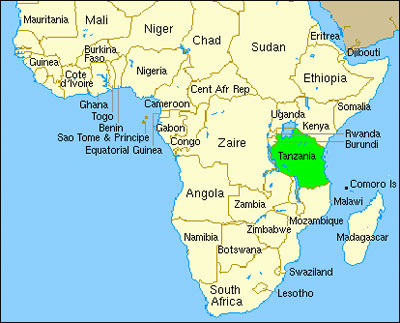
Value Pricing in Tanzania

From Kenneth Morrison, CPA, CA, at Provision Accounting Group in Richmond, British Columbia, an excellent example of culturally-adjusted Value Pricing from Tanzania.

Here’s some excerpts from his letter to us:

Value pricing lessons from Africa

Nancy and I just returned from a three-week trip to Tanzania and I saw two pricing options that should make Ron proud. 

Value Pricing lesson 1 - Dodoma Dental Clinic

The dental clinic in Dodoma caters to all income levels but the real objective is provide low or no cost dental care to those most in need and least able to pay. However the dentist in charge, quite a remarkable man, is also required as best he can to bring the clinic to a cash flow breakeven position.

He has three-pronged pricing option available as there are three prices available for the same procedure. The strategy is also brilliant in that it has not only three pricing options, his strategy also takes into account the different high value points during the process.

The prices are very differing amounts for exactly the same procedure:

Premium (or fast track as he calls it)                                    $1,000

Regular                                                                                   $500

Free, based on financial capability (Tip Clause)                    $000

Premium is double the price of regular service and is available 24/ 7 because of the “importance” and “busy schedule” of the patients. These patients are ushered directly into the chair through a side entrance, not only is there no waiting there is no need to be seen as taking advantage of their status. The high value point, either because of pain or ego is at this point, price is almost no object. This is of course very profitable for the clinic.

Regular is in most cases for the insurance based client who is not troubled by waiting a reasonable time and wants to take full advantage of a health insurance policy so rarely will they select the premium service. This regular price is based on the maximum price of most insurance schedules. This price is also profitable for the clinic.

Free, after a financial resources review, is for those the clinic really wishes to help who otherwise would have no access to dental care. (One dentist for 170,000 people in East Africa according to the World Health Organization). However upon leaving the clinic after the “free” treatment, problem solved and pain free, the patient encounters a donation box on the wall and is encouraged to make a contribution (an extremely high value point, pain free and happy). For returning patients they are aware of the “tip” box and regular contributions are made.

The multilevel pricing allows an individual choice and the patients with the ability to pay almost always taking the most expensive option and which is presented to them at the high value point.

The clinic is presently in a positive cash flow and serving a significant needy population. The premium service is a tax on the rich happily paid to subsidize dental care for the poor.        

Pricing Lesson 2 - College Dorm Rooms

Education is very prized in Tanzania and many students and their families struggle to pay the costs of tuition, materials and room board.

One university has a very creative structure in place for accommodation. This pricing structure, as with the first example, has been done taking into account the culture in the country, as crowded accommodation is the norm.

Each room contains two bunk beds, (sleeping room for four) two fairly large tables and two closets

The accommodation is priced as follows:

One person per room                                                             $1,000 per person

Two people per room                                                               $600 per person

Four people per room                                                               $480 per person

This is perfectly priced to maximize the return for the university while keeping the parents who are writing the checks also happy.

Firstly no parent (in this culture or any other, I would hope) will agree to $1,000.00 amount

Some parents may agree to the second choice of $600.00 however now the total revenue for the university is $1,200.00 so everyone is still happy. 

Most parents will insist on the third option which maximizes the return for the university at $1,920.00, almost double option one and yet all stakeholders are pleased except the student, although in this culture the student likely has more space than at home and is probably ecstatic to be away.   The costs for the university are virtually the same in any of the three options as the fee is for accommodation only.

The interesting point is that both these pricing strategies work because of the cultural context. I suspect for a variety of reasons, including spoiling our children, they might not work as well for our culture.

Our firm formed a charitable foundation, Provision Charitable Foundation, and since 2009 have been involved in projects in Tanzania. We are very proud of having graduated our first three medical doctors this year and have a variety of other projects underway. However we have also begun the process of out sourcing basic accounting work to an office that we have opened in Kampala, Uganda. As a result we are providing well-paying white collar jobs that are desperately needed while increasing our own profitability.   

If you have are curious about what we do in Tanzania please visit our website or call and we would be pleased to discuss.

Regards

Kenneth A Morrison CPA CA

Cuban Baseball Crisis

From The Economist, December 19, 2015. 

Of the number of Latin Americans playing Major League Baseball (MLB) before 1959, two-thirds were Cuban, even though many were black and banned from MLB, until the color barrier was broken in 1947.

In2007, ten Cubans played MLB, and 27 today, earning $100 million annual salary. This has created an elaborate infrastructure of smugglers to get athletes out of Cuba, and they take a 30% cut.

Raul Castro, president since 2013, wants a “normalized” system, whereby the players travel freely, and returns to Cuba in the off-season. He also wants to impose a 20% tax (at least it’s less than the smugglers!).

The problem is the trade embargo with Cuba can only be lifted by Congress, and it precludes a tax on foreign earnings. The Economist claims MLB has much in common with Cuban socialism in its $9 billion per year business—it levies a tax on teams with high payrolls, etc.

However, Cuban players over 23 years oldwith at least five years in the National Series are exempt from the salary cap and can auction to highest bidder, which of course reduces team owner profits.

So, MLB is likely advocate a tightly controlled system of acquiring Cuban players, rather than a free-for-all.

Seems to be there’s two bootleggers and no Baptists!

Ed adds: Coincidentally, this week the New York Mets reached a contract agreement with Cuban native and slugger Yoenis Cespedes. The contract has an innovative structure in that it is a $75 million deal, front loaded with $27.5 million in the first and includes an opt out clause after that first year. At first pass is seems a bit odd, but as it has been analyzed it is possible that this is a bit of an innovation in megabucks sports contracts. 

$400 to Eat at Olive Garden?

Article from Money.cnn.

The interesting thing to me about this article were some of the comments. They completely understood the logic behind this pricing, and didn’t complain about “gouging,” as people tend to do with Uber’s Surge Pricing.

Ed adds: You would have to pay me to eat at the Olive Garden. 

Corporate Social Responsibility and Tax Avoidance

From The Economist, January 2, 2016, Schumpeter, “Social saints, fiscal fiends.”

Pfizer prides itself of its corporate social responsibility, but that didn’t stop it from seeking a tax inversion $160 billion takeover of Allergan, and moving its headquarters to Ireland. It would have saved $1 billion in corporate tax had it done this Companies that do most in CSR also the biggest tax avoiders, and spend more on tax lobbying

Economists says both CSR and tax avoidance is done to maximize profits. CSR also helps attract talent.

Another theory is that taxes and CSR are substitutes; the less tax a company pays the more for CSR.

Here’s a thought: How about the USA lowering the corporate income tax, the highest in the world?

Ed’s Topics

David Bowie Bonds

David Bowie was not only an innovative musician, he was also a financial wiz. In 1997 he raised $55 million by selling bonds secured by the future revenues from his music catalogue. Turns out that with the advent of Napster and iTunes, this was pure genius. 

Here is my favorite Bowie song:

Koch Brothers’ Wealth Doubles During Obama Term

Premise A: During the Obama Administration the net worth of the Koch brothers went from $19 billion in 2008 to $41 billion today.

Premise B: The Koch brothers are money grubbing bastards who will stop at nothing to increase their fortune. 

Conclusion: The Koch brothers must be about to launch a campaign to repeals the XXIV Amendment to the US Constitution to help secure a third term for POTUS. 

This is not happening so one of the premises is wrong. Listen to the episode to find out which one and why?

Bitcoin’s Blockchain

Ed’s link/article:

Ron mentioned that the SEC approved Overstock.com CEO Patrick Byrne’s plan to issue stock using blockchain technology. Overstock did issue private bonds using blockchain previously (from the Mises Wire, December 16, 2015).

The Economist calls the blockchain technology a machine for creating trust, “The trust machine,” in its October 31, 2015 issue:

The spread of blockchains is bad for anyone in the trust business—the centralized institutions and bureaucracies, such as banks, clearing houses and government authorities…

The blockchain is essentially a public ledger (sometimes called a distributed ledger). It doesn’t sound sexy, but neither did double-entry bookkeeping.

NASDAQ will start using blockchain for trades of privately held companies. Everledger uses blockchain to protect and verify luxury goods: diamonds, rare art, etc.

Russ Roberts has an excellent interview on his EconTalk podcast with Nathaniel Popper, author of the acclaimed book, Digital Gold.

CIA OSS Manual

In January 1944 the Office of Strategic Service (forerunner of the CIA) published the Simple Sabotage Field Manual. In it they make suggestions on how ordinary citizens behind enemy lines can help in the war effort. To me, part of this reads like a advisory column to folks who fill out timesheets. See pages 28-30. 

Episode #76: Lessons from the Trading Game

Peter Drucker taught that “Business is society’s change agent. All other institutions are designed to conserve if not to prevent change.” Companies exist to create wealth, no other institution can do it.

By playing the Trading Game, participants in this session will learn the subjective nature of value, and how increasing the availability of goods and services your company offers leads to prosperity, happiness, and a higher standard of living for all.

Participants will come away with a deeper understanding of how business is a serious moral enterprise—not the simplistic idea it is based on greed—and that cooperation is far more prevalent than competition.

The game begins when the participants randomly draw a card from a deck, each one containing an item they will now own (each card will contain an electrical item you’d find at Best Buy, of approximate equal price, such as an electronic gadget, Coffee Maker, memory stick, cell phone, DVDs, etc.).

The group is then divided into, say, ten groups of five participants each. They are instructed to rate how much they like their gift, using a scale of one to ten. The total score for each group is then summed.

Then the instructor allows the participants to trade only within their group of five, allowing them to exchange for a gift they value more. The gifts are then scored again, and the total score increases.

Then the instructor allows the entire class to trade, expanding the number of potential trading partners from four to forty-nine. With many more options, the complex trades that take place would make an economist proud.

We have discovered some people don’t trade after discovering their gift is very popular, but they do increase its score (the Bandwagon and Endowment Effects). Other scores may actually decrease after an exchange, as Buyer’s Remorse sets in. Overall, though, the total score goes up again.

This may be a simple game, but it does a wonderful job illustrating complex economic principles in a way that a child can understand. There are at least seven lessons to take away from this game:

  1. Trading freely can add value even though the traded items remain physically unchanged.

  2. The more trading partners there are, the better—wealth and happiness are increased.

  3. A free exchange is a win-win game, not zero-sum.

  4. The game is win-win because of the rules set up beforehand—theft and coercion are not allowed, nor does anyone have to trade if they don’t want to.

  5. Scarcity is almost always real. You can’t have everything, so have to make tradeoffs.

  6. Opportunity costs—that is, economics does not ask “What do you want?,” but rather “How much do you want it?” which involves making tradeoffs, not having final solutions.

  7. Economic value is in the eye of the beholder.

  8. People trade, not governments. The Trade Deficit is an accounting fiction that doesn’t describe the economic fact that individuals are made better off from trading.

If China invented a vaccine against cancer would you not buy it because it would increase our trade deficit?

By operating a company, you are expanding the choices available to the consumer. This is the real source of wealth in an economy—the variety of goods and services available. If it were otherwise, any country could achieve wealth simply by printing more pieces of paper money.

Perhaps this is better understood if we think of Nathan Mayer Rothschild, one of the founders of the international Rothschild banking dynasty, probably the richest man in the world at the time of his premature death in 1836 at the age of 58 from an infected abscess. Despite having the best medical care money could buy, he did not have access to antibiotics that today could be purchased from any pharmacy for a few dollars.

Would you rather have Bill Gate’s income in today’s world—with its abundance of goods and services—or during the time of Rothschild? Another way of articulating this is that the wealth of nations resides in consumer well-being, not profits.

That said, your company has to understand what customers truly value, since all economic value is in the eye of the beholder. How your firm monetizes the value it creates for customers is your business model.

Ed and Ron learned about the trading game from Jay Richard’s excellent book, Money, Greed, and God: Why Capitalism Is the Solution and Not the Problem.

You can download sample cards here.

Episode #75: Interview with Mark Koziel

Ed and I had the honor of interviewing Mark Koziel from the American Institute of Certified Public Accountants. He VP of Firm Services & Global Alliances at the AICPA.  He oversees the development, ongoing improvement and delivery of services to members in PCPS/Firm Practice Management as well as International relations with various CPA related groups. He frequently speaks on CPA issues around the country. Prior to joining the AICPA, Mark Koziel served as Director of Media Planning for a political consulting firm in East Aurora, NY serving Presidential, Senate, Congressional and Governor races around the country. 

Mark was one of the founding members of the Young CPAs committee and served as Chair for two years before being appointed to the Buffalo Chapter Board and serving as President for the 2003-2004 Fiscal Year, one of the youngest President’s in the history of the Buffalo Chapter. Mark earned a BS in Accounting from Canisius College. Mark has been named one to the Top 100 Most Influential People in Accounting by Accounting Today annually from 2008-2014.

Macro Issues in the Accounting Profession

  • What are some of the major trends happening in the accounting profession?

  • How about trends around the world?

  • Rules vs. Principles debate?

  • Big 4 Consulting revenue projected to be greater than the Big 3 (Bain, McKinsey, BCG) consulting firms.

  • Auditor reform rotation in the EU.

Micro Issues

  • What’s happening in firms with Value Pricing? Is it diffusing?

  • What about timesheets?

  • What about firm innovation?

  • What about profession’s innovation?

  • PWC’s HALO audit software—runs algorithms through entire data sets—no more sampling (100% of customer transactions)

We also discussed the book, The Future of the Professions: How Technology Will Transform the Work of Human Experts, and how it will impact the accounting profession.

What advice would Mark give to a young aspiring professional?

Thanks to Mark for a thought-provoking discussion, as always!

Episode #74: Interview with Daniel Susskind

Daniel Susskind is a Lecturer in Economics at Balliol College, Oxford, where he teaches and researches, and from where he has two degrees in economics. Previously, he worked for the British Government - in the Prime Minister's Strategy Unit, in the Policy Unit in 10 Downing Street, and as a Senior Policy Adviser at the Cabinet Office. He was a Kennedy Scholar at Harvard University.

Professor Richard Susskind OBE is an author, speaker, and independent adviser to international professional firms and national governments. He is President of the Society for Computers and Law, IT Adviser to the Lord Chief Justice of England, and Chair of the Advisory Board of the Oxford Internet Institute. His numerous books include the best-sellers, The End of Lawyers? (OUP, 2008) and Tomorrow's Lawyers (OUP, 2013), his work has been translated into more than 10 languages, and he has been invited to speak in over 40 countries.

We were honored to be able to interview Daniel Susskind about his book (co-authored with his father, Richard Susskind), The Future of the Professions: How Technology Will Transform the Work of Human Experts. 

The book is based on:

  • 8 Professions (Doctors, lawyers, accountants, auditors, architects, journalists, teachers, clergy)

  • 100 Interviews

  • 800+ sources

It lays out two futures for the professions:

  1. Technology streamlines the “print-based” industrial society

  2. Technology based internet society, with increasingly capable machines, displacing the work of professionals

They believe that gradually scenario #2 will dismantle scenario #1

How long will this take? Daniel says: "We say that we think that will happen in the 'long run' but we do not commit to timing. This is for an important reason -- the pace of change is not in our hands!

They write the professions are increasingly:

  • Unaffordable

  • Antiquated

  • Opaque

  • Underperforming

The future of the professions is too important to leave to professionals.

Folks, we can’t recommend this book highly enough. Without a doubt, it is the most important book written on the professions in decades.

Episode #73: Business Lessons from A Christmas Carol

On this episode, Ron and Ed explore the business lessons from one of the most recognized and beloved stories shared during the holidays, Charles Dickens’ novella, A Christmas Carol. While many of you know the story and seen one or more of the adaptations, many fewer of you have read the original work which, like most of Dickens, an absolute joy to read and has much to say about business practices.

“It is so good,” says Ron, “that you want to read it more slowly to savor it, like a fine wine.”

Ed is also a long time fan as is his daughter as you can see from this video clip.

Episode #72 - Free-Rider Friday - December 2015

Ed's Topics

Sent in from our listener, Hector Garcia: Netflix's paid maternity leave, along with a clip from John Oliver's show on the topic, and a TED talk that also makes the case for paid maternity leave.

Texas bans Teledoc App. Here's a Cato Institute podcast that discusses.

IBM Watson Trend App, which highlights tech, toys, and health.

"Netflix Should Ditch its Unlimited Vacation Policy," from the Huffington Post.

Manhattan DA Pushes for Lawful Backdoor Into Encrypted Phones, from NBC News.

Ron's Topics

Harvard Blog Post, "To Get More Creative, Become Less Productive."

From The Economist, "The heirs of Al Capone," discussing Meth labs v alcohol, and a classic "Bootleggers and Baptists" alliance whereby meth labs might argue for reinstating Prohibition!

The Wall Street Journal article, "Winning the Right to Save Your Own Life," by Darcy Olsen, President of the Goldwater Institute, on right-to-try laws passed by 24 states, giving terminally ill patients access to drugs.

From The Economist "Keep calm and click on: Google Books in court," discussing how a group of authors lost the case to prohibit Google Books from digitizing books because it violated copyright laws.

We also discussed Bitcoin's Blockchain technology, which some folks believe is revolutionary technology in the same way as double-entry bookkeeping. The Economist writes: "Simply put, it is a machine for creating trust."

See "The trust machine," and "The great chain of being sure about things," from The Economist, October 31, 2015,

Episode #71 - Best Business Books of 2015

Ed's Choice

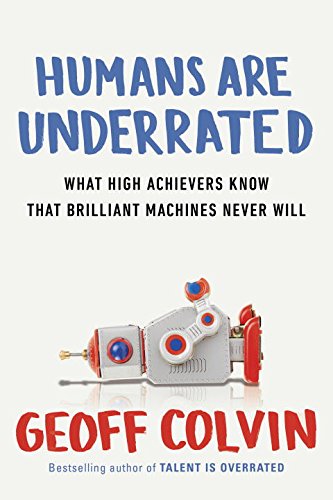
Humans Are Underrated: What High Achievers Know That Brilliant Machines Never Will, by Geoff Colvin.

"Figuring out what computers will never do is an exceedingly perilous route to determining how humans can remain valuable."

Better strategy is to ask: "What are the activities that we humans, driven by our deepest nature or by the realities of daily life, will simply insist be performed by other humans, regardless of what computers can do.?"

Honorable Mentions

Uncontainable: How Passion, Commitment, and Conscious Capitalism Built a Business Where Everyone Thrives, by Kip Tindell.

A More Beautiful Question: The Power of Inquiry to Spark Breakthrough Ideas, by Warren Berger.

Uncommon Sense, Common Nonsense, by Jules Goddard and Tony Eccles.

We interviewed Jules Goddard on the January 16, 2015 show.

Ron' Choice

The Future of the Professions: How Technology Will Transform the Work of Human Experts, by Richard and Daniel Susskind.

"This book is about the professions and the systems and people that will replace them. Technology will be the main driver of this change. ...in the long run, we will neither need or want professionals to work in the way that they did in the twentieth century and before. We are advancing into a post-professional society."

We are interviewing Daniel Susskind on the show, which will run on January 8, 2016.

During the conversation Ed mentioned that his son's baseball team (10U) uses an application called GameChanger. In addition to scoring the game and tracking stats as well as performance trends, the system produces a story about each game which is Powered by Narrative Science, a company mention in the book. 

Here is a sample of one story:

Hudson Z's effort not enough to carry the Royals past the Cardinals, 4-3 

Hudson Z. held up his end of the bargain, but he couldn't guide the Royals past the Cardinals as the Royals lost 4-3 in four innings on Thursday. 

The Cardinals had no answer for Hudson, who kept runners off the basepaths in his appearance. The Cardinals managed just one hit off of Z, who allowed no earned runs, walked none and struck out none during his 1 1/3 innings of work. 

The Royals jumped out to an early 2-0 lead in the top of the first. The Royals attack began with a single from Ethan M. The Royals then tacked on more runs when Narit C scored on an RBI single by M. 

The Cardinals stayed on top until the final out after taking the lead in the second, scoring four runs on an error and three singles.

Honorable Mentions

The Great Ulcer War, by William S. Hughes, M.D.

13 Things Mentally Strong People Don't Do, by Amy Morin.

Leadership BS: Fixing Workplaces and Careers One Truth at a Time, by Jeffrey Pfeiffer.

The Forgotten Depression: 1921: The Crash That Cured Itself, James Grant.

Sage Contest Winner

The winner of the Sage Small Business of the Year Contest, in Canada, was David Cohen, Author, speaker, coach, lover of jazz, coffee bars, good conversation and baseball.

We interview David at the bottom of the hour.

Learn more about David at Theboomerbusinesscoach.com.

Episode #70 - Live from the VeraSage Symposium Boston

As you may know Ron Baker is a founder of the VeraSage Institute, a think tank for professional firms; and that Ed Kless is a senior fellow.

The Institute holds a biennial conference during which the fellows and some friends are invited to gather share their knowledge in a symposium atmosphere. 

The latest of these events took place in Boston in October 2015. This episode is a recording of a session during which Ron and Ed as well as VeraSage Fellows, Kirk Bowman and John Chisholm, had a conversation about the future of the professional firm. In addition, they took questions from other Fellows and Friends. 

We hope you enjoy this peak into the gathering.

Episode #68 - Proper Project Management

Defining the Word “Project”

Sometimes, we need to go back to the very basics. While facilitating a class on project management, I always take the opportunity to spend a few minutes defining some basic concepts, since as Plato said, “All knowledge begins with the definition of terms.” Of course, for a project management course, the first term would be project.

What is a project?

According to the Project Management Institute (PMI) a project is “a temporary endeavor undertaken to create a unique product, service, or result.”

In my experience, further refining two words in this definition provides tremendous insight into the topic of project management. They are: temporary and unique.

To understand a project as temporary is to understand that it must have a clearly defined end. Too many projects are allowed to continue on seemingly ad infinitum. More often, professionals struggle to obtain sign off from a customer to clearly end the project. These two situations are caused by a lack of, or poorly defined, project objectives. One metaphor that has helped me over the years is to think of a project as a temporary company—one that comes into existence for the sole purpose of obtaining the objectives of the project and then goes out of business.

To comprehend a project as unique is to know that while you have participated in many similar projects, each one in truly different. There is no such thing as the “plain vanilla” or standard project, especially in professional knowledge firms. Each project has a different set of goals, objectives, constraints, and of course, personalities. Customers who ask you for the “plain vanilla” project are ignorant of these facts. (Note that the same customer who asks for the “plain vanilla” project will likely state, often times only five minutes later, that their company does this “very differently” from others you many have encountered).

The Difference Between Goals and Objectives

There is clearly a difference, in good project management, between goals and objectives. Goals are what we hope to attain by undertaking the project; however, they are not always attained by project end because there may be other external influences that factor into their achievement or lack thereof. Objectives are, well, objective, in that they can clearly be checked off as having been attained by project end.

For example, “increase sales by 10 percent” would be a goal of the project not an objective. An objective would be the “installation of the new accounting system.” The acid test question to distinguish one versus the other is, “Can this (goal or objective) be clearly accomplished when we consider the project to be completed?”

I am not saying that we should not continue to track project goals, post completion; I am just noting that they need not be accomplished in order for us (and the customer) to consider the project done.

Lastly, if a customer wants you to guarantee the attainment of goals than I would have you consider contingency pricing. For example, if they do increase sales by 10 percent, you should be paid at least 30 percent of that number. In a sense, a customer asking you to guarantee goals, is like that customer asking a lawyer to guarantee winning a case and therefore subject to a contingency arrangement. I would, however, guarantee meeting all objectives.

Now that we have defined some basics of project management, let us put it all together into the Triangle of Truth.

The Triangle of Truth

One of the basic principles of project management is what is known as the triple constraint. Some call this the scope, resource, time triangle. I call it the Triangle of Truth.

The concept is simple. A project consists of three interrelated variables: scope, resource (some say cost), and time. These variables are like the angles of a triangle. If you recall from geometry class in high school, in order for a polygon (shape) to be considered a triangle the three angles must add to 180 degrees—i.e., Angle A (Scope) + Angle B (Resource/cost) + Angle C (Time) = 180. If these do not add to 180 you do not have a triangle. So, if you make a change to the value of one of the angles, one of the other two or both must also change to compensate or else the figure is broken.

The big problem with most professionals is that they are lousy and lazy about scope development. They prefer to concentrate on the second two elements, cost and time. In some cases, the professional feels pressure from the customer or prospect to give answers to the cost and time questions first. To me, this would be the equivalent of purchasing the lumber for a new house before going to an architect for plans; or a doctor writing a prescription before performing a diagnosis. Remember: prescription before diagnosis equals malpractice!

Why do we need a balanced triangle? If we go back to the analogy and take it one step farther, let us draw a circle inside this triangle, the size of the circle represents the quality of the work performed. The largest perfect circle can be drawn inside a triangle that is equilateral—that is, all sides the same—and, therefore all angles equal to 60 degrees.

This is an important point, because for a professional knowledge firm (PKF), quality is defined exclusively by the customer, not the professional. The professional cannot say that they do quality work. Rather, their customers say that about them.

Great Moments in Value Pricing History - Ed Kless

What happens in most firms is that scope is often poorly or not-at-all defined. I am sent an email a week from someone asking me to assist them with scope creep on a project. My first response is to ask them to send me a copy of their scope document. In almost all cases, I am sent back a proposal with a range of hours. In replying to this I tell the poor sap that I have some good news and some bad news. “The good news is you do not have scope creep; the bad news is you are over budget.” What I mean is that since they never defined scope to begin with they are not outside of scope. This leads us to the scope document.

Elements of a Scope Document

I submit the following as the required elements (consultants call them inclusions) of a scope document.

  • Scope statement

  • Objectives

  • Constraints

  • Project structure

  • Roles definition

  • Project team definition

  • Assumptions

  • Deliverables

  • Scope details or functional requirements

  • Project change control

  • Future projects list

  • Approval

Elements of a Change Request

In almost all of the small and medium business information technology projects that I have been associated with there have been usually dozens of change requests. In fact, I cannot think of a single project, however small, that there were none. I believe it would be Twilight Zone weird that any project would have no change requests. Any project worth scoping will be, by definition, one that lends itself to changes. If a customer expects that a project will not have any change requests, he is probably not a good customer to have. No one can predict the future.

Please note that the language that I use for these is change request, not Cchange Oorder. They are, by definition, requests and may be accepted or rejected by the project sponsor (steering committee, on a larger project). A change request is simply an acknowledgment that something that affects the Triangle of Truth needs to be adjusted. In some cases there may not be any budgetary or price change. For example, during an implementation of software the controller may leave the company. The resolution for this may be to push the “go-live” date of the project out, rather than adjust the financial resources. Even if there is no change to the budget, this is still a change request and needs to be approved by the project sponsor. Let us look at the elements of a change request with some commentary.

  • Project name

  • Change number

  • Project manager name

  • Requestor name—In my view on small projects anyone on the project (customer or consultant) can request a change. In many cases the project manager would assist in the creation of the change request document and would most certainly review it before presenting it to the executive sponsor.

  • Requested date

  • Resolution requested by date—“ASAP” is not an allowed date. ASAP means different things to the sender and receiver. To the sender it means now, emphasis on the word soon. To the receiver it means whenever, emphasis on the word possible.

  • Description of change

  • Business reason for change—This section must describe the economic benefit that the change will create. In short, if the economic benefit does not exceed the cost section below, it is unlikely the change will be accepted.

  • Impact on scope—In a sense a change request is a mini scope document. Please remember that when scope changes there must be a change to cost and/or time in the Triangle of Truth.

  • Impact on price—This would detail the pricing change needed to perform the change.

  • Impact on time

  • Impact on quality—Remember if quality is affected, all three of the other elements (scope, cost and time) must also be affected.

  • Change accepted or rejected

  • Reason for rejection, if rejected

  • Signatures and dates

  • Lastly, change requests should be listed in a separate change request log if the changes are great in number.

Customers do not care about the amount of time spent on their work—or effort. They do, however, care about the duration of that work. Duration is the number of days or weeks that a project will take to complete. It is the window of time in which the result must be achieved. 

Effort is the actual amount of work, usually expressed in resource hours. A task can have a duration of 8 hours; however the effort could only be 15 minutes. Alternatively, a task with duration of 8 hours could also have 24 hours of effort. Project management is more concerned about duration than effort.

Turnaround time would emphasize when a project or case will be done, not how many hours will go into its completion. It is similar to FedEx guaranteeing the package will arrive on your doorstep by 8:30 a.m. It is the result that counts. Hence, turnaround time is an example of a Key Predictive Indicator that measures what customers care about.

Episode #67 - Free-Rider Friday - October 2015

Ed's Topics

New Apple TV New Features, but still no Amazon Prime App

Visitors to Karl Marx's gravesite resent having to pay. Wall Street Journal article.

Would you allow auto insurance companies monitor your driving habits? For example, Allstate.

Adidas now offers 3-D printed shoes.

Inventor creates a beer cup that fills from the bottom potentially ending the beer line as we know it. 

Ron's Topics

VW's Market Share Myth

Volkswagen's emission testing scandal was reported in The Economist, September 26, 2015, "A mucky business." One of the reasons cited was VW's desire to overtake Toyota as the world's largest auto manufacture.

The market share myth on parade. See our shows, The Top 10 Business Myths, Parts I and II, from September 26, 2014 and October 3, 2014 for more on this.

Interesting to note that cars carrying the VW badge make up 60% of sales but the profit margin on them is just 2%. VW obviously makes its profits from its other brands, including Audi, Bentley, Porsche, Lamborghini, etc.

Right to Try Laws Sweep the Country

Right to Try laws allow doctors to prescribe medication being safely used in clinical trials for patients diagnosed as terminally ill. These laws goes beyond the FDA's current "Compassionate Use" policy, allowing patients access to drugs that have passed Phase I clinical trials, since that exemption requires 100 physician hours of paperwork, hence only about 1,000 applications are approved annually.

Right to Try laws have passed in AZ, AK, CO, IN, LA, MI, MS, MO, MT, ND, SD, UT, VA, WY, and CA has a bill on the Governor Brown's desk. The FDA, so far, has not challenged these laws, and it's believed if it did, they'd lose in court--and in the court of public opinion.

Prediction Markets on the US Presidential Race

Check out the Iowa Electronic Market and PredictIt websites for, usually, more accurate predictions with respect to political races than pollsters.

eBay No Long an Auction Site

The Economist reported in its August 29, 2015 issue that eBay reports only 20% of its sales are made in an auction. Sixty percent are now a flat price and the rest are best offer.

Sage Small Business Awards US Prize Winner Interviewed

Michelle James, founder of Forever Cakes, is an entrepreneur with an inspiring story. Here is a picture of the cake she mentioned as here favorite. We have to admit, it is pretty amazing! 

Michelle James' incredible cake. 

Michelle James' incredible cake. 

Episode #66 - The Death of Standard Cost Accounting

Andrew Carnegie’s favorite saying might have been, “Watch the costs and the profits will take care of themselves,” but in an intellectual capital company, it should be,  “Watch your value and price, and the profits will take care of themselves. Management accounting is a thoroughly inward-looking discipline, from cost accounting to the DuPont return on investment (ROI) formula. One of the century’s most influential accounting academics was William Paton, who in a 1922 treatise described what he believed to be the cost accountant’s chief activity:

The essential basis for the work of the cost accountant—without it, there could be no costing—is the postulate that the value of any commodity, service, or condition, utilized in production, passes over into the object or product for which the original item was expended and attaches to the result, giving it its value.

Fortunately, Paton later repudiated this notion that costs attached to a product as it moves through the factory in a speech he gave at a conference in 1970:

The basic difficulty with the idea that cost dollars, as incurred, attach like barnacles to the physical flow of materials and stream of operating activity is that it is at odds with the actual process of valuation in a free competitive market. The customer does not buy a handful of classified and traced cost dollars; he buys a product, at prevailing market price. And the market price may be either above or below any calculated cost figure.

In their outstanding book, The Strategy and Tactics of Pricing (third edition), Thomas T. Nagle and Reed K. Holden offer the following indictment of cost-plus pricing:

The problem with cost-driven pricing is fundamental: In most industries it is impossible to determine a product’s unit cost before determining its price. Why? Because unit costs change with volume. This cost change occurs because a significant portion of costs are “fixed” and must somehow be “allocated” to determine the full unit cost. Unfortunately, since these allocations depend on volume, which changes with changes in price, unit cost is a moving target.

Price is how the firm captures the results of its value proposition, and since a company is what it charges for, focusing on maximizing value is a better metric than maximizing profit, which is nothing but a lagging indicator, derived from value creation.

This debate between cost accounting and profitability is not over. Much work is being done in this area. In 1987, as mentioned before, H. Thomas Johnson and Robert S. Kaplan published Relevance Lost: The Rise and Fall of Management Accounting, which was named in 1997 one of the 14 most influential management books to appear in the first 75 years of Harvard Business Review’s history. The book is credited with launching the activity- based costing (ABC) revolution.

ABC always asks, “Does this process have to be done?” If so, what is the most effective way of doing it? This costing method has provided manufacturers with the information they need to cut costs substantially, but the real promise of ABC may rest with service industries. Peter Drucker makes this observation in his book Managing in a Time of Great Change:

Activity-based costing shows us why traditional cost accounting has not worked for service companies. It is not because the techniques are wrong.

It is because traditional cost accounting makes the wrong assumptions. Service companies cannot start with the cost of individual operations, as manufacturing companies have done with traditional cost accounting. They must start with the assumption that there is only one cost: that of the total system. And it is a fixed cost over any given time period. The famous distinction between fixed and variable costs, on which traditional cost accounting is based, does not make much sense in services.

But that all costs are fixed over a given time period and that resources cannot be substituted for one another, so that the total operation has to be costed—those are precisely the assumptions with which activity-based costing starts. By applying them to services, we are beginning for the first time to get cost information and yield control.

Toyota—No Cost Accounting?

Johnson’s later book, Profit Beyond Measure, is a seminal work, although not yet fully developed. Johnson profiles Toyota and Scania as two manufacturers that do not have a standard cost accounting system.

As Glenn Uminger, a financial controller at Toyota Motor Manufacturing-Kentucky (TMM-K) since 1988, says, “TMM-K has never had a standard cost system to track operating costs, and we probably never will.”

 So how do they do it? How can a manufacturing company run without a standard cost accounting system? Toyota understands price justifies costs, not the other way around. Here is how Johnson explains it in his book, Profit Beyond Measure:

None of these comments is meant to imply that Toyota does not have accounting and production planning information systems. Of course it does. Toyota has a comprehensive array of information systems, accounting and otherwise, with which to plan, in advance of operations, and to report results of operations after the fact. But information from such systems is not allowed to influence operational decisions.

Toyota management discharges its responsibility for costs not by taking arbitrary steps to manipulate operations, but largely in the vehicle planning stage. During the design stage, long before the first penny has been committed to making a vehicle, Toyota has always placed enormous importance on setting and achieving cost targets.

To do so, over the years Toyota has developed a famous technique for target costing. Simply stated, target cost is the maximum cost the company can afford to incur to produce and sell a vehicle and still earn a required profit at the price customers are expected to pay.

He notes Dr. Edward Deming’s observation that over 97 percent of the events that affect a company’s results are not measurable, while less than 3 percent of what influences final results can be measured:

Managers who adopt the new thinking offered here will accept as second nature the idea that what decides an organization’s long-term profitability is the way it organizes its work, not how well its members achieve financial targets.

Management accounting simply takes accounting revenue, cost, and profitability information, which is appropriate for measuring the overall financial results of a business, and inappropriately attempts to trace it to the particular activities and products of the business that gave rise to those results. Assigning such quantitative measures to parts of a mechanistic system makes sense. However, the parts of a natural living system cannot be so treated. Accounting measures are unable to penetrate the organic, multifaceted union between customer and company that ultimately is the source of a company’s financial results.

Because cost and profit are not objects, but are properties that emerge from relationships, quantitative measures can only describe them, they cannot explain them.

Wisdom Is Timeless

Henry Ford’s understanding of this topic is truly prescient, as demonstrated in his autobiography, My Life and Work, published in 1922. It is worth quoting at length for the historical lessons it teaches. The notion that price justifies costs was not foreign to Ford:

If the prices of goods are above the incomes of the people, then get the prices down to the incomes. Ordinarily, business is conceived as starting with a manufacturing process and ending with a consumer. If that consumer does not want to buy what the manufacturer has to sell him and has not the money to buy it, then the manufacturer blames the consumer and says that business is bad, and thus, hitching the cart before the horse, he goes on his way lamenting. Isn’t that nonsense? But what business ever started with the manufacturer and ended with the consumer? Where does the money to make the wheels go round come from? From the consumer, of course. And success in manufacturer is based solely upon an ability to serve that consumer to his liking.

Keep in mind that Ford’s primary objective was the mass consumption of the automobile, so he focused more on driving the price down in order to increase volume. In a growing industry this is a viable strategy. In mature markets, it is probably better to increase value, thus allowing higher prices. Nevertheless, with Ford’s objective in mind, consider his views on the importance of cost accounting and prices, which are profound:

Our policy is to reduce the price, extend the operations, and improve the article. You will notice that the reduction of price comes first. We have never considered any costs as fixed. Therefore we first reduce the price to the point where we believe more sales will result. Then we go ahead and try to make the prices. We do not bother about the costs. The new price forces the costs down. The more usual way is to take the costs and then determine the price; and although that method may be scientific in the narrow sense, it is not scientific in the broad sense, because what earthly use is it to know the cost if it tells you that you cannot manufacture at a price at which the article can be sold?

Notice Ford “never considered any costs as fixed.” He understood, in the long run, that all costs are avoidable, and by subjecting every cost to the test, does it add value to the customer?, he was able to increase the efficiencies in the factory:

But more to the point is the fact that, although one may calculate what a cost is, and of course all of our costs are carefully calculated, no one knows what a cost ought to be. One of the ways of discovering what a cost ought to be is to name a price so low as to force everybody in the place to the highest point of efficiency. The low price makes everybody dig for profits. We make more discoveries concerning manufacturing and selling under this forced method than by any method of leisurely investigation.

Disney’s Brilliant Price Hike

Our VeraSage colleague Kirk Bowman, The Visionary of Value, does his own podcast, The Art of Value. He interviewed Joni Newkirk, who used to lead pricing for Walt Disney World.

We highly recommend you listen to this show, then read her whitepaper on the price hike story.

It’s a perfect illustration how pricers have to optimize profits overall, not for each silo or department.

Yet cost accounting tends to atomize a business, under the false believe that maximizing each part results in a more optimal whole. This runs counter to systems thinking, where sometimes certain departments need to be less efficient (or profitable) in order for the whole to be more effective.

The Price-led Costing Revolution

By its very nature, cost accounting is a historical function, but what is important for pricing are planned costs, not past costs. Furthermore, cost accountants usually pay far too much attention to sunk costs, which should have no influence over pricing or value considerations.

As Henry Ford pointed out, no one knows what a cost should be. Yet, cost accounting has held hegemony for far too long over the pricing strategies of businesses everywhere, embedding the conventional wisdom that costs determine price. Merely because a practice is widely adopted and utilized does not make it optimal, not to mention true. Check out the debate on Ron’s LinkedIn post on this topic in the comments.

One of Peter’s Principles is bureaucracy defends the status quo long past the time when the quo has lost its status. Cost accounting, and its more modern cousin activity-based costing, does not deserve to be the apotheosis of pricing, let alone running a business.

No doubt, it has its role in any organization, but that role is very specific and historical, not one that should have a major influence in production and pricing decisions.

Innovation requires builders not bean-counters, and the last person who should be running something is the man who controls the costs. Sure, you need that man in there somewhere to keep a rein on things, but he shouldn’t be at the top.

—James Dyson, Against the Odds: An Autobiography


Episode #65 - How to be a Price Searcher, not a Price Taker

We simply must get over the false idea that there is one optimal price for a customer. There is a range of optimal prices, commensurate with the value being created. Dutch economist Peter van Westendorp developed the van Westendorp Price Sensitivity Meter (PSM) by posing five questions, to which I have added two more:

  1. At what price would this service be so expensive the customer would not consider buying it?

  2. At what price would the service be expensive, but the customer would still buy it?

  3. At what price would the service be perceived as inexpensive?

  4. At what price does the service become so inexpensive the customer would question its value?

  5. What price would be the most acceptable price to pay?

  6. What costs can we afford to invest in at the target price and still earn an acceptable profit?

  7. At what price would the firm walk-away from this customer (Reservation price)? What is the firm’s Hope For price? Pump Fist price?

Commercial from IBM about achieving premium pricing at a hotel minibar. "Satisfying the right need at the right moment".

The Psychology of Price

There is strong empirical evidence—from both the rational and behavioral schools of economics—that offering customers different options can often times result in them purchasing more, at a higher price, than merely offering one take-it or leave-it option.

This simply recognizes that different customers have different value perceptions, and firms that engage in price searching are deploying a more optimal pricing model.

In his book, Predictably Irrational, MIT behavioral economist Dan Ariely illustrates the utility of offering options by illustrating The Economist magazine’s offerings. First, he presented the following two options to 100 students at MIT’s Sloan School of Management:

  1. Economist.com subscription $59: One-year subscription to Economist.com, including access to all articles from The Economist since 1997—68 students chose this option.

  2. Print & web subscriptions $125: One-year subscription to the print edition of The Economist and online access to all articles from The Economist since 1997—32 students.

Now compare those results to the actual ad that The Economist offered, which contained three options, not two:

  1. Economist.com subscription $59: One-year subscription to Economist.com, including access to all articles from The Economist since 1997—16 students chose this option.

  2. Print subscription $125: One-year subscription to the print edition of The Economist—0 students.

  3. Print & web subscriptions $125: One-year subscription to the print edition of The Economist and online access to all articles from The Economist since 1997—84 students.

Ariely concludes that there is nothing rational about this change in choices. The mere presence of an option that was not desired affected behavior, leading to a potential 42.8% increase in incremental revenue for The Economist, or $3,432. You simply will not get that level of return by improving efficiency.

Offering pricing options creates the anchoring effect, whereby the customer is now comparing prices to your highest offering. This is why Prada stores always display one incredibly high-priced article that acts as an anchor for all the other products.

All of these high priced items act as an anchor, even if the customer never buys them—throwing a halo effect over the other offerings, allowing for prices to be higher.

The first lesson from the above is if you do not offer a high-end premium package, how could you customers ever select one? Second, list your most expensive option first. The third lesson is that by offering three options, you almost always sell more of the middle option, and less of the cheapest offering.

Once again this confirms what most pricing experts know: people are not just price sensitive; they are value conscious.

A snippet from Dan Ariel's TED talk. This is a great illustration on the psychological effects of options pricing.

Seven Generic Customer Segmentation Strategies

According to Tom Nagle and Reed Holden in their book The Strategy and Tactics of Pricing, there are seven effective segmentation strategies to specifically identify different types of customers in order to capture the consumer surplus:

  1. Buyer identification. Senior discounts, children’s prices, college students, non-profits, and coupons are all examples of ways to identify different buyers with different price sensitivities.

  2. Purchase location. Dentists, opticians, and other professionals sometimes maintain separate offices, in different parts of the same city, or in different cities, which charge different prices based upon the economic and demographic makeup of each. Coca-Cola and other soft drinks sell at radically different prices depending upon where they are purchased, from discount retailers being the cheapest price per ounce and bars and vending machines being the most expensive. With the increasing use of the Internet to make purchases, being able to segment by location is becoming more difficult, but still feasible.

  3. Time of purchase. Theaters offering midday matinees, restaurants charging cheaper prices for lunch than dinner, and cellular and utility companies offering pricing based on peak and off-peak times are all examples of segmenting by time of purchase.

  4. Purchase quantity. Quantity discounts are usually based on volume, order size, step discounts, or two-part prices. Customers who buy in large volumes tend to be more price sensitive but less costly to service, and they have more incentive to shop for a cheaper price. Thus, they are offered volume discounts. Two-part pricing involves two separate charges to consume a single product. Night clubs charge a cover at the door as well as for drinks and food.

  5. Product design. Offering different versions of a product or service is a very effective way to segment customers, either by adding more features, or taking some away.  Premium gasoline, for instance, only costs the oil companies approximately 4 cents more per gallon to refine but sells at the pump for anywhere from 10 to 15 cents more. Pricers call low-end products a flanking product, a signal to competitors to not start a price war in the higher-value segment.

  6. Product bundling. Restaurants bundle food on the dinner menu as opposed to à la carte, usually at cheaper prices. Symphonies, theaters, and sports teams bundle a package of events into season tickets. IBM and Hewlett-Packard bundle hardware, software, and consulting services to increase the value of their respective offerings.

  7. Tie-ins and metering. Before the Clayton Antitrust Act of 1914, tie-in sales were common. American Can, for instance, leased its canning machines with the requirement they be used to close only American’s cans. Since the passage of the Clayton Act, the courts have refused to accept tying agreements, except for service contracts where it is essential to maintain the performance and/or the reputation of a new product. While using the tying method with a contract may be illegal, opportunities still exist to use this strategy without a contract. For example, Rrazor blade manufacturers design unique razors requiring customers to purchase its blades for refill, and a certain toner must be used on various leased copy machines.

In addition to the above seven generic strategies, other characteristics that can be used to offer different options to the customer include:

  • Guaranteed response time; start time; and turnaround time

  • Access to specific talent within the firm

  • Bundling education and training

  • Inclusion of the firm’s newsletter, special events, seminars, and so forth

  • Automatic upgrades or updates (relevant if changes in the law or technology are significant to your customer)

  • Offering older technology to achieve a lower price

  • Historical data conversion included or excluded

  • Prior tax or other government compliance requirements (e.g., bundling in five year’s worth of prior tax return filings)

  • A systems review, risk audit, or other Needs & Diagnostics your firm offers

  • Attendance at the customer’s board meetings

  • Intellectual Property ownership belongs to firm rather than customer (mostly for advertising agencies)

  • Different risk-sharing methods based upon the outcome the customer achieves

  • Offering warranties, guarantees, and other forms of insurance

  • Varying payment terms

  • Various financing options—purchase, lease, rent, etc.

Once again, the above is not an exhaustive list of criteria that a firm could use to offer different levels of options to its customers. The process of creating these options is one of creativity and innovation; there are literally an infinite number of combinations, limited only by a firm’s imagination. 

Listener Questions

On Twitter, BJ Lee asks about payment terms, e.g., half paid upfront and half on completion.

Payment terms are pricing, and must be considered upfront. The general rule is: the lower the price, the fast you get paid, including 100% pre-paid (similar to a hotel’s best internet rate being pre-paid, no cancellations).

Another question we received, via email, was from Bryce, a practicing CPA:

Ron and Ed,

Love the show. I have a situation that I'd love to hear your opinions on.

We work with many HVAC and Plumbing companies. Most of them do not do hourly pricing/billing. Instead, if you need a repair, they charge a flat diagnostic fee and, once they've found the source of the problem, give a flat price for fixing it upfront that the customer has to sign off on.

This seems to be a way of pricing you would advocate for.

However, many of them run into questions about 'fairness' when the job is shorter than the customer expected. The customer often looks up the price of the parts online, subtracts that from the price they paid and divides the remainder by how long it took the company to fix the problem, arriving at what they perceive as the hourly rate. This number seems too large to them and they complain of being overcharged. (I've attached a screenshot of a recent complaint like this.)

What are your thoughts on this? How would you go about responding to these complaints? How would you educate the customers ahead of time to avoid these complaints? Would you change how these companies are pricing?

This is partly an educational opportunity: we must simply reeducate the customers away from thinking time spent = value. The airlines, cellular companies, etc., have been able to reeducate customers, so we know it’s possible.

Also, managing customer expectations upfront could also be deployed. A great example (example to our VeraSage colleague, Dan Morris) is Waters Plumbing Heating and Air. The explanation of its Flat Rate Pricing plan is brilliant.

Notice how they discuss how the customer has choices: repair the item, replace the item, or upgrade the item. They also waive the diagnostic price if they are hired to do the job.

We believe another strategy is to offer the customer options on when the work will be done. We’ll do it today for $x, tomorrow for $X - $Y, or next week for $X - $Y - $Z.

Obviously, this will change with the nature of the job (emergency, etc.), but it’s another arrow in the quiver that could be used in the right circumstances.

Episode #64 - Famous Last Words

Clarence Darrow once said, "I have never killed anybody, but I have read many obituaries with delight!"

With that schadenfreude in mind, join us for a look at some of the funniest, poignant, and insightful last words spoken by famous, and infamous, people throughout history.

Last words allow us to catch a glimpse of the entire life that preceded it.

Hard to authenticate last words: witnesses distraught, or they are revised for posterity. For example:

“Tell them to go out and win one for the Gipper.”

This was never said on the death bed of “George Gip.” In fact, he was never known to his teammates as “the Gipper.”

Last Words—Famous People

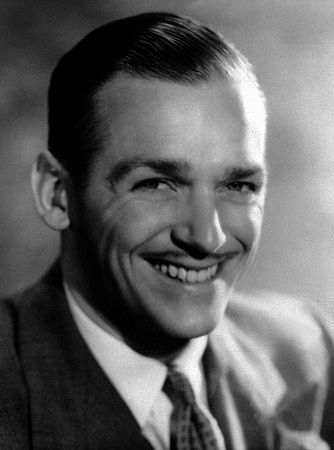
“I’ve never felt better.” Douglas Fairbanks

“I wish I had drunk more champagne.” John Maynard Keynes

“Am I dying or is this my birthday?” Lady Astor (Churchill’s sparring partner).

“Don’t cut the ham too thin.” Fred Harvey, restaurateur, Harvey Houses across the west.

“That was a great game of golf, fellers.” Bing Crosby, just finished a round, fatal heart attack, 20 yards from the clubhouse

Berg, Morris (“Moe”) (1902-1972) American athlete, spy. Professional baseball player. Catcher for Boston Red Sox. Spied for U.S. during World War II. Died at age 70 of injuries sustained in a fall at his home. Last Words: “How did the Mets do today?” Spoken to his nurse.

“Goodbye, I’ll see you in heaven.” John D. Rockefeller, Sr. to Henry Ford, who replied, “You will if you get in.”

“I love your company, gentlemen, but I believe I must leave you to go to another world.” Adam Smith’s last words to his friends (on his gravesite in Edinburgh)

Hope, Leslie Townes (“Bob”) (1903-2003) British-born American comedian. Stage, screen, radio and television actor. Grew up in Cleveland, Ohio. Starred in popular radio and television programs. Won many awards including Emmy, Golden Globe, People’s Choice. Entertained American troops in World War II and subsequent conflicts. Died at age 100 at Toluca Lake, California.

Last Words: “Surprise me.” His response to his wife who asked where he wanted to be buried.

Last Words—Infamous People

“Well, folks, you’ll soon see a baked Appel.” George Appel, put to death, electric chair in 1928 for killing a NY policeman

Anastasia, Albert (1902-1957) American gangster. Executioner for Murder, Inc. Killed at age 55 in a gangland-style execution while sitting in a chair at the Park Sheraton Hotel barbershop in New York City.

Last Words: “A quick haircut.”

Burris, Gary (1956-1997) American murderer. Shot and killed a cab driver in Indianapolis in 1980. Executed at age 40 by lethal injection in Indiana.

Last Words: “Beam me up!”

Chubbuck, Christine (1944-1974) American television news reporter. Committed suicide by shooting herself in the head during a live telecast. Died 14 hours later at age 29 in a Sarasota, Florida, hospital.

Last Words: “In keeping with Channel 40’s policy of bringing you the latest in blood and guts, and in living color, we bring you another first, an attempted suicide.” Statement she read to viewers just before shooting herself.

Glass, Jimmy L. (1962?-1987) American murderer. Convicted of killing a couple in their home on Christmas Day. His case is notable in that he petitioned the U.S. Supreme Court claiming execution by electrocution is cruel and unusual punishment and a violation of the Eighth and Fourteenth Amendments to the U.S. Constitution. The Court ruled 5 to 4 that electrocution was an acceptable form of execution. Glass was executed by electric chair in Louisiana at age 25.

Last Words: “I’d rather be fishing.” Spoken while he was sitting in the electric chair waiting to die.

Grasso, Thomas J. (1962?-1995) American murderer. Convicted of double murder. Executed at age 32 by lethal injection in Oklahoma.

Last Words: “I did not get my Spaghetti-O’s; I got spaghetti. I want the press to know this.”

Harris, Robert Alton (1953-1992) American murderer. Convicted of the murder of two teenage boys. When he died in San Quentin’s gas chamber in 1992, he was the first person to be executed in California since 1967.

Last Words: “You can be a king or a street sweeper, but everyone dances with the grim reaper.” Recorded by Warden Daniel Vasquez.

French, James D. (1936?-1966) American Murderer. Claimed his constitutional rights were violated because he was forced to wear prison clothes and was surrounded by prison guards during his trial. Murdered his cellmate. Executed by electrocution in Oklahoma.

Last Words: “How about this for a headline? French fries.”

Last Words from the Titanic

“We have been together for 40 years, and we will not separate now.” Ida Straus, refusing lifeboat on Titanic to stay with husband Isidor, NY Dept store magnate.

Astor, John Jacob, IV (1864-1912) American businessman. Great-grandson of John Jacob Astor I. Served in the Spanish-American War. Victim ofTitanic disaster. His pregnant wife Madeline survived. Eyewitness reported that Astor grabbed onto the sides of a raft. When his feet and hands froze he let go and drowned at age 47. Different

Last Words: “The ladies have to go first—Get into the lifeboat to please me—Good-bye, dearie. I’ll see you later.” Spoken to his wife Madeline.

Harris, Henry B. (1866-1912) American theatrical producer, theater owner and operator. Victim of Titanic disaster. Produced more than 60 shows on Broadway. On the Titanic, Harris went to the side of his wife before the lifeboat was lowered away. Upon hearing “Women first” shouted to him by one of the ship’s officers, Harris made his last known statement.

Last Words: “All right. Good-bye, my dear.” He hugged and kissed his wife goodbye then climbed back to the deck of the Titanic where he drowned.

Episode #63 - Entrepreneur Heaven - October 2015

On this show, Ed and I profiled four entrepreneurs:

  1. George Eastman        

  2. James Cash Penney

  3. The Wright Brothers

  4. Anita Roddick

George Eastman

Eastman (July 12, 1854 – March 14, 1932) was an American innovator and entrepreneur who founded the Eastman Kodak Company and popularized the use of roll film, helping to bring photography to the mainstream.

He was a major philanthropist, establishing the Eastman School of Music, and schools of dentistry and medicine at the University of Rochester and in London.  

1976 Kodak = 90% of all film sold in USA, 85% of all cameras. The irony is Kodak invented digital camera!

January 2012 Kodak filed bankruptcy.

Make the Camera as Convenient as the Pencil, 1920 Essay

“You press the button and we do the rest.”

“What we have made an advertised and sold has always been the embodiment of an idea rather than a piece of photographic apparatus.”

He was a pessimist at heart: “Tell me the worst you know,” his approach to getting at problems.

He liked the letter K, strong, incisive. Start and end with K: Kodak.

First Kodak on market July, 1888—10 years after start of business.

100 Exposures, 2.5” picture diameter, $25 = $700 today. New roll = $10, but you had to develop pictures with Kodak.

Eastman Kodak lost major antitrust suit: “he did not understand the antitrust laws and did not know anyone who did.”

He did believe business was war, but no trace of cruelty (unlike Charles Revson).

1925, final year of active engagement, told employees:

“What we do in our working hours determines what we have in the world. What we do in our play hours determines what we are.

In his final two years, Eastman was in intense pain caused by a disorder affecting his spine.

On March 14, 1932, Eastman shot himself in the heart, leaving a note which read, "To my friends: my work is done. Why wait?"

James Cash Penney

James Cash "J.C." Penney, Jr. (September 16, 1875 – February 12, 1971) 1902, founded the J. C. Penney stores.

First venture: butcher shop failed.

He refused to supply meat to hotels that sold liquor.

Penney’s father was a Primitive Baptist preacher, Missouri farmer with 12 children.

Insisted his employees never touch tobacco/alcohol.

Why a Buyer’s Market Hasn’t Changed Our Plans, 1921 essay

Store managers had to own 1/3 of the store.

In 1918, he personally interviewed 5,000, hired 100

Centralized bookkeeping, cash receipts @ Mother Store. Easier to teach a man merchandising than finance

After the 1929 stock crash, Penney lost virtually all his personal wealth, and borrowed against his life insurance policies to help the company meet its payroll.

The financial setbacks took a toll on his health. Penney checked himself into the Battle Creek Sanitarium, where he was treated.

In 1940, during a visit to a store in Des Moines, Iowa, he trained a young Sam Walton on how to wrap packages with a minimal amount of paper and ribbon.

He remained as chairman of the board until 1946, and after that as honorary chairman until his death in 1971.

The Wright Brothers

Born:

  • Orville: August 19, 1871, Dayton, Ohio

  • Wilbur: April 16, 1867, Millville, Indiana

Died:

  • Orville: January 30, 1948 (aged 76), Dayton

  • Wilbur: May 30, 1912 (aged 45), Dayton

Education: Orville 3 years high school; Wilbur 4 years

The Wright Brothers, David McCullough. This is a fantastic, short volume on their lives, extremely well-written.

Fascination started with toy helicopter brought home by father, Bishop Milton Wright.

Orville was more cheerful, optimistic, mechanical ingenuity.

Lifelong bachelors, Republicans. Two older brothers married, had families.

Spring 1893 opened Wright Cycle Exchange, earned $2-3K/year ($55K today).

Answer to inquiry from Wilbur to US Weather Bureau in Washington, DC, about prevailing winds around country: Outer banks of North Carolina, Kitty Hawk, 700 miles from Dayton.

December 17, 1903: flipped a coin to see who’d fly. Wilbur won. Four flights that day.

May 1912 Wilbur typhoid fever, died May 30 at 45.

Orville flew 1910 at 80MPH, had to give up flying in 1918.

July 20, 1969, Neil Armstrong carried small swatch of the muslin from a wing of the 1903 Flyer.

“The best dividends on the labor invested have invariably come from seeking more knowledge rather than more power.”

Anita Roddick

23 October 1942 – 10 September 2007

Founder of The Body Shop, a cosmetics company producing and retailing natural beauty products that shaped ethical consumerism.

Ron read Body and Soul, 1991, on Paul Dunn’s recommendation.

The company was one of the first to prohibit the use of ingredients tested on animals and one of the first to promote fair trade with third world countries.

In 2003, Queen Elizabeth II appointed Roddick a Dame Commander of the Order of the British Empire.

In 2004, Roddick was diagnosed with liver cirrhosis due to long-standing hepatitis C.

By 2004, the Body Shop had 1980 stores, serving over 77 million customers throughout the world. It was voted the second most trusted brand in the United Kingdom, and 28th top brand in the world.

On 17 March 2006, L'Oréal purchased Body Shop for £652 million. This caused controversy, because L'Oréal is involved in animal testing.

Four-Letter Words! (essay), 1998

Love, give, care, feel, hope, fair, soul, and true all found in my work (my all-time favorite word).

We can bring our heart to work.

For me, the workplace is an incubator for the human spirit.

Enthusiasm cannot be managed; it cannot be taught.

Sign above her office door: “Department of the Future”

Allowed ½ day per month for community service.

Merged politics and business—activism must be incorporated.

Quotes:

If you think you're too small to have an impact, try going to bed with a mosquito.

If you do things well, do them better. Be daring, be first, be different, be just.

I want to work for a company that contributes to and is part of the community. I want something not just to invest in. I want something to believe in.

Episode #62 - Free-Rider Friday - Septemeber 2015

Ed's Topics

The song "Happy Birthday" is now in the public domain, and you get to hear Ed sing happy birthday to Ron royalty free!

Price Gouging for Drugs

Turing Pharmaceuticals and its CEO Martin Shkreli clearly made a serious mistake in pricing, but chalking it up to gouging and greed missed a large part of the story. 

The Freedom Report, Fraser Institute

The index published in Economic Freedom of the World measures the degree to which the policies and institutions of countries are supportive of economic freedom. The cornerstones of economic freedom are personal choice, voluntary exchange, free- dom to enter markets and compete, and security of the person and privately owned proper

Ron's Topics

Airplane Space is a Human Right?

The Washington Post, September 17, 2015: "Airplanes' space wars are shifting to the human rights front, by Christopher Elliott.

KPMG Australia: Disruptive Innovation?

Hat tip to our good friend Brent Uken at EY for passing this along.

"KPMG Australia disrupts itself with online marketplace for idle staff hours KPMG has launched a new online marketplace to offer the down-time of staff to clients for short term jobs at a discount. Like Airtasker.com or Freelancer.com – but for KPMG clients and staff only. 

Martin Sheppard, KPMG Australia's lead brand and innovation partner, likens KPMG Marketplace to an airline maximising "yield" by selling last-minute seats cheap. The idea grew from a response to an in-house ideas competition. "Relationship partners" don't get to sign off on KPMG Marketplace assignments bought by "their" clients. A start-up built the platform, not a big IT house. 

Some partners bristled at the idea of discounting charge-out rates. But the marketplace meets more business needs than optimising revenue from highly paid workers. Traditional professional services firms like KPMG don't turn a dollar of revenue online. That leaves them ill-equipped to exploit the boom in use of contingent labour by pared-to-the-bone clients struggling with peak workloads. 

KPMG Marketplace can also be used to sell other services. KPMG generated ideas from its staff via an internal competition, dubbed iTiger (i is for innovation). The idea that became KPMG Marketplace started as an idea for overworked KPMG staff to farm out batches of work internally. Others gave it a client focus, and KPMG Marketplace was born. Gestation was 18 months from "lightbulb moment" to launch. 

KPMG Marketplace works like this: Clients struggling with short-term peak seasons or workloads submit assignments online – for example, in foreign exchange reconciliation, financial modelling, data or business process analysis or project administration. They might get three CVs back – and choose one, who comes to work for them for up to 10 days. Longer secondments – say for a stand-in chief financial officer – will continue to be dealt with by the traditional process of speaking with a partner and signing an engagement letter setting out terms and conditions. Engagement online via KPMG Marketplace is more efficient, which explains part of the discount."

We discuss why we believe this is a flawed strategy for a so-called professional knowledge firm (and my Alma Mater).

Question & Shout Outs

Tim Rodman (@TimRodman) asks: If using timesheets means you are "a practicing Marxist", how bad would a Bernie Sanders win be for the @VeraSage mission?

To BJ Lee (@bj_lee_), a vocal coach, who asked us about pricing. We suggested he offer options, which he did, and the customer selected the highest priced option. Congratulations, BJ!

Thanks for Justin Royer (@justin_royer) for letting Ron know he will have to get his check book out to purchase the Apple car, scheduled to be released in 2019. Read about it here.

Episode #61 - Pricing on Purpose: Price Sensitivity Factors

The following is excerpted from Chapter 14 of Ron’s book, Pricing on Purpose: Creating and Capturing Value.

Price Elasticity vs. Price Sensitivity

Certainly mathematics has its place in pricing, allowing us to test, predict, and determine elasticity. Yet, since pricing is an art more than a science, judgments are also vitally important and cannot be substituted with mathematical precision.

Even if a company possesses a precise elasticity calculation it knows is accurate, it would only be part of the puzzle of pricing. Since elasticity normally lumps “consumers” together, it does not help us in segmenting customers into different value propositions, thereby offering individuals different bundles in order to maximize profit.

Ten Factors of Price Sensitivity

In order to assist those who are in charge of Pricing On Purpose in ascertaining and judging price sensitivity, the following ten factors should be examined to see which apply to your particular customer circumstances.

Thomas Nagle identifies ten factors affecting price sensitivity in his book, The Strategy and Tactics of Pricing.

1. Perceived Substitutes Effect

This effect states that buyers are more price sensitive the higher the product’s price relative to its perceived substitutes. New customers to a market may be unaware of substitutes, and thus pay higher prices than more experienced buyers. Restaurants in resort areas face less pressure to compete based on price (which locals may describe as “tourist traps”).

Branding can also overcome, to a certain extent, the substitute effect. Woolite, for example, has maintained a relatively expensive price because it positions itself as an alternative to dry cleaning, not a substitute to regular laundry detergent.

Customers have a reference price when there are many substitutes, and as long as the offering is within that range—sometimes referred to as a zone of indifference—it will be considered acceptable, the point being your marketing can influence which products customers will compare yours with, possibly pushing up the price they are willing to pay.

2. Unique Value Effect

Buyers are less price sensitive the more they value the unique attributes of the offering from competing products. This is precisely why marketers expend so much energy and creativity trying to differentiate their offering from that of their competitors.

Heinz ketchup, for example, developed a secret formula for making its product thicker and was able to increase its market share from 27 to 48 percent while maintaining a 15 percent wholesale price premium.

Auction houses rely on the unique value effect in order to command the prices they do among their bidders. Rare artifacts from the John F. Kennedy estate are known as “positional” or “expressive” goods, since the people who purchase them are trying to position themselves in society, or express who or what they are (art collectors, for example).

3. Switching Cost Effect

Buyers will be less price sensitive the higher the costs (monetary and nonmonetary) of switching vendors. Airlines that have a fleet of Boeing airplanes may be reluctant to switch to Airbus because of the enormous investment they have in their pilots, flight crews, parts inventory, and the mechanics of operating a certain plane.

Many people are unwilling to give up certain software products due to the learning and familiarity they have with their existing product. Personal relationships are most susceptible to this type of perceived cost, due to the emotional investment the customer has made in the relationship. Childcare providers, doctors, lawyers, veterinarians, and accountants all can benefit from this effect.

4. Difficult Comparison Effect

Customers are less price sensitive with a known or reputable supplier when they have difficulty in comparing alternatives. People eat at McDonald’s, continue to use AT&T, lodge at Marriott and shop at JC Penny because they are familiar with these offerings and perceive them to be less risky than unknown alternatives.

Stockbrokers price based on different criteria (shares of stock traded, or value of shares traded), making it difficult for the customer to compare one with the other. Cellular phone companies employ this strategy by offering different features among their myriad calling plans, making it very difficult to compare one company’s offering to another.

5. Price Quality Effect

Buyers are less sensitive to a product’s price to the extent a higher price signals better quality. These products can include image products, exclusive products, and products without any other cues as to their relative quality.

It is said that only 15% of Rolls Royce customers ask about price before purchasing. These types of prestige products are an important form of marketing. Witness designer clothing and accessories, along with American Express’ Gold, Platinum, and Black credit cards, which command enormous premiums over alternative cards.

Many customers still have a common visceral reaction that high price equates to high value (and quality). Marketers have discovered that utilizing a high price for new products is quite effective for signaling quality to the marketplace. Other marketing research has shown that while discounting familiar brands can increase sales, the same strategy for unknown brands can actually reduce sales.

6. Expenditure Effect

Buyers are more price sensitive when the expenditure is larger, either in dollar terms or as a percentage of household income. A one-office accounting firm may not pay much attention to the price of paper clips, but an international firm that buys in large quantities will.

Business purchasers look at the total amount of the purchase, while households will compare the expenditure to total income. Many people will not expend much energy shopping for the lowest price of soft drinks, but they will put more effort into searching for an automobile or a home. Higher-income customers often will pay higher prices because they do not have the time to shop as thoroughly as low-income individuals.

7. End-benefit Effect

This effect is especially important when selling to other businesses. What is the end-benefit they are seeking? Is it cost minimization, maximum output, quality improvement? The fulfillment of the end-benefit is often gauged by its share of the total cost.

For instance, steel suppliers selling to auto manufacturers know that the price of the steel comprises a large component of the cost of the car; on the other hand, when steel is sold to a luggage manufacturer, the steel cost is relatively minimal compared to the other material used.

The end-benefit effect is also psychological. Think of going out for a romantic anniversary dinner and paying with a two-for-one coupon. Most people view price shopping as tacky when the purchase involves something emotional. Wedding florists, caterers, and bands certainly understand this principle.

The larger the end-benefit, the less price sensitive the buyer. Think of the Michelin tire ads showing a picture of a baby in diapers next to its radial tire proclaiming, “Michelin. Because so much is riding on your tires.”

8. Shared-cost Effect

When you spend someone else’s money on yourself, you are not prone to be price conscious. This is one reason airlines, hotels, and rental car companies can all price discriminate against business travelers, because most of them are not paying their own way.

This also explains some of the success of the frequent flyer and other reward programs. Many business travelers value these rewards and will not accept alternative offerings, especially since they are reimbursed anyway. Also, publications, educational seminars, and other business expenses are tax deductible, and this also reduces the buyer’s price sensitivity relating to various business expenses.

9. Fairness Effect

Notions of fairness can certainly affect customers, even when they are not economically (or mathematically) rational. If a gas station sells gas for $2.30 per gallon and gives a $0.10 discount if the buyer pays with cash, and another gas station offers the same gallon at $2.20 but charges a $0.10 surcharge if the customer pays with a credit card, which station will sell more gas to credit card users?

The economic cost is exactly the same, but most people will psychologically prefer to deal with the first station and not the second because there appears to be something inherently unfair about being assessed a surcharge.

10. Inventory Effect

The ability of buyers to carry an inventory also affects their price sensitivity. Amateur cooks with large pantries will stock up on a good deal, but a single person living in a small apartment will not. The perishability of the item in question is another factor to consider.

Centralized vs. Decentralized Pricing

We discussed the debate between having pricing centralized versus giving pricing authority to the field. We are advocates of a centralized pricing function, since someone needs to own this function, study it, and turn it into a core compentency.

See our show from February 13, 2015, Who’s In Charge of Value?, for our discussion of the role of the Chief Value Officer.