

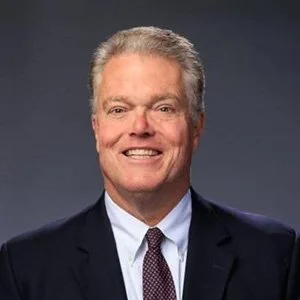
Professor Michael Munger returns to The Soul of Enterprise for a fourth visit and once again, the answer is transaction costs. Ron and Ed catch up with the Duke University economist, political scientist, author, and host of The Answer Is Transaction Costs to explore some of the provocative questions he has tackled in the podcast’s latest summer episodes.
Why is being late an economic problem rather than merely bad manners? How have social media dramatically lowered the cost of coordinating outrage? Can transaction costs even explain the battle between the person who makes a resolution tonight and the same person who breaks it tomorrow?
Along the way, we’ll explore Munger’s larger argument that transaction costs are hiding in plain sight, shaping markets, institutions, cooperation, incentives, and everyday human behavior. It’s another wide-ranging conversation with one of TSOE’s favorite economists and the Knower of Important Things.
ABOUT MICHAEL C. MUNGER
Mike Munger is the Pfizer/Edmund T. Pratt, Jr. University Distinguished Professor at Duke University, with appointments in Political Science, Economics, and Public Policy. A former president of the Public Choice Society and former FTC staff economist, he studies markets, institutions, regulation, and the sharing economy. He is the author of Tomorrow 3.0 and The Sharing Economy and hosts The Answer Is Transaction Costs podcast.
SHOW NOTES
Segment one
“Capitalism may contain the sees of its own destruction.” —Michael Munger from his book “Is Capitalism Sustainable?” https://www.amazon.com/dp/B07VZ8ZP11?lv=shuf&channelId=500&plpRedirect=mhFallback
“As long as we continue to have a dynamic economy, yes, innovation will save us.” —Michael Munger in reference to his sharing economy book. More info here: https://polisci.duke.edu/books/tomorrow-30-transaction-costs-and-sharing-economy
Professor Munger has a theory on AI and it starts like this (the rest is in segment one): “For many firms, they’re going to get smaller. For some firms, they’re going to get much larger.” —Michael Munger
“For many people, there’s going to be poverty, and I think populism is the next great democratic threat. And it’s because of transaction costs.” —Michael Munger
Segment two
“Remember, transaction costs are triangulation, transfer, and trust.” —Michael Munger; More at this link: https://thedailyeconomy.org/article/to-consumers-all-costs-are-transaction-costs/
“Uber doesn’t sell rides. Everybody thinks that Uber sells rides. What Uber sells is a reduction in transaction costs. They sell connections.” —Michael Munger
Today I learned: “The title of my podcast, The Answer is Transaction Costs, does come from my dissertation defense” —Michael Munger https://taitc.buzzsprout.com/
“I think there are people who would argue that the current Congress has excessive transaction costs, but that system was designed to protect minorities, and it’s doing it’s job […]” —Michael Munger
Segment three
What’s the biggest transaction cost in American politics? “Right now we have, paradoxically, sort of weak parties in the sense that the margins are so close that neither the Democrats nor the Republicans have much ability to force their members to vote in a particular way.” —Michael Munger
Isn’t the point to have competition between the [political] parties, no so much within the parties? “There’s an empirical answer to that question, and that is, what is the fastest growing group in the American electorate? And the answer is independents, people who associate with neither party” —Michael Munger
On charismatic authority: https://en.wikipedia.org/wiki/Charismatic_authority
"Time price" measures the actual cost of a good or service by calculating how many hours of work are required to buy it, a concept Mark Twain famously illustrated through economic debates in A Connecticut Yankee in King Arthur's Court. https://humanprogress.org/mark-twain-explains-time-prices/
Segment four
“Who was their first?” gives us a sense of the cause of externality based on the right of first possession. Wrap your had around that one and then check out segment four with Professor Munger today.
Nobel laureate economist William Nordhaus found that innovators and producers capture only about 2.2% of the total economic value they generate, while the remaining 97.8% flows to society. https://www.iedm.org/entrepreneurs-give-much-more-than-they-take/
A big THANK YOU to Professor Munger for joining us today. Check out his podcast, The Answer Is Transaction Costs, in your favorite podcast player or at this link https://taitc.buzzsprout.com/

Bonus Content is Available As Well
Did you know that each week after our live show, Ron and Ed take to the microphone for a bonus show? Typically, this bonus show is an extension of the live show topic (sometimes even with the same guest) and a few other pieces of news, current events, or things that have caught our attention.
Click the “FANATIC” image to learn more about pricing and member benefits.