



Episode #60 - Interview with George Gilder

Includes our conversation during commercial breaks which are not heard in the audio above.
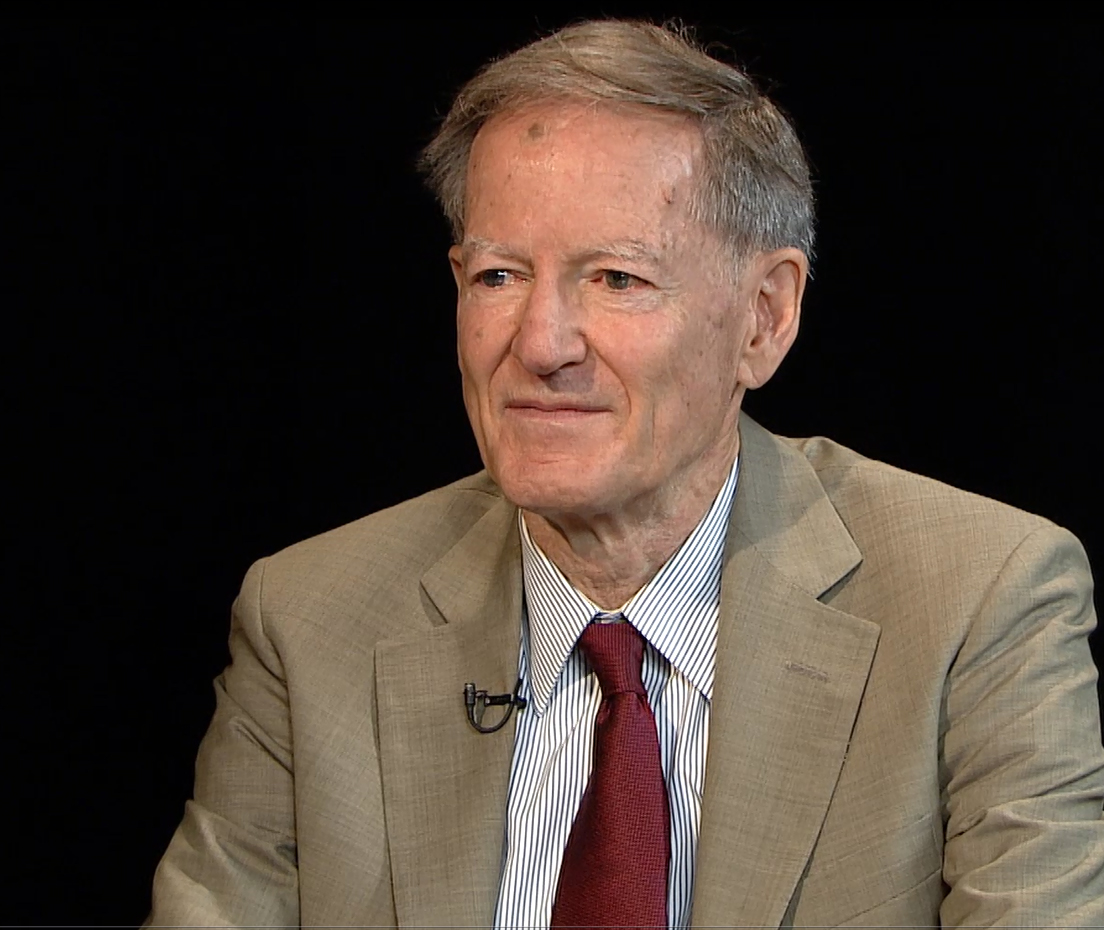
From George Gilder's appearance on Uncommon Knowledge (click for interview)

From George Gilder's appearance on Uncommon Knowledge (click for interview)

George Gilder is the author of 18 books: Bitcoin & Gold: Information Theory of Money (forthcoming); Knowledge & Power: The Information Theory of CapitalismMen & MarriageWealth & Poverty (new edition 2012); The Spirit of EnterpriseLife After TelevisionMicrocosmTelecosmThe Silicon Eye, and The Israel Test.

Microcosm and Telecosm both listed among the era's top 10 technology books by VentureBeat in 2012 and Microcosm ranked among the era's top two technology books by Wired. Knowledge & Power was libertarian "book of the year" at FreedomFest 2013. George is a contributor to Forbes, National Review, and the Wall Street Journal.

He is also a venture capitalist (angel) specializing in U.S. technology companies. He wrote and edited the Gilder Technology Report, is number 27 Management Guru in Clayton Christensen's Top 50, and is founder and fellow of the Discovery Institute, and was the most quoted living author by President Ronald Reagan.

His specialties: Long distance running, chiefly trail and hill races, and Nordic skiing.

Why Gilder is Ron’s Mentor

Ron’s Dad read the Playboy interview with George Gilder in August 1981, and insisted he read Wealth & Poverty.

The rest is history. You can read more about this here.

I wrote Mind Over Matter: Why Intellectual Capital is the Chief Source of Wealth, inspired by Gilder, which he included in the bibliography to The Israel Test, and quoted from it in Knowledge & Power (page 145).

We discussed with George some of his books, and his profound speech before the Vatican in 1997, The Soul of Silicon.

Below are some excerpts from these works, most of which were not covered on the show.

Ed and Ron recommend you read anything by Gilder.

Wealth & Poverty, 1981 [updated 2012]

This book grew out of Gilder’s Visible Man book, which was ahead of its time on welfare reform.

Gilder makes the moral case for capitalism, as well as supply-side economics. Ronald Reagan was so impressed with Wealth & Poverty, he gave a copy to each of his Cabinet members.

Gilder went on to become Reagan’s most quoted living author.

Joshua Gilder, George’s cousin, was the main speechwriter on Ronald Reagan’s Moscow State University speech, which we use a clip from to open The Soul of Enterprise show, and discussed in our book, The Soul of Enterprise: Dialogues on Business in the Knowledge Economy. 

One of the key insights in Wealth & Poverty: Greed leads, as by an invisible hand, to an ever-expanding welfare state.

Ayn Rand attacked Gilder, in her last speech in 1982, The Age of Mediocrity.”

George’s response: “Her atheism blinded her to the spiritual dimensions of capitalism.” Indeed.

The Spirit of Enterprise, 1984 [updated 1992]

Entrepreneurs accelerate creative destruction. Economists measure the destruction and doubt the creativity.

“It is the spirit of enterprise—the mysterious workings of creativity and faith—that can surmount all the material scarcities of human life.”

“Entrepreneurship can no more be reduced to a model of money and markets than poetry can be explained by the rules of grammar and vocabulary.”

“Capitalism offers nothing but frustrations and rebuffs to those who wish—because of IQ, birth, credentials—to get without giving, to take without risking, to profit without sacrifice, to be exalted without humbling themselves to understand others and meet their needs.”

The Israel Test, 2009

The Israel test is a moral challenge, and can be summarized by a few questions:

  1. What is your attitude toward people who excel you in the creation of wealth or in other accomplishment?

  2. Do you aspire to their excellence, or do you seethe at it?

  3. Do you admire and celebrate exceptional achievement, or do you impugn it and seek to tear it down?

Israel’s per-capita innovation dwarfs all nations, so much so that American technology could display the emblem: Israel Inside.

Golden Rule of Capitalism: That the good fortune of others is also one’s own. No one can be rich alone.

Envy of excellence leads to perdition, the love of it leads to the light.

What matters in human accomplishment not average performance, but exceptional performance. Charles Murray’s book, Human Accomplishment, documents extraordinary accomplishments have been made by 4,002 people from 800 B.C. to 1950.

The Jewish world population is approximately .3%, yet they comprise 25% of notable accomplishments. Inequality is the answer, not the problem.

Knowledge and Power: The Information Theory of Capitalism and How it is Revolutionizing Our World, 2013 

The key issue in economics is not aligning incentives with some public good but aligning knowledge with power.

The key force of economic advance is the entrepreneur, who creates new goods, services, business plans and projects.

Proposition: Capitalism is not chiefly an incentive system but an information system.

It lacks a science of disorder and randomness. Until now.

Gilder uses Claude Shannon’s information theory to explain innovation and creativity. Essentially all information is surprise, according to Shannon.

Creativity always takes us by surprise, otherwise we wouldn’t need it, and socialism would work

This is a new way to think about human creativity, not simply invisible hands responding to incentives, but visible hands creating entire new markets.

Information wants a low-entropy carrier to provide demand and predictability for high-entropy signals of supply and surprise.

Gilder’s examples of Low-entropy carriers: rule law, maintenance of order, property rights, reliable regulation, light taxation, transparency, monetary stability, and family life.

Excessive Government regulation creates noise in the channel, distorting the signals of markets, inhibiting learning, growth, discovery, surprise, and thus wealth.

Expansion of wealth happens through learning and discovery through falsifiable experiments.

Knowledge is about the past, entrepreneurship is about the future.

One of the books key insights:

  •          Wealth = Knowledge

  •          Growth = Learning  

Capitalism is more about ideas than incentives. It’s a “noosphere” (mind-based system) and can revive as quickly as minds and policies can change.

Adam Smith was to assume that the entrepreneur was the tool of the market rather than its creator. This is the original sin of demand-side economics.

“The grander vision of economics fails because it subordinates a higher and more complex level of activity—the creation of value—to a lower level, its measurement and exchange.” 

The Soul of Silicon, May 1, 1997

We believe this is the most profound moral defense of capitalism ever written.

The 21st Century Case for Gold: A New Information Theory of Money, 2015
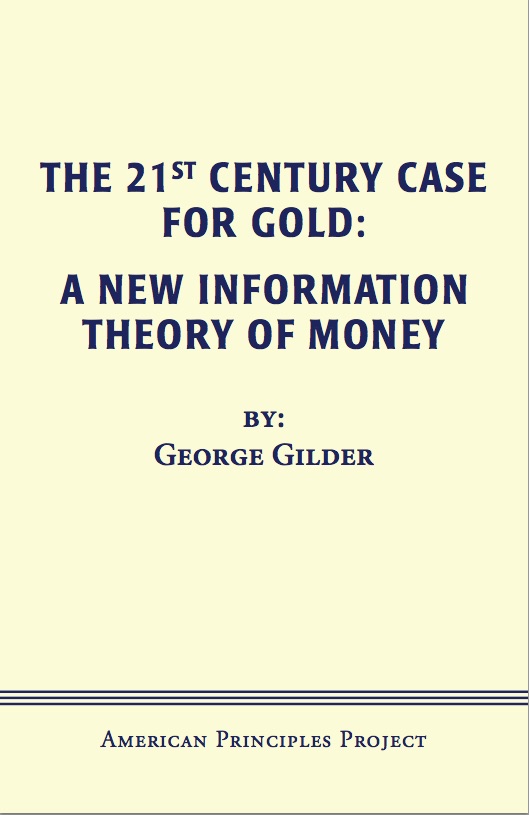
Click for access to the book

Click for access to the book

Economist Richard Thaler: “Why tie to gold? Why not 1982 Bordeaux?”

In this monograph, Gilder argues Milton Friedman was wrong on monetary policy. Floating currencies have been an utter. Failure.

Steve Forbes says that floating the currency is as senseless as floating the clock. A measuring stick cannot be part of what it measures, which is what makes time a perfect external measurement unit.

Gilder’s main argument is that while time is not money, money is time. The source of the value of money is time:

  • As economy grows, only time remains scarce

  • Money succeeds not because it measures value but because it obviates the need to perform impossible calculations Value > Price (consumer surplus)

  • Money facilitates exchange, making it an information system

  • Austrian subjective theory of value functions within objective time

  • Money isn’t the content, it’s the carrier of transactions

Gilder replaces the quantitiy theory of money with an information theory of money.

The old monetary equation: Money supply x Velocity = GDP, always held Velocity constant (this made it a theory, otherwise it would be just an identity equation, like accounting).

But velocity is not a constant 1.7, as Friedman assumed—it has varied from 3.1 to 12. Gilder defines velocity as freedom.

He further argues that if Government guarantees investments, mortgages, banks and auto companies to big to fail, then no learning will take place and you’ll destroy wealth.

Bitcoin not a competitor to gold, but a gold inspired standard for the Internet

Outsider trading scandal—the government doesn’t want you to buy anything you know—buy the lottery where no one knows more than you!

When a company goes public, its information goes private:

  • Berkshire/GE, private equity, and venture capitalists are all really inside traders

  • Venture capitalists have the most valuable money—less than .2%, yet they have seeded companies that comprise some 21% of GDP, 65% of market          capitalization, and 17% of jobs created

Speaking of George Gilder, by Frank Gregorsky, 1988

This is an excellent compendium of Gilder’s thinking on a wide-range of topics. Well worth reading.

Thank you, George, for appearing on The Soul of Enterprise, it was an honor and privilege!

Episode #59 - Best Business Books

Ron's Books

The Future of Management, Gary Hamel (2007) 

Your company is being managed by a small coterie of long-departed theorists who invented the rules and conventions of ‘modern’ management back in the early days of the 20th century. Management is out of date. Like the combustion engine, it’s a technology that has largely stopped evolving, and that’s not good.

Your company has 21st-century, Internet-enabled business processes, mid-20th century management processes, all built atop 19th-century management principles.

Types of innovation:

  • Management Innovation

  • Strategic Innovation

  • Product/Service Innovation

  • Operational Innovation 

Management Ideas 1900—2000 (most born after Civil War!)

  • Scientific management

  • Cost accounting and variance analysis

  • The commercial research laboratory

  • ROI analysis and capital budgeting

  • Brand management

  • Large-scale project management

  • Divisionalization

  • Leadership development

  • Industry consortia

  • Radical decentralization (self-organization)

  • Formalized strategic analysis

  • Employee-driven problem solving

Made organizations more efficient, not more ethical

Our organizations are less human than the people in them—people are amazingly adaptable and creative, our organizations are not.

Put efficiency ahead of every goal, since most management was invented to solve the problem of inefficiency.

1917 Henri Fayol, early management theorist, described the work of management as, "Planning, organizing, commanding, coordinating, and controlling." Sounds familiar, no?

From Hamel again, “Today the most valuable human capabilities are precisely those that are the least manageable. While the tools of management can compel people to be obedient and diligent, they can’t make them creative and committed.”

Management Innovation is defined as anything that substantially alters the way in which the work of management is carried out, or significantly modifies organizational forms, and, by so doing, advances organizational goals.

Management Innovation yields a competitive advantage if:

  1. Is a novel management principal, challenges long-standing orthodoxy

  2. Is systemic, encompassing a range of processes and methods

  3. Is part of an ongoing program of rapid-fire invention where progress compounds over time

Most managers find it easier to acknowledge the merits of a disruptive business model than to abandon the core tenets of their bedrock management beliefs. "What management practice or behavior does most to drive really great people out of our company? Or, which of our management practices does the most to destroy employee initiative?"

Examples of Management Innovations

  • Results Only Work Environment

  • Prediction markets

  • Internet, all periphery and no center

  • Knowledge Worker

  • Strategic Pricing (C-Suite)

  • Our Firm of the Future (not just a business model change!!) It’s an End, not just a means. It’s a Management Innovation as well:

    • Intellectual Capital leverage, not time leverage

    • Effectiveness over efficiency, efficaciousness

    • Value Pricing, not hourly billing

    • No timesheets

    • After Action Reviews

Positive deviants (management mutants), examples of companies that innovate management itself

  • Toyota (USA automakers thought it was  their paternalistic culture; then Toyota opened plants in USA and got same results)

  • Whole Foods

  • GoreTex

  • Google

  • Semco

  • Morningstar

  • Linux

The real reason it takes a crisis to provoke big change:  too much authority has been vested in too few people.

A Class with Drucker: The Lost Lessons of the World’s Greatest Management Teacher, William A. Cohen, PhD, 2008

William Cohen was Drucker’s first Graduate PhD Student (1975-1979), Claremont Graduate University.

Drucker called himself a social ecologist in that he believed the human condition could be advanced by more effective management and more ethical leadership.

Some of Drucker’s Lessons

What everybody knows is frequently wrong. For example, the demise of Tylenol (Johnson & Johnson) was predicted, but failed to occur.

If you keep doing what worked in the past you’re going to fail. Organizations  should make revolutionary change itself, even though it means obsolescing products of its current and past success

GE’s Jack Welch, CEO 1981 $12B value. 25x that when he left

            Drucker’s two questions:

1.    If you weren’t already in the business, would you enter it today?

2.    What are you going to do about it?

Approach problems with your ignorance—not your experience.

Ignorance is the most important component for helping others to solve any problem in any industry.

Henry Kaiser’s Liberty Ships, built 1500 in 2/3 the time and ¼ cost! He knew nothing about ship building.

Develop expertise outside your field to be an effective manager.

Outstanding performance is inconsistent with fear of failure.

The objective of marketing is to make selling unnecessary. Selling and marketing are neither synonymous nor complementary. One could consider them adversarial in some cases. There is no doubt that if marketing were done perfectly, selling, in the actual sense of the word, would be unnecessary. Marketing is not a business function, like manufacturing, because it permeated every aspect of the business. 

You can’t predict the future, but you can create it.

A Model organization that Drucker Greatly admired. The Army trains and develops more leaders, with a lower casualty rate. George Patton: “A pint of sweat in training is worth a gallon of blood in combat." Training is Army’s most important investments, not an expense.

How to motivate the knowledge worker

  • Theory X/Y not the answer

  • There is a responsible manager in authority

  • Workers are led, not managed

  • Workplace is participatory, but not “free-wheeling”

  • Workers are not motivated by money alone

  • Each worker is motivated differently, according to the   individual and the situation

  • Workers can leave = volunteers, treated with respect

  • Volunteers don’t need contracts, they need covenants

Drucker’s principles of self-development

Not up to others after we leave home/school—up to ourselves!

  • Reading

  • Writing

  • Listening

  • Teaching

Ed’s Books

A Failure of Nerve, Edward H. Friedman

Ed opened by quoting from the Preface of Friedman's book, here is blog post about the quote. TCMOOTITATIWWWPWAUTC

In short, Friedman's belief is that leaders do not need to be empathetic, but self differentiated and compassionate. They need to be step down transformers who seek to lower the level of anxiety around them, by simply self regulating their own anxiety. 

As an example of this, Ed cited the work of Captain Chesley Sullenberger of the ill fated, but not deadly, Flight 1549. When asked by Katie Couric if as any point he prayed, he replied, “I would imagine somebody in back was taking care of that for me while I was flying the airplane.”

Friedman also points out that data in business is like alcohol or other additive drug. It can be used in moderation, but many leaders are ensnared in its addictive properties and become dependent on it.

Wealth and Poverty, George Gilder (1981 Edition)

In addition to changing the lives of both Ron and Ed, this book influenced Ronald Reagan to implement supply-side economics during his first administration. 

Ed made two basic points about the book. First, that Keynesians, according to Gilder, have "hopelessly and irrevocably" confused cause and effect. Their mantra on demand causing supply is akin to saying demand or need and it will be given unto you.

Second, supply side economics is not about "trickle down." This notion was used to spurn the ideas of the book by its opponents, but in truth, Gilder makes a completely different point. He is saying that in order to receive one must first give, create or give and it will be given unto you

In other words if you want a meal/car/house, you don't go about demanding a house, you first give, in most cases to your employer who in turn trades money for your talent. You then can use that money to buy a meal/car/house. 

Note: there has been an update to this book, in 2012, but Ed was discussing the 1981 edition.


Episode #58 - Free-Rider Friday - August 2015

Ed's Topics

More misunderstanding of price theory.

Another example of how the belief that price is exclusively a function of costs: Why Starbucks' Prices Went Up, as Coffee Beans Got Cheaper (New York Times).

Big Brother Boss

Also from the Times: Data crunching coming your way so your boss can manage your time. Great, sign my up for this... NOT!

Froggy Went A-Courtin' But Lady Frogs Chose Second-best Guy Instead (NPR)

Thanks for our listener Mike Natolli for sending the link to this one. The framing effect (or decoy effect, if you prefer) is part of the reptilian brain, not only in retiles, but in we humans as well. 

Apple working on a car.

Ron needs to start saving his money as he is on record as saying that if Apple made a car, he would buy it.

More abuse of intellectual property law.

LMFAO, The Band, Sends Cease And Desist Over LMFAO, The Beer

Ron's Topics

"What If Stalin Had Computers?" (New Republic, August 18, 2015). 

Postcapitalism: A Guide to Our Future, by Paul Mason.

Postcapitalism argues that we are on the brink of a change so big and so profound that this time capitalism itself, the immensely complex system within which entire societies function, will mutate into something wholly new.

At the heart of this change is information technology, a revolution that is driven by capitalism but, with its tendency to push the value of much of what we make toward zero, has the potential to destroy an economy based on markets, wages, and private ownership.

The Black Book of Communism: Crimes, Terror, Repression, 1999:

French scholars tally up the deaths under communism:

  • USSR = 20 million

  • China = 65 million

  • Vietnam = 1 million

  • North Korea = 2 million

  • Cambodia = 2 million

  • Eastern Europe = 1 million

  • Latin America = 150,000

  • Africa = 1.7 million

  • Afghanistan = 1.5 million

  • Communists not in power = 10,000

  • Total = Nearly 100 million.

There is no good way to implement a bad idea!

Dan Price, CEO, Gravity Payments

120 employees, paid each $70,000 (“Happiness Salary”). He sank last year’s profits $2.2M into higher wages and slashed his salary $1M to $70,000. His two best employees quit, as well as customers who feared less service from non-motivated employees.

His brother Lucas, co-founder in 2004, filed a lawsuit, accusing Dan of paying too high a salary to himself.

This illustrates the perils of "Bubble sheet research," which attempts to measure "happiness" and its link to income.

Distributive fairness:

1.   Equality (everyone gets the same).

2.   Proportionality (all receive rewards in proportion to their inputs).

“There is nothing more unequal than the equal treatment of unequal people.” ― Thomas Jefferson

At least he used his own resources. Imagine a $70,000 federal minimum wage?

Dodd-Frank Rule

SEC requires companies to reveal median pay and compare to CEO pay, starting in 2017, passed 3-2 on party lines on August 5th.

Multinationals can exclude 5% of foreign employees.

Lobbying trade unions believe this rule will shame bosses into paying themselves less and workers more. “It will allow investors to see," says Commissioner Kara Stein, "how a company manages human capital.”

But labor unions don’t have a history of caring about protecting investors!

An investment bank with high pay can look more egalitarian than a cleaning company with low paid workers and a moderately paid CEO.

This rule hijacks the SEC for political purposes, unrelated to SEC’s mission, which is:

To protect investors, maintain fair, orderly, and efficient          markets, and facilitate capital formation.

A company’s pay ratio is not material information! Moreover, the ratio has no bearing on whether or not the CEO's pay is appropriate. Executive pay is already disclosed under current regulations.

Companies will try to goose the ratio from the other direction, by shedding its lowest-paid employees (utilizing contractors and temps).

Cost of implementation: $1.3 Billion upfront, $526million afterwards.

One way of course to "fix" the appearance of a "bad" ratio would be outsourcing, but as Ed points out, another court ruling in California is trying to stop that from happening.

Uber in Las Vegas

Surge pricing = bad when Uber does it.

Congestion pricing when government does it, celebrated by urban planning policy wonks.

North Korea

On August 15th, it turned clocks back ½ hour to establish its own time zone and reverse the imposition of Tokyo time in 1912.

It established the "Juche calendar," from 1912, the birth of Kim Il Sung.

Hugo Chavez turned clock back ½ hour in 2007 (a fairer distribution of sunrise?).

What is it with dictators and time?

Episode #57 - The Experts Speak

On this episode, Ed and I discussed the book, The Experts Speak: The Definitive Compendium of Authoritative Misinformation, Christopher Cerf and Victor Navasky, expanded and revised edition, 1998.

The two authors are interesting—a National Lampoon Contributing Editor, and a  Sesame Street contributor (Cerf) and editorial director of The Nation, Navasky.

They created The Institute of Expertology, a group of scholars who record sayings from experts for posterity.

The book describes three kinds of experts: past, present and future. Also, three type of expertise: descriptive, prescriptive and predictive.

Richard Feynman reminds us, “Science is the belief in the ignorance of experts.”

Samples from the “Experts”

Politics

WSJ Editorial, “Bill Clinton will lose to any Republican who doesn’t drool on stage.”

“FDR will be a one-term president.” Mark Sullivan, New York Herald Tribune columnist and political commentator, 1935.

"The race will not be close at all. Landon will be overwhelmingly elected and I’ll state my reputation as a prophet on it." William Randolph Hearst, August 1936. [FDR in 1936 won 523 electoral votes to Alf Landon’s 8, 11M vote margin].

"And while I'm talking to mothers and fathers, I give you one more insurance. I have said this before but I will say it again and again and again: Your boys are not going to be sent into any foreign wars.” FDR October 30, 1940.

"It is highly unlikely that an airplane or a fleet of them could ever think of fleet of navy vessels under battle conditions.” FDR as Secretary of the Navy 1922.

"I have no political ambitions for myself or my children.” Joseph P Kennedy.


"I favor the civil rights act of 1964 and it must be enforced at gunpoint if necessary.”1965.

"I would have voted against the civil rights act of 1964.” 1968. 

Both Ronald Reagan.


"There are only two ways to reduce the budget deficit. We must do both.” April 1987.

"There are only three ways to reduce the budget deficit. We must do all three.” September 1987.

"There are only four ways to reduce the federal budget deficit. We must do all four.” August 1988.

All Michael Dukakis.


Economics

“Stocks have reached what looks like a permanently high plateau.” Irving Fisher, Yale Economist, October 17, 1929 [one week prior to the $6 billion stock market crash].

“1930 will be a splendid employment year.” US Dept of Labor, New Year’s Forecast, December 1929.

“In all likelihood world inflation is over.” Managing Director, IMF, 1959.

Hitler

“There is no doubt that he [Hitler] has become a much more quiet, more mature and thoughtful individual during his imprisonment than he was before and does not contemplate acting against existing authority.” Otto Leybold (Warden of Landsberg Prison), letter to the Bavarian Minister of Justice, Sept 1924.

“Hitler is a queer fellow who will never become Chancellor; the best he can hope for is to head the Postal Department.” Paul von Hindenburg, President of Germany, 1931.

War

“The Hawaiian Islands are over-protected; the entire Japanese fleet and air force could not seriously threaten Oahu.” Captain William T. Pulleston, former Chief of US Naval Intelligence, “What Are the Chances?” The Atlantic Monthly, August 1941.

“Among the really difficult problems of the world, the Arab-Israeli conflict is one of the simplest and most manageable.” Walter Lippmann, April 27, 1948.

Invention

“The phonograph is not of any commercial value.” Thomas Edison, 1880.

“For God’s sake go down to reception and get rid of a lunatic who’s down there. He says he’s got a machine for seeing by wireless! Watch him—he may have a razor on him.” Editor of the Daily Express, London, refusing to see John Logie Baird, the inventor of television, 1925.

“There is not the slightest indication that nuclear energy will ever be obtainable. It would mean that the atom would have to be shattered at will.” Dr. Albert Einstein, 1932.

“What, Sir? Would you make a ship sail against the wind and currents by lighting a bonfire under her deck? I pray you excuse me. I have no time to listen to such nonsense.” Napoleon Bonaparte, to Robert Fulton, inventor of the steamboat, c. 1805.

“God himself could not sink this ship. Titanic Deckhand, responding to a passenger’s question, “Is this ship really unsinkable?” Southampton, England, April 10, 1912. [Sunday, April 14, 1912 it struck an iceberg].

“This is the biggest fool thing we have ever done…The bomb will never go off, and I speak as an expert in explosives.” Admiral William Daniel Leahy, advising President Truman on the impracticality of the US atomic bomb project, 1945.

"X-rays are hoax.” Lord Kelvin

"Radio has no future.” Lord Kelvin

"My dynamite will sooner lead to peace." Alfred Bernhard Nobel, founder of the Nobel Prizes.

Ed’s Favorite

"I have often thought that if there had been a good rap group around in those days I might've chosen a career in music instead of politics.” Richard M Nixon.

Ron’s Favorite

“Nothing of importance happened today.” George III (King of England), diary entry, July 4, 1776.

Episode #56 - Interview with Jennifer Warawa

Ed and I had the pleasure of interviewing his Sage colleague, Jennifer Warawa, the Global Vice President, Product Marketing–Accountants.

Jennifer's passion is to partner with consultants, accountants and bookkeepers to provide solutions that make a difference in their business or firm, and support them in delivering an extraordinary experience to their clients.

Prior to working with Sage, Jennifer owned her own firm for 12 years providing accounting, bookkeeping, and consulting services, software training, as well as business/ financial planning and marketing.

In addition to being a regular speaker at accounting conferences, Jennifer was also listed as one of the “10 Tweeters Worth Following” by Accounting Today and is an avid blogger, which includes being a featured writer on the Virgin Entrepreneur website. Jennifer made the Accounting Today Top 100 Most Influential People in Accounting and CPA Practice Advisor’s Top 40 Under 40 lists consecutively for the last four years.

Some of the issues we discussed with Jennifer

  • What is Sage’s Strategy to add value in the future?

  • How is the Cloud adoption coming along among firms?

  • The gap between what customers want and what firms think they want.

  • What things should business owners look for in selecting a CPA firm?

  • What’s the number one issue facing the accounting profession?

  • Is this different in different countries?

Sage's New Products to help firms be more effective

Thanks for sharing your insights and knowledge on the state of the professions, as well as businesses, Jennifer!

Episode #55 - Entrepreneur Heaven - August 2015

They say you can’t turn back the clock and go back to the good old days. Yet this is precisely what is happening with the total quality service movement, the customer loyalty movement, CRM, and other philosophies that put the customer at the center of the business organization. Millions of dollars are being spent on consultants to relearn what was once common sense, practiced by the great entrepreneurs from the turn of the century to the mid-1950s.

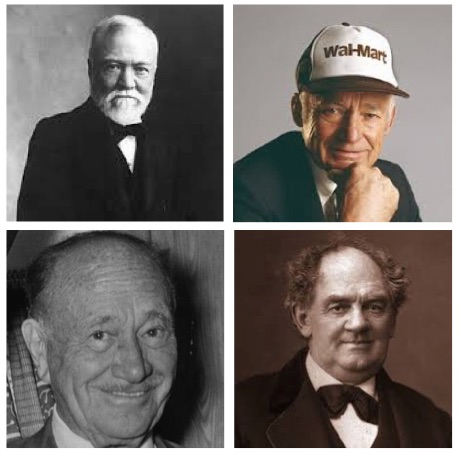
On this third installment of our Entrepreneur Heaven Series, we will explore the wisdom of Sam Walton, P.T. Barnum, Andrew Carnegie, and Conrad Hilton, and.

Wisdom is timeless, and occasionally turning back the clock is the wisest course of action. Sometimes history is our best teacher. 

Sam Walton (March 29, 1918- April 5, 1992)

Three weeks before his death, President George H. W. Bush awarded him the Presidential Medal of Freedom.

Graduated with a B.A. in economics, 1940, University of Missouri.

1940, starts work at J.C. Penney, stays 18 months.

Sept 1, 1945—opens first variety store.

1950, starts over in Bentonville with Walton’s .05¢ and .10¢.

July 2, 1962, Opens Wal-Mart, in Rogers, Arkansas.

Oct 31, 1969 Wal-Mart incorporated.

Battle over “fair trade,” whereby manufacturers could determine the price at which their goods could be sold. Benefited inefficient retailers since it protected them from low-price retail competition.

State by state, these laws were repealed in the 1950s, 1960s, and in 1975 Congress passed legislation ending the practice.

On the corporation’s organization chart, Walton was listed as: Chief Spiritual Officer.

In his book, Made in America: My Story (1992), Walton writes that his  single biggest regret in his whole business career: that he didn’t include the associates in the initial, managers-only profit-sharing plan.

Walton’s great insight: replacing inventory with information!

“Job security lasts only as long as the customer is satisfied. Nobody owes anybody else a living.”

Six ways Wal-Mart thinks small:

1.    Think one store at a time

2.    Communicate, Communicate, Communicate

3.    Keep your ear to the ground—no computer can tell you how much you could have sold

4.    Push responsibility—and authority—down

5.    Force ideas to bubble up

6.    Stay lean, fight bureaucracy

Sam’s Rules for Building a Business:

1.    Commit to your business

2.    Share your profits with associates

3.    Motivate your partners. Encourage competition, set high goals, keep score, switch jobs

4.    Communicate

5.    Appreciate everything associates do.

6.    Celebrate your successes

7.    Listen to everyone in the Co.

8.    Exceed customer expectations

9.    Control your expenses better than competition

10.  Swim Upstream. Ignore conventional wisdom

“In this free country of ours, the shopkeeper’s success is entirely up to you: the customer.”

Phineas Taylor  Barnum (July 5, 1810 – April 7, 1891)

He never said: “There’s a sucker born every minute.”

Human oddities on display, but never gross—women and children could attend.

He just wanted to entertain an America he thought worked too hard and laughed too little

He wrote, “The American Museum” in 1869.

His circus was sold to Ringling Brothers on July 8, 1907 for $400,000 (about $8.5 million in 2008 dollars). The Ringling Brothers and Barnum & Bailey circuses ran separately until they merged in 1919 forming the Ringling Bros. and Barnum & Bailey Circus. 

Andrew Carnegie (November 2, 1835–August 11, 1919)

Born: Nov 2, 1835 in Dumferline, Scotland.

Immigrated at age 12 from Scotland.

In 1870, Britain produced more steel rest of world combined. By 1900, year Carnegie retired, US producing twice as much as UK, highest-quality, lowest-priced:

            $160/ton in 1875 to $17/ton by 1898

            Sold holdings to JP Morgan $480M (his share $300M)

Carnegie: optimist, thirst for public approbation, wrote nice things about unions, who lionized him.

Homestead Steel Works strike of 1892, Carnegie in Scotland, 300 Pinkerton guards hired crushed the workers, black mark on his legacy.

He was fanatical about controlling costs: “Cut the prices; scoop the market; run the mills full…watch the costs and the profits will take care of themselves.”

Railroads developed cost accounting, and Carnegie brought it to the steel industry

Committed himself to world peace from two decades from retirement to death, a complete failure. Actually worse, he was a fool (Richard S. Tedlow, Bus Historian, Giants of Enterprise). He was fond of Kaiser Wilhelm II of Germany (“I think he can be trusted and declares himself for peace.”)

He wrote “The Crucial Question,” (1896) advice to young people on how to become business owners.

“And here is the prime condition of success, the great secret: concentrate your energy, thought, and capital exclusively upon the business in which you are engaged.”

 “The only irreplaceable capital an organization possesses is the knowledge and ability of its people. The productivity of that capital depends on how effectively people share their competence with those who can use it.”

“Take away my people but leave my factories, and soon grass will grow on factory floors. Take away my factories but leave my people, and soon we will have a new and better factory.”

“The man who dies rich dies disgraced.”

“Man must have an idol—The amassing of wealth is one of the worst species of idolatry. No idol more debasing than the worship of money.”

Carnegie gave away $332M, including 7,000 church organs, while Rockefeller gave away $175M.

Conrad Hilton (Dec 25, 1887–Jan 3, 1979)

Grew up New Mexico, father ran a general store. He married and divorced Zsa Zsa Gabor, and had a son with her.

First bus venture managing the Hilton Trio, musically inclined ladies (including his sister), but it flopped.

Then worked in a bank, and then manager of father’s store, but father kept meddling. He served in the Army WW I.

While trying to find a hotel bed first night in Cisco, TX, he couldn’t. The owner gave him one week to come up with $40K buy the hotel. He scraped together the money from family and friends. By 1921, he added two more hotels.

He wrote “A Million-Dollar Mountain and a Red Hat” (1957) to explain how he raised the money to build his first million dollar hotel on the corner of Main and Harwood in the Dallas bus district and Be My Guest, which used to be found in the drawer of every Hilton hotel next to the Bible.

He leased the land for 99 years, at $31,000/year, from the owner, and negotiated a clause in the lease to allow him to pledge the land as collateral to lenders, enabling him to build the hotel.

Episode #54 - Free-Rider Friday - July 2015

We discussed the following topics on this episode of Free-Rider Friday.

Sage Summit 2015 Recap

Our thoughts on Sage Summit in New Orleans, where we also broadcasted The Soul of Enterprise live, over three days with an array of guests.

You can listen to each day’s shows here:

Ed’s Topics

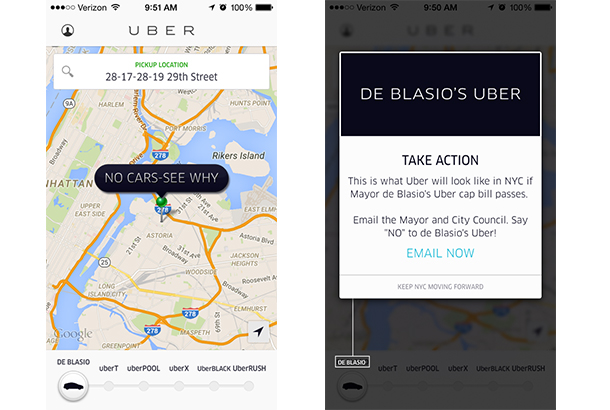
Uber delivers a passport and launches a “De Blasio Feature” in New York City, which shows what your wait would be in the absence of Uber. How about Uber for flights?

Cato Institute: One idea for how states could effectively end the federal income tax: Texas could refund everyone’s federal income tax, and then increase the state sales tax. Effectively converting to a pure consumption tax.

The CEO of the private company that makes WD-40 said: “Profit is the applause of doing good work and having engaged employees and that’s what I’m most proud of.”

Jet.com plans to compete against Wal-Mart, Costco, Amazon, etc. by charging $50 per year, and sell everything at cost. Will this business model succeed?

Ron’s Topics

American Enterprise Economist Kevin Hasset, says if you confiscate 100% of all after-tax US corporate profits, and redistribute them to wage earners, you would add roughly $7.50 per hour to wages.

Compare this to the $15 minimum wage some cities have implemented, and you don’t have to be an economist to predict what will happen to employment.

Accenture will get rid of annual performance appraisals. Deloitte is doing the same thing, as reported in detail in the Harvard Business Review, which you can access here: Reinventing Performance Management.

Airline profits have soared to record heights, even as fuel prices have dropped recently, as explained in this article.

Episode #53 - VeraSage Laws

Ed and I discussed the upcoming Sage Summit in New Orleans, where we will be broadcasting three live shows on VoiceAmerica.com on Tuesday-Thursday, from 2pm-3pm (CT).

We announced the winners of the VoiceAmerica contest to attend Sage Summit:

  • Virginia Colin

  •          Ann Beal

  •          Barbara Young

  •          Lindsay Boyd

  •          Prudence Gensman

  •          Simran Singh

VeraSage Laws

Baker’s Law: Bad customers drive out good customers

All customers are not equal.

Whenever anyone said, “All men are created equal.” Federalist Fisher Ames, an ardent opponent of Thomas Jefferson would retort:

            And differ greatly in the sequel.

Usually, the price isn’t wrong—the customer is!

We discussed the VeraSage Adaptive Capacity Model, whereby, similar to an airline or hotel, you reserve capacity for your best customers.

Also, this caveat before firing customers: your customers won’t get better until you do.

It’s axiomatic: You’re as good—or as bad—as the character of your customer list. How does that make you feel.

Kless’ First Law: He who liveth by the discount, shall ye also perish by the discount.

Kless’ Second Law: All measurements are judgments in disguise.

VeraSage adoption of the Second Law of medicine: Prescription before diagnosis is malpractice.

The Military has a great saying: “Time spent on             reconnaissance is never wasted.” 

VeraSage Axiom: Ideas are always and everywhere more important than their execution.

This one is counterintuitive, but true. There’s no good way to execute a bad idea, and good ideas are not everywhere. Thomas Sowell discusses this concept in his books, Knowledge and Decisions and Basic Economics.

Peter Drucker’s Law: Marketing and selling are not complementary, but adversarial.

Another counterintuitive point from Peter Drucker. In a perfect world, you wouldn’t need salesman, because your marketing would be so effective customers would line up to purchase your wares. Apple?

Episode #52 - Interview with Greg Tirico

Ron and Ed interview Greg Tirico who is responsible for Advocacy Solutions and Services at Sprout Social. He has spent the majority of his career leading digital marketing initiatives in Fortune 500 organizations. Today we will speak to him about Mary Meeker's annual Internet Trends report. Greg's insight when added to Mary's will guide your social strategy for the next 12 months. Personal note on Greg: When not espousing the benefits of employee advocacy, he can be found searching for the perfect Pinot Noir.

Episode #51 - Best Business Books

Ron’s Book Selections

Business as a Calling: Work and the Examined Life, by Michael Novak.

The economic and ethical responsibility of a business is to serve others, and increase the wealth of its customers.  The business world instills, and requires, the practice of a number of virtues:  diligence, industriousness, prudence in risk taking, reliability, kindness to strangers (customers), and fidelity in personal relationships.  Are not these the same virtues parents try to teach their children?  As Michael Novak explains in Business as a Calling:

My general position on these three questions has two parts.  First, business is a morally serious enterprise, in which it is possible to act either immorally or morally.  Second, by its own internal logic and inherent moral drive, business requires moral conduct; and, not always, but with high probability, violations of this logic lead to personal and business disgrace.  Immoral acts do occur in business. But to behave immorally is neither necessary to nor conducive to business success (Novak, 1996: 8-9).

These men [industrial barons] did more than make money; calling them “money-makers” trivializes what they accomplished.  Nor does the word greed capture their state of soul.  “Greed” does not explain why Andrew Carnegie gave virtually all his money away.  Instead, he poured [profits] back into his firm as an investment in its future.  In other words, he put it at risk.  “Greed” is for the impoverished socialist imagination a term of art; its purpose is neither descriptive nor analytical.  Its purpose is moral denunciation, for ideological reasons (Ibid: 75).

The Seven Internal and External Responsibilities

The moral case for capitalism needs to be made, and fortunately it has been.  Nonetheless, most popular culture and institutions, from movies and television shows to research organizations and universities, villainize businesspeople and business firms, endlessly portraying them as power-hungry, stop-at-nothing-to-get-ahead, ruthless members of society.  This view is pernicious, not to mention entirely out of touch with how the world works.  A business, in its essence, is a moral institution because it requires moral conduct to succeed in the long run.  As Novak explains:

It may help to divide these responsibilities into two different sets.  The second set will easily be recognized as “ethics,” since the source of their authority comes from outside business––from religious conviction, moral traditions, humane principles, and human rights commitments.

The first set [Internal Responsibilities] consists of the moral requirements necessary for business success.  One way to see that they are ethical is to ask yourself what happens when they are violated (Novak, 1996: 135).

Seven Internal Responsibilities:

1) To satisfy customers with goods and services of real value.  Like other acts of freedom, launching a new business is in the beginning an act of faith; one has to trust one’s instincts and one’s vision and hope that these are well enough grounded to build success.  It is the customers who, in the end, decide.

2) Make a reasonable return on the funds entrusted to the business corporation by its investors.  Is it moral to lose other people’s money?

3) To create new wealth.  This is no small responsibility.  If the business corporation does not meet this, who else in society will? 

 4) To create new jobs.  You cannot create employees without creating employers.                 

 5) To defeat envy through generating upward mobility and putting empirical ground under the conviction that hard work and talent are fairly rewarded.  The founders of the American republic recognized that most other republics in history had failed and that the reason they failed was envy:  the envy of one faction for another, one family for another, one clan for another, or of the poor toward the rich.  ...The best way to conquer this is to generate economic growth through as many diverse industries and economic initiatives as possible, so that every family has the realistic possibility of seeing its economic condition improve within the next three or four years.  Poor families do not ask for paradise, but they do want to see tangible signs of improvement over time.  When such horizons are open, people do not compare their condition with that of their neighbors; rather, they compare their own position today with where they hope to be in three or four years.  They give no ground to envy.   ...Only then can people see that hard work, goodwill, ingenuity, and talent pay off.  When people lose their faith in this possibility, cynicism soon follows.

6) To promote invention, ingenuity, and in general, “progress in the arts and useful sciences” (Article I, Section 8, U.S. Constitution).  All wealth comes from intellectual capital and the human mind, or caput, Latin for headThe great social matrix of such invention, discovery and ingenuity is the business corporation.

7) To diversify the interests of the republic.  Crucial to preventing the tyranny of the majority.  The interests of road builders are not those of canal builders, or of builders of railroads, or of airline companies.  The sheer dynamism of economic invention makes far less probable the coalescing of a simple majority, which could act as a tyrant to minorities.  The economic interests of some citizens are, in an important sense, at cross-purposes with the economic interests of others, and this is crucial to preventing the tyranny of a majority (Ibid: 138-45).

Seven Responsibilities from Outside Business:

  1. To establish within the firm a sense of community and respect for the dignity of persons.

  2. To protect the political soil of liberty.

  3. To exemplify respect for law.

  4. Social justice.  To be good citizens of the community.  Like other forms of justice and love, social justice begins at home.

  5. To communicate often and fully with their investors, shareholders, pensioners, customers, and employees.

  6. To contribute to making its own habitat, the surrounding society, a better place.

  7. To protect the moral ecology of freedom (Ibid: 146-51).

Bad Medicine: Doctors Doing Harm Since Hippocrates, by David Wootton

Bad Medicine is one of the most important books I have read in a long time. David Wootton is a historian at the University of York. He’s no medical profession basher, thanking modern medicine for saving his life and also proudly announcing his daughter is a doctor.

Not only is the book incredibly well written—even if, like me, you have no particular interest in the history of medicine—it is a mesmerizing look at how a supposedly scientific and evidence-based profession rejected new innovations, knowledge, and theories while stubbornly clinging to their old—and completely ineffectual, if not down right lethal—therapies.

Bad Medicine Drives Out Good Medicine

The history of medicine begins with Hippocrates in the fifth century BC. Yet until the invention of antibiotics in the 1940s doctors, in general, did their patients more harm than good. In other words, for 2400 years patients believed doctors were doing good; for 2300 years they were wrong.

From the 1st century BC to the mid-nineteenth century, the major therapy was bloodletting, performed with a special knife called a lancet. Interestingly enough, that is the title of today’s prestigious English medical journal, The Lancet. Bad ideas die hard.

The Case Against Medicine

The author makes three devastating arguments. First, if medicine is defined as the ability to cure diseases, then there was very little medicine before 1865. Prior to that—a period the author calls Hippocratic medicine—doctors relied on bloodletting, purges, cautery, and emetics, all totally ineffectual, if not positively deleterious (no matter how efficiently they were administered).

Second, effective medicine could only begin when doctors began to count and compare, such as using clinical trials.

Third, the key development that made modern medicine possible is the germ theory of disease.

We all assume that good ideas and theories will drive out bad ones, but that is not necessarily true. Historically, bad medicine drove out good medicine, as Wootton explains:

We know how to write histories of discovery and progress, but not how to write histories of stasis, of delay, of digression. We know how to write about the delight of discovery, but not about attachment to the old and resistance to the new.

The cultural obstacles, Wootton believes, are based on a somewhat counterintuitive observation: institutions have a life of their own. All actions cannot be said to be performed by individuals; some are performed by institutions. For instance, a committee may reach a decision that was nobody’s first choice.

This is especially true for institutions that are shielded from competition and hermetically sealed in orthodoxy. In a competitive market, germ theory would have been tested in a competing company, diffusing into the population much faster than it did within the institutions of the medical community. Wootton also cites Thomas Kuhn’s book, The Structure of Scientific Revolutions, wherein he distinguished between periods of “normal science” and science that takes place during periods of crisis. Germ theory was adopted because the medical profession knew it was in crisis.

Why is this Relevant to Business?

The similarities between bad medicine, the billable hour, timesheets, Frederick Taylor’s efficiency metrics, and value pricing are illustrative.

In physics the key barriers to progress are most likely theoretical. In oceanography they might be practical. What are the key barriers to progress in the professional knowledge firm?

If a supposed scientific and evidence-based profession is this slow to change, what chance do lawyers, CPAs, and other professionals have to move away from the discredited labor theory of value—the modern-day equivalent of bloodletting?

Ed’s Book Selections

The Trusted Advisor, by David H. Maister, Charles H. Green and Robert M. Galford


Beautiful Evidence, by Edward R. Tufte

The best graphic ever! 

Episode #50 - Free-Rider Friday - June 2015

Welcome to “Free-Rider Friday.” Most of our shows are “topic” driven, where we dive deep into one subject. Free-Rider Fridays are designed to be “event” driven—whatever issues are in the news that we (or you) find worthy of commentary.

In economics, free riding means reaping the benefits from the actions of others and consequently refusing to bear the full costs of those actions. This means Ed and Ron will free ride off of the news, and each other, with no advanced knowledge of the events either will bring up.

The song lyrics for “Free Ride” by The Edgar Winter Group. 

Ed’s Topic

The driverless car conundrum: should the car be programmed to swerve and kill 5 people, or to kill the driver? It’s a version of “Trolleyology” that we discussed on our August 22, 2014 show, Everyday Ethics: Doing Well and Doing Good.

It’s a fascinating question, and we discussed the ethics and legal implications of the driverless car.

Ron’s Topic

One traditional definition of “management” in older English dialects was, according to the Oxford English Dictionary, “to spread manure.”

According to David Whyte, a self-described corporate poet, in his book, Crossing the Unknown Sea:

Manager is derived from the old Italian and French words          maneggio and manege, meaning the training, handling and          riding of a horse.

It is strange to think that the whole spirit of management is          derived from the image of getting on the back of a beast,          digging your knees in, and heading it in a certain direction.

The word manager conjures images of domination, command, and ultimate control, and the taming of a potentially wild energy. It also implies a basic unwillingness on the part of the people to be managed, a force to be corralled and reined in. All appropriate things if you wish to ride a horse, but most people don’t respond very passionately or very creatively to being ridden, and the words giddy up there only go so far in creating the kind of responsive participation we now look for.

Sometime over the next fifty years or so, the word manager will disappear from our understanding of leadership, and thankfully so. Another word will emerge, more alive with possibility, more helpful, hopefully not decided upon by a committee, which will describe the new role of leadership now emerging. An image of leadership which embraces the attentive, open-minded, conversationally based, people-minded person who has not given up on her intellect and can still act and act quickly when needed.

Also, on work-life balance, our VeraSage colleague Dan Morris wrote a post back in 2006, “Work-Life Balance is PC for Slacker.”

On this topic, David Whyte also provocatively points out in his book The Three Marriages: Reimagining Work, Self and Relationship:

Poets have never used the word balance, for good reason. First of all, it is too obvious and therefore untrustworthy; it is also a deadly boring concept and seems to speak as much to being stuck and immovable, as much as to harmony. There is also the sense of unbalancing that must take place in order to push a person into a new and larger set of circumstances.

My mentor, George Gilder, says this with respect to work/life balance:

One of the things that really makes me laugh is when I hear about the “workaholic.” Workaholics are what the make the world go. Show me a success in any field, and I’ll show you an obsessive. If your life is “balanced” by languid afternoons at the museum, you cannot develop a new business, break an important story, or make a contribution to the world. …Our task on earth—laboring in the service to others—can only be satisfied thru hard and unbalanced work.

Balance is for ballerinas and tires.

Ed also talked about his new favorite word: Floccinaucinihilipilification, meaning “the estimation of something as valuless.” 

Ed’s Topic

Donald Trump announced his candidacy for US President to Neil Young’s song “Rockin’ in the Free World,” which created a controversy since Young doesn’t support Trump.

Ron’s Topic

We discussed The Economist May 23, 2015 article, “Democratising medicine: The crowd will see you now,” which talks about CrowdMed to diagnose rare diseases.

Ed’s Topic

The California Labor Commission ruled that Uber’s “independent contractors” are actually employees. This is an insane ruling, and another regulatory burden that the disrupter Uber will have to deal with.

Ron’s Topic

We discussed The Psychology of Pessimism, by Steven Pinker, from Cato’s Letter, Winter 2015. You can check out more of Steven Pinker’s work at Humanprogress.org.

If you are listening to this show in the year 2115, you will be worried about declining population! We don’t have an economic model for what happens when worldwide population declines, since it’s never happened in history.

Ed’s Topic

Since we pre-recorded this show before the Supreme Court ruling on the ObamaCare case, we discussed how might the court rule. Ron thought the court would let it stand, but tell Congress to fix it. Ed thought they’d overturn it, but tell Congress to fix it.

We were both wrong. Ed was wronger!

Ron’s Topic

We discussed price-match guarantees, since they prevent rather than provoke price wars, from The Economist, Free Exchange, February 14, 2015.

It’s a pre-emptive defense as it persuades customers they don’t need to shop around, since they can invoke the guarantee instead of switching.

The result: tacit collusion, without any explicit communication between firms.

Episode #49 - Interview with former Disney Executive Lee Cockerell

Lee Cockerell is the former Executive Vice President of Operations for the Walt Disney World® Resort. "As the Senior Operating Executive for ten years Lee led a team of 40,000 Cast Members and was responsible for the operations of 20 resort hotels, four theme parks, two water parks, a shopping & entertainment village and the ESPN sports and recreation complex in addition to the ancillary operations which supported the number one vacation destination in the world."

One of Lee's major and lasting legacies was the creation of Disney Great Leader Strategies, which was used to train and develop the 7000 leaders at Walt Disney World. Lee has held various executive positions in the hospitality and entertainment business with Hilton Hotels for 8 years and the Marriott Corporation for 17 years before joining Disney in 1990 to open the Disneyland Paris project.

Lee has served as Chairman of the Board of Heart of Florida United Way, the Board of Trustees for The Culinary Institute of America (CIA), the board of the Production and Operations Management Society and the board of Reptilia a Canadian attractions and entertainment company. In 2005 Governor Bush appointed Lee to the Governor's Commission on Volunteerism and Public Service for the state of Florida where he served as Chairman of the Board.

He is now dedicating his time to public speaking, authoring a book on leadership, management and service excellence titled, Creating Magic…10 Common Sense Leadership Strategies from a Life at Disney, which is now available in 13 languages and his latest book, The Customer Rules…The 39 Essential Rules for Delivering Sensational Service. Lee also performs leadership and service excellence workshops and consulting for organizations around the world as well as for the Disney Institute. Lee has received the following awards: 

  • Golden Chain Award for Outstanding leadership and business performance from the Multi-Unit Foodservice Operations Association (MUFSO).

  • Silver Plate Award for Outstanding Operator in the foodservice industry from the International Foodservice Manufacturers Association (IFMA).

  • Excellence In Production Operations Management and Leadership (POMS) from the Productions and Operations.

  • Grandfather of the year from his three grandchildren, Jullian, Margot and Tristan.

Lee and his wife Priscilla live in Orlando Florida.

Topics discussed with Lee

1.    Ever meet J.W. Marriott? Yes.

2.    Joined Disney 1990, to open Disneyland Paris? (Euro Disney), which in the early days lost $1 million per day.

3.   Creating Magic: 10 Common Sense Leadership Strategies from a Life at Disney (2008) 

The Customer Rules: The 39 Essential Rules for Delivering Sensational Service (2013)

Time Management Magic (Jan 2015)

4.    Walt Disney World = size of San Francisco, or 2x Manhattan, 59,000 Cast Members

a.    Mickey = Teamster (13 or 14 unions in WDW)

b.    70% return rate

c.     Lowest turnover in hospitality industry

5.    Formula: Committed, responsible, inspiring leadership create a culture of care, which leads to quality service, which leads to Guest satisfaction, which leads to measurable business results and a strong competitive advantage.

6.    “Because all business problems boil down to leadership problems. The soft stuff is actually the hard stuff."

7.    Strategy #1: Remember, everyone is important: Cast was given freedom to set it’s own productivity targets. They set them very high!

8.    Feelings are never translated or passed on properly in a command chain

9.   No micromanagement = Trust!

10. Disney Institute Definition of Culture: “The system of values and beliefs an organization holds that drives actions and behaviors and influences relationships.” Established by design, not chance.

11.  You mentioned no price consistency at Disney’s food and beverage, because no one person in charge. How has pricing improved?

12.  What do you think of Disney’s new surge-pricing scheme?

13.  Your response to 9/11: evacuate 50,000 from theme parks; free hotel rooms; food vouchers; suspend charges for phone calls anywhere in world; costumed entertainers to occupy frightened children.

14.  Structured interviews by psychologists over the phone, create detailed profiles, powerful tool 1994?

15.    ¼ of the 25,000 Sommeliers work at WDW, sells more wine than any single site in the world (Vegas)

16.    Magical Moments and Take 5

17.    25 steps between trash containers!

18.  Sacrifice efficiency for safety and security (or Take 5, and MOMs). Snow White and Four Dwarfs

19.  Customers are human beings = Guestology

20.  Trading Pins! Two guys got idea at Olympics = millions dollar business!

21.   20% = active change agents; 30% = resist change; 50% on fence

Thanks to Lee for sharing how Disney spreads Pixie Dust, and how your organization can do it, too. 

Episode #48 - Interview with Kevin Mitchell, President PPS

Note: We had some technical difficulties during this show due to the State Wide Fiber Optic Network outage in Arizona, where Voice America is located. Thus, we go to the first break very soon, and the sound quality isn’t very good since we were on mobile phones. Sorry for the inconvenience.

Ed and I were honored to interview Kevin Mitchell, president of Professional Pricing Society (PPS), which is the premiere pricing organization in the world.

PPS was founded by Kevin’s father, Eric Mitchell, in 1984. Eric was a pioneer in the pricing field, having worked at Xerox, Intel, and Ford in the 1970s as a pricer, became a consultant in the field, then launched PPS.

Kevin recounted his work experience, including Colgate-Palmolive and General Electric, and how he returned to the family business of PPS in 2007. He has BA degrees in Economics and English from Duke University and an MBA in Marketing from The William E. Simon Graduate School of Business at the University of Rochester. Kevin lives in Atlanta, Georgia, USA and his hobbies include music, cooking, and sports.

He discussed the growth of the pricing field, not only in organizations, but also more women in the field (25% of PPS members are women, and between 30-40% of younger pricers are now women). Pricing has grown within academia as well. It’s much easier now to earn a degree in pricing, including an MBA in pricing at Kevin’s alma mater, University of Rochester.

I asked Kevin if he thought pricing is now a profession, and like Reed Holden, he thinks it is. We discussed how multi-disciplinary pricing is, and Kevin think an effective pricer has to be part artist and part scientist (this is also the view of Robert Cross).

Kevin also gave some of the demographics of PPS’s 5,000 members worldwide: North America comprises approximately 60% of members, with western and northern Europe comprising approximately 18%, 5% from Latin America, 5% Asia Pacific, and the rest from Australia, Africa, Middle East and other regions.

There’s no dominate industry among the memberships. Members come from these various industries:

  •             Heavy goods

  •             Industrial concerns

  •             Hi-tech

  •             Telecom

  •             Retail

  •             Life Sciences

  •             Chemicals

  •             Energy

Ed asked Kevin how organizations make the transition to value pricing, and discussed the 1% Windfall: how a 1% price increase, with no change in demand, can have more impact on profit than any other lever a business can pull, such as increasing efficiency, cutting costs, or even new customers.

Ed then asked Kevin about “charm pricing” (odd-number pricing) and how it applies to small business. Even-numbered pricing does send a signal that this is higher quality, such as Apple’s $17,000 watch. But why does Apple use charm pricing on its other products? Perhaps to convey a best of both worlds: you get Apple’s prestige and you’re also getting a deal.

And finally, Ron asked Kevin which industry he thought were the best pricers. Airlines and hospitality was his answer, along with heavy goods (Caterpillar is known for its pricing competence), and electronics. Robert Cross answered hotels.

We recommend you become a member of Professional Pricing Society, attend their conferences and webinars, and become a Certified Professional Pricer. It’s a fantastic organization, and thank you Kevin for being a guest on The Soul of Enterprise.

Episode #47 - Entrepreneur Heaven - June 2015

Ed and I discussed four legendary individuals in our second installment of Entrepreneur Heaven: Steve Jobs, Thomas Watson, Sr., Charles Revson, and Mary Kay Ash. We also answered a listener question.

Steve Jobs (1955-2011)

In 1975, Jobs sold his VW microbus and Wozniak his scientific calculator, raised $1300.

Steve Jobs 7 Principles of innovation

  1. Do what you love

  2. Put a dent in the universe

  3. Kick-start your brain (creativity = connection)

  4. Sell dreams, not products

  5. Say no to 1,000 things—I’m as proud of what we don’t do as I am of what we do

  6. Create insanely great experiences

  7. Master the message—story telling (“You’ve baked a really lovely cake, but then you’ve used dog shit for frosting”)

Other thoughts

  • "Customers don’t innovate; they iterate."

  • “Innovation distinguishes between a leader and a follower.”

  • Apple Store NYC (opened 2001): Sales: $4,032/sq. ft vs. Tiffany’s $2600.

  • Retail consultant David Goldstein: “I give them two years before they’re turning out the lights on a very painful and expensive mistake.”

  • “Commentary: Sorry, Steve: Here’s Why Apple Stores Won’t Work,” BusinessWeek, May 21, 2001

  • Made sense on spreadsheet; but emotional experiences are not well captured on Excel spreadsheets.

  • Jobs benchmarked Four Seasons hotel for the store! Genius bar, concierge, etc.

  • Stanford University, “You’ve Got to Find What You Love” June 14, 2005

  • Oral History Interview with Steve Jobs, Smithsonian Institution, April 20, 1995

Thomas Watson (1874-1956)

Ed and the Think Pad He still has from IBM

Ed and the Think Pad He still has from IBM

See Richard S. Tedlow’s book, Giants of Enterprise: Seven Business Innovators and the Empires They Built.

Also, The Book of Entrepreneurs’ Wisdom: Classic Writings by Legendary Entrepreneurs, edited by Peter Krass.

Charles Revson  (1906-1975)

“The reason women by cosmetics is because they buy hope.”

Born Somerville, MA in 1906, father was a cigar roller.

No formal education, tough childhood, parents both Russian-born Jews (Revson = rabbi’s son).

With brother Joseph and Charles Lachman, formed Revlon, March 1, 1932 (Charles was 25)

Used to recall products based on just a complaint or two.

Did not want to compete on price, and he knew his company was not efficient!

Fashion accessory, not a beauty aid (selling turn of a head, touch of class).

Different shades for different outfits, moods, occasions.

Great admirer of GM—brand for each purpose and purse.

Fire and Ice: incredibly successful advertising campaign.

See one of Ron’s all-time favorite business books, the unauthorized biography of Charles Revson: Fire and Ice: The Story of Charles Revson—the Man Who Built the Revlon Empire

Mary Kay Ash (1918-2001)

Mary Kay Ash authored three books:

Listener Question

Jacqui Brauman

1 May 2015

I've been listening to you guys for a few months now. I came across Ron Baker's work in a workshop I did called "Law Firms of the Future". I Realised now that the facilitator has ripped off most of the content, but it was valuable. I've tried introducing a version of value billing to my law firm. I bought it as a sole practice 2 years ago. I now have one employee solicitor who has complete autonomy (except that I pay his professional indemnity insurance, so he won't really have full responsibility for his mistakes). What I really hope is that Ron is wrong when he says that economy of scale doesn't apply to a law firm. I hope it applies up to a point, say maybe 5 to 10 solicitors, which I hope to have? I'm still struggling with the old fashioned business model for law firms though, and am trying to think of a way to introduce some subscription service or retainer system for the ordinary mum and dad client. Love to hear a brief comment on this in one of your Free Rider Fridays.

Jacqui: There is a difference between leverage and economies of scale. I think at the level you are shooting for (5-10 employees), leverage can add to profitability.

For a study of this very issue, albeit done on accounting firms, check out this wonderful whitepaper by our friend Ric Payne: The Performance Characteristics of Accounting Firms that are Sending Their Owners Home with at Least $1 Million.

Episode #46 - Free-Rider Friday

May 29th was “Free-Rider Friday.” Most of our shows are “topic” driven, where we dive deep into one subject. Free-Rider Fridays are designed to be “event” driven—whatever issues are in the news that we (or you) find worthy of commentary.

In economics, free riding means reaping the benefits from the actions of others and consequently refusing to bear the full costs of those actions. This means Ed and Ron will free ride off of the news, and each other, with no advanced knowledge of the events either will bring up.

We also had a special guest: John Chisholm, senior fellow at VeraSage Institute, and recovering lawyer.

John Chisholm’s Biography

My life changed when he met the late—and great—Paul O’Byrne in Sydney in 2005.

Until then, I had always struggled with the concept of billing clients in 6 minute increments even though, as managing partner and CEO of large law firms in Australia, this was for all intents and purposes a pretty successful business model which I embraced.

When I left mainstream law firms in 2004 and set up my consultancy practice I was determined not to price my services by time (perhaps I was just too lazy/too old to record time in my own consulting practice?) but really had no idea how I would price myself. That is until I met Paul.

The rest as they say is history. Initially through Paul and then Ron Baker and the whole VeraSage family I have become an advocate, zealot and many of my colleagues would say a terrorist for the destruction of time based billing in professional firms in Australasia.

Viva la revolution!

John’s Background

John Chisholm was previously a partner and managing partner at Maddocks, chief executive of Middletons and executive chairman Melbourne PKF Chartered Accountants.

John established his own consultancy, John Chisholm Consulting, in 2005 to share his expertise and experience with professional service firms in Australia, New Zealand and worldwide who look to maximize their business performance. He now speaks, trains, facilitates, coaches and consults.

As a practicing lawyer, managing partner and chief executive John was well placed to experience first hand both the benefits but also the drawbacks of the profession pricing their services solely by reference to time. He now works with many professional service firms (and their clients) around Australasia assisting them with both a mindset change, and the practical implementation and application of, moving towards value based pricing.

John has studied and works with professional firms in UK, US and Australia who no longer bill their clients in 6-minute increments of time. He has written numerous articles on value pricing and has presented and spoken to over a 1000 lawyers and accountants in the past three years on this topic. He is regularly invited as a keynote or guest speaker at legal industry events including for the Law Council of Australia, Australian Legal Practice Management Association, Law Institute of Victoria, Law Society of Queensland, CPA Australia and Leo Cussen Institute.

Free-Rider Friday Topics Discussed

An article on the Results Only Working Environment from Personnel Today, May 22, 2015, by Vicki Arnstein, and how the idea is starting to take root in the UK.

Daimler showed off its autonomous lorry, in the first state to license it on public roads: Nevada. Daimler believes that self-driving commercial vehicles will come to market before driverless cars. Here’s a CBS news story and a video from Daimler.

Schumpeter’s Creative Destruction Applies to Taxi Medallions. Excellent article on how taxi medallions are losing their value due to the competition from Uber, etc.

Episode #45 - Interview with Brad Smit

Brad Smith, CXO, Sage

Brad Smith, CXO, Sage

Ed and Ron interviewed Brad Smith, Global EVP of Customer Experience at Sage.

Brad is responsible for developing all aspects of the Sage customer experience, from product design to the invoice experience and all points in between. As Ed said by way of introduction, "What Joe Pine theorizes, Brad Smith materializes."

He has nearly 20 years of leadership in web consumer, enterprise software, and communication service provider industries. Brad is on the board of the Consortium for Service Innovation and loves talking about customer experience. "My job is to deliver what other people promise." 

We had a wide-ranging discussion on customer service, customer experience, airline loyalty programs, the Sage RV Tour, Sage City, and the experiment at Zappos with Holacracy.

You can read three of Brad’s articles on customer experience.

You won’t want to miss this interview. Brad is a fount of wisdom when it comes to instilling customer loyalty, value, and service into your organization.

Additional resources:

Ed's Blog post on his visit to Zappos.

Episode #44 - Public Choice Theory

Winston Churchill said,

Democracy is the worst form of government, except all those other forms that have been tried from time to time.

Public Choice Theory describes the extension of analysis to the political alternatives to markets. Many commentators talk about "market failure," but far fewer ever mention government failure. Public choice theory sheds light on how government employees face incentives as much as employees in the private markets, and how these incentives can create bad policies, costly regulations, and other negative consequences.

Identify a problem to be “solved” by government. But there are no solutions, only tradeoffs.

Nobel laureate James Buchanan and Gordon Tullock, founders Public Choice Economics, insisted:

Any formula for government intervention that ignores political realities is unscientific.

Gordon Tullock wrote that public choice was “politics without romance.”

Economists are often blamed for having a religious faith in markets, but no one has pointed out more market failures than economists.

We underestimate how well markets work and over-estimate how well democracy works.

Four Insights from Public Choice Economics

1. Special-interest-group effect (concentrated benefits, diffused costs)

  • Sugar program cost each American $9.24 yet it raised each sugar grower’s annual income by an average of $617,000 in 2012

2. Rational ignorance—your vote won’t determine election

  • Put more time into developing your job skills, or a major purchase then into an election. You’ll only get small amount of benefits, or pay small amount of costs

3. Rent-seeking—lobbyists wasteful to society, redistribution transfers slices of the pie, does nothing to increase pie

4. Bundling effect—Example: shopping supermarket

  • Imagine having to pick between two shopping carts pre-filled with food. You could look, put not move items from one cart to the other

  • Outside observers cannot know that you chose that Cart A despite its offering of diapers and dog food rather than because of them

  • We can say nothing about the majority’s preferences for any individual policy

  • So politicians don’t know why they won (or why opponents lost)

The Myth of the Rational Voter by Bryan Caplan

Why are voters predictably irrational?

H.L. Mencken: “Democracy is a pathetic belief in the collective wisdom of individual ignorance.”

Voters are asked to do brain surgery and they can’t pass basic anatomy.

Democracy is a relatively inferior way of making decisions: marriage, career, state to live, home to buy, etc.

Most voters are worse than ignorant, they are irrational, according to Caplan. He claims democracy fails because it does what voters want—a built-in externality.

Wisdom of the crowds doesn’t work with voting because of systematic errors

Most voters have four biases:

  1. Antimarket bias––tendency to underestimate the benefits of the market mechanism

  1. Antiforeign bias––a tendency to underestimate the economic benefits of interaction with foreigners

  • Incessant worry about the “trade deficit”

  • Ideological purity is free! Severe biases can’t exist in betting or prediction markets, but can in voters

  1. Make-work bias––a tendency to underestimate the economic benefits of conserving labor

  • China excavating land with shovels; Milton friedman asks, why not tractors? Need jobs. Oh, then use spoons

  • We wouldn’t think this way in our household, where we love labor saving devices

  • You don’t worry how to spend the hours you save buying a washing machine

  • Saving labor is progress and responsible for our ever-increasing standard of living!

  • Illusion that employment, not production, is the measure of prosperity

  1. Pessimistic bias––a tendency to overestimate the severity of economic problems and underestimate the recent past, present, and future performance of the economy.

  • Pessimism sells: Club of Rome, peak oil, Malthus, etc.

  • As you do better, your children have to do even better, optimism declines

Analogy between voting and shopping flawed. You don’t “buy” policies with votes.

Democracy let’s people with severe biases continue to participate at no extra cost.

If people are rational consumers and irrational voters, it’s a good idea to rely more on markets and less on politics.

Other Books and Resources

An unhealthy Alliance video

Episode #43 - Interview with Dan Ariely

Dan-Ariely.jpg

Ed and I were honored to have the opportunity to speak with Dan Ariely, James B. Duke Professor of Psychology & Behavioral Economics at Duke University, and New York Times best-selling author of four books. Dan has had a major influence on the thinking of both of us in economic matters, especially in the areas of pricing, decision making, and choice architecture.

We asked Dan

  • Burning Man, which he tries to attend every year. He explains it's a "gift economy," not a barter economy.

  • Whether or not he was comfortable with the term "behavioral economics," given that Austrian economist Ludwig von Mises argued that animals behave, but humans act (with a purpose or objective in mind), and they also learn. Dan uses the term "Judgment and Decision Making (JDM) in his first book, Predictably Irrational.

  • David Friedman says economists assume rationality because it's useful and can predict human behavior about 50% of the time. Dan disputes the 50% figure, and explains why we need to explain failure points and mistakes in human decision making.

  • The "placebo effect" (Latin for “I shall please"). The term originally explained 14th century sham mourners. People get a larger placebo effect when the price of a pill was communicated to be higher than average.

  • Do the questions on the hospital in-take forms influence a patient's ability to get well quicker?

  • The Economist subscription example Dan uses in his book and TED talk, with two and three choices, respectively. Is the "decoy" (or "dominated") option manipulative?

  • Does Dan believe in the Subjective Theory of Value? He does say that value will never be perfectly objective, but we can do better at measuring it than we do now.

  • The backwards bicycle video. Dan hadn't seen it, but discusses the power of habits and how hard they are to change.

  • In The Upside of Irrationality, Dan writes about the concept of "Hedonic adaption": we humans adapt far more quickly than we think.

  • He also wrote in that book that "the market for single people is the most egregious market failure in Western society." How has Internet dating has influenced this failure? Dan explains since it's based on searchable and quantifiable aspects of people (height, income, etc.) it may not be very predictable of compatibility, like trying to understand how a cookie will taste by reading the ingredients. Humans are not algorithms.

  • Now that you've studied all of this irrationality, are you more rational? He focuses on habits, traps, and tries to establish rules (e.g., no eating bread).

  • In The Honest Truth About Dishonesty Dan explains "the fudge factor": people's ability to cheat, up to a point where they can still feel good about their own sense of integrity. He discussed how signing your tax return first would reduce cheating, and gave empirical evidence of how this worked with odometer mileage declarations for auto insurance (people declared 15% more miles when signing the form first).

  • His latest book, due out May 19th, Irrationally Yours, based on his popular Wall Street Journal advice column, and a new movie on dishonesty coming out May 22.

We highly recommend all of Dan's books, blog, advice column and research.

Dan's Books

Episode #42 - Best Business Books - May 2015

Thousands of business books are published each year. Some are worthless, others have merit, fewer still have lasting value, but a handful possess the ability to transform your business (and possibly, your life).

Yet with today’s busy and demanding schedules, do you feel you don’t devote enough time to reading and absorbing new ideas? Then this show is for you. Ed and Ron will explore the best business books ever written, selecting their favorite all-time business books.

Ed and Ron discussed four of their all-time favorite business books. Stay tuned for further shows in this series where we will share more of our favorites.

Minding the Store, Stanley Marcus, 1974

Ron believes Stanley Marcus is the true grandfather of the customer service revolution. This is the single best book ever written on customer service, and the autobiography of a remarkable man who had a remarkable life.

“There is never a good sale for Neiman Marcus unless it’s a good buy for the customer.” Herbert Marcus, 1926, to Stanley Marcus on his first day working at the store.

Neiman Marcus (NM) was established (September 8, 1907) as a result of the bad judgment of its founders, Herbert Marcus, his younger sister, Carrie Marcus Neiman, and her husband, Al Neiman.

They established a sales promotion business in Atlanta, GA, and received two offers to sell out, one for $25,000 and the other for an exclusive franchise for the state of Missouri or Kansas for a relatively new product called Coca-Cola.

Stanley Marcus’s innovations:

  • First weekly fashion shows/bridal fashion shows

  • His and Her Xmas Gifts

  • Christmas Catalog

  • Fortnight (themes) to overcome October bus lag!

  • Personalized gift wrapping

Stanley took over store in 1950, after death of his father.

Women’s Wear Daily hung “the melancholy Plato of retailing” label on him.

People liked what they didn’t find at NM. Stanley wrote:

It’s up to management to decide, not whether the article will sell, but whether it should be sold.

Another excellent book on Marcus is Stanley Marcus: The Relentless Reign of a Merchant Prince, by Thomas E. Alexander.

Stanley wrote four books during his lifetime but this one of the only ones I've seen written about him by an insider, Thomas E. Alexander, who met Stanley in 1965 and served nearly 20 years as his Executive Vice President of Marketing.

This was an incredibly demanding job, since Marcus was the consummate marketer, and many previous men failed at in this role.

Alexander gives you an insider's view of the famous Neiman Marcus Fortnights, a Dallas institution until they were discontinued in 1986.

Many of the pictures come from the Stanley Marcus Collection at South Methodist University, DeGolyer Library.

You'll read about the first out-of-state store in Bal Harbour, Florida, opened in January 1971, and also the controversy of the San Francisco store opening at Union Square. Herb Caen was an incredible critic of Neiman Marcus opening there, and the irony was that Stanely Marcus was farther to the left than Caen ever dreamed of being.

One very amusing anecdote about Marcus are the two things that exceeded his expectations, which were very high. One was Sophia Loren, and the other was the Bohemian Grove in San Francisco.

Another is the story of Marcus's falling out with the world famous architect, Frank Lloyd Wright. Upon hiring another architect and Wright seeing his drawings, sends Marcus a letter and under his signature writes, "Looks to me like you dropped big money to pick up small change."

In the final chapter, "Saying Goodbye," Alexander tells of Marcus, age 95, reflecting: "Without change, there is no challenge, and without challenge there is only the status quo but no progress." Wise words.

Other books by Stanley Marcus

The Halo Effect…and the Eight Other Business Delusions That Deceive Managers, Phil Rosenzweig

Ed’s Summary:

  • Tom Peters gets destroyed.

  • Jim Collins gets destroyed.

Halo Effect: the tendency to look at a company’s overall performance and make attributions about its culture, leadership, value, and more.

Business books: scientific rigor or storytelling?

Do business questions lend to scientific investigations? Rosenzweig says, in many instances, yes. He believes there’s no need to veer between extremes: humanities and science.

We have no satisfactory theory of effective leadership that is independent of performance

Does strong financial performance creates employee satisfaction, or vice versa?

We yearn to find out how we can avoid the seemingly inevitable fate of decline and death.

Nothing recedes like success.

The book really debunks the work of Jim Collins, especially his book Good to Great.

Physics envy: we can predict the movement of planets, so why not the performance of companies?

Collins book offered a picture of business somewhere between Norman Rockwell and Mister Rogers

Profit Beyond Measure: Extraordinary Results through Attention to Work and People, H. Thomas Johnson and Anders Broms, 2000

In 1987, as mentioned before, H. Thomas Johnson and Robert S. Kaplan published Relevance Lost: The Rise and Fall of Management Accounting, which was named in 1997 one of the 14 most influential management books to appear in the first 75 years of Harvard Business Review’s history.

The book is credited with launching the activity-based costing revolution. Yet, these two thinkers have gone down very different paths since then: Kaplan going on to pioneering work in the field of performance measurement, creating the Balanced Scorecard, and Johnson moving on to what he calls “management by means.”

In fact, they are now feuding with each other, and have not spoken in years.

Johnson’s book Profit Beyond Measure is a seminal work, although not yet fully developed. And while I have severe misgivings about some of his environmental rants in the book, when he profiles Toyota and Scania—the latter now owned by Volvo—as two manufacturers that do not have a standard cost accounting system, he is on firm ground.

It is hard to argue with results, and Toyota is one of the most respected companies in the world, and has produced one of the highest-quality products at the lowest cost in the industry for years, dating back to 1926 when it started as a weaving machinery manufacturer.

As Glenn Uminger, a financial controller at Toyota Motor Manufacturing-Kentucky (TMM-K)—which Johnson studies in depth in his book—since 1988, says, “TMM-K has never had a standard cost system to track operating costs, and we probably never will.”

So how do they do it? How can a manufacturing company run without a standard cost accounting system? Toyota understands price drives costs, not the other way around. Here is how Johnson explains it in his book, Profit Beyond Measure:

None of these comments is meant to imply that Toyota does not have accounting and production planning information systems. Of course it does. Toyota has a comprehensive array of information systems, accounting and otherwise, with which to plan, in advance of operations, and to report results of operations after the fact. But information from such systems is not allowed to influence operational decisions.

Toyota management discharges its responsibility for costs not by taking arbitrary steps to manipulate operations, but largely in the vehicle planning stage. During the design stage, long before the first penny has been committed to making a vehicle, Toyota has always placed enormous importance on setting and achieving cost targets. To do so, over the years Toyota has developed a famous technique for target costing. Simply stated, target cost is the maximum cost the company can afford to incur to produce and sell a vehicle and still earn a required profit at the price customers are expected to pay.

Johnson goes on to explain his theory that Toyota operates under “management by means” rather than “management by results.” It is an interesting viewpoint because it views the organization as a living system, based on interdependent relationships, and those are nearly impossible to quantify.

He notes Dr. Edward Deming’s observation that over 97 percent of the events that affect a company’s results are not measurable, while less than 3 percent of what influences final results can be measured:

Because cost and profit are not objects, but are properties that emerge from relationships, quantitative measures can only describe them, they cannot explain them. Quantitative measures, unlike art, music, or the stories and myths that humans fashion with words, cannot convey understanding of the multidimensional patterns that shape the relationships from which results, such as cost and profit, emerge in a living system.

If Andrew Carnegie said, “Watch the costs and the profits will take care of themselves,” Johnson is saying, “Nurture the means. The results will take care of themselves.” Kaplan would say, “Measure the result and the means will take care of themselves,” and I say, “Watch your value, and the profits will take care of themselves.”

Turning to One Another: Simple Conversations to Restore Hope to the Future, Margaret Wheatly, 2009

Ed shared the ten questions from this book:

  • Do I feel a vocation to be fully human?

  • What is my faith in the future?

  • What do I believe about others?

  • What am I willing to notice about my world?

  • When have I experienced good listening?

  • Am I willing to reclaim time to think?

  • What is the relationship I want with the earth?

  • What is my unique contribution to the whole?

  • When have I experienced working for the common good?

  • When do I experience the sacred?

Episode #41 - Free-Rider Friday - April 2015

Welcome to “Free-Rider Friday.” Most of our shows are “topic” driven, where we dive deep into one subject. Free-Rider Fridays are designed to be “event” driven—whatever issues are in the news that we (or you) find worthy of commentary.

In economics, free riding means reaping the benefits from the actions of others and consequently refusing to bear the full costs of those actions. This means Ed and Ron will free ride off of the news, and each other, with no advanced knowledge of the events either will bring up.

You can also comment on Twitter at #ASKTSOE.

Our New Facebook Page

Like us on Facebook.

Ed’s Topic - More on the “one-percent”

The top 1% of income earners in the USA pay nearly 40% of federal income taxes. You can see another breakdown here, based on 2012 IRS data, from the Tax Foundation.

Ron’s Topic - Net Neutrality Regulation Update

Ajit Pi (pronounced “Ah-JEET Pi”), FCC Commissioner, was interviewed in the April Rush Limbaugh Newsletter (no link available). Here’s some of what he said:

The FCC is wielding a regulatory sledgehammer to pound down a nail that simply doesn’t exist. Innovators, engineers, and technologists have decided how the Internet works—but now it’s going to be regulators, politicians, and lawyers.

He also mentioned how Netflix’s CFO said: “We didn’t really like Title II. We would have preferred a non-regulated solution.”

Allegations Netflix (1/3 of all traffic at peak) purposefully sends traffic on worse roads; refused open video standards to intentionally worsen the experience of users to gin up support for net neutrality regulation.

There’s no regulation of content contained in the 400 pages, which is good news. But Mr. Pi says it’s possible.

The “Universal Service Fee” (USF) now applies to broadband, not just voice. So expect to see this on your broadband bill.

Mr. Pi believes these regulations will help big companies at the expense of smaller ones—less competition, less choice, etc.

Ed’s Topic - AppleWatch

The Apple Watch pre-sold 2.3 million units. We discussed the blog post by pricing consultant and author Rafi Mohammed, who grades Apple an A for ambition, but a D in pricing strategy. Here's why:

Problems

  1. Upgrades

  2. No carrier subsidies

  3. Price range too wide ($349 to $17,000)

Should have

  1. Narrow price range $249-$2000

  2. Offer a monthly payment plan

  3. Trade-in program

  4. Bundle watch with iPhone

It remains to be seen if the most profitable company on the planet really launched with a sub-optimal pricing strategy.

This is wonderful thing about enterprise: all value is subjective, and subject to the test of the market—that is, the preferences of individuals.

Ron’s Topic - Peter Drucker and 2020

An HBR blog post by Rick Wartzman, “What Peter Drucker Knew About 2020,” was discussed.

Here’s the article on the company that introduced a $70,000 minimum wage for its 120 employees.

Ed’s Topic - Learn Liberty and the TIP Story

Many great educational videos on economics, different schools of thought of classical liberalism, etc., at LearnLiberty.org.

Ron would also recommend Milton Friedman’s “Free to Choose” TV series, both the original 1980 series as well the updated series done in for 1990.

You can watch both for free at freetochoose.tv, along with other excellent content.

Ed also asked Ron about the TIP Clause used in some professional firms when they are delivering extraordinary value.

Here’s the story, as told in Ron’s Book, Implementing Value Pricing: A Radical Business Model for Professional Firms:

In 1997, Tim was the managing partner of top accounting firm, and his best, long-term customer (of 20 years) had come to him wanting to sell his $250 million closely held business. He told Tim (and I am paraphrasing here), “You’ve been my CPA for 20 years and I trust you with my life. It is time for me to sell my business and enjoy my golden years. Here is what I want you to do:

  • Update our business valuation to maximize the sales price.

  • Fly with me anywhere we have to go to meet with potential buyers.

  • Be actively involved at every stage of the sales negotiation.

  • Perform the due diligence, along with the attorneys, of the qualified buyers.

  • Work with the attorneys on the sales contract to make sure my interests are protected.

  • Perform tax planning and structure the deal in such a manner as to maximize my wealth retention.”

Obviously, this was a very sophisticated customer and it is true Tim had no idea, at the outset of this engagement, how long it would take to close the deal, and how much firm capacity (his and his team members) it would require. But he did know more than an average salesman would know, which is one of the enormous advantages professionals possess when it comes to pricing the customer, not the service. He knew the customer’s business was well niched, profitable, and growing. This would indicate a very high probability of success.

He also knew this customer was an audit customer of the firm’s and therefore he would not be able to charge a contingency price based upon a financial outcome (such as a percentage of the sales price, or of any tax savings), since that would impair independence, which is illegal for an auditor.

When I asked Tim how he priced this engagement, he proudly proclaimed that every hour charged to this project was at his highest consulting rate of $400 per hour, indicating, right from the start, Tim knew there was more value on this project than he would ever be able to pad on a timesheet.

He further explained how he had updated the business valuation, negotiated with two buyers, and did all of the other tasks requested by the customer. As a result of Tim’s work, the customer received (and saved in taxes) an additional $15,000,000, and acknowledged Tim was directly responsible for this outcome. In Tim’s own words, the customer was “elated.”

Tim then told how he priced the engagement. He reviewed all of the hours from the work-in-progress time and billing system, believed it did not adequately reflect the value he provided, and marked it up an additional 25 percent over the $400 hourly rate. He then sent out an invoice for $38,000, which the customer promptly—and happily—paid.

He believed he was value pricing. He was not—he was value guessing, since the customer had absolutely no input into the price up front, and only a customer can determine value.

When I asked Tim what he thought the customer would have paid if he had utilized a TIP clause (also referred to as the retrospective price, or success price), such as the following:

In the event that we are able to satisfy your needs in a timely and professional manner, you have agreed to review the situation and decide whether, in the sole discretion of XYZ [company], some additional payment to ABC [CPAs] is appropriate in view of your overall satisfaction with the services rendered by ABC.

The TIP is being based on the “overall satisfaction with the services rendered,” and not any financial contingency, which is the origin of the acronym TIP—to insure performance. This TIP clause would be discussed with the customer before any work began. If needed, you could put a minimum price on the engagement (such as $40,000) to cover immediate firm capacity.

But in this case, given the 20-year relationship with the customer, even a price solely determined by a TIP would have been acceptable, since the customer was not likely to take advantage of Tim after the services he rendered and the long-term relationship they had.

In answer to my question, Tim said his customer would most likely have paid him $500,000, a sum I believe to this day is below the real number—but at least better than the $38,000 he finally charged. Nevertheless, since Tim knows the customer better than I do, let us take his number as correct.

I informed Tim he had made the Ultimate Accounting Entry:

Debit Credit Experience $462,000 Cash $462,000

Tim was providing extraordinary value to this customer yet his cost-plus pricing theory prevented him from capturing a fair portion of it. Are we not ruled by our theories? This is why it is imperative to extinguish the cost-plus mentality from your firm.

No one in any seminar I have shared this story with believed Tim would have received less than $38,000 for his services on this engagement. In effect, Tim paid a reverse risk premium—he was assured he would not go below his hourly rate, but in return he gave up the added value the customer already believed he had created. This is not a risk worth taking if you want to maximize your firm’s profitability.

The deleterious effects of this are deeper than just being deprived the value from the work you provided on any one engagement. The problem lies at the very core of a firm’s measurement system and points out how it does not offer the opportunity to learn from lost pricing opportunities, or pricing mistakes.

In his inimitable way, Yogi Berra explains this situation with his quip, “We made too many wrong mistakes.”

When it comes to pricing, the wisdom from Yogi is profound. Tim made the wrong mistake, and here is why: He will not learn anything from it because the firm’s primary assessment is billable hours—once again the billable hour is the incorrect measuring device for value. When the partners review the realization report on this engagement, they will see 125 percent, which is excellent when you consider most firms realize between 50 and 95 percent overall on each hour.

Most likely, Tim will get nothing but accolades and praise from his fellow partners. No one will ask where the $462,000 is because the billable hour metrics do not have a way to capture that type of information, which is precisely why pricing is more of an art than a science.

This is an excellent example of a wrong mistake for another reason: Tim (or the firm) will not learn anything from this lost pricing opportunity. The $462,000 simply vanishes into thin air (or, more precisely, the consumer surplus remains on the customer’s income statement).

No knowledge was gained by the firm on how to price the next similar engagement in accordance with value—it will simply perpetuate the same mistake, over and over. Being a more accurate activity-based cost-accountant, or even excellent project manager, would also not have helped Tim to capture the value.

This is not meant to imply with value pricing you will never make mistakes. You certainly will. The difference is they will be the right mistakes, because with value pricing, as opposed to cost-plus pricing, you are forced to receive input from the customer as to your value, and have in place pricing strategies that will capture more of that value (like the TIP clause).

If you engage in After Action Reviews (AARs), which perform value assessments on each engagement, and elicit feedback from your customers, you will learn from your mistakes and become better at pricing in the future.

Most feedback firms receive on pricing is negative: “Your price was too high.” Or it is ambivalent: “Your price was just right.” No customer ever discloses how much money your firm left on the table. Since humans emerged from the cave and began to barter, it is the customer’s job to do everything in their power to push down prices. There is nothing new about this, and it should not surprise any executive. Your firm’s job, however, is to push back. The only effective way to accomplish this is by emphasizing value.

Ron was also interviewed for an article on the TIP clause, which you can read here.