Entrepreneurship

Episode #578 Preview - Stop Managing Minds Like Hands: Knowledge workers aren't paid for hours!

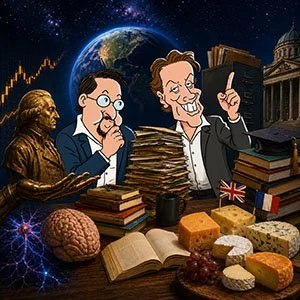
In this episode, Ron and Ed explore a distinction that Peter Drucker saw decades ago but many organizations still struggle to grasp: knowledge workers are fundamentally different from service workers — and managing them the same way is a category error.

Drucker famously wrote, “The most valuable assets of a 21st-century institution (whether business or nonbusiness) will be its knowledge workers and their productivity.” That statement isn’t aspirational — it’s diagnostic. Knowledge workers own the means of production: their minds. They cannot be supervised into excellence, scheduled into creativity, or measured into insight.

Ron and Ed unpack what truly differentiates knowledge work: autonomy over time, responsibility for outcomes rather than tasks, the necessity of continuous learning, and the reality that effectiveness — not efficiency — is the governing metric.

If we continue to treat accountants, consultants, and other professionals as if they were interchangeable labor inputs, we shouldn’t be surprised when engagement drops and innovation stalls. The future belongs to organizations that understand what Drucker meant — and are willing to build differently because of it.

Join us every Friday at 3pm ET / 12pm PT

  • You can watch us live at https://www.thesoulofenterprise.com/live (the podcast is available just a few hours after the show airs live)

  • You can also chat with us during the live stream on your preferred social network. Say hello on Facebook, YouTube, X/Twitter, or LinkedIn

  • Prefer email? Shoot us a note at asktsoe@verasage.com

As always, please check our website for upcoming and previous show notes and recordings, use Twitter to find the show at @AskTSOE or find us on Facebook.

The Soul of Enterprise show hosts, Ron Baker and Ed Kless, are on X (the artist formerly known as Twitter) at @ronaldbaker and @edkless, respectively (and obviously).

Episode #577 - The Profitability Breakthrough: 11th conversation with Joe Woodard

For the eleventh time (because apparently we’re not done yet), Ron and Ed welcome back Joe Woodard to talk about The Profitability Breakthrough, the live workshop they’ll be leading together in May.

This episode goes beyond theory and into architecture. What actually drives profitability in an accounting firm? Is it pricing? Positioning? Capacity? Client selection? Or is it the uncomfortable truth that most firms are solving the wrong problem entirely?

Joe unpacks the core ideas behind the workshop — why incremental tweaks won’t move the needle, how firms get trapped in activity instead of outcomes, and what it takes to engineer a genuine breakthrough rather than another marginal improvement.

If you’ve ever wondered whether profitability is a math problem or a mindset problem, this conversation might make you slightly uncomfortable — which is usually where the good stuff starts.

SHOW NOTES

Segment one

Segment two

  • Ron asked Joe about skim, penetration and neutral pricing with respect to his daughter’s trip to the Manhattan TurboTax store. Here is more info (in general) about these pricing methodologies https://www.culturehive.co.uk/wp-content/uploads/2020/10/Three-Approaches-to-Pricing-Strategy-1.pdf 

  • The Profitability Breakthrough is a workshop for Accounting Firms coming up in May. Ron, Ed, AND Joe will be running the workshop. More information at this link https://thresholdnow.com/woodard 

  • The combination of Ed, Ron, and Joe brings an extremely unique set of perspectives. Joe brings a 20 year ground game in working with individual practitioners and Ron + Ed have been doing pricing research since…….what…..the 1920s? :)  The Profitability Breakthrough is a 3-day event in Las Vegas in May. More information here https://thresholdnow.com/woodard 

  • “There’s nothing so practical as a good theory.” —Ron Baker as quoted by Ed Kless

Segment three

  • “Doctor’s don’t have scope creep.” —Ron Baker

  • Joe mentioned Client Advisory Services during the chat today. I don’t want to assume everyone understand this fully. Here is “4 reasons why CAS offers a compelling career path” from Jean Zick, CPA at this link https://www.journalofaccountancy.com/newsletters/academic-update/4-reasons-why-cas-offers-a-compelling-career-path/

  • “If you want to stay fiercely independent, join an alliance.” —Joe Woodard on how firms can stay independent while not offering an unnecessary grab bag of services to all customers

  • “What could I have saved them if I had been their tax advisor the last 2 years? That’s the key question.” —Joe Woodard

Segment four

Bonus Content is Available As Well

Did you know that each week after our live show, Ron and Ed take to the microphone for a bonus show? Typically, this bonus show is an extension of the live show topic (sometimes even with the same guest) and a few other pieces of news, current events, or things that have caught our attention.

Click the “FANATIC” image to learn more about pricing and member benefits. 

Episode #576 - America at 250 - Part 1: Illiberal Temptations and Enduring Truths

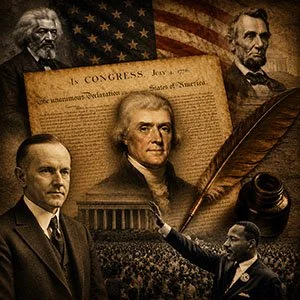
As America approaches its 250th anniversary, Ron and Ed examine three essays that converge on a single question: What actually sustains a free society?

Drawing on Dan McLaughlin’s warning to “Resist the Temptation of Woodrow Wilson”  , they explore the perennial allure of concentrated executive power and the dangers of confusing “solidarity” with strongman governance. From there, they turn to Ayaan Hirsi Ali’s argument that religious liberty was not an afterthought but the Founders’ first freedom, a theological inheritance that constrained power long before modern political theory attempted to. Finally, they consider Yuval Levin’s case for America’s extraordinary institutional durability, a constitutional system designed to frustrate ambition, balance factions, and outlast the apocalyptic mood of any given generation.

Together, these essays raise an uncomfortable but vital tension: liberty requires limits; power must be restrained; and durability depends less on innovation than on fidelity to first principles.

Ron and Ed ask whether America’s strength lies not in bold executive action, nor in nostalgic lament, but in a constitutional architecture sturdy enough to survive our worst instincts — including our periodic desire to abandon it.

SHOW NOTES

Segment one

Segment two

Segment three

Segment four


Bonus Content is Available As Well

Did you know that each week after our live show, Ron and Ed take to the microphone for a bonus show? Typically, this bonus show is an extension of the live show topic (sometimes even with the same guest) and a few other pieces of news, current events, or things that have caught our attention.

Click the “FANATIC” image to learn more about pricing and member benefits. 

Episode #575 - Update on the Direct Primary Care Model: Interview with Dr. Paul Thomas

On this episode of The Soul of Enterprise, we welcome back Dr. Paul Thomas, founder and CEO of Plum Health Direct Primary Care. Since his last visit, Plum Health has expanded to multiple locations, added new physicians, and continued scaling a model that puts relationships—not insurance paperwork—at the center of care.

We’ll get an update on that growth and explore the broader Direct Primary Care (DPC) movement: How fast is it growing? Why are employers and patients embracing it? And is it truly reshaping how healthcare is delivered in America?

We’ll also dig into the regulatory hurdles that still stand in the way—HSA eligibility, state-level rules, and what policy changes could accelerate adoption.

If you care about innovation, subscription models, or the future of healthcare, this conversation is one you won’t want to miss.

SHOW NOTES

Segment one

  • Current state of the DPC movement: 2,919 DPC practices in 50 states. The Direct Primary Care movement is growing! This is a small but mighty group and they are having an out-sized impact on the overall healthcare industry.

  • Regulatory hurdles became much easier in 2025. Congress allowed for businesses to use pre-tax dollars to fund direct primary care services for their employees. Previous to that, it had to be post-tax dollars.

  • We’ve often thought about DPC being great for an individual or freelancer. But a large employer group with 1,000 employees can also take advantage of the DPC business model for their employees which makes healthcare more accessible and convenient.

  • Dr. Paul has a great joke about his DPC practice and what they can / cannot do for you: “If you cut your finger, call me. If you cut your finger off, please go to the emergency department.”

Segment two

  • The average wait time for a DPC doctor is 3 minutes from your arrival.

  • Dr. Paul has grown from 1 to FIVE OFFICES during the course of his business. Scaling a direct primary care practice can and is being done. https://www.plumhealthdpc.com/ 

  • As a result of that growth, Dr. Paul now looks to groups who are self-funded with 500-600 patients in the Detroit or mid-Michigan areas. In addition, he is building near-sight offices based on employee concentrations for specific businesses.

  • “If you’re smart enough to finish med school, gritty enough to get through residency, and passionate enough to have chosen a primary care specialty then you have all the ingredients you need to be a successful DPC doctor and a successful entrepreneur.” —Dr. Paul Thomas, PlumHealth DPC

Segment three

  • Dr. Paul has grown Plum Health to the point where he is now the Chief Medical Officer in the practice and handles the organizational management, culture, and education of the doctors in the practice. 

  • Dr. Paul has a strong vision for Plum Health: We believe healthcare should be affordable, accessible, and excellent for everyone.

  • Dr. Paul mentioned his StartupDPC website during the show today. Here is the link: https://www.startupdpc.com/ 

  • Is AI having an impact on Dr. Paul’s business. Yes, of course. For example, their EMR system allows for the recording of conversations with patients which then makes it easier to create a medical note. The doctor spends some time editing the note and the time savings compounds over the day, week, month, and year.

Segment four

  • Today I learned that some states like Maine have integrated DPC into the primary state healthcare marketplace.

  • During World War II, the federal government introduced wages and price controls. In an effort to continue attracting and retaining employees without violating those controls, employers offered and sponsored health insurance to employees in lieu of gross pay. This was a beginning of the third-party paying system that began to replace direct out-of-pocket payments. https://en.wikipedia.org/wiki/History_of_health_care_reform_in_the_United_States 

  • GREAT point by Dr. Paul today: The use of AI for managing his business can help INFORM his decisions. That’s an important distinction.

  • A big THANK YOU to Dr. Paul Thomas for joining us today. Check out his DPC at this link: https://www.plumhealthdpc.com/ 


Bonus Content is Available As Well

Did you know that each week after our live show, Ron and Ed take to the microphone for a bonus show? Typically, this bonus show is an extension of the live show topic (sometimes even with the same guest) and a few other pieces of news, current events, or things that have caught our attention.

Click the “FANATIC” image to learn more about pricing and member benefits. 

Episode #574 - One Thing: February 2026

Inspired by A.J. Jacobs’ appearance on Russ Roberts’ EconTalk, Ron and Ed have continued their annual tradition of keeping a “One Thing” journal—capturing a single idea each day that sparked insight, curiosity, or reflection. Often it’s a quote; sometimes it’s a question, a concept, or a surprising turn of phrase.

In One Thing 2026, they once again open their journals and share a curated collection of the thoughts that shaped their year. The result may feel delightfully eclectic, but as always, it’s packed with insight—nuggets of wisdom drawn from their reading, listening, and lived experience. Think of it as a guided tour through the ideas that lingered long enough to be written down—and shared.

SHOW NOTES

Segment one

Segment two

Segment three

Segment four

  • The last line In Salman Rushdie’s Victory City (2023): “Nothing endures, but nothing is meaningless either”

  • "We want radical change in search of stability" —Peter Block

  • "The only free cheese is in the mouse trap" (Ukrainian: Безкоштовний сир буває тільки в мишоловці) is a common Eastern European proverb, heavily used in Ukraine, meaning that nothing of value is truly free, and too-good-to-be-true offers often hide dangerous traps or hidden costs. It is the regional equivalent of "there's no such thing as a free lunch". 

  • "Does anyone have any questions for my answers?" —former U.S. Secretary of State Henry Kissinger

  • “Be the person the room who wants to make things easier” —unattributed

Bonus Content is Available As Well

Did you know that each week after our live show, Ron and Ed take to the microphone for a bonus show? Typically, this bonus show is an extension of the live show topic (sometimes even with the same guest) and a few other pieces of news, current events, or things that have caught our attention.

Click the “FANATIC” image to learn more about pricing and member benefits. 

Episode #573 - The Pricing Briefing for 2026

In this pricing update, Ron and Ed take the pulse of what’s happening right now in the world of pricing. From shifting market conditions and inflation narratives to how organizations are responding—or failing to respond—to economic signals, they cut through the noise to focus on what actually matters. The hosts explore common misconceptions, highlight emerging trends, and offer a reality-based perspective on how pricing decisions are being made in today’s uncertain business environment. As always, this isn’t about tactics alone—it’s about thinking clearly, acting intelligently, and restoring pricing to its proper strategic role.

SHOW NOTES

Segment one

Segment two

Segment three

Segment four

Bonus Content is Available As Well

Did you know that each week after our live show, Ron and Ed take to the microphone for a bonus show? Typically, this bonus show is an extension of the live show topic (sometimes even with the same guest) and a few other pieces of news, current events, or things that have caught our attention.

Click the “FANATIC” image to learn more about pricing and member benefits. 

Episode #572 - The Transformation Economy: Third interview with Joe Pine

We’re joined by Joe Pine on January 31, just days before the release of his long-awaited new book, The Transformation Economy (February 4, 2026). For longtime listeners, this conversation will feel both familiar and bracingly new. Familiar because we have spent the last two years exploring, applying, and occasionally interrogating the very ideas Joe now brings together in this book. New because Joe pushes the argument further and with more precision than ever before.

Building on his seminal work on experiences, Joe makes the case that economic value has moved decisively into a new domain: transformations. Not experiences staged for customers, but transformations designed with them—where the explicit aim is lasting change in who the customer is or what they are capable of becoming. That shift, Joe argues, carries profound implications not just for strategy, but for accountability, pricing, and purpose.

This episode is not a book report. It’s a rigorous conversation between fellow travelers who share a vocabulary but are still very much in productive tension. We explore where transformation fits (and doesn’t) in real organizations, why so many firms mistake motivation for method, and why treating transformation as optional is itself a category error.

If you’ve been following our ongoing work on transformation, this episode serves as both a capstone and a catalyst. If you’re new to the idea, consider this your initiation—fair warning: once you see the economy this way, it’s rather difficult to unsee it.

SHOW NOTES

Segment one

  • From Joe Pine at the start of the show: From the agrarian economy to the industrial economy to the service economy to the experience economy. Now consumers want transformative experiences.

  • “Customization is the antidote to commoditization.” —Joe Pine

  • “All transformation is identity change. […] Transformations last through time.” —Joe Pine

  • “Commodity goods and services are time well saved. Experience is time well spent. Transformation is time well invested.” —Joe Pine

Segment two

Segment three

  • Fun fact: Joe Pine used to travel with a gumball machine. Why? When a kid puts a quarter in a gumball machine, the transaction is seldom about the actual gumball so much as it is about watching the colored candy spin down and around the machine until it comes out at the bottom.

  • Why invest in your employees? Because they are just going to leave as they get better, right? The retort to that line of thinking is, “Well, why keep employees that aren’t getting better?”

  • What is one of the data points that tells Joe the transition to the Transformation Economy is working? “I know of hundreds of companies today that charge for outcomes. There should be thousands, tens of thousands.” —Joe Pine

  • Are there any sectors of the economy where there are not likely to be a transformation? “Every time I did that with experiences, someone would correct me.” —Joe Pine

Segment four

  • There is much more context to this quote but here is a snippet to trigger your curiosity: “Abraham Maslow got it wrong. He had, at the top of his pyramid, the self actualization, finding the meaning in life, transcendence…..When meaning is at the bottom of the pyramid.” —Joe Pine

  • A big THANK YOU to Joe Pine for joining us today. The Transformation Economy will be out in 4 days! You can pre-order it now and also check out Joe’s substack at this link https://transformationsbook.substack.com/ 

  • Also check out Strategic Horizons at https://strategichorizons.com/integration/ 

Bonus Content is Available As Well

Did you know that each week after our live show, Ron and Ed take to the microphone for a bonus show? Typically, this bonus show is an extension of the live show topic (sometimes even with the same guest) and a few other pieces of news, current events, or things that have caught our attention.

Click the “FANATIC” image to learn more about pricing and member benefits. 

Episode #571 - Best Books of 2025

It’s time again for our annual Best Books episode, where we sift through a year’s worth of reading (and in some cases listening) and surface the works that actually mattered. Not necessarily the buzziest, the newest, or the most performatively “important,” but the books that made us pause, argue back, reread passages, and rethink assumptions we thought were settled.

As is our custom, we don’t just name titles and move on. We talk about why these books stuck: the questions they asked, the frameworks they offered, and the quiet ways they reshaped how we see the world of business, economics, culture, and human behavior. Some selections clarified things; others productively complicated them. All earned a place in the conversation.

If you’re looking for a thoughtful recap of the ideas that animated our year—or you’re hunting for your next great read—this episode is equal parts reflection, recommendation, and mild intellectual provocation. Consider it our annual reading ledger, balanced not in pages consumed, but in insight accrued.

SHOW NOTES

Segment one:

  • Number 5 best book of the year from Ron: Skunk Works: A Personal Memoir of My Years at Lockheed by Ben Rich https://amzn.to/49ClJrX  

  • Number 5 best book of the year from Ed: Against Empathy: The Case for Rational Compassion – How Emotion Undermines Morality, Justice, and Good Policy by Paul Bloom https://amzn.to/3LQVF3c  

  • Number 4 best book of the year from Ed: The Tyranny of Clichés: How Liberals Cheat in the War of Ideas by Jonah Goldberg https://amzn.to/4qwfoEm  

  • Number 4 best book of the year from Ron: SYSTEMANTICS. THE SYSTEMS BIBLE by John Gall https://amzn.to/45mLbPK 

Segment two:

  • Number 3 best book of the year from Ron: Slow Productivity: The Lost Art of Accomplishment Without Burnout Hardcover by Cal Newport https://amzn.to/3NzoLEM  

  • Number 3 best book of the year from Ed: The Habit of Being: Letters of Flannery O'Connor by Flannery O'Connor https://amzn.to/3NIYhk8  

  • Number 2 best book of the year from Ron: Taking Religion Seriously by Charles Murray https://amzn.to/4qGY0wT

Segment three:

  • Also the number 2 best book of the year from Ron (yes, he picked two number twos): The Immortal Mind: A Neurosurgeon’s Case for the Existence of the Soul by Michael Egnor and Denyse O'Leary https://amzn.to/4pWnjd1 

  • Number 2 best book of the year from Ed: The Age of Entanglement by Louisa Gilder https://amzn.to/4pTQWLS 

Segment four:

  • Number 1 best book of the year from Ed: The Golden Thread: A History of the Western Tradition, Volume I: The Ancient World and Christendom by James Hankins and Allen C. Guelzo https://amzn.to/3NzMUuW  

  • Number 1 best book of the year from Ron: The Way of Medicine: Ethics and the Healing Profession (Notre Dame Studies in Medical Ethics and Bioethics) by Farr Curlin and Christopher Tollefsen https://amzn.to/4a8zejc 

Bonus Content is Available As Well

Did you know that each week after our live show, Ron and Ed take to the microphone for a bonus show? Typically, this bonus show is an extension of the live show topic (sometimes even with the same guest) and a few other pieces of news, current events, or things that have caught our attention.

Click the “FANATIC” image to learn more about pricing and member benefits. 

Episode #570 - From Leo XIII to AI: Ethics Applied for a New Era: Interview with Father Vincent DeRosa

Join Ron and Ed as they sit down with Father Vincent DeRosa for an eye-opening conversation on the enduring relevance of Catholic social teaching in today’s rapidly evolving business landscape. Together, they dive deep into Rerum Novarum, Pope Leo XIII’s seminal encyclical on the rights and duties of capital and labor—exploring its connections to the foundational principles of the free market and contemporary business ethics.

Drawing parallels between the disruptive forces of the Industrial Revolution and the modern AI transformation, the discussion considers how timeless ethical considerations can guide the challenges and opportunities facing businesses today. Discover how the Church’s teachings can provide insight on worker rights, social responsibility, and the delicate balance between innovation and human dignity in the age of artificial intelligence.

Whether you’re a business leader, professional, or curious thinker, this episode offers a thoughtful exploration of the intersection between faith, philosophy, and enterprise, only on The Soul of Enterprise.

SHOW NOTES

Segment one

Segment two

Segment three

  • Father Vincent mentioned Alexis de Tocqueville’s “Democracy in America”. More here: https://en.wikipedia.org/wiki/Democracy_in_America 

  • From Google: Subsidiarity in Catholic Social Teaching (CST) is the principle that decisions and responsibilities should be handled by the smallest, lowest, or least centralized competent authority (like families or local communities) rather than a higher, more distant one, with larger entities only intervening to support and coordinate, not to dominate or replace 

  • What is the connection of the current Pope taking Leo IV compared to Pope Leo XIII? Father Vincent went through a GREAT response today in segment three.

  • Also from the Rerum Novarum, employers are morally bound to respect workers as persons, not treat them as tools for profit. See §20: https://www.vatican.va/content/leo-xiii/en/encyclicals/documents/hf_l-xiii_enc_15051891_rerum-novarum.html#Duties_of_Employers

Segment four

• A big THANK YOU to Father Vincent DeRosa for joining us today! If you are curious, take the time to dig into Rerum Novarum, an encyclical of Pope Leo XIII https://www.vatican.va/content/leo-xiii/en/encyclicals/documents/hf_l-xiii_enc_15051891_rerum-novarum.html 

Bonus Content is Available As Well

Did you know that each week after our live show, Ron and Ed take to the microphone for a bonus show? Typically, this bonus show is an extension of the live show topic (sometimes even with the same guest) and a few other pieces of news, current events, or things that have caught our attention.

Click the “FANATIC” image to learn more about pricing and member benefits. 

Episode #569 - 2025: The Year in Review

In this annual tradition, Ed and Ron look back on 2025, unpacking the year's most impactful trends, business transformations, and economic shifts. From breakthroughs in AI to evolving tax regulations and the latest developments in technology, they reflect on the standout themes that defined this year. Tune in as they explore what these changes mean for the future, the insights gained along the way, and the lessons learned. Perfect for listeners who want to capture the essence of 2025's business landscape in one insightful episode.

SHOW NOTES

Segment one

Going through people we lost in 2025: 

Segment two

Segment three

Segment four

  • 2025 “predictions” and how we did: Ron — Homelessness will receive more media coverage with Trump in office

  • 2025 “predictions” and how we did: Ron — US and world economies would continue to diverge in 2025 

  • 2025 “predictions” and how we did: Ron — Trump will stop subsidizing wind power

  • 2025 “predictions” and how we did: Ed — AI will remain a hot topic and gain momentum

  • 2025 “predictions” and how we did: Ed — Joe Biden would not be the nominee for the Democrats

  • 2025 “predictions” and how we did: Ed — Bitcoin would break $100k for the year and end at $60k

Bonus Content is Available As Well

Did you know that each week after our live show, Ron and Ed take to the microphone for a bonus show? Typically, this bonus show is an extension of the live show topic (sometimes even with the same guest) and a few other pieces of news, current events, or things that have caught our attention.

Click the “FANATIC” image to learn more about pricing and member benefits. 

Episode #568 - Off the Cuff: Fifth Conversation with Greg Kyte

Ron and Ed welcome back Greg Kyte — yes, for the fifth time — because he keeps showing up with something new (and we keep letting him). Greg’s accounting resume is full of the usual letters (CPA, MBA), but his actual story is far from typical: from middle-school math teacher to stand-up comedian to fractional CFO managing medical office buildings. 

Greg doesn’t just talk numbers — he talks character, change, and the weird ways growth happens when you’re willing to laugh at yourself.

SHOW NOTES

Segment one

Segment two

  • Wait? Patreon members get to listen to the back channel conversation during the breaks, including our most recent HIPAA violation? Yes, that is correct. #satire

  • “AI and comedy don’t work out.” —Greg Kyte. Challenge accepted. Please see the next post.

  • From ChatGPT: 

    • Here are a few very “Greg Kyte–style” jokes—dry, self-aware, and poking at accounting ethics:

      • Option 1 (Classic Kyte energy):

        • “I’m a CPA who teaches ethics, which means I spend my days explaining to people why the thing they really want to do is a bad idea.”

      • Option 2 (Accounting pain humor):

        • “People ask why accounting needs ethics. I usually respond, ‘Have you met accountants under deadline?’”

      • Option 3 (Short, social-perfect):

        • “I teach accounting ethics—basically couples therapy, but for CPAs and their conscience.”

      • Option 4 (Comedian crossover):

        • “I used to do stand-up comedy. Now I do accounting ethics. In both jobs, the goal is the same: keep people from making terrible decisions in public.”

      • Option 5 (Very Kyte):

        • “Ethics isn’t about knowing the rules. It’s about knowing which rule you’re going to Google after you get caught.”

  • Here is the Breaking Country song, Walk My Walk. All AI generated. https://www.youtube.com/watch?v=UwKmDH83qo0

Segment three

  • Has Greg Kyte tried to use ChatGPT to create jokes? No. (That is all….just “no”)

  • “My $20 a month subscription to ChatGPT saves me hundreds of dollars and so much time.” —Greg Kyte

  • “I’m seeing in the next 5-10 years a resurgence of people wanting to see live performances […] because they know this is real.” —Ed Kless

  • Meet Tilly Norwood, AI actress: https://www.leagueoffilmmakers.com/meet-tilly-norwood-the-first-ai-actor/ 

Segment four

  • On comedians pushing the bounds more and more today: “Everyone is plugged into their phone so being polarizing doesn’t necessary mean that you don’t have an audience going forward.” —Greg Kyte

  • “If you’re not polarizing then you don’t have a strong opinion. You need to have a strong value proposition, or else you’re just part of the noise.” —Greg Kyte

  • A big THANK YOU to Greg Kyte for joining us. He does SOOOOOO many things. Maybe check him out on X and learn more about Comedy Church (and see it live in the Salt Lake City area) https://www.adambroud.com/comedychurch 

Bonus Content is Available As Well

Did you know that each week after our live show, Ron and Ed take to the microphone for a bonus show? Typically, this bonus show is an extension of the live show topic (sometimes even with the same guest) and a few other pieces of news, current events, or things that have caught our attention.

Click the “FANATIC” image to learn more about pricing and member benefits. 

Episode #567 - Break the Mold: Second interview with Alan Whitman

Ron and Ed welcome back Alan Whitman, former CEO of Baker Tilly and author of the new book Break the Mold. In his second visit to The Soul of Enterprise, we will talk about this book and the mold around the CPA profession. The mold is made up of the common conventions and the long-time operating principles that are shared across organizations. We are sure you will enjoy this in-depth conversation. 

SHOW NOTES

Segment one

Segment two

  • “Strategy is the framework by which you decide where you’re going to make your investments, what type of people and platforms you’re going to have, what type of clientele you are going to attract. So it is the higher level, 30,000-foot framework, from which all of your tractors are built.” —Alan Whitman

  • A great quote from Alan’s new book, Break The Mold: “Discernible transformation rarely happens when you’re confined to the past.” https://www.amazon.com/BREAK-MOLD-ACHIEVE-TRANSFORMATIONAL-SIMULTANEOUSLY/dp/B0FY4RJ2M3 

  • Bravo, Alan! “The past should inform the future because the past is important to how you got here. But it shouldn’t restrict your ability to active those transformational steps towards the future.” —Alan Whitman

  • “We need to permanently change the model and that’s only going to happen at scale if somebody has the guts to break the mold.” —Alan Whitman

Segment three

  • Here’s an example of how Alan was able to affect change in a large firm: “I guaranteed somebody’s compensation for a couple years because I needed them to change out of what was comfortable.” Now THAT is a risk worth taking when you understand your strategy and where the firm is headed.

  • “We’re always afraid of what we’re going to lose versus excited about what we’re going to gain.” —Alan Whitman

  • Peter Drucker never said, “What you can measure, you can manage.” What Drucker did say is what you measure you’ll get. Good and hard. Even it if ruins your business.

  • “That’s the one thing in professional services, in less mature organizations, that I’ve found. Oftentimes, people let things happen to them.” —Alan Whitman

Segment four

Bonus Content is Available As Well

Did you know that each week after our live show, Ron and Ed take to the microphone for a bonus show? Typically, this bonus show is an extension of the live show topic (sometimes even with the same guest) and a few other pieces of news, current events, or things that have caught our attention.

Click the “FANATIC” image to learn more about pricing and member benefits. 

Episode #566 - From Numbers to Narrative: Interview with Dave Fionda

Ron and Ed sit down with entrepreneur, advisor, and educator David Fionda, founder of BizBreakthru.com, to explore what it really takes for business owners to break through their growth ceilings. With decades of experience guiding firms through transformation — from startups to global consultancies — Fionda brings both the discipline of a CPA and the curiosity of a strategist.

They discuss why most advisory work fails to scale, how to turn financial data into decision-making power, and the mindset shifts that separate incremental change from genuine breakthrough. This is a real-world architecture of growth, built from a lifetime of turning insights into action.

SHOW NOTES

Segment one

  • Dave and Ed go back to the late 80s/early 90s. They met in Fargo, North Dakota at a Holiday Inn. Let’s put that on our TSOE Bingo card for a future get together.

  • Dave Fionda on the software sales market: “You’ve gotta be top of mind.”

  • Is “built from the ground up using AI” something that should be considered important in ERP software? “You can over adopt. People get so excited about AI.” —Dave Fionda

  • “It’s not that we are going to fire all the CFOs and say we don’t need them. AI is a tool.” —Dave Fionda

Segment two

  • “Where should the kid go to school? Is he good at math? Yeah. Then he should go to Bentley.” And that’s how Dave became an accountant. Compare and contrast with today’s college admissions process.

  • Bentley was founded as an accounting school. It started in 1917 as the Bentley School of Accounting and Finance, with a first class of just 30 students. Its sole purpose was training accountants.

  • “What the CPA does for you is it gives you a very strong business foundation.” —Dave Fionda

  • What is Dave’s take on the billable hour? “You have go to in the value billing direction.”

Segment three

  • “For most accounting software vendors, 80% of their business comes from 20% of their VARs.” —Dave Fionda 

  • Questions of wisdom from Dave who has a lifetime of sales experience: “What is the opportunity to build a relationship with this customer? How does this potential customer see me?”

  • In a sales conversation: “My mom told me one thing. You have two ears and 1 mouth. So you should be listening twice as often as you should speak.” —Dave Fionda

  • One of Ed’s favorite questions in the sales process: “Do you view us as an extra pair of hands? Do you view us as an expert? Or do you view us as a collaborator?”

Segment four

Bonus Content is Available As Well

Did you know that each week after our live show, Ron and Ed take to the microphone for a bonus show? Typically, this bonus show is an extension of the live show topic (sometimes even with the same guest) and a few other pieces of news, current events, or things that have caught our attention.

Click the “FANATIC” image to learn more about pricing and member benefits. 

Episode #565 - Rethinking the P in PE: Interview with Brent Beshore

NEW SHOW FEATURE: We are now LIVE streaming our shows. Want to join us live? Just click this link every Friday at 3pm ET / 12pm PT.

Ron and Ed sit down with Brent Beshore, founder and CEO of Permanent Equity, to explore a radical rethinking of what “private equity” can mean. Instead of the typical buy-fix-flip model, Beshore’s firm takes a generational approach which involves acquiring businesses to own indefinitely, building value through trust, stewardship, and patient capital.

They discuss why short-term thinking often erodes lasting wealth, how culture can be a company’s greatest moat, and what it takes to invest with humility in a world obsessed with speed. This is private equity with a soul, or as Brent might say, the long-term bet on human potential.

SHOW NOTES

Segment one

Segment two

  • The Messy Marketplace is a book by Brent Beshore that talks a bit about how selling a company involves complex motives and emotions for the owner, not just the price. https://www.permanentequity.com/the-messy-marketplace 

  • “Most private equity is buy, lever, strip, and flip. That’s not investing. That’s engineering a spreadsheet.” —Brent Beshore, Founder of Permanent Equity

  • “Be high integrity and a lot of things just take care of themselves.” —Brent Beshore

  • On the show today Brent said, “We were one of the first people on the internet to start writing about buying and selling small businesses.” And you can find that writing here https://www.permanentequity.com/content 

Segment three

Segment four

  • From Brent’s annual letter last year, “My guess is that 2025 will mark the beginning of widely applicable and highly valuable AI becoming available for those who are paying attention.” But whether or not he still agrees might surprise you. https://www.permanentequity.com/content/2024-annual-letter 

  • On the state of AI today, “It’s not capable of replacing human judgement.” —Brent Beshore

  • Main Street Summit is Brent’s incredible 3-day festival that brings the smartest minds together to speak to topics important to the small and medium sized business community. https://www.mainstreetsummit.com/ 

  • A big THANK YOU to Brent Beshore for joining us today. Permanent Equity is the name of the firm and, as referenced several times today, their content is fantastic! Read more here https://www.permanentequity.com/content 

Bonus Content is Available As Well

Did you know that each week after our live show, Ron and Ed take to the microphone for a bonus show? Typically, this bonus show is an extension of the live show topic (sometimes even with the same guest) and a few other pieces of news, current events, or things that have caught our attention.

Click the “FANATIC” image to learn more about pricing and member benefits. 

Episode #564 - 10x Joe: When Practice Meets Obsession - Tenth interview with Joe Woodard

NEW SHOW FEATURE: We are now LIVE streaming our shows. Want to join us live? Just click this link every Friday at 3pm ET / 12pm PT.

Ron and Ed welcome back Joe Woodard — for the tenth time. Over the years, Joe has joined The Soul of Enterprise to challenge the accounting profession’s comfort zone, rethink practice models, and remind everyone that transformation is never “done.”

In this milestone conversation, they revisit the evolution of Woodard’s mission to help accounting professionals build healthier, more human-centered firms, and how the journey from technician to transformer keeps unfolding. Expect reflection, a few friendly jabs, and, as always, big ideas about the future of advisory work.

SHOW NOTES

Segment one

  • Joe Woodard is back. Let’s get right to it. He’s been using his Vision Pro more and more often. And it has practical purposes. He does WORK ON IT! 

  • When comparing time spent, Joe is spending more time on the Oculus (Meta Quest) than the Vision Pro. It’s not a better device necessarily but the ecosystem is more robust. Black Phone (the new show) is a great example of something Joe has been enjoying on the Oculus.

  • On “AI from the ground up accounting systems”… They are called native AI general ledger solutions. Here is a quick overview from Digits (one of the native AI examples) https://digits.com/blog/ai-accounting-benefits 

Segment two

Segment three

  • What AI tools has Joe been personally using lately? A great quote from Joe: “I haven’t Google’ed anything in months”. 

  • AI and human editorial has become an important tool for the Woodard Report. All use of AI is disclosed with dozens and dozens of rules to help guide the human editorial staff to a refined, finished article. https://report.woodard.com/articles 

  • Just this week, Joe has been experimenting with Articulate 360 https://www.articulate.com/360/ 

  • For a browser, Joe is using Microsoft Edge with Copilot. There are several examples of AI-first browsers out there today from Perplexity to OpenAI to Chrome with Gemini and Edge with Copilot

Segment four

  • “Culture emerges from the system.” —Ron Baker

  • “Culture begins with vision, mission, and purpose.” —Joe Woodard

  • A big THANK YOU to Joe Woodard for joining us for a 10th TIME!!! Scaling New Heights is about six months away. Check out more at this link https://www.woodard.com/scaling-new-heights-2026 

Bonus Content is Available As Well

Did you know that each week after our live show, Ron and Ed take to the microphone for a bonus show? Typically, this bonus show is an extension of the live show topic (sometimes even with the same guest) and a few other pieces of news, current events, or things that have caught our attention.

Click the “FANATIC” image to learn more about pricing and member benefits. 

Episode #563 - Apples, Oranges, and the Illusion of Measurement

NEW SHOW FEATURE: We are now LIVE streaming our shows. Want to join us live? Just click this link every Friday at 3pm ET / 12pm PT.

In this conversation, Ron and Ed take a close look at economist Russ Roberts’ critique of utilitarianism. Can moral choices can be reduced to calculations of pleasure and pain? "No," says Roberts (and say Ron and Ed). Drawing on Roberts’ essay Apples and Oranges, they explore why life’s most important questions resist tidy arithmetic.

Is it possible to weigh justice against joy? Or kindness against efficiency? Ron and Ed unpack the limits of the ledger, where human dignity, love, and meaning refuse to fit neatly into the spreadsheet.

SHOW NOTES

Segment one

Segment two

Segment three

Segment four


Bonus Content is Available As Well

Did you know that each week after our live show, Ron and Ed take to the microphone for a bonus show? Typically, this bonus show is an extension of the live show topic (sometimes even with the same guest) and a few other pieces of news, current events, or things that have caught our attention.

Click the “FANATIC” image to learn more about pricing and member benefits. 

Episode #562 - Phinance, Fans & Fun: The Beancounter Behind the Bananas: Interview with Tim Naddy

NEW SHOW FEATURE: We are now LIVE streaming our shows. Want to join us live? Just click this link every Friday at 3pm ET / 12pm PT.

In this episode, we sit down with Dr. Tim Naddy — CPA, educator, entrepreneur, author-in-the-making — who serves as Vice President of Finance for the Savannah Bananas, a team that’s rewriting the rulebook on sports entertainment.

Tim walks us through how a seemingly wild concept (a baseball team with full-on live-show energy) becomes a serious business by blending financial discipline with big ideas. He unpacks the “diamond and dugout” finance model, the decision to keep merchandise separate from operations, and how the organization turned unlimited food and fan-first pricing into measurable growth.

SHOW NOTES

Segment one

  • Who and WHAT are the Savannah Bananas? https://thesavannahbananas.com/about_us/ 

  • Ed was reminded of The King and His Court / Eddie Feigner when he was first introduced to the Savannah Bananas https://en.wikipedia.org/wiki/Eddie_Feigner 

  • The Banana Ball Championship League is an exhibition league for professional players that was founded by the Savannah Bananas in 2022. The league currently has 6 teams. https://en.wikipedia.org/wiki/Banana_Ball 

  • The Savannah Bananas are decidedly NOT like the Harlem Globetrotters. In fact, the only thing that is fixed for Banana Ball is everything. EXCEPT the actual athletic competition. The game play is legitimate and the outcome is unknown.

Segment two

Segment three

Segment four

  • All you can eat food at Savannah Banana home games was not necessarily something that was planned. But what do you think fans do with the extra dollars? Many of them buy merch. Plus, their kids are well fed instead of grumpy. For Tim it’s all about putting a GREAT experience in front of the fans. “The affordability is part of the reason why we resonate so deeply…” —Dr. Tim Naddy

  • YES! Dr. Tim Naddy did it today. I didn’t think he would but it absolutely made my day. What did he do? He quoted Arrested Development with “There’s always money in the banana stand.”

  • A big THANK YOU to Dr. Tim Naddy for joining us today. There is no cost to join the ticket lottery to see the Savannah Bananas. Here is the link: https://thesavannahbananas.com/tickets/

Bonus Content is Available As Well

Did you know that each week after our live show, Ron and Ed take to the microphone for a bonus show? Typically, this bonus show is an extension of the live show topic (sometimes even with the same guest) and a few other pieces of news, current events, or things that have caught our attention.

Click the “FANATIC” image to learn more about pricing and member benefits. 

Episode #561 - What’s Changing in Pricing? An Update for Professionals

NEW SHOW FEATURE: We are now LIVE streaming our shows. Want to join us live? Just click this link every Friday at 3pm ET / 12pm PT.

In this episode, we return to the pricing front lines. We’ll bring you up to speed on how pricing models are evolving in the experience, knowledge-work, and subscription zones — what’s working, what’s failing, and what you should keep an eye on.

We’ll walk through the shift from “set a price and forget it” to dynamic, value-based, relationship-driven pricing. There will be practical takeaways for service firms, consultancies, and knowledge-work businesses: how to rethink your pricing structure, how to engage clients around value, and how to prepare for what’s next.

Whether you’re revisiting your base pricing, pivoting into subscription or retainer models, or simply looking to tighten up the value conversation — this update is your check-in and wake-up call. Tune in to learn what Ron & Ed have learned (and re-learned) so you don’t repeat the same mistakes.

AI SHOW NOTES (Greg was busy with his new, fancy friends)

Fair Pricing Strategies and Perceptions

Ed and Ron discussed the concept of fair pricing, drawing from a LinkedIn post by Dan Nillo, who emphasized that fair price is a perception rather than a formula. They explored various strategies companies use to make price increases seem fair, such as linking increases to improved services or wages, and the importance of transparency in pricing. Ed expressed skepticism about the need to justify price increases, preferring a straightforward approach, while Ron highlighted the value of storytelling in pricing to manage customer perceptions.

Pricing Strategies and Customer Narratives

Ed and Ron discussed a pricing update from China involving public restroom dispensers that require users to scan a QR code and watch online advertising before releasing toilet paper. They also reviewed various pricing strategies from companies like Patagonia, Apple, and Starbucks, emphasizing how storytelling and emotional appeals can influence pricing in both B2C and B2B contexts. Ron highlighted examples such as Siemens' shift to subscription-based models and Caterpillar's transparent explanation of pricing factors, while Ed noted the importance of repositioning value through narratives that resonate with customers.

Narrative Pricing Strategy Insights

Ed and Ron discussed the importance of narrative in pricing strategies, drawing parallels to Zig Ziglar's teachings and Snap-on Tools' approach of prioritizing quality over price. They explored how personalization and dynamic pricing can boost revenue but emphasized the need to balance this with maintaining customer trust, as excessive surveillance pricing could lead to regulatory issues and erode consumer trust.

Dynamic Pricing Strategy Discussion

Ron and Ed discussed the risks and ethical considerations of using price discrimination tactics, emphasizing the importance of careful implementation and potential public backlash. Ed shared insights from an article by Pascal Yamin on common pitfalls in dynamic pricing, including the "boil the ocean" mistake, the "technology-first trap," and the "vanity metrics problem." They agreed on the need for focused, outcome-based approaches to pricing and highlighted the importance of practical adoption by sales teams. Ron introduced the topic of AI, noting its potential to help reach incorrect conclusions more quickly, and the group agreed to continue the discussion after the break.

AI Pricing Strategy Challenges

Ron and Ed discussed the pitfalls of using AI in pricing strategies, emphasizing that AI can optimize the wrong model and lacks understanding of customer-specific factors. They highlighted the importance of clear strategy, positioning, and human judgment in pricing decisions. Ron shared insights from an article by Mark Stiving on the Compass Framework, which categorizes pricing metrics into inputs, access, activities, outputs, and outcomes, advocating for outcome-based pricing as the holy grail despite its challenges.

AI Monetization in Marketing Agencies

Ron and Ed discussed the impact of AI on professional services, particularly in marketing agencies. They explored how agencies can monetize AI through various pricing models, including output-based pricing, subscription licenses, and focusing on outcomes. They also touched on the importance of convenience in service delivery and the need for firms to move up the value chain to avoid commoditization. The conversation concluded with Ed sharing his experience using an AI tool to rename and renumber podcast episodes, highlighting the potential for AI to automate routine tasks.

Bonus Content is Available As Well

Did you know that each week after our live show, Ron and Ed take to the microphone for a bonus show? Typically, this bonus show is an extension of the live show topic (sometimes even with the same guest) and a few other pieces of news, current events, or things that have caught our attention.

Click the “FANATIC” image to learn more about pricing and member benefits. 

Episode #560 - Kamayan: Interview with Christian Origenes

NEW SHOW FEATURE: We are now LIVE streaming our shows. Want to join us live? Just click this link every Friday at 3pm ET / 12pm PT.

In this episode, Ron and Ed talk with filmmaker Christian Origenes, director of Kamayan — a documentary exploring the heart of Filipino identity through its cuisine. Origenes traces how communal meals, shared by hand on banana leaves, embody the resilience and creativity of the Filipino people.

From the colonial echoes that shaped modern recipes to the new generation reclaiming ancestral flavors, Kamayan reveals food as both memory and bridge — connecting homeland Filipinos, diaspora communities, and those just beginning to rediscover their roots.

Ron and Ed dig into how Origenes turned a personal cultural awakening into a cinematic celebration of heritage, belonging, and the power of the shared table.

SHOW NOTES

Segment one

Segment two

  • So how does empathy relate to business? Paul Bloom, author or Against Empathy, suggests that empathy leads to more kindness. However, if you made a sadist more empathetic, it would just lead to a happier sadist.

  • “People who literally experience others’ feelings are either characters in novels or nuts. Empathy is either an affectation, a literary device, or a delusion. Political empathy usually is an affectation, a pose assumed to mask nakedly political ends.” —Kevin Williamson in the article in the link https://www.nationalreview.com/magazine/2012/12/17/against-empathy/ 

  • Today I learned that Counselor Deanna Troi in Star Trek: The Next Generation is a half-human, half-Betazoid empath who can sense the emotions of others. Her empathic abilities were a key part of her role as the ship's counselor.

  • Also from Kevin’s article: “Empathy, or the imitation of empathy, entirely negates the need for argument in a great many circumstances.”

Segment three

  • Paul Bloom, the author of Against Empathy, was on Russ Robert’s podcast a few years ago. https://www.econtalk.org/paul-bloom-on-empathy/ 

  • “Or consider why economics is sometimes called “the dismal science.” It’s a derogatory description thought up by Thomas Carlyle in the 1800s, coined to draw a contrast with the “gay science” of music and poetry: “Not a ‘gay science,’ I should say, like some we have heard of; no, a dreary, desolate and, indeed, quite abject and distressing one; what we might call, by way of eminence, the dismal science.” ― Paul Bloom, Against Empathy: The Case for Rational Compassion

  • “Who would be more useful to an unemployed man: a man who knows what it is like to be unemployed, through long personal experience, or a man who never has been unemployed, because he built a business and employed himself? The main problems of the poor and unemployed do not include a shortage of people able to commiserate with them” —Kevin Williamson in his article titled Against Empathy https://www.nationalreview.com/magazine/2012/12/17/against-empathy/ 

  • Here is the other side of the empathy argument that we discussed on the show today: “Is empathy a sin? Some conservative Christians argue it can be” https://www.pressdemocrat.com/2025/08/21/is-empathy-a-sin-some-conservative-christians-argue-it-can-be/ 

Segment four

Bonus Content is Available As Well

Did you know that each week after our live show, Ron and Ed take to the microphone for a bonus show? Typically, this bonus show is an extension of the live show topic (sometimes even with the same guest) and a few other pieces of news, current events, or things that have caught our attention.

Click the “FANATIC” image to learn more about pricing and member benefits. 

Episode #559 - Against Empathy

NEW SHOW FEATURE: We are now LIVE streaming our shows. Want to join us live? Just click this link every Friday at 3pm ET / 12pm PT.

In this episode of The Soul of Enterprise, Ron and Ed take on one of the most cherished virtues of our age — empathy — and ask whether it really belongs at the heart of moral or political reasoning.

Drawing on Kevin D. Williamson’s National Review essay “Against Empathy,” they explore his case that empathy, far from being a moral compass, often clouds judgment and replaces argument with feeling. Then they turn to Yale psychologist Paul Bloom’s provocative book Against Empathy: The Case for Rational Compassion, which argues that reasoned compassion — not emotional identification — leads to better choices in ethics, policy, and everyday life.

From the courts to the classroom to the marketplace, Ron and Ed ask: what happens when emotion overrules principle? And what might a society guided by rational compassion look like instead?

SHOW NOTES

Segment one

Segment two

  • So how does empathy relate to business? Paul Bloom, author or Against Empathy, suggests that empathy leads to more kindness. However, if you made a sadist more empathetic, it would just lead to a happier sadist.

  • “People who literally experience others’ feelings are either characters in novels or nuts. Empathy is either an affectation, a literary device, or a delusion. Political empathy usually is an affectation, a pose assumed to mask nakedly political ends.” —Kevin Williamson in the article in the link https://www.nationalreview.com/magazine/2012/12/17/against-empathy/ 

  • Today I learned that Counselor Deanna Troi in Star Trek: The Next Generation is a half-human, half-Betazoid empath who can sense the emotions of others. Her empathic abilities were a key part of her role as the ship's counselor.

  • Also from Kevin’s article: “Empathy, or the imitation of empathy, entirely negates the need for argument in a great many circumstances.”

Segment three

  • Paul Bloom, the author of Against Empathy, was on Russ Robert’s podcast a few years ago. https://www.econtalk.org/paul-bloom-on-empathy/ 

  • “Or consider why economics is sometimes called “the dismal science.” It’s a derogatory description thought up by Thomas Carlyle in the 1800s, coined to draw a contrast with the “gay science” of music and poetry: “Not a ‘gay science,’ I should say, like some we have heard of; no, a dreary, desolate and, indeed, quite abject and distressing one; what we might call, by way of eminence, the dismal science.” ― Paul Bloom, Against Empathy: The Case for Rational Compassion

  • “Who would be more useful to an unemployed man: a man who knows what it is like to be unemployed, through long personal experience, or a man who never has been unemployed, because he built a business and employed himself? The main problems of the poor and unemployed do not include a shortage of people able to commiserate with them” —Kevin Williamson in his article titled Against Empathy https://www.nationalreview.com/magazine/2012/12/17/against-empathy/ 

  • Here is the other side of the empathy argument that we discussed on the show today: “Is empathy a sin? Some conservative Christians argue it can be” https://www.pressdemocrat.com/2025/08/21/is-empathy-a-sin-some-conservative-christians-argue-it-can-be/ 

Segment four

Bonus Content is Available As Well

Did you know that each week after our live show, Ron and Ed take to the microphone for a bonus show? Typically, this bonus show is an extension of the live show topic (sometimes even with the same guest) and a few other pieces of news, current events, or things that have caught our attention.

Click the “FANATIC” image to learn more about pricing and member benefits.