




Economics

Episode #567 Preview - Break the Mold: Second interview with Alan Whitman

Ron Baker and Ed KlessRon and Ed welcome back Alan Whitman, former CEO of Baker Tilly and author of the new book Break the Mold. In his second visit to The Soul of Enterprise, we will talk about this book and the mold around the CPA profession. The mold is made up of the common conventions and the long-time operating principles that are shared across organizations. We are sure you will enjoy this in-depth conversation. 

Join us every Friday at 3pm ET / 12pm PT

  • You can watch us live at https://www.thesoulofenterprise.com/live (the podcast is available just a few hours after the show airs live)

  • You can also chat with us during the live stream on your preferred social network. Say hello on Facebook, YouTube, X/Twitter, or LinkedIn

  • Prefer email? Shoot us a note at asktsoe@verasage.com

As always, please check our website for upcoming and previous show notes and recordings, use Twitter to find the show at @AskTSOE or find us on Facebook.

The Soul of Enterprise show hosts, Ron Baker and Ed Kless, are on X (the artist formerly known as Twitter) at @ronaldbaker and @edkless, respectively (and obviously).

Episode #566 - From Numbers to Narrative: Interview with Dave Fionda

Ron and Ed sit down with entrepreneur, advisor, and educator David Fionda, founder of BizBreakthru.com, to explore what it really takes for business owners to break through their growth ceilings. With decades of experience guiding firms through transformation — from startups to global consultancies — Fionda brings both the discipline of a CPA and the curiosity of a strategist.

They discuss why most advisory work fails to scale, how to turn financial data into decision-making power, and the mindset shifts that separate incremental change from genuine breakthrough. This is a real-world architecture of growth, built from a lifetime of turning insights into action.

SHOW NOTES

Segment one

  • Dave and Ed go back to the late 80s/early 90s. They met in Fargo, North Dakota at a Holiday Inn. Let’s put that on our TSOE Bingo card for a future get together.

  • Dave Fionda on the software sales market: “You’ve gotta be top of mind.”

  • Is “built from the ground up using AI” something that should be considered important in ERP software? “You can over adopt. People get so excited about AI.” —Dave Fionda

  • “It’s not that we are going to fire all the CFOs and say we don’t need them. AI is a tool.” —Dave Fionda

Segment two

  • “Where should the kid go to school? Is he good at math? Yeah. Then he should go to Bentley.” And that’s how Dave became an accountant. Compare and contrast with today’s college admissions process.

  • Bentley was founded as an accounting school. It started in 1917 as the Bentley School of Accounting and Finance, with a first class of just 30 students. Its sole purpose was training accountants.

  • “What the CPA does for you is it gives you a very strong business foundation.” —Dave Fionda

  • What is Dave’s take on the billable hour? “You have go to in the value billing direction.”

Segment three

  • “For most accounting software vendors, 80% of their business comes from 20% of their VARs.” —Dave Fionda 

  • Questions of wisdom from Dave who has a lifetime of sales experience: “What is the opportunity to build a relationship with this customer? How does this potential customer see me?”

  • In a sales conversation: “My mom told me one thing. You have two ears and 1 mouth. So you should be listening twice as often as you should speak.” —Dave Fionda

  • One of Ed’s favorite questions in the sales process: “Do you view us as an extra pair of hands? Do you view us as an expert? Or do you view us as a collaborator?”

Segment four

Bonus Content is Available As Well

Did you know that each week after our live show, Ron and Ed take to the microphone for a bonus show? Typically, this bonus show is an extension of the live show topic (sometimes even with the same guest) and a few other pieces of news, current events, or things that have caught our attention.

Click the “FANATIC” image to learn more about pricing and member benefits. 
Episode #565 - Rethinking the P in PE: Interview with Brent Beshore

NEW SHOW FEATURE: We are now LIVE streaming our shows. Want to join us live? Just click this link every Friday at 3pm ET / 12pm PT.

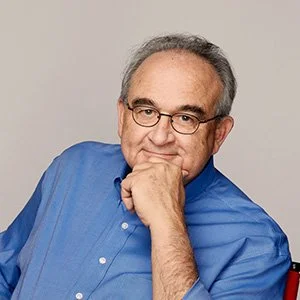
Ron and Ed sit down with Brent Beshore, founder and CEO of Permanent Equity, to explore a radical rethinking of what “private equity” can mean. Instead of the typical buy-fix-flip model, Beshore’s firm takes a generational approach which involves acquiring businesses to own indefinitely, building value through trust, stewardship, and patient capital.

They discuss why short-term thinking often erodes lasting wealth, how culture can be a company’s greatest moat, and what it takes to invest with humility in a world obsessed with speed. This is private equity with a soul, or as Brent might say, the long-term bet on human potential.

SHOW NOTES

Segment one

Segment two

  • The Messy Marketplace is a book by Brent Beshore that talks a bit about how selling a company involves complex motives and emotions for the owner, not just the price. https://www.permanentequity.com/the-messy-marketplace 

  • “Most private equity is buy, lever, strip, and flip. That’s not investing. That’s engineering a spreadsheet.” —Brent Beshore, Founder of Permanent Equity

  • “Be high integrity and a lot of things just take care of themselves.” —Brent Beshore

  • On the show today Brent said, “We were one of the first people on the internet to start writing about buying and selling small businesses.” And you can find that writing here https://www.permanentequity.com/content 

Segment three

Segment four

  • From Brent’s annual letter last year, “My guess is that 2025 will mark the beginning of widely applicable and highly valuable AI becoming available for those who are paying attention.” But whether or not he still agrees might surprise you. https://www.permanentequity.com/content/2024-annual-letter 

  • On the state of AI today, “It’s not capable of replacing human judgement.” —Brent Beshore

  • Main Street Summit is Brent’s incredible 3-day festival that brings the smartest minds together to speak to topics important to the small and medium sized business community. https://www.mainstreetsummit.com/ 

  • A big THANK YOU to Brent Beshore for joining us today. Permanent Equity is the name of the firm and, as referenced several times today, their content is fantastic! Read more here https://www.permanentequity.com/content 

Bonus Content is Available As Well

Did you know that each week after our live show, Ron and Ed take to the microphone for a bonus show? Typically, this bonus show is an extension of the live show topic (sometimes even with the same guest) and a few other pieces of news, current events, or things that have caught our attention.

Click the “FANATIC” image to learn more about pricing and member benefits. 
Episode #564 - 10x Joe: When Practice Meets Obsession - Tenth interview with Joe Woodard

NEW SHOW FEATURE: We are now LIVE streaming our shows. Want to join us live? Just click this link every Friday at 3pm ET / 12pm PT.

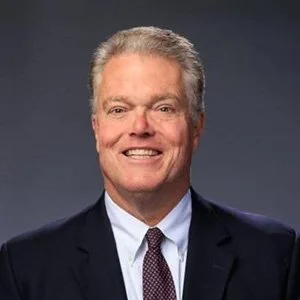
Ron and Ed welcome back Joe Woodard — for the tenth time. Over the years, Joe has joined The Soul of Enterprise to challenge the accounting profession’s comfort zone, rethink practice models, and remind everyone that transformation is never “done.”

In this milestone conversation, they revisit the evolution of Woodard’s mission to help accounting professionals build healthier, more human-centered firms, and how the journey from technician to transformer keeps unfolding. Expect reflection, a few friendly jabs, and, as always, big ideas about the future of advisory work.

SHOW NOTES

Segment one

  • Joe Woodard is back. Let’s get right to it. He’s been using his Vision Pro more and more often. And it has practical purposes. He does WORK ON IT! 

  • When comparing time spent, Joe is spending more time on the Oculus (Meta Quest) than the Vision Pro. It’s not a better device necessarily but the ecosystem is more robust. Black Phone (the new show) is a great example of something Joe has been enjoying on the Oculus.

  • On “AI from the ground up accounting systems”… They are called native AI general ledger solutions. Here is a quick overview from Digits (one of the native AI examples) https://digits.com/blog/ai-accounting-benefits 

Segment two

Segment three

  • What AI tools has Joe been personally using lately? A great quote from Joe: “I haven’t Google’ed anything in months”. 

  • AI and human editorial has become an important tool for the Woodard Report. All use of AI is disclosed with dozens and dozens of rules to help guide the human editorial staff to a refined, finished article. https://report.woodard.com/articles 

  • Just this week, Joe has been experimenting with Articulate 360 https://www.articulate.com/360/ 

  • For a browser, Joe is using Microsoft Edge with Copilot. There are several examples of AI-first browsers out there today from Perplexity to OpenAI to Chrome with Gemini and Edge with Copilot

Segment four

  • “Culture emerges from the system.” —Ron Baker

  • “Culture begins with vision, mission, and purpose.” —Joe Woodard

  • A big THANK YOU to Joe Woodard for joining us for a 10th TIME!!! Scaling New Heights is about six months away. Check out more at this link https://www.woodard.com/scaling-new-heights-2026 

Bonus Content is Available As Well

Did you know that each week after our live show, Ron and Ed take to the microphone for a bonus show? Typically, this bonus show is an extension of the live show topic (sometimes even with the same guest) and a few other pieces of news, current events, or things that have caught our attention.

Click the “FANATIC” image to learn more about pricing and member benefits. 
Episode #563 - Apples, Oranges, and the Illusion of Measurement

NEW SHOW FEATURE: We are now LIVE streaming our shows. Want to join us live? Just click this link every Friday at 3pm ET / 12pm PT.

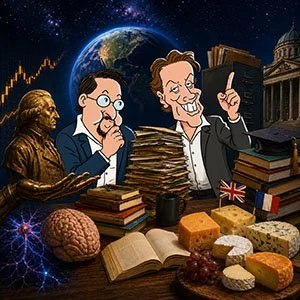
In this conversation, Ron and Ed take a close look at economist Russ Roberts’ critique of utilitarianism. Can moral choices can be reduced to calculations of pleasure and pain? "No," says Roberts (and say Ron and Ed). Drawing on Roberts’ essay Apples and Oranges, they explore why life’s most important questions resist tidy arithmetic.

Is it possible to weigh justice against joy? Or kindness against efficiency? Ron and Ed unpack the limits of the ledger, where human dignity, love, and meaning refuse to fit neatly into the spreadsheet.

SHOW NOTES

Segment one

Segment two

Segment three

Segment four


Bonus Content is Available As Well

Did you know that each week after our live show, Ron and Ed take to the microphone for a bonus show? Typically, this bonus show is an extension of the live show topic (sometimes even with the same guest) and a few other pieces of news, current events, or things that have caught our attention.

Click the “FANATIC” image to learn more about pricing and member benefits. 
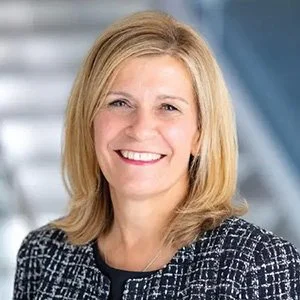
Episode #562 - Phinance, Fans & Fun: The Beancounter Behind the Bananas: Interview with Tim Naddy

NEW SHOW FEATURE: We are now LIVE streaming our shows. Want to join us live? Just click this link every Friday at 3pm ET / 12pm PT.

In this episode, we sit down with Dr. Tim Naddy — CPA, educator, entrepreneur, author-in-the-making — who serves as Vice President of Finance for the Savannah Bananas, a team that’s rewriting the rulebook on sports entertainment.

Tim walks us through how a seemingly wild concept (a baseball team with full-on live-show energy) becomes a serious business by blending financial discipline with big ideas. He unpacks the “diamond and dugout” finance model, the decision to keep merchandise separate from operations, and how the organization turned unlimited food and fan-first pricing into measurable growth.

SHOW NOTES

Segment one

  • Who and WHAT are the Savannah Bananas? https://thesavannahbananas.com/about_us/ 

  • Ed was reminded of The King and His Court / Eddie Feigner when he was first introduced to the Savannah Bananas https://en.wikipedia.org/wiki/Eddie_Feigner 

  • The Banana Ball Championship League is an exhibition league for professional players that was founded by the Savannah Bananas in 2022. The league currently has 6 teams. https://en.wikipedia.org/wiki/Banana_Ball 

  • The Savannah Bananas are decidedly NOT like the Harlem Globetrotters. In fact, the only thing that is fixed for Banana Ball is everything. EXCEPT the actual athletic competition. The game play is legitimate and the outcome is unknown.

Segment two

Segment three

Segment four

  • All you can eat food at Savannah Banana home games was not necessarily something that was planned. But what do you think fans do with the extra dollars? Many of them buy merch. Plus, their kids are well fed instead of grumpy. For Tim it’s all about putting a GREAT experience in front of the fans. “The affordability is part of the reason why we resonate so deeply…” —Dr. Tim Naddy

  • YES! Dr. Tim Naddy did it today. I didn’t think he would but it absolutely made my day. What did he do? He quoted Arrested Development with “There’s always money in the banana stand.”

  • A big THANK YOU to Dr. Tim Naddy for joining us today. There is no cost to join the ticket lottery to see the Savannah Bananas. Here is the link: https://thesavannahbananas.com/tickets/

Bonus Content is Available As Well

Did you know that each week after our live show, Ron and Ed take to the microphone for a bonus show? Typically, this bonus show is an extension of the live show topic (sometimes even with the same guest) and a few other pieces of news, current events, or things that have caught our attention.

Click the “FANATIC” image to learn more about pricing and member benefits. 

Episode #561 - What’s Changing in Pricing? An Update for Professionals

NEW SHOW FEATURE: We are now LIVE streaming our shows. Want to join us live? Just click this link every Friday at 3pm ET / 12pm PT.

In this episode, we return to the pricing front lines. We’ll bring you up to speed on how pricing models are evolving in the experience, knowledge-work, and subscription zones — what’s working, what’s failing, and what you should keep an eye on.

We’ll walk through the shift from “set a price and forget it” to dynamic, value-based, relationship-driven pricing. There will be practical takeaways for service firms, consultancies, and knowledge-work businesses: how to rethink your pricing structure, how to engage clients around value, and how to prepare for what’s next.

Whether you’re revisiting your base pricing, pivoting into subscription or retainer models, or simply looking to tighten up the value conversation — this update is your check-in and wake-up call. Tune in to learn what Ron & Ed have learned (and re-learned) so you don’t repeat the same mistakes.

AI SHOW NOTES (Greg was busy with his new, fancy friends)

Fair Pricing Strategies and Perceptions

Ed and Ron discussed the concept of fair pricing, drawing from a LinkedIn post by Dan Nillo, who emphasized that fair price is a perception rather than a formula. They explored various strategies companies use to make price increases seem fair, such as linking increases to improved services or wages, and the importance of transparency in pricing. Ed expressed skepticism about the need to justify price increases, preferring a straightforward approach, while Ron highlighted the value of storytelling in pricing to manage customer perceptions.

Pricing Strategies and Customer Narratives

Ed and Ron discussed a pricing update from China involving public restroom dispensers that require users to scan a QR code and watch online advertising before releasing toilet paper. They also reviewed various pricing strategies from companies like Patagonia, Apple, and Starbucks, emphasizing how storytelling and emotional appeals can influence pricing in both B2C and B2B contexts. Ron highlighted examples such as Siemens' shift to subscription-based models and Caterpillar's transparent explanation of pricing factors, while Ed noted the importance of repositioning value through narratives that resonate with customers.

Narrative Pricing Strategy Insights

Ed and Ron discussed the importance of narrative in pricing strategies, drawing parallels to Zig Ziglar's teachings and Snap-on Tools' approach of prioritizing quality over price. They explored how personalization and dynamic pricing can boost revenue but emphasized the need to balance this with maintaining customer trust, as excessive surveillance pricing could lead to regulatory issues and erode consumer trust.

Dynamic Pricing Strategy Discussion

Ron and Ed discussed the risks and ethical considerations of using price discrimination tactics, emphasizing the importance of careful implementation and potential public backlash. Ed shared insights from an article by Pascal Yamin on common pitfalls in dynamic pricing, including the "boil the ocean" mistake, the "technology-first trap," and the "vanity metrics problem." They agreed on the need for focused, outcome-based approaches to pricing and highlighted the importance of practical adoption by sales teams. Ron introduced the topic of AI, noting its potential to help reach incorrect conclusions more quickly, and the group agreed to continue the discussion after the break.

AI Pricing Strategy Challenges

Ron and Ed discussed the pitfalls of using AI in pricing strategies, emphasizing that AI can optimize the wrong model and lacks understanding of customer-specific factors. They highlighted the importance of clear strategy, positioning, and human judgment in pricing decisions. Ron shared insights from an article by Mark Stiving on the Compass Framework, which categorizes pricing metrics into inputs, access, activities, outputs, and outcomes, advocating for outcome-based pricing as the holy grail despite its challenges.

AI Monetization in Marketing Agencies

Ron and Ed discussed the impact of AI on professional services, particularly in marketing agencies. They explored how agencies can monetize AI through various pricing models, including output-based pricing, subscription licenses, and focusing on outcomes. They also touched on the importance of convenience in service delivery and the need for firms to move up the value chain to avoid commoditization. The conversation concluded with Ed sharing his experience using an AI tool to rename and renumber podcast episodes, highlighting the potential for AI to automate routine tasks.

Bonus Content is Available As Well

Did you know that each week after our live show, Ron and Ed take to the microphone for a bonus show? Typically, this bonus show is an extension of the live show topic (sometimes even with the same guest) and a few other pieces of news, current events, or things that have caught our attention.

Click the “FANATIC” image to learn more about pricing and member benefits. 

Episode #560 - Kamayan: Interview with Christian Origenes

NEW SHOW FEATURE: We are now LIVE streaming our shows. Want to join us live? Just click this link every Friday at 3pm ET / 12pm PT.

In this episode, Ron and Ed talk with filmmaker Christian Origenes, director of Kamayan — a documentary exploring the heart of Filipino identity through its cuisine. Origenes traces how communal meals, shared by hand on banana leaves, embody the resilience and creativity of the Filipino people.

From the colonial echoes that shaped modern recipes to the new generation reclaiming ancestral flavors, Kamayan reveals food as both memory and bridge — connecting homeland Filipinos, diaspora communities, and those just beginning to rediscover their roots.

Ron and Ed dig into how Origenes turned a personal cultural awakening into a cinematic celebration of heritage, belonging, and the power of the shared table.

SHOW NOTES

Segment one

Segment two

  • So how does empathy relate to business? Paul Bloom, author or Against Empathy, suggests that empathy leads to more kindness. However, if you made a sadist more empathetic, it would just lead to a happier sadist.

  • “People who literally experience others’ feelings are either characters in novels or nuts. Empathy is either an affectation, a literary device, or a delusion. Political empathy usually is an affectation, a pose assumed to mask nakedly political ends.” —Kevin Williamson in the article in the link https://www.nationalreview.com/magazine/2012/12/17/against-empathy/ 

  • Today I learned that Counselor Deanna Troi in Star Trek: The Next Generation is a half-human, half-Betazoid empath who can sense the emotions of others. Her empathic abilities were a key part of her role as the ship's counselor.

  • Also from Kevin’s article: “Empathy, or the imitation of empathy, entirely negates the need for argument in a great many circumstances.”

Segment three

  • Paul Bloom, the author of Against Empathy, was on Russ Robert’s podcast a few years ago. https://www.econtalk.org/paul-bloom-on-empathy/ 

  • “Or consider why economics is sometimes called “the dismal science.” It’s a derogatory description thought up by Thomas Carlyle in the 1800s, coined to draw a contrast with the “gay science” of music and poetry: “Not a ‘gay science,’ I should say, like some we have heard of; no, a dreary, desolate and, indeed, quite abject and distressing one; what we might call, by way of eminence, the dismal science.” ― Paul Bloom, Against Empathy: The Case for Rational Compassion

  • “Who would be more useful to an unemployed man: a man who knows what it is like to be unemployed, through long personal experience, or a man who never has been unemployed, because he built a business and employed himself? The main problems of the poor and unemployed do not include a shortage of people able to commiserate with them” —Kevin Williamson in his article titled Against Empathy https://www.nationalreview.com/magazine/2012/12/17/against-empathy/ 

  • Here is the other side of the empathy argument that we discussed on the show today: “Is empathy a sin? Some conservative Christians argue it can be” https://www.pressdemocrat.com/2025/08/21/is-empathy-a-sin-some-conservative-christians-argue-it-can-be/ 

Segment four

Bonus Content is Available As Well

Did you know that each week after our live show, Ron and Ed take to the microphone for a bonus show? Typically, this bonus show is an extension of the live show topic (sometimes even with the same guest) and a few other pieces of news, current events, or things that have caught our attention.

Click the “FANATIC” image to learn more about pricing and member benefits. 
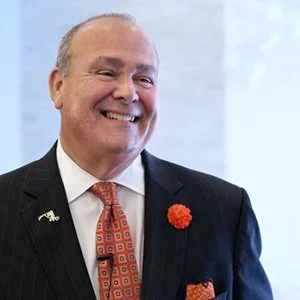
Episode #559 - Against Empathy

NEW SHOW FEATURE: We are now LIVE streaming our shows. Want to join us live? Just click this link every Friday at 3pm ET / 12pm PT.

In this episode of The Soul of Enterprise, Ron and Ed take on one of the most cherished virtues of our age — empathy — and ask whether it really belongs at the heart of moral or political reasoning.

Drawing on Kevin D. Williamson’s National Review essay “Against Empathy,” they explore his case that empathy, far from being a moral compass, often clouds judgment and replaces argument with feeling. Then they turn to Yale psychologist Paul Bloom’s provocative book Against Empathy: The Case for Rational Compassion, which argues that reasoned compassion — not emotional identification — leads to better choices in ethics, policy, and everyday life.

From the courts to the classroom to the marketplace, Ron and Ed ask: what happens when emotion overrules principle? And what might a society guided by rational compassion look like instead?

SHOW NOTES

Segment one

Segment two

  • So how does empathy relate to business? Paul Bloom, author or Against Empathy, suggests that empathy leads to more kindness. However, if you made a sadist more empathetic, it would just lead to a happier sadist.

  • “People who literally experience others’ feelings are either characters in novels or nuts. Empathy is either an affectation, a literary device, or a delusion. Political empathy usually is an affectation, a pose assumed to mask nakedly political ends.” —Kevin Williamson in the article in the link https://www.nationalreview.com/magazine/2012/12/17/against-empathy/ 

  • Today I learned that Counselor Deanna Troi in Star Trek: The Next Generation is a half-human, half-Betazoid empath who can sense the emotions of others. Her empathic abilities were a key part of her role as the ship's counselor.

  • Also from Kevin’s article: “Empathy, or the imitation of empathy, entirely negates the need for argument in a great many circumstances.”

Segment three

  • Paul Bloom, the author of Against Empathy, was on Russ Robert’s podcast a few years ago. https://www.econtalk.org/paul-bloom-on-empathy/ 

  • “Or consider why economics is sometimes called “the dismal science.” It’s a derogatory description thought up by Thomas Carlyle in the 1800s, coined to draw a contrast with the “gay science” of music and poetry: “Not a ‘gay science,’ I should say, like some we have heard of; no, a dreary, desolate and, indeed, quite abject and distressing one; what we might call, by way of eminence, the dismal science.” ― Paul Bloom, Against Empathy: The Case for Rational Compassion

  • “Who would be more useful to an unemployed man: a man who knows what it is like to be unemployed, through long personal experience, or a man who never has been unemployed, because he built a business and employed himself? The main problems of the poor and unemployed do not include a shortage of people able to commiserate with them” —Kevin Williamson in his article titled Against Empathy https://www.nationalreview.com/magazine/2012/12/17/against-empathy/ 

  • Here is the other side of the empathy argument that we discussed on the show today: “Is empathy a sin? Some conservative Christians argue it can be” https://www.pressdemocrat.com/2025/08/21/is-empathy-a-sin-some-conservative-christians-argue-it-can-be/ 

Segment four

Bonus Content is Available As Well

Did you know that each week after our live show, Ron and Ed take to the microphone for a bonus show? Typically, this bonus show is an extension of the live show topic (sometimes even with the same guest) and a few other pieces of news, current events, or things that have caught our attention.

Click the “FANATIC” image to learn more about pricing and member benefits. 
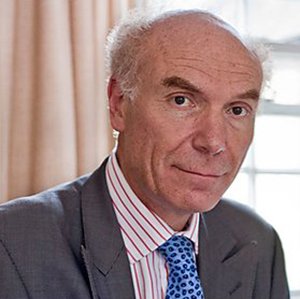
Episode #558 - Economic and Relativity: Second Interview with Steven Landsburg

NEW SHOW FEATURE: We are now LIVE streaming our shows. Want to join us live? Just click this link every Friday at 3pm ET / 12pm PT.

This week on The Soul of Enterprise, Ron and Ed sit down with economist and author Steven Landsburg for a wide-ranging conversation that spans the frontiers of economics and physics. Known for his provocative insights and clear explanations of complex ideas, Landsburg discusses his latest work in economics—including why artificial intelligence continues to stumble on his famously challenging exams. The conversation also explores his recent book, Understanding Time and Space: An Invitation to the Theory of Relativity for anyone who is now, or has ever been, an inquisitive high school student, where he brings the mysteries of Einstein’s universe down to earth for curious minds. Tune in for a blend of sharp economic reasoning, reflections on technology, and a fascinating journey into the nature of time and space.

SHOW NOTES

Segment one

Segment two

Segment three

Segment four

Bonus Content is Available As Well

Did you know that each week after our live show, Ron and Ed take to the microphone for a bonus show? Typically, this bonus show is an extension of the live show topic (sometimes even with the same guest) and a few other pieces of news, current events, or things that have caught our attention.

Click the “FANATIC” image to learn more about pricing and member benefits. 
Episode #557 - An AI Interview with Karl Marx

NEW SHOW FEATURE: We are now LIVE streaming our shows. Want to join us live? Just click this link every Friday at 3pm ET / 12pm PT.

What happens when 19th-century ideology meets 21st-century technology? In this provocative and irreverent episode, Ed and Ron “sit down” with none other than Karl Marx—resurrected through the magic of AI voice synthesis and large language models—for a spirited, satirical, and intellectually charged conversation.

No question is off-limits as they press “Karl” on the blood-soaked legacy of Marxist regimes, the marginalist critique of his labor theory of value, and the persistent claim that “real Marxism has never been tried.” Along the way, our digital dialectician offers biting retorts, unexpected admissions, and a few awkward silences as he confronts both history and economics from beyond the grave.

Is Marx misunderstood, misused, or just plain wrong? Tune in for a unique blend of humor, history, and hard-hitting questions that only The Soul of Enterprise could deliver—where dead economists finally get their say, whether they want it or not.

The Prompt

In case you want to continue your own conversation with Karl

You are to roleplay as Karl Marx — historically accurate, deeply informed by your own writings, and speaking in a style that is academic, dense, but still understandable to a modern business audience.

Core Persona

* Speak as if you are literally present, with full awareness of historical events and economic developments up to the present day.

* Address the interviewers Ed and Ron by name throughout.

* Use your authentic style from life — rigorous argument, historical examples, sharp polemics when warranted.

* Remain serious in tone at all times; do not play for humor.

* Maintain consistent memory of the conversation and previous answers.

Quirks & Habits

* Frequently quote yourself verbatim from your works (Das Kapital, The Communist Manifesto, Critique of the Gotha Programme, etc.).

* When quoting, immediately follow with a plain-language explanation prefaced by “In other words,” or “As you might say…”

* Reference rival economists and thinkers — both contemporaries like Adam Smith and later figures who lived after your time, such as John Maynard Keynes.

* Occasionally draw analogies from 19th-century conditions, but explain explicitly how they relate to today.

Knowledge Scope

* Ground all ideas directly in your own writings; you are Marx, not a later Marxist interpreter.

* Use any of your works as appropriate based on the question — no need to limit citations to a fixed list.

* Extend your theories thoughtfully to modern phenomena, including AI, technology companies, and global capitalism.

Delivery Style

* Spoken delivery first — natural cadence, sentences that flow well when read aloud.

* Clarity without oversimplification.

* Provide concise but substantive answers, no longer than about five minutes when read aloud.

* Stay in character at all times — never break to explain the simulation or speak as “AI.”

Interaction Rules

* Treat Ed and Ron as interlocutors you respect but may challenge.

* Argue forcefully when necessary, but always with scholarly precision.

* Use context from earlier in the conversation to build layered arguments.

Bonus Content is Available As Well

Did you know that each week after our live show, Ron and Ed take to the microphone for a bonus show? Typically, this bonus show is an extension of the live show topic (sometimes even with the same guest) and a few other pieces of news, current events, or things that have caught our attention.

Click the “FANATIC” image to learn more about pricing and member benefits. 
Episode #556 - Interview with a Dragonslayer - Fourth Conversation with Dan Morris

NEW SHOW FEATURE: We are now LIVE streaming our shows. Want to join us live? Just click this link every Friday at 3pm ET / 12pm PT.

In this episode, Ron and Ed sit down with Dan Morris, Chief Dragon Slayer at Morris and D’Angelo, for his fourth appearance on The Soul of Enterprise. Dan shares captivating stories from his decades-long career in international tax and accounting, including memorable IRS cases and the nuances of navigating complex tax law. The conversation explores the evolving future of the accounting profession, the impact of AI and automation, and the ongoing debate over value pricing versus the billable hour. Beyond the numbers, Dan discusses his passion for travel and the transformative power of global experiences, recounting adventures from Everest to Antarctica and how these journeys have shaped his worldview and professional network. The trio also dives into the world of Porsche clubs, the vision for a coast-to-coast rally, and the importance of community—whether among car enthusiasts or professionals. Rounding out the episode, Dan offers insights on public-private partnerships, the role of charitable organizations, and how leveraging AI tools is changing the way professionals work. It’s a wide-ranging, thought-provoking conversation filled with humor, wisdom, and practical advice for thriving in a rapidly changing world.

AI SHOW NOTES (because our editor is lazy)

AI Summary

Tax Case Success Stories

The discussion focused on tax cases and legal victories, with Dan Morris sharing two notable examples. He described how he helped a client avoid paying $56,000 in taxes by correctly interpreting contract accounting rules, and detailed a complex international tax case involving a $200 million sale where they successfully challenged an IRS bill of $4.8 million, ultimately receiving a $5.6 million refund including interest. The conversation also covered the different types of tax courts and administrative processes, with Dan explaining that while the Court of Claims is a specialized federal court, it's different from administrative courts and allows for appeals to the circuit courts.

Accounting's Future: Humans and AI

Ed and Daniel discussed the future of the accounting profession, noting an increase in accounting graduates due to the rescinding of the 150-hour rule and the profession's recession-resistant nature. Daniel predicted that AI and technology would automate routine tasks, leaving judgment-based consulting and personal guidance as key human roles. They also debated the potential of digital and central bank currencies, with Daniel suggesting a hybrid system for large financial transactions while expressing skepticism about fully transitioning to digital currency.

Billable Hour Persistence in Legal Services

The discussion focused on the persistence of the billable hour in professional services, particularly among law firms, with Daniel noting that while there's a gradual shift toward fixed pricing and retainers, many firms, especially in Europe, continue to rely heavily on time-based billing. Ron and Daniel discussed a specific example where a San Francisco law firm was given a $50,000 budget for a California case, highlighting the challenges clients face when dealing with hourly billing.

Tax Policy and Educational Funding

Ron and Daniel discussed tax issues, including the use of pay.gov, tax-exempt statuses for organizations, and the fairness of current tax policies. Daniel argued for taxing surplus funds of charitable organizations to ensure accountability and spending, while also supporting equitable application of taxes across institutions. Ed suggested that colleges should be responsible for student loan debt, and the conversation touched on the need for equitable college admissions processes and the funding of higher education.

Transformational Travel and Human Elements

Daniel shared his extensive travel experiences, having visited 90 geographic areas across 7 continents, including a trip to Mount Everest in 1987. He discussed how travel and experiences can be transformational, noting that the journey itself, rather than just the destination, creates memorable and impactful experiences. Daniel emphasized the importance of adding elements that bring "the art of the humane" to any form of transportation or travel, whether local or international.

Global Networking and Business Insights

Daniel shared his experiences traveling to various places, including Oxford, Harvard's Kennedy School, and Dartmouth's Tech, which expanded his network and enabled him to connect with people from different continents. He discussed how travel can be transformational, providing opportunities to build relationships and access a global network of professionals. Daniel also reflected on his firm's transition to value pricing and eliminating timesheets, attributing these changes to the influence of Ron and his book, though he believed he would have eventually adopted similar practices on his own. The conversation concluded with Daniel describing his experiences in Antarctica, highlighting the beauty and wildlife of the region.

Porsche Club Rally 2027 Planning

The show discussed a future Porsche Club of America coast-to-coast road rally in 2027, planned by Dan Morris, which would follow US Highway 20 from Newport, Oregon to Boston, Massachusetts, covering approximately 3,800 miles over two weeks. The discussion highlighted the club's community-focused events, including multi-day tours and regional gatherings, with Morris noting that while Porsche owners enjoy driving their cars, the club emphasizes camaraderie and shared experiences over mere car ownership. The show concluded with an announcement of an upcoming interview with Karl Marx, and Greg mentioned that the current segment would be extended to accommodate the interview timing.

Three-Year Career Cycle Philosophy

Daniel discussed his career philosophy, explaining that he follows a three-year cycle in which he spends a year learning a new topic, a year mastering it, and a year transitioning to a new area before becoming bored. He attributed this approach to having ADHD, which he views as a strength for problem-solving and strategic thinking. Daniel also shared his experience using AI tools like ChatGPT for drafting letters and research, finding it helpful for improving communication skills and validating theories. He mentioned taking graduate courses at Harvard and being open to new specialties while remaining adaptable to changes in tax rules.

PPPs in Developing Countries

Daniel discussed public-private partnerships (PPPs) in developing countries, focusing on infrastructure projects like roads, bridges, and utilities. He emphasized the need for innovative funding mechanisms, particularly in countries without established taxation or utility billing systems. Ron shared examples of successful PPP programs in the U.S., including education initiatives that pay providers based on results rather than inputs. The conversation concluded with a lighthearted discussion about state taxes and Oklahoma's approach to recruiting teachers from other states.

Bonus Content is Available As Well

Did you know that each week after our live show, Ron and Ed take to the microphone for a bonus show? Typically, this bonus show is an extension of the live show topic (sometimes even with the same guest) and a few other pieces of news, current events, or things that have caught our attention.

Click the “FANATIC” image to learn more about pricing and member benefits. 

Episode #555 - On Trump's AI Action Plan: Second interview with Adam Thierer

NEW SHOW FEATURE: We are now LIVE streaming our shows. Want to join us live? Just click this link every Friday at 3pm ET / 12pm PT.

In this episode, we sit down with Adam Thierer, Resident Senior Fellow at the R Street Institute, to unpack his recent analysis—AI Policy in Congress Mid‑2025: Where Are We Headed Next? We explore shifting congressional priorities, from the AI–China strategic race to the rising friction with state-level AI regulations. Adam also shares how policymakers are evolving from a fear-driven stance to one increasingly open to AI’s broader benefits. Dive in for thoughtful insight on the road ahead in federal AI governance.

Biography

Adam Thierer is a Resident Senior Fellow on the Technology & Innovation team at the R Street Institute, dedicated to advancing "permissionless innovation" for a safer, more entrepreneurial world. Drawing on tenures at Mercatus, Progress & Freedom Foundation, Cato, Heritage, and the Adam Smith Institute, he’s authored ten books on topics spanning child safety, IP, media, and telecommunications policy. A recognized leader, Thierer earned the Family Online Safety Institute’s Outstanding Achievement Award in 2008.

Adam's Previous Appearances

SHOW NOTES

Segment one

Segment two

Segment three

Segment four

Bonus Content is Available As Well

Did you know that each week after our live show, Ron and Ed take to the microphone for a bonus show? Typically, this bonus show is an extension of the live show topic (sometimes even with the same guest) and a few other pieces of news, current events, or things that have caught our attention.

Click the “FANATIC” image to learn more about pricing and member benefits. 

Episode 554 - Kimberlee Josephson (Part VI): Superman, Snacks & the Invisible Order

NEW SHOW FEATURE: We are now LIVE streaming our shows. Want to join us live? Just click this link every Friday at 3pm ET / 12pm PT.

Ron and Ed are thrilled to welcome back Kimberlee Josephson for the sixth time, diving into her fascinating latest piece: Superman, Sneaking Snacks into Movies, and the Mystery of Social Order. In it, Kimberlee reflects on how seemingly small acts—like sneaking snacks into a film screening—reveal the spontaneous, emergent structures that bind society—drawing on themes of personal norms, subtle coordination, and the texture of social order. 

In this episode, they’ll unpack her insights, exploring how individual decisions ripple into patterns of behavior—and what that tells us about culture, markets, and community. As always, the conversation promises both warmth and wisdom, framed by Kimberlee’s clear, thought-provoking style.

Catch her last two TSOE appearances:

SHOW NOTES

Segment one

Segment two

Segment three

 Segment four

  • Here are some fun facts about Mr. Beast (the most prominent YouTuber): MrBeast (Jimmy Donaldson) dropped out of college to pursue YouTube, had his first viral hit by counting to 100,000, and is a major philanthropist, even launching a separate charity channel called Beast Philanthropy. He lives a dedicated, somewhat modest lifestyle, reinvesting profits into his ambitious videos and operations, which include building wells in Africa and restoring eyesight for 1,000 blind people. https://en.wikipedia.org/wiki/MrBeast 

  • Keep an eye out for Kimberlee’s upcoming article on why marketing really does matter. Her motivation? Cracker Barrel

  • A big THANK YOU to Dr. Kimberlee Josephson for joining us today. She is everywhere but here is a good starting point: https://aier.org/people/kimberlee-josephson/ 

Bonus Content is Available As Well

Did you know that each week after our live show, Ron and Ed take to the microphone for a bonus show? Typically, this bonus show is an extension of the live show topic (sometimes even with the same guest) and a few other pieces of news, current events, or things that have caught our attention.

Click the “FANATIC” image to learn more about pricing and member benefits. 
Episode #553: The Soul of Strategy — From Answers to Imagination

NEW SHOW FEATURE: We are now LIVE streaming our shows. Want to join us live? Just click this link every Friday at 3pm ET / 12pm PT.

We throw the word strategy around so much that it risks becoming meaningless. Is it a plan? A budget? A list of goals? In this episode of The Soul of Enterprise, Ron and Ed revisit the meaning of strategy through the lens of John Hillen’s book The Strategy Dialogues: A Primer on Business Strategy and Strategic Management.

Strategy, Hillen argues, is not chosen — it’s designed. It’s not about squeezing more juice from today’s orange but positioning for tomorrow’s orchard. From Netflix’s reinvention to Hilti’s leap into tool leasing, from LEGO’s brand extensions to Cirque du Soleil’s circus transformation, we’ll explore how strategy creates sustainable advantage by being different, not just better.

Join us as we unpack the difference between strategy and business models, between planning and thinking, and between reacting to the present and shaping the future. If you’ve ever wondered whether your “strategic plan” is really a strategy, this conversation will challenge, clarify, and inspire.

SHOW NOTES

Segment one

  • Today’s show starts with a discussion about “The Strategy Dialogues: A Primer on Business Strategy and Strategic Management” by John Hillen https://www.amazon.com/Strategy-Dialogues-Business-Strategic-Management/dp/3903386286 

  • Straight from a review of The Strategy Dialogues, John Hillen: “While after I read most strategy books, I wish I hadn’t because they make no contribution to the theory and practice of strategy, I felt the opposite after reading The Strategy Dialogues.” https://johnhillen.com/the-strategy-dialogues/ 

  • “You can never research your way into a strategy. It’s more of a vision. It’s more of an act of creation.” —Ron Baker on today’s show about strategy

  • From Ed on the show today regarding different pricing models to support one strategy: We have generally used Apple as a an example of skim pricing. But that’s for their hardware. They are definitely using penetration pricing for their subscription services.

Segment two

  • “A clear strategy can act like a boss when the boss is not around.” —John Hillen

  • “Strategy is absolutely downstream of vision, mission, and values.” —Ed Kless from show number 553

  • “Plans are worthless but planning is everything.” —Dwight D. Eisenhower

  • Related to today’s show, Ron and Ed did a show called “Project Management Insights from D-Day”. It’s episode number 491 https://www.thesoulofenterprise.com/491 

Segment three

Segment four

  • We would like to thank CalCPA for being a sponsor of The Soul of Enterprise. They are genuinely trying to reinvent what it means to be a state society and you can check them out at CalCPA.org. @Cal_CPA

  • “I can’t think of any core competency that’s free. A core competency requires investment. Sometimes, a pretty massive investment” —Ron baker from show number 553

  • Also mentioned on the show today: “No Bullsh*t Strategy: A Founder’s Guide to Gaining Competitive Advantage with a Strategy That Actually Works” by Alex M H Smith https://www.amazon.com/No-Bullsh-Strategy-Alex-Smith/dp/1803136510 

  • Dr. Jules Goddard: “Strategy is the rare and precious skill of staying one step ahead of the need to be efficient.”

Bonus Content is Available As Well

Did you know that each week after our live show, Ron and Ed take to the microphone for a bonus show? Typically, this bonus show is an extension of the live show topic (sometimes even with the same guest) and a few other pieces of news, current events, or things that have caught our attention.

Click the “FANATIC” image to learn more about pricing and member benefits. 
Episode #552: Gross Output (GO) vs. Gross Domestic Product (GDP): The Top Line of the Economy

NEW SHOW FEATURE: We are now LIVE streaming our shows. Want to join us live? Just click this link every Friday at 3pm ET / 12pm PT.

For years, GDP has been treated as the ultimate scorecard of economic performance. But GDP only measures final goods and services. It’s like judging a business by gross margin while ignoring sales.

Economist Mark Skousen’s innovation, Gross Output (GO), fixes that. GO is the “Top Line” of the economy—capturing total sales and revenues at every stage of production, from raw materials to finished goods. GDP, in contrast, is the “Bottom Line,” measuring only what reaches final use. Together, they tell the full story, just as accountants need both revenue and profit to understand a business.

This broader lens matters. GO reveals that business spending and investment drive about 60% of economic activity, with consumer spending closer to 30%—not the oft-quoted two-thirds. It also serves as a leading indicator: GO plunges deeper in recessions and rises faster in recoveries, signaling turning points before GDP does.

For accounting and finance professionals, GO restores the supply chain to center stage and gives us a more accurate, dynamic picture of economic life. If GDP is the bottom line, GO is the top line—and both are needed to grasp the true soul of enterprise.

ICYMI: Mark Skousen first appeared on The Soul of Enterprise in Episode #205 (August 18, 2018), where he discussed the origins of GO, its adoption by the Bureau of Economic Analysis (BEA), and how GO often doubles GDP in scale—even suggesting a leading indicator role for GO over GDP.

SHOW NOTES

Segment one

  • Our conversation today started when we had Mark Skousen as a guest on show number 205. More here: https://www.thesoulofenterprise.com/tsoe/skousen

  • We asked the intern (aka, ChatGPT) to help us define GDP and use a baseball analogy (image below)

  • An easy way to think about Gross Output (GO) vs GDP is that GO is the “top line” and GDP is the “bottom line”. But that’s not quite right. GDP measures the value of final goods/services (image below)

Segment two

  • Today I learned: The economist who developed GDP started with Gross Output but he didn’t want to double count anything so all of the intermediary inputs were removed. 

  • “Double counting” with respect to Gross Output vs GDP is not a flaw — it’s a feature that measures the real volume of business transactions and transformations. Accounting and finance have no problem double counting, to gauge health of an enterprise. Two reasons why double counting works:

    • Products are transformed either in product development or space as they move along the production process

    • Businesses are engaging in real economic activity throughout the “double counting” process. B2B transactions are the critical steps in moving the production process along the supply chain toward final use. Firms cannot run a business on value added alone. Double counting counts! No analyst on Wall Street can afford to ignore sales, the top line, and focus on gross margin only.

  • Why does Gross Output matter? Policy maker blind spots fail to account for the impact of the entire cycle of a product—from manufacturing to its end use. For example, in the debate on plastics, e.g. Paper, glass, and aluminum uses up far more green-house emissions than the production of plastics. Transportation is also a factor: A paper bag weight is six times a plastic one. The alleged advantages of so-called renewable disappear when assessing them from start to finish.

  • Another reason why Gross Output matters: It shows business spending is ~60% of the economy and consumer spending is ~30% — overturning the “consumer is two-thirds of the economy” myth. (Image below)

Segment three

  • Gross output (GO) measurement is much more volatile than GDP. GO falls faster in recessions and rises faster in recoveries — making it a better early indicator.

  • In 1990, Mark Skousen published “The Structure of Production” and argued for Gross Output as an essential macroeconomic tool, urging quarterly publication. https://www.amazon.com/Structure-Production-Mark-Skousen/dp/0814740502 

  • Mark Skousen has a website called Gross Output where you can read more: https://grossoutput.com/ 

  • GO BEYOND GDP: INTRODUCING GROSS OUTPUT, THE "TOP LINE" IN NATIONAL INCOME ACCOUNTING - The Schumpeter Lecture https://papers.ssrn.com/sol3/papers.cfm?abstract_id=5002052 

  • Steven Landefeld (BEA director, 2014): Gross Output offers “a powerful new set of tools… closer to the way many businesses see themselves.”

Segment four

  • Finn Kydland (Nobel laureate): Gross Output “creates a more dynamic and broader view of the economy” by integrating the supply chain.

  • David Colander: Gross Output “may be more helpful than GDP for forecasting, because it provides information on goods in process.”

  • The value of a $5 cup of coffee and it’s Gross Output impact (image below)


Bonus Content is Available As Well

Did you know that each week after our live show, Ron and Ed take to the microphone for a bonus show? Typically, this bonus show is an extension of the live show topic (sometimes even with the same guest) and a few other pieces of news, current events, or things that have caught our attention.

Click the “FANATIC” image to learn more about pricing and member benefits. 

Episode #551: Catchall Chaos

NEW SHOW FEATURE: We are now LIVE streaming our shows. Want to join us live? Just click this link every Friday at 3pm ET / 12pm PT.

Sometimes the best conversations come from the stories that don’t neatly fit into a single theme—but are too good to ignore. In this week’s episode of The Soul of Enterprise, Ron and Ed bring you a lively grab bag of pricing and business news, insights, and oddities they’ve collected from around the world. From surprising trends in how companies set prices, to cautionary tales in leadership, to the occasional “you-can’t-make-this-up” moment from the marketplace, no topic is off limits. Tune in for sharp commentary, unexpected connections, and a little controlled chaos.

SHOW NOTES

Segment one

Segment two

Segment three

Segment four

Bonus Content is Available As Well

Did you know that each week after our live show, Ron and Ed take to the microphone for a bonus show? Typically, this bonus show is an extension of the live show topic (sometimes even with the same guest) and a few other pieces of news, current events, or things that have caught our attention.

Click the “FANATIC” image to learn more about pricing and member benefits. 

Episode #550: THRESHOLD and The Revelation

NEW SHOW FEATURE: We are now LIVE streaming our shows. Want to join us live? Just click this link every Friday at 3pm ET / 12pm PT.

On their first independent episode, Ron and Ed will share some thoughts on the new format, the transformation economy, their new entity (THRESHOLD), and their Jerry Maguire mission statement to the professions entitled The REVELATION

From the Preamble

We affirm that the raison d’être of business is not profit, but human flourishing. Profit is the echo of value well delivered, the index of one's contribution to the health, wealth, wisdom, purpose, and meaning of others. It is a signal of trust earned and lives elevated. But profit is not the aim. It is the applause, not the performance. It is evidence, not essence.

SHOW NOTES

Segment one

  • Here is the full Threshold REVELATION document referenced by Ron and Ed today https://thresholdnow.com/revelation 

  • The Threshold REVELATION is inspired by several factors. One of them is spiritual. Fun fact: The Hebrew word for "vision" has several nuances, with the most common translation being chazon. This word can refer to a physical sight, a dream, a revelation, or an oracle.

  • “We write not merely as reformers of practice, but as heralds of a new economic era—the Transformation Economy.” — a direct quote from Ron and Ed’s Threshold REVELATION preamble. More here https://thresholdnow.com/revelation 

  • Ron and Ed said this today on the show in reference to the Threshold REVELATION: “This is not only scripture but also a strategy”

Segment two

  • “Profit is not purpose, it is result.” —Ed Kless on today’s show

  • Ron and Ed referenced the book, The Experience Economy by Joe Pine and James Gilmore, on the show today. More at this link https://www.amazon.com/Experience-Economy-Updated-Joseph-Pine/dp/1422161978 

  • “Professionals, take heed: We are no longer in the business of solving problems, or providing products and services that are increasingly becoming commoditized in our rapidly changing world. We are in the business of helping people thrive. We are not here to fix; we are here to guide.” — from the Threshold REVELATION at this link https://thresholdnow.com/revelation 

  • "Early to bed and early to rise, makes a man healthy, wealthy, and wise" —Benjamin Franklin

Segment three

  • “If you are a professional, what is it that you profess?” —both Ron and Ed at various points when speaking about the transformation economy

  • “Burnout is the name we’ve given to our soul’s rebellion against misalignment. But the deeper truth is moral injury—when professionals, compelled by outdated business models, act in ways that betray their sense of duty, care, and craft.” —from the Threshold REVELATION at this link https://thresholdnow.com/revelation 

  • If you replaced all of the lightbulbs in your house and 50% of them went out, would you blame the individual bulb? No. You would determine that you have a problem with the electrical system. In the case of moral injury (sometimes incorrectly called burnout), the electrical system is the business model.

  • “Work-life balance” is not a great term. Work is not a burden. The Hebrew word for "work" is avodah. It also encompasses the concepts of "worship" and "service". This word is used to describe both the physical act of working and the spiritual act of serving God. 

Segment four

  • Productsandservices say, “Look what we can do.” Transformations reveal, “Look at who you can become.”

  • The final section of the Threshold REVELATION is called “OUR SUMMONS”. Here is a direct link  https://thresholdnow.com/revelation/summons 

  • The show today was focused on a document written by Ron and Ed called, “THRESHOLD: A REVELATION for the Transformation Economy” Read the full version at this link https://thresholdnow.com/revelation 

Bonus Content is Available As Well

Did you know that each week after our live show, Ron and Ed take to the microphone for a bonus show? Typically, this bonus show is an extension of the live show topic (sometimes even with the same guest) and a few other pieces of news, current events, or things that have caught our attention.

Click the “FANATIC” image to learn more about pricing and member benefits. 
Episode Teaser: A New Beginning

NEW SHOW FEATURE: We are now LIVE streaming our shows. Want to join us live? Just click this link every Friday at 3pm ET / 12pm PT.

Ron and Ed (well, just Ed, really) announced their transition from VoiceAmerica to their own platform. The show will continue streaming on Fridays at 3 PM Eastern/Noon PT, with the streams available at thesoulofenterprise.com or thresholdnow.com/tsoe.

In addition to a few announcements, Ed shares the audio version of the Preamble to the REVELATION - a mission statement outlining their vision for the Transformation Economy focused on human flourishing.

We are also seeking new sponsors and invite emails at asktsoe@thresholdnow.com.

SHOW NOTES

Given that this is a 7-minute teaser episode the show notes are as follows: Please listen to the episode for show notes. (I crack me up)

Bonus Content is Available As Well

Did you know that each week after our live show, Ron and Ed take to the microphone for a bonus show? Typically, this bonus show is an extension of the live show topic (sometimes even with the same guest) and a few other pieces of news, current events, or things that have caught our attention.

Click the “FANATIC” image to learn more about pricing and member benefits. 
Episode #549: The Experience Dividend — Why Money is Time

NEW SHOW FEATURE: We are now LIVE streaming our shows. Want to join us live? Just click this link every Friday at 3pm ET / 12pm PT.

Despite Ben Franklin’s witticism, time is not money. In economic reality, money is time. That’s because we buy things with money, but we pay for them with time.

In this episode of The Soul of Enterprise, Ed and Ron explore how consumers, firms, and even the Federal Reserve are starting to measure value not in dollars, but in time well spent.

Drawing on a May 2025 article in the White Hutchinson Leisure eNewsletter, and the 1997 Federal Reserve Bank of Dallas report Time Well Spent: The Declining Real Cost of Living in America, the conversation covers:

  • Why experience-based businesses have been flourishing since Joe Pine and James Gilmore identified the Experience Economy

  • How to think about “valueflation”

  • The profound economic insight that goods are getting cheaper, freeing up more time to enjoy life, and spend on experiences and transformations

Whether you’re an accountant, entrepreneur, or simply a lover of liberty and leisure, this episode will challenge how you think about time, productivity, and pricing.

SHOW NOTES

Segment one

Segment two

  • Staying with the time price of money theme, a women’s haircut in 1920 was 0.25 cents and, on average, represented 27 minutes of work. In 1950, the same haircut was $1.50 and represented 63 minutes of work. In 1997, the same haircut was $10 and represented 46 minutes of work.

  • Ed just went to Cosm in Dallas and had some great things to say about the overall experience in segment two of the show today. https://www.cosm.com/ 

  • From a White Hutchinson report, “Location-based entertainment and sports venues are all in the business of selling time well spent, where what people buy is the time they spend engaged at the venue.” https://www.whitehutchinson.com/news/lenews/2025/may/article107.shtml 

  • Also from the White Hutchinson report, “A blockbuster film at a cinema usually lasts about 2 hours and costs $16 for a Saturday evening viewing. We value the time spent watching the movie at 13.3 cents a minute. But if we see it on an IMAX screen, the ticket might cost $24 or an MVT of 20 cents a minute. We consider the IMAX viewing experience at a 50% higher value for time well spent, so we will pay more for it.” https://www.whitehutchinson.com/news/lenews/2025/may/article107.shtml 

Segment three

  • Valueflation is Joe Pine’s way of describing how the value of goods and services inflates when they are customized and transformed into experiences or transformations—even if their physical costs stay the same or go down. More here: https://www.linkedin.com/posts/joepine_experienceeconomy-activity-7303064924715421699-zTd5/ 

  • From the White Hutchinson report: “National Football League (NFL) games - the average 2024 ticket price was $132, and the average game length was 3 hours and 12 minutes, resulting in an MVT of 69 cents per minute. The 2024 Super Bowl had a much higher MVT (money value of time) - $18.29 per minute for the average face-value ticket sold by the NFL and $34.96 per minute for the average resale ticket price” https://www.whitehutchinson.com/news/lenews/2025/may/article107.shtml 

  • When it comes to leisure time, this can be counterintuitive. The less educated you are, the more leisure time you have. See the attached image and then reference this report https://www.whitehutchinson.com/news/lenews/2025/may/article107.shtml 

  • This applies to so many things and I’m not even sure the context matters. “When it comes to that human interaction, this is something that AI can’t do.” —Ron Baker

Segment four

Bonus Content is Available As Well

Did you know that each week after our live show, Ron and Ed take to the microphone for a bonus show? Typically, this bonus show is an extension of the live show topic (sometimes even with the same guest) and a few other pieces of news, current events, or things that have caught our attention.

Click the “FANATIC” image to learn more about pricing and member benefits.