




July 2026

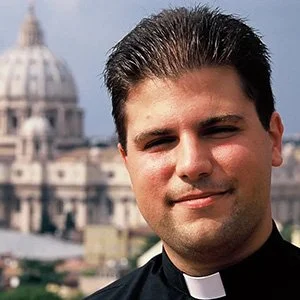
Episode #598 - Magnifica Humanitas: Second interview with Father Vincent DeRosa

Father Vincent DeRosa returns to The Soul of Enterprise to examine Magnifica Humanitas, Pope Leo XIV’s first encyclical and a landmark reflection on safeguarding human dignity in the age of artificial intelligence. Building on our earlier conversation about Rerum Novarum, we explore how Catholic social teaching continues to evolve while remaining rooted in timeless principles.

Ron, Ed, and Father Vincent discuss why the Church sees AI as a defining challenge of our era, drawing compelling parallels between today’s technological revolution and the Industrial Revolution that inspired Rerum Novarum 135 years ago. Together they unpack themes including the common good, human dignity, work, innovation, and the ethical responsibilities of business leaders as AI reshapes organizations and society.

Whether you’re religious or not, this conversation offers a thoughtful framework for asking one of the most important questions of our time: How do we ensure that technology serves humanity—rather than the other way around?

About Father Vincent DeRosa

Father Vincent DeRosa is a Catholic priest, educator, and thoughtful commentator on the intersection of faith, ethics, technology, and economics. Returning to The Soul of Enterprise after his popular discussion of Rerum Novarum, Father Vincent helps translate centuries of Catholic social teaching into practical insights for today’s business leaders. His work explores how enduring principles of human dignity and the common good can guide decision-making in the age of artificial intelligence.

SHOW NOTES

Segment one

Segment two

Segment three

  • From Chapter Five of MAGNIFICA HUMANITAS: “Finally, I would like to employ the expression “to disarm,” which is close to my heart. Disarming AI means freeing it from the mentality of “armed” competition, which today is not limited simply to the military context, but is also an economic and cognitive phenomenon.” https://www.vatican.va/content/leo-xiv/en/encyclicals/documents/20260515-magnifica-humanitas.html#The_need_to_disarm_words 

  • This might be the deepest question asked on the show today. From Ron to Father Vincent DeRosa: “AI isn’t just a technological revolution. It could be a spiritual one, too. Is that possible?”

  • “It is incumbent upon man to use his time well to develop philosophy and poetry and the arts, and all of those other benefits that we all year for.” —Father Vincent DeRosa

Segment four

Bonus Content is Available As Well

Did you know that each week after our live show, Ron and Ed take to the microphone for a bonus show? Typically, this bonus show is an extension of the live show topic (sometimes even with the same guest) and a few other pieces of news, current events, or things that have caught our attention.

Click the “FANATIC” image to learn more about pricing and member benefits. 
Episode #597 - Rise 2040: A conversation with Tom Hood

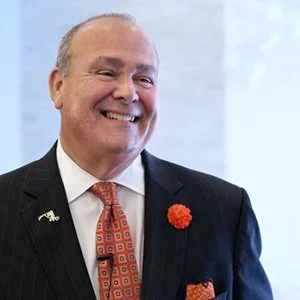
The accounting profession has always adapted to change—but what if it could actively shape the future instead of simply reacting to it? In this episode, Ron and Ed welcome Tom Hood, EVP of Business Engagement & Growth at AICPA & CIMA, to discuss Rise2040, the profession-wide initiative designed to help accountants and finance professionals envision—and create—the future of the profession.

Tom explains why AI, automation, shifting client expectations, and changing talent models require a new mindset centered on foresight rather than hindsight. The conversation explores the key themes emerging from the Rise2040 project, including how trust becomes even more valuable in an AI-powered world, why accountants must evolve into strategic advisors, and what firms and finance leaders can do today to prepare for the next 15 years.

Whether you’re in public accounting, industry, or simply curious about where the profession is headed, this discussion offers a compelling look at how accountants can move from reacting to disruption to leading it.

About Tom Hood
Tom Hood, CPA, CGMA, CITP, is Executive Vice President of Business Engagement & Growth at AICPA & CIMA. A longtime thought leader on the future of accounting, he previously served as CEO of the Maryland Association of CPAs and is a LinkedIn Top Voice with more than 700,000 followers. Tom leads initiatives including Rise2040, helping accounting and finance professionals prepare for an AI-driven future through innovation, leadership, and strategic foresight.

SHOW NOTES

Segment one

Segment two

  • The biggest finding from Rise2040? “What is the one thing that we absolutely can’t use. Consistently, across the world, […] responses were trust, ethics, and integrity.” —Tom Hood

  • What does the profession need to most unlearn? “You have to go from being experts to being learners.” —Tom Hood via a conversation with Ms. Brown

  • Which hard trend do you think the accounting profession is still dramatically underestimating? “I think it’s AI. That speed factor [and impact of AI]” —Tom Hood

  • “In Rise2040 we talk about the idea of AI as a force multiplier for finance and accounting professionals, both in public practice and in corporate finance.” —Tom Hood (more at this link https://www.aicpa-cima.com/advocacy/landing/rise2040)

Segment three

Segment four

  • On private equity in the accounting industry: “As we look at it, it’s just another form of capitalization.” —Tom Hood

  • Let’s end with some great news: “80% of our members are somewhat to highly optimistic about our future” —Tom Hood

  • A big THANK YOU to Tom Hood for joining us today. The Rise2040 vision report is available now at this link https://www.aicpa-cima.com/advocacy/landing/rise2040  

Bonus Content is Available As Well

Did you know that each week after our live show, Ron and Ed take to the microphone for a bonus show? Typically, this bonus show is an extension of the live show topic (sometimes even with the same guest) and a few other pieces of news, current events, or things that have caught our attention.

Click the “FANATIC” image to learn more about pricing and member benefits. 
Episode #596 - Should Government Fund Science - Interview with Terence Kealey

For decades, we’ve been told that scientific progress depends on government funding. But what if that assumption is wrong?

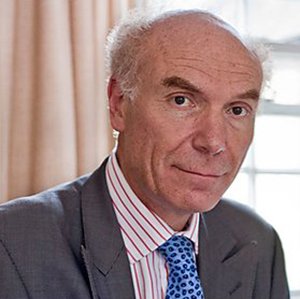
In this episode, Ron and Ed welcome Dr. Terence Kealey—physician, biochemist, former Vice-Chancellor of the University of Buckingham, and Adjunct Scholar at the Cato Institute—to explore one of the most controversial questions in science and public policy. Drawing on his research and books The Economic Laws of Scientific Research and Sex, Science and Profits, Kealey argues that markets, private institutions, and the scientific community itself are more than capable of driving innovation without government direction.

The conversation examines the economics of scientific discovery, the incentives created by public funding, the role of universities, and whether today’s research ecosystem encourages breakthrough innovation or bureaucratic conformity. Whether you agree with Kealey’s conclusions or not, his arguments challenge deeply held assumptions about how knowledge advances and who should pay for it.

If you’ve ever wondered whether science flourishes because of government—or despite it—this episode will give you plenty to think about.

About Dr. Terence Kealey
Dr. Terence Kealey is a British physician, biochemist, and economist of science. He served as Vice-Chancellor of the University of Buckingham from 2001 to 2014 and previously lectured in clinical biochemistry at the University of Cambridge. Now an Adjunct Scholar at the Cato Institute, he is the author of The Economic Laws of Scientific Research, Sex, Science and Profits, and numerous works examining the relationship between scientific innovation, markets, and public policy.

SHOW NOTES

Segment one

  • Our guest today, Dr. Terence Kealey, has quite a depth of writings at Cato Institute. More at this link: https://www.cato.org/people/terence-kealey 

  • Regarding government funding of science, Dr. Kealey penned this article for Cato - “NIH’s Lost Mission” https://www.cato.org/multimedia/cato-podcast/nihs-lost-mission 

  • Not all government science funding is bad. “Government’s are surprisingly good at mission science.” —Dr. Terence Kealey

  • “[Universities] want government funding. And, you know, you can’t blame them. We all want government funding. People who go swimming want government funding.” —Dr. Terence Kealey

Segment two

  • “Until 1957, the American government funded only a tiny amount of mission science. The rest was all done by the private sector, and there’s no sense of important science not being done in those days.” —Dr. Terence Kealey

  • “Industrial science isn’t peer-reviewed. […] Peer-reviewed science is science that’s removed from reality.” —Dr. Terence Kealey

  • On peer-reviewed vs industrial science: “It’s technology that keeps science honest.” —Dr. Terence Kealey

  • One of Dr. Kealey’s recent features is called “Rescuing Science: Recovering Science as Civic Virtue”. More here: https://www.cato.org/multimedia/media-highlights-tv/terence-kealey-featured-lecture-rescuing-science-recovering-science 

Segment three

Segment four

Bonus Content is Available As Well

Did you know that each week after our live show, Ron and Ed take to the microphone for a bonus show? Typically, this bonus show is an extension of the live show topic (sometimes even with the same guest) and a few other pieces of news, current events, or things that have caught our attention.

Click the “FANATIC” image to learn more about pricing and member benefits. 
Episode #595 - Second interview with David Barrett

What happens when you refuse to build your company the “right” way?

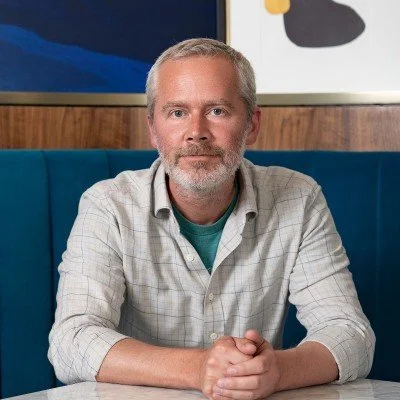
Ron and Ed welcome back David Barrett, founder and CEO of Expensify, to discuss the unconventional thinking that transformed a simple expense reporting app into a publicly traded fintech platform. From bootstrapping product-led growth and rejecting traditional enterprise sales models to building a culture around engineering, experimentation, and long-term thinking, David shares why questioning accepted business wisdom has been central to Expensify’s success. The conversation explores innovation, leadership, AI, remote work, company culture, and why sometimes the best strategy is to ignore conventional advice and solve the problem that’s actually in front of you. Whether you’re an entrepreneur, accountant, or business leader, this episode offers a fresh perspective on building companies that last.

About David Barrett
David Barrett is the founder and CEO of Expensify, the expense and financial management platform he launched in 2008. A lifelong programmer and computer engineer, David previously led engineering at Red Swoosh before its acquisition by Akamai. Under his leadership, Expensify has grown into a global fintech company serving millions of users and became a publicly traded company on Nasdaq in 2021. He is widely recognized for his unconventional approach to technology, leadership, and product innovation.

SHOW NOTES

  • Our guest today, David Barrett, founded Expensify and is still the CEO today. More at this link: https://en.wikipedia.org/wiki/Expensify 

  • David Barrett’s main-stage appearance at Scaling New Heights 2026 in Orlando on June 14 focused primarily on what genuinely useful AI should look like inside accounting and expense-management software.

  • This was almost a throwaway quote from David but there is a GOOD bit of prescience in here: “In an AI world what functionality do you need as a platform, versus what can the AI build for you.”

  • “We think the part that sucks about expense management is trying to beg your team for information. That’s why we rebuilt Expensify around this notion of collaboration, around meeting the salesperson where they are.” —David Barrett, CEO of Expensify

  • Episode 102 was our first interview with the amazing David Barrett, CEO of Expensify https://www.thesoulofenterprise.com/102 

  • Great conversation today about the difference between Claude and ChatGPT. Here’s the (really) quick hit: Claude is more niche-focused. ChatGPT is AI for anybody.

  • “AI-driven expense management […] is the inevitable future of expense management.” —David Barrett, CEO of Expensify

  • In economics, the Jevons paradox, or Jevons effect, is said to occur when technological improvements that increase the efficiency of a resource's use lead to a rise, rather than a fall, in total consumption of that resource. https://en.wikipedia.org/wiki/Jevons_paradox 

  • On AI and our general involvement, the phrase “human in the loop” has become common. GREAT perspective from our guest today: “Fundamentally, it can’t just be humans in the loop. It should be humans in the lead.” —David Barrett, CEO of Expensify

Bonus Content is Available As Well

Did you know that each week after our live show, Ron and Ed take to the microphone for a bonus show? Typically, this bonus show is an extension of the live show topic (sometimes even with the same guest) and a few other pieces of news, current events, or things that have caught our attention.

Click the “FANATIC” image to learn more about pricing and member benefits. 
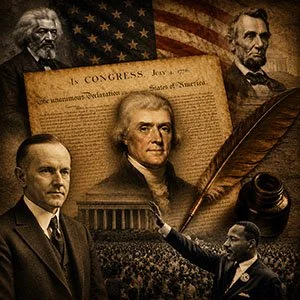
Episode #594 - The Declaration at 250

The Declaration of Independence is far more than a historical document. It is a statement of principles that has inspired generations to pursue a more perfect union. In this special Independence Day episode, Ed brings portions of the Declaration to life with a dramatic reading before Ron and Ed explore its enduring influence on America’s greatest speeches.

From Frederick Douglass’s searing critique in What to the Slave Is the Fourth of July? to Abraham Lincoln’s Gettysburg Address and Second Inaugural, Calvin Coolidge’s Sesquicentennial address, and Martin Luther King Jr.‘s iconic “I Have a Dream” speech, the conversation traces how each generation has wrestled with and renewed and expanded the Declaration’s promise of liberty, equality, and human dignity.

Join us for a thoughtful discussion on the power of words, the ideals that continue to shape the American experiment, and why the Declaration still has something profound to say nearly 250 years later.

SHOW NOTES

Segment one

  • On America’s 250th, go back to “Democracy in America” from The Economist https://www.economist.com/united-states/2026/06/11/on-americas-250th-go-back-to-democracy-in-america 

  • Tim Berners-Lee via Wikipedia https://en.wikipedia.org/wiki/Tim_Berners-Lee

  • “When in the Course of human events, it becomes necessary for one people to dissolve the political bands which have connected them with another, and to assume among the powers of the earth, the separate and equal station to which the Laws of Nature and of Nature's God entitle them, a decent respect to the opinions of mankind requires that they should declare the causes which impel them to the separation.” https://www.archives.gov/founding-docs/declaration-transcript 

  • “We hold these truths to be sacred & undeniable” — Jefferson’s original rough draft https://www.loc.gov/exhibits/declara/ruffdrft.html

  • Patrick Henry from the famous “Give Me Liberty or Give Me Death” speech: “No man thinks more highly than I do of the patriotism, as well as abilities, of the very worthy gentlemen who have just addressed the House. But different men often see the same subject in different lights; and, therefore, I hope it will not be thought disrespectful to those gentlemen if, entertaining as I do opinions of a character very opposite to theirs, I shall speak forth my sentiments freely and without reserve. This is no time for ceremony. The question before the House is one of awful moment to this country. For my own part, I consider it as nothing less than a question of freedom or slavery; and in proportion to the magnitude of the subject ought to be the freedom of the debate. It is only in this way that we can hope to arrive at truth, and fulfill the great responsibility which we hold to God and our country. Should I keep back my opinions at such a time, through fear of giving offense, I should consider myself as guilty of treason towards my country, and of an act of disloyalty toward the Majesty of Heaven, which I revere above all earthly kings.” https://avalon.law.yale.edu/18th_century/patrick.asp 

Segment two

Segment three

  • “What, to the American slave, is your 4th of July?” This is Frederick Douglass’s Fourth of July speech from 1852 https://loveman.sdsu.edu/docs/1852FrederickDouglass.pdf 

  • We will have the original Jefferson draft and the final language of the Declaration of Independence on the website for comparison. Here is the full PDF.

  • Read Martin Luther King Jr.'s 'I Have a Dream' speech in its entirety https://www.npr.org/2010/01/18/122701268/i-have-a-dream-speech-in-its-entirety 

  • “But 100 years later, the Negro still is not free. One hundred years later, the life of the Negro is still sadly crippled by the manacles of segregation and the chains of discrimination. One hundred years later, the Negro lives on a lonely island of poverty in the midst of a vast ocean of material prosperity. One hundred years later the Negro is still languished in the corners of American society and finds himself in exile in his own land. And so we've come here today to dramatize a shameful condition. In a sense we've come to our nation's capital to cash a check.” —Martin Luther King, Jr 

Segment four

Bonus Content is Available As Well

Did you know that each week after our live show, Ron and Ed take to the microphone for a bonus show? Typically, this bonus show is an extension of the live show topic (sometimes even with the same guest) and a few other pieces of news, current events, or things that have caught our attention.

Click the “FANATIC” image to learn more about pricing and member benefits.