

Episode #391: Interview with Mark Vonnegut

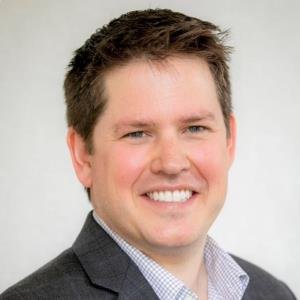
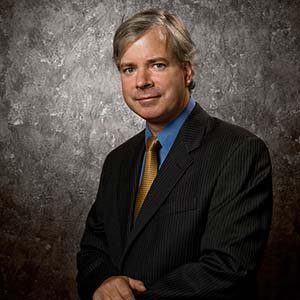
Ed and Ron were honored to have on the show Dr. Mark Vonnegut to discuss his 2022 book, The Heart of Caring: A Life in Pediatrics. Yes, Mark is the son of Kurt Vonnegut. This show was a firsthand look at the healthcare system, its impact on children, along with the rest of us.

mark vonnegut heart of caring

Here are some brief show notes. Use these to follow along while listening to the show.

  • When did Dr. Mark know he wanted to be a doctor? Since a child, he knew he wanted to be a doctor but his commune in the 60’s got in the way first :)

  • The patient is king and if Dr. Mark doesn’t take care of them they go to other doctors. That was the simplified version of how 90% of doctors and hospitals looked at things in the early days of his career.

  • $6 used to be Dr. Mark’s overhead per visit. Today it is over $100 and attributable to compliance and performance metrics put on him by the insurers.

  • On medical care costs 30-40 years ago: “It had to be affordable when patients were paying out of pocket.” —Dr. Mark

  • Today it is virtually illegal for Dr. Mark to take care of someone without taking a co-payment. There is a tremendous amount of paperwork in front of the actual care.

  • Dr. Mark adopted electronic medical records 10 years before they were required because they can make medicine safer. Today they are billing machines weaponized by big hospitals and insurers.

  • Check us out on Patreon at Patreon.com/TSOE where you can subscribe and get commercial free episodes PLUS bonus episodes. Now sponsored by @90Minds. Need a mind? Get one at 90Minds.com.

  • Dr. Mark’s is the last generation to experience a time when you could be a doctor and be your own boss. Today, 70% of doctors are actually employees.

  • Along the way, we have equated health INSURANCE with health CARE. Insurance shouldn’t pay for the mundane. Your car insurance doesn’t pay for oil changes or gasoline.

  • “Unnecessary administrative costs as much as unnecessary medical procedures. Probably more.” —Dr. Mark

  • Years ago, 90% of the medical diagnosis came from what the patient said. They physical exam confirmed it. The last few % points came from the lab. Today you troll the patient through the lab and see what bites.

  • “Most doctors have 10 minutes to see you at most. 40% of that time is spent entering data into a laptop with very little eye to eye contact. They come up with a number or diagnosis as their job.” —Dr. Mark

  • “Explanations of benefits” are evil bits of propaganda whereby the insurance company claims to have paid X when the cost was Y. —Dr. Mark

  • “Let the school nurses do immunizations because they don’t suffer fools.” —Dr. Mark

  • “The only thing dumber than making marijuana illegal is thinking it’s harmless to children.” —Dr. Mark

  • Hiring a social worker was the smartest thing Dr. Mark ever did. They made the whole pediatric practice much more efficient.

  • The baby formula shortage was a foreseeable and avoidable problem. Thankfully, Dr. Mark has some of the “fancy” formulas available for patients who really needed them.

  • We’d like to give a shout out to Blake Oliver (@blaketoliver) of EarmarkCPE.com (@EarmarkCPE) where you can get CPE credits for listening to podcasts!

  • “There are more similarities than dissimilarities in taking care of patients with Ebola compared to patients with Diabetes.” —Dr. Mark

  • “There shouldn’t be a revolving door between the pharmaceutical industry and the FDA.” —Dr. Mark

  • A big THANK YOU to Dr. Mark Vonnegut for joining us today. Check out his book, “The Heart of Caring”


Bonus Content is Available As Well

Did you know that each week after our live show, Ron and Ed take to the microphone for a bonus show? Typically, this bonus show is an extension of the live show topic (sometimes even with the same guest) and a few other pieces of news, current events, or things that have caught our attention. 

This week was bonus episode #392 - “The Klessla”. Here are a few links discussed:

Click the “FANATIC” image to learn more about pricing and member benefits. 

Episode #390: Live from the Meeting of the Minds 2022

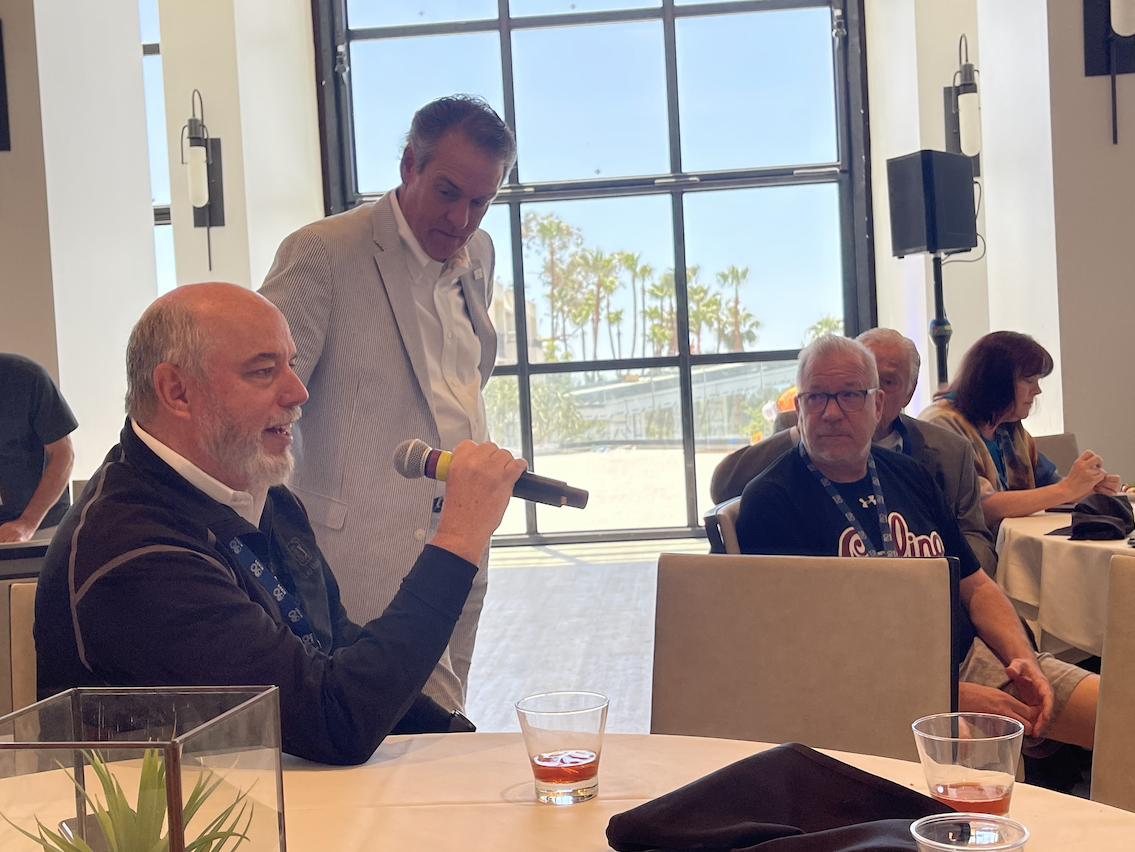
We’ll do it live!!! Despite some minor technical hiccups, Ron and Ed were excited to be doing the show live from the 90 Minds annual conference, The Meeting of the Minds in Newport Beach, CA. The Meeting of The Minds brings a membership of consultants, resellers, and software providers together to celebrate our powerful community. For two days, these consultants will share, listen, learn, and challenge their perceptions. We are thrilled to be a part of all of those things.

Here are some brief show notes. Use these to follow along while listening to the show. Ron and Ed mostly talked subscription and also fielded some great questions from the audience.

  • …and as we get started, it's always great to have a helping, technical hand. Here's a live shot from the event. @90minds #90MotM #AskTSOE @ronaldbaker @edkless

  • Is Netflix an indication that we have reached peak subscription? Not quite. Netflix pulled out of Russia and lost 700k subscribers. They recently reported a lost of only 200k in the quarter.

  • “The subscription model puts the relationship at the center and creates a new profit formula beyond the traditional income statement. You’re not looking at gross margins, you’re looking at customer lifetime value.” —Ron Baker

  • Not only is 90 Minds a sponsor of our Patreon channel at Patreon.com/TSOE, all of their members get access to the feed.

  • What is it that you are adding on to the subscription to keep people there? In other words, what is YOUR equivalent of the new season of Ozark? How are you plussing your model? This is how Ron/Ed think about the subscription model.

  • Ed subscribes to a vacuum from iRobot but what he is REALLY subscribing to is the outcome — clean floors!

  • Ron loves the Fender subscription model because they are not selling guitars. They are selling musicianship.

  • Great question from Phil today. In response, there should be a top tier subscription offering that includes all you can eat. The levels below it can be things that are “covered” and “not covered” to help delineate between tiers.

  • EA has decided not to renew with FIFA. Why? 71% of their revenue is subscription and NOT based on game sales. https://arstechnica.com/gaming/2022/05/ea-friendship-ended-with-fifa-now-ea-sports-fc-is-my-best-friend/

  • Experiences vs transformations. We professionals have the capabilities to deliver transformations to our customers…in a serial manner!

  • Thank you to EVERYONE at @90Minds for joining us during the live show today. See you in 167 hours!

We captured some great live shots from the conference. Can you find yourself or someone you know?


Bonus Content is Available As Well

Did you know that each week after our live show, Ron and Ed take to the microphone for a bonus show? Typically, this bonus show is an extension of the live show topic (sometimes even with the same guest) and a few other pieces of news, current events, or things that have caught our attention. 

Click the “FANATIC” image to learn more about pricing and member benefits. 

Episode #389: ESG — We Respectfully Dissent

Join Ed and Ron for a deep dive on the problems with Environmental, Social, and Governance (ESG) standards, or lack thereof. ESG has replaced the Triple Bottom Line and began to receive global attention due to the United Nations Principles for Responsible Investment (PRI) report, and is seen as a means for advancing the UN’s Sustainable Development Goals (SDGs). The SEC is now proposing regulations that will force public companies to disclose environmental risk factors, at tremendous cost. What could go wrong? Quite a lot. Metrics for ESG are completely subjective, nor grounded in empirical reality as demonstrated when three different ESG watchdogs rated Tesla: Best, Worst, and Middling. How helpful. If an oil company is rated, it is automatically Worst (unless it is Gazprom in Russia, which received a very high ESG rating before the Ukraine invasion), even though oil companies saves countless lives every single day. For all these reasons and more, we dissent from the hokum being pushed by advocates of ESG.

Here are the show notes. Use these to follow along while listening to the show:

  • Before we get into the show today, let’s be clear: The TSOE hosts do not hate the environment, nor do they hate social initiatives, nor do they hate social governance. The ESG movement is the issue at hand.

  • ESG first gained global attention in 2006 as a part of the United Nations sustainable development goals. In 13-14, businesses started to take ESG more seriously which led to heightened business activities and investments.

  • Now we have ESG ratings agencies, watchdogs, and consultants. BDO.com/resources/esg is an example of this. They are “committed to making ESG synonymous with BDO”

  • Regarding ESG - “Some companies have simply rebranded older existing funds as green”. Read more at this WSJ article: “Funds Go Green, but Sometimes in Name Only” https://www.wsj.com/articles/funds-go-green-but-sometimes-in-name-only-11631179801

  • Here is an ESG related question posed by Ron on the show today: Do companies perform better because they are socially conscious?

  • At a certain level, our Patreon members get a shout out. Like Mark Gandy (@g3cfo) of CFOBookshelf.com. Check out his podcast as well! And then join us at Patreon.com/TSOE

  • Ron mentioned a whole list of S&P 500 indicators for ESG on the show. Check out this National Review article for more details: https://www.nationalreview.com/2022/04/esg-a-ratings-agency-and-utah/

  • Something that needs to be said: ESG investments (like Blackrock’s fund) make money irrespective of the performance of the investments.

  • Around the 1850s, limited liability companies were created (to…limit liability) but in return they were told, “stay in your lane and serve your shareholders.” The assumption was this would keep organizations from getting too big and dominating politics. It was a very clever structure.

  • ESG is going to deal with all of these things — human rights, sustainable finance, social exclusion, climate change — using subjective measures. How do these subjective measures change things?

  • Thomas Sowell: “There Are No Solutions, Only Trade-offs” https://www.youtube.com/watch?v=3_EtIWmja-4

  • Did you know that your written rating of our podcast will be read on the air? Tap this link and spend 15 seconds rating The Soul of Enterprise RateThisPodcast.com/TSOE

  • The purpose of a business is NOT to make a profit. Profit is the result.

  • Even those in favor of ESG will say, “ESG is necessary but it’s not sufficient.”

  • Tesla has received three ESG ratings: one is the best, one the worst, and one in the middle. As an investor, what can you do with that information?

  • Gazprom has been given a higher ESG rating than ExxonMobil. Did these rating agencies take into account the Ukraine war? Or the annexation of Crimea before that?

  • Ed mentioned scope 1, 2 and 3 on the show today. Here is a quick overview from Deloitte. https://www2.deloitte.com/uk/en/focus/climate-change/zero-in-on-scope-1-2-and-3-emissions.html

  • ESG funds are pouring into China even though China on the environment, on social, and on governance…..is horrific.

  • The uncertainty and subjectivity of ESG ratings is ultimately at the heart of our show today. For example, climate models have a tremendous amount of uncertainty before they are even applied.

  • Ed had some fun with the various individual carbon footprint calculators:

    • Climatehero.me - 20.8 tons of CO2 per year

    • EPA - 23 tons of CO2 per year

    • Nature.org - 87 tons of CO2 per year

    • Henkel - 17.9 tons of CO2 per year

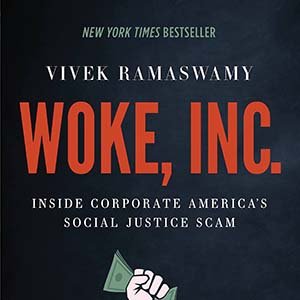
  • We closed our show today with a quote from Woke, Inc by Vivek Ramaswamy: “We’d be strictly better off if companies and their customers ended the shared fiction that every capitalist transaction must also be part of some grand fight between good and evil.”

  • One of our excellent Patreon sponsors, @90Minds, is holding their annual meeting next week and we will be LIVE ON SITE during the show! Looking forward to it!


Bonus Content is Available As Well

Did you know that each week after our live show, Ron and Ed take to the microphone for a bonus show? Typically, this bonus show is an extension of the live show topic (sometimes even with the same guest) and a few other pieces of news, current events, or things that have caught our attention. 

This week was bonus episode 390 - “Transfer NOT Cancel Student Debt”. Here are a few links discussed:

Click the “FANATIC” image to learn more about pricing and member benefits. 

Episode #388: The Problem with CPE with Blake Oliver and Michael Kravshik

Belying the episode title there is more than one problem with continuing professional education (aka CPE). Ron and Ed were joined this week by two innovators in the profession — Blake Oliver of Earmark and Michael Kravshik of LumiQ — to talk about not only the problems, but how they are trying to help solve it.

About Blake Oliver

Blake Oliver, CPA, is an entrepreneur, accountant, writer, and podcast host who specializes in cloud accounting technology. He is one of Accounting Today’s Top 100 Most Influential People and has been named a 40 Under 40 in the accounting profession by CPA Practice Advisor. Blake also produces and co-hosts the Cloud Accounting Podcast, a Top 50 Business News show on the Apple charts and the most popular podcast for accountants and bookkeepers in the world. He is the Director of Marketing at Jirav and lives in Scottsdale, Arizona.

About Michael Kravshik

Michael Kravshik is the Co-Founder, CEO, and oft-times main host for LumiQ. LumiQ is a mobile podcast app where engaging conversations with business leaders count as verifiable professional education. With a slick mobile app, automatic documentation tracking, and new episodes weekly, we've made professional education something it's never been before: enjoyable.

Here are the show notes. Use these to follow along while listening to the show:

  • Blake started as an accountant and then became a product marketer at a tech firm. Through that experience, he started Earmark CPE as a way to fix the inconvenience associated with live classes.

  • Earmark CPE is a user generated community. If you have a podcast targeted towards accountants or bookkeepers then your content might be eligible for the platform.

  • Michael started about 18 ideas (his words :) ) with his co-founder before arriving at LumiQ. They approached CPAs with the idea and ended up launching an app to make CPE (CPD in Canada) easy and convenient.

  • We measure earned CPE in terms of hours because it’s the easy thing to measure. It doesn’t mean it’s right.

  • It is the collective hope of Blake and Michael that the industry changes for the better by learning continuously on a phone instead of cramming CPE into a few days at a conference.

  • The real problem is that you don’t want to earn CPE because it’s not great. That’s why LumiQ takes a professional, sometimes scripted, approach to the content they create.

  • In Canada, one minute is one minute when listening to CPE….ahem…CPD podcasts. Listening speed is not a factor.

  • In the end both Blake and Michael are creating CPE/CPD content that is valuable, interesting, and engaging. That means accountants and bookkeepers are going to keep listening whether or not it is required.

  • Bonus AND commercial free episodes are now available at the TSOE Patreon channel - Patreon.com/TSOE. Now sponsored by @90Minds. Need a mind? Hire one at 90Minds.com

  • What happens to live CPE in the future? We will find out soon if they come back post-Covid but they are trending down. It’s not a growth industry.

  • In terms of demographics, the C-level to staff members are all involved in Earmark CPE and LumiQ. You see different age ranges gravitate towards different content but usage is up across all demos.

  • What is the biggest issue facing the industry? Michael sees one of two directions from the larger associations: 1) We’re going to focus on the things we traditionally did. 2) We’re going to turn the CPA into an MBA (jack of all trades, master of none).

  • What’s the biggest challenge facing the industry? From Blake: The rules of accounting haven’t changed in 100 years but our economy has changed a lot. The data we are collecting is just not useful today the way it was in the Gilded Age.

  • Customer Lifetime Value (LTV) divided by the cost of acquiring a customer (CAC) is the most valuable metric for subscription organizations. It remains completely unaddressed by GAAP.

  • A big THANK YOU to Blake for joining us today! Check out his work at EarmarkCPE.com

  • A big THANK YOU to Michael for joining us today! Check out his work at LumiQLearn.com


Bonus Content is Available As Well

Did you know that each week after our live show, Ron and Ed take to the microphone for a bonus show? Typically, this bonus show is an extension of the live show topic (sometimes even with the same guest) and a few other pieces of news, current events, or things that have caught our attention. 

This week was bonus episode 389 - “Marathon times”. Here are a few links discussed:

Click the “FANATIC” image to learn more about pricing and member benefits. 

Episode #387: Third Interview with Dr. Jules Goddard

Ron and Ed welcomed back for the third time Dr. Jules Goddard from London Business School. His new book (with David Giles Lewis and Tamryn Batcheller-Adams) entitled Mavericks guides you through the five characteristics that you can develop to become a maverick leader. From passionate belief, an undeterred attitude, being resourceful, being directional and finally experimenting, these characteristics are the blueprint for you to grow into an iconic and positive change maker. The focus is not on what becoming a leader can do for you, but on what you can do to make the world a better place.

dr jules goddard mavericks book

Many of our listeners know him, but here is a bit more about Dr. Jules Goddard:

Dr. Jules Goddard earned his MA at Oxford, an MBA from Wharton, and his PhD from London Business School. He's a Guest Lecturer at INSEA and formerly Gresham Professor of Commerce and Mercers School Memorial Professor at The City University. He is currently Research Associate of the Management Lab MLab at London Business School. He's a teacher, writer and consultant in the areas of business creativity, strategic thinking, leadership and corporate transformation.

Here are the show notes. Use these to follow along while listening to the show:

  • Dr. Jules Goddard has been with us twice before. The first time was episode 27 and we discussed his book, "Uncommon Sense, Common Nonsense" https://www.thesoulofenterprise.com/27

  • During his second appearance, we caught up with him effectively mid-pandemic in episode 315 https://www.thesoulofenterprise.com/315

  • Regarding his new book, Mavericks, Dr. Goddard says: “We are all mavericks but not all of us are able to express our inner self. The world is short on mavericks, those who are entrepreneurs in more ways than just business.”

  • Regarding Mavericks from Dr. Jules Goddard: We need candidness is this complex modern world. Mavericks are true to themselves and hopefully can express it with a bit more confidence.

  • “There is a sense that individualism is a fairly recent phenomenon. We welcome dissent. We like difference in opinion. This is part and parcel of the whole business of being a Maverick.” —Dr. Jules Goddard

  • What is the etymology of the word Maverick? It is from the name of Samuel A. Maverick (1803–70), a Texas rancher who did not brand his cattle (which was considered very nonconformist at the time).

  • Are Maverick leaders born or made? From Dr. Goddard: “They are educated. They are made. We typically contrast nature vs nurture but the third element is CHOICE.”

  • “Mavericks are recognized less by their personality than by their character.” —Dr. Jules Goddard

  • Check out our Patreon show at Patreon.com/TSOE featuring bonus and commercial-free episodes. Now sponsored by 90 Minds! “More minds are better than one!” Check them out at 90Minds.com

  • “To solve a problem, you first have to specify a problem — to specify the problem worth solving.” —Dr. Jules Goddard

  • From Dr. Goddard: Work with those whom you love working with. They will draw out your skills and interest within. In a setting where you have no power to do the work you love it’s very difficult to find the energy/inspiration to make a difference.

  • Why is resourcefulness a big differentiator for problem solving? This is common in someone who wants to work with others of a different mindset. In other words, “Mavericks attract other Mavericks.”

  • When we’re making decisions in business we WANT lots of thoughts. Many decisions go against our own tastes and preferences. So how do we retain loyalty in those instances? Take other’s thoughts seriously and improve upon them.

  • “Maverick leaders are inspired by a problem in need of a solution.” —Dr. Jules Goddard

  • “Entrepreneurs…Mavericks…act on the world in order to think rather than think before acting. We discover what we believe to be true by trying a ton of stuff out. We don’t invest too much time on analysis, thought, and planning.” —Dr. Jules Goddard

  • “In children, playfulness is the basis upon which a child learns fast. A fear of even making the slightest mistake disables us from being successful later on.” —Dr. Jules Goddard

  • From Dr. Goddard: “We do not honor our greatest people. We very rarely thank them. The modern tendency is to believe they are greedy, exploitative, or lucky. But they put themselves out in the world and created a difference.”

  • Mentioned by Ron today, “Meh, good enough.” (image below)

  • How can organizations be created with the culture and structure to support Maverick leadership? The question should be: Why don’t the insides of organizations look more like the outside of organizations. For example, why don’t we bring more market forces internally?

  • “All truths come through metaphor.” —Dr. Jules Goddard on things in business that benefit from a “successful crash” of an idea that simply does not work.

  • A big THANK YOU to Dr. Jules Goddard. Be sure to check out his new book, Mavericks, and learn to make a difference! https://amzn.to/3uZJ96j

  • Here is a collection of articles from Dr. Jules Goddard for further reading as well: https://www.london.edu/think/search#q=goddard&sort=%40articledate%20descending

meh, good enough

Bonus Content is Available As Well

Did you know that each week after our live show, Ron and Ed take to the microphone for a bonus show? Typically, this bonus show is an extension of the live show topic (sometimes even with the same guest) and a few other pieces of news, current events, or things that have caught our attention. 

This week was bonus episode 388 - “Mediocretes”. Here are a few links discussed:

Click the “FANATIC” image to learn more about pricing and member benefits. 
Episode #386: Second Interview with Chris Edwards of Cato on Tax Policy

Back in January with spoke with Chris Edwards about how wealth fuels economic growth. We welcome Chris back to talk about his other area of expertise - US tax policy. Join us on "Tax Day" (well sort of, it was extended to April 18 this year), for what will be a lively and wide ranging conversation about this topic that effects everyone.

chris edwards cato

Before we get to the show notes, here is a bit more about Chris Edwards:

Chris Edwards is the director of tax policy studies at Cato and editor of www.DownsizingGovernment.org. He is a top expert on federal and state tax and budget issues. Before joining Cato, Edwards was a senior economist on the congressional Joint Economic Committee, a manager with PricewaterhouseCoopers, and an economist with the Tax Foundation. Edwards has testified to Congress on fiscal issues many times, and his articles on tax and budget policies have appeared in the Washington Post, Wall Street Journal, and other major newspapers. He is the author of Downsizing the Federal Government and coauthor of Global Tax Revolution. Edwards holds a B.A. and M.A. in economics, and he was a member of the Fiscal Future Commission of the National Academy of Sciences.

Here are the show notes. Use these to follow along while listening to the show:

  • Chris recently wrote “Exploring Wealth Inequality” which counters Thomas Pickety and his erroneous data. Link here: https://www.cato.org/sites/cato.org/files/2020-01/pa-881-updated-2.pdf

  • We don’t have good information on wealth and wealth distribution in the US. The idea of wealth inequality is not easy to get to without official data. For example, tax returns only cover about 60% of income earned in the United States.

  • In the US, you can become wealthy in the market because it is so dynamic. 70% of the Forbes top 400 are self made. In other countries, cronyism is more prevalent and it is easier for families to retain wealth over generations.

  • The OECD for two decades have been increasingly pushing for global level tax rules. This is currently the “global 15% tax” that you might have heard about. Here are Chris’ thoughts on the Cato site: https://www.cato.org/blog/g-7-corporate-tax-agreement

  • On the show today, Chris Edwards remarked that “it’s a win-win when you cut tax rates” to which Ed invoked the Laffer curve. Well done! https://www.investopedia.com/terms/l/laffercurve.asp

  • Our Patreon channel, at Patreon.com/TSOE, is sponsored by some of our Patrons. For example, we would love to give a shoutout to Blake Oliver of EarmarkCPE.com. Earn CPE credits for listening to podcasts just like this one!

  • Is it true that the IRS only audits the poor? The EITC and other refundable credits have a long history of error and fraud rates. This rates have been as high as 25-30%. It’s a massive spending program in the tax code with high fraud rates.

  • “Tying up financial accounting to the government’s tax accounting is a really bad idea.” Here are some deeper thoughts from Chris: https://www.cato.org/blog/democratic-tax-plan-would-corrupt-financial-statements

  • The optimal tax gap is not zero. This would mean IRS agents knocking on everyone’s door and intrusion into every laptop in the US. This is not on balance with our expected civil liberties. Around 3-6% of GDP is the level for the US with 6-10% in the EU.

  • Every nation has a tax gap which creates the “shadow economy”. These are activities outside of the government’s scope. The US has a much smaller shadow economy compared to other free countries.

  • 60-90% of IRS audits are incorrect. If that number shocks you, it shouldn’t. Chris has quite a few more figures in his article “Simplify Tax Code to Solve IRS Mess” https://www.cato.org/blog/simplify-tax-code-solve-irs-mess

  • Bonus episodes and commercial free episodes are available at our Patreon channel, Patreon.com/TSOE, which is sponsored by @90Minds. Need a mind? Hire one at 90Minds.com

  • Should the government offer a pro forma tax return instead of citizens figuring it out? Not exactly. Chris believes in a simplified tax code instead of a pro forma return.

  • Every employee pays a 15% income tax to the federal government. It’s not half from the employee and half from the company. The employee is “fully burdened” which should be obvious to anyone paying attention.

  • “We don’t need the government inventing new taxes and putting a wet blanket on new technologies.” —Chris Edwards

  • “We know the wealth tax is a horrible idea because even the giant welfare states in Europe have gotten rid of them.” —Chris Edwards

  • Chris mentioned “civil liberties” related to IRS tax enforcement several times today on the show. What exactly does he mean? Fortunately, he wrote a full article on it at this link https://www.cato.org/blog/irs-tax-enforcement-vs-civil-liberties

  • Interesting fact from today’s chat with Chris Edwards: Did you know that some high income western counties do not tax capital gains at all?

  • The Government Accountability Office and the taxpayer advocates group recently discovered that the IRS is only answering about 15% of phone calls from confused American taxpayers.

  • A big THANK YOU to Chris Edwards for joining us today. Beyond his lengthy bio he is also the editor of DownsizingGovernment.org


Bonus Content is Available As Well

Did you know that each week after our live show, Ron and Ed take to the microphone for a bonus show? Typically, this bonus show is an extension of the live show topic (sometimes even with the same guest) and a few other pieces of news, current events, or things that have caught our attention. 

Click the “FANATIC” image to learn more about pricing and member benefits. 

Episode #385: Social Entrepreneurship Summit: Kimberlee Josephson & Sam Staley

Two fan favorites from 2021 return to join Ron and Ed in what no doubt was a spirited conversation about Social Entrepreneurship, Kimberlee Josephson (Episode 360) and Sam Staley (Episode 367). Kimberlee is an Associate Professor of Business, Associate Dean for the Breen Center for Graduate Success at Lebanon Valley College; Sam is the director of the DeVoe Moore Center at Florida State University. Ron and Ed will (mostly) be along for the ride on this one as two of the foremost thinkers in this area will share (and maybe even spar a little about) their ideas surrounding social entrepreneurship. Don't miss this one!

This was SUCH an interesting conversation that typical show notes would simply not do these two amazing guests justice. We have created a series of audio clips from the show of some of the most significant highlights.

  • What is Social Entrepreneurship? Hear a quick definition from Sam Staley.


  • What is Social Entrepreneurship? Hear a quick definition from Kimberlee Josephson.


  • What is the difference between social problems and issues vs social entrepreneurship? Listen to Sam Staley explain.


  • How does Kimberlee Josephson feel about “buy one, give one” social programs?


  • Sam Staley wants you to create something of value with a revenue stream. Hear the details in this video.


About Kimberlee Josephson

Dr. Kimberlee Josephson is an Associate Professor of Business, Associate Dean for the Breen Center for Graduate Success at Lebanon Valley College in Annville, Pennsylvania, and Adjunct Research Fellow with the Consumer Choice Center. Her academic background is in international studies and strategic management and she teaches courses covering topics on global sustainability, international marketing, and workplace diversity. Prior to serving in academia, her professional career spanned from working in sales in Manhattan, as a producer for a web marketing firm, freelancing for on-air promotions at QVC, and as a research assistant for an international NGO. Her op-eds have appeared at University Business, Quartz at Work, and PA Capital Star. She holds a doctorate in Global Studies and Commerce from La Trobe University in Australia, a master’s degree in Political Science from Temple University in Philadelphia, another master’s degree in International Policy from La Trobe University, and a bachelor’s degree in Business Administration with a minor in Political Science from Bloomsburg University.

About Samuel Staley

Sam Staley became director of the DeVoe Moore Center in January 2014 after serving as Managing Director from September 2011 to December 2013. In addition to his responsibilities providing strategic direction and supervision of center operations and programs, he teaches advanced undergraduate and professional masters courses in social entrepreneurship, economic development, land use and regulation, urban policy, and research methods. Prior to joining Florida State, Dr. Staley was the Robert W. Galvin Fellow at Reason Foundation, an internationally recognized public policy think tank based in Los Angeles where he worked on issues such as transportation system management and performance, public private partnerships, growth management, and regulatory reform. While at Reason Foundation, he managed the China Mobility Project, traveling to China more than 30 times as supervisor of academic research projects on transportation policy and finance. He has more than 25 years of experience in urban policy and is the author, co-author, or editor of five books on public policy and more than 100 professional articles and reports. His research has appeared in leading academic journals, including the Journal of the American Planning Association, Housing Policy Debate, Town Planning Review, Transportation Research Part A: Policy and Practice, and the Journal of Transportation Engineering.


Bonus Content is Available As Well

Did you know that each week after our live show, Ron and Ed take to the microphone for a bonus show? Typically, this bonus show is an extension of the live show topic (sometimes even with the same guest) and a few other pieces of news, current events, or things that have caught our attention. 

This week was Bonus episode 385 - “The Smell of Twitter Musk” and here are a few links we discussed:

Click the “FANATIC” image to learn more about pricing and member benefits. 
Episode #384: Bric-A-Brac

Ron and Ed have had so many Guests in the past few months that certain housekeeping items have gone neglected. In this episode they will rectify that and answer listener email and, of course, talk about subscription stuff. Previous to the live episode, you could email asktsoe@verasage.com with a question. Ron and Ed worked those into the show but you can ALWAYS email them at the same address with any questions about shows/topics.

Before the show notes, what’s a bric-a-brac?
/ˈbrikəˌbrak/ noun — miscellaneous objects and ornaments

Below are the show notes. Use them to follow along while listening to the podcast:


Bonus Content is Available As Well

Did you know that each week after our live show, Ron and Ed take to the microphone for a bonus show? Typically, this bonus show is an extension of the live show topic (sometimes even with the same guest) and a few other pieces of news, current events, or things that have caught our attention. 

Click the “FANATIC” image to learn more about pricing and member benefits. 

Episode #383: Interview with Michael Tanner on The Inclusive Economy

michael tanner cato institute

Ron and Ed welcome Michael Tanner of the CATO Institute to engage in a conversation about The Project on Poverty and Inequality in California which builds on Michael's most recent book, The Inclusive Economy: How to Bring Wealth to America’s Poor, a comprehensive look at the ways government contributes to poverty in the United States.

A bit more about Michael Tanner
Michael Tanner is a Cato Institute senior fellow and heads research into a variety of domestic policies, with an emphasis on poverty and social welfare policy, health care, and Social Security and entitlement reform. More recently Tanner has undertaken a major project to develop innovative solutions to poverty in California, which is widely seen as a model for building bipartisan consensus around innovative ways to reform government-imposed barriers to economic participation by the poor and marginalized groups. Tanner is also the author of numerous other books on public policy, including Going for Broke: Deficits, Debt, and the Entitlement Crisis, Leviathan on the Right: How Big-Government Conservatism Brought Down the Republican Revolution, Healthy Competition: What’s Holding Back Health Care and How to Free It, The Poverty of Welfare: Helping Others in Civil Society, and A New Deal for Social Security. He also contributed a chapter on libertarian solutions for poverty to Libertarianism.org’s Visions of Liberty. Called a “lucid writer and skilled polemicist” by the New York Times and hailed as one of the nation’s five most influential experts on Social Security by Congressional Quarterly, Tanner’s writings have appeared in nearly every major American newspaper, including the New York Times, the Washington Post, the Los Angeles Times, the Wall Street Journal, and USA Today. A prolific writer and frequent guest lecturer, Tanner appears regularly on news programs.

Below are the show notes. Use them to follow along while listening to the podcast:

  • His book, The Inclusive Economy, is a culmination of Michael Tanner’s research over the years. “Why are people poor in the first place?” is his starting point. https://www.amazon.com/Inclusive-Economy-Bring-Wealth-Americas/dp/194864701X

  • There is some validity to The Success Sequence (graduate high school, college, get a job, get married) but the real question is WHY is that the case.

  • If you doubled everyone’s income tomorrow, you wouldn’t get rid of inequality but everyone would be better off (leaving aside the obvious macro economic factors).

  • California has large pockets of wealth, a very reasonable economic growth rate, and deep social programs. But they have the highest poverty rate in the nation. So what has gone wrong in California?

  • There are two types of homelessness and they can both be seen in California. Those on the street are the result of various mental or drug issues (largely a chicken/egg scenario). But at $3,000 per month in rent, there is a set of working homeless that are less obvious.

  • Even before the economic disruptions caused by COVID-19, far too many Californians were living in poverty. That is the starting point for the Project on Poverty and Inequality in California. Link here: https://www.cato.org/project-poverty-inequality-california

  • No doubt, the criminal justice system makes it hard for people to get out of poverty. To make it worse, there are so many interactions with police because so many things are illegal.

  • True story: Ohio prisons teach barber skills (among other skills). But in Ohio you can’t get a license to be a barber if you have a criminal record. Your government at work, ladies and gentlemen.

  • “Fund students instead of systems” is a way to approach the public school monopoly. More from CATO here: https://www.cato.org/commentary/fund-students-instead-systems

  • CEQA is the California Environmental Quality Act. The original intention is far from the use today where it is now being used to block housing projects of all kind and has contributed significantly to California’s housing shortage. https://opr.ca.gov/ceqa/

  • California is the 4th worse state when it comes to occupational licensure. Check out our previous show on this. Link here: https://www.thesoulofenterprise.com/225

  • If you enjoy what Ron and Ed have to say every Friday then please consider becoming Patreon sponsor at Patreon.com/TSOE where you can enjoy bonus episodes and commercial free shows.

  • Our guest today is one of THE top social security experts. Michael feels we are going to have to reduce social security benefits and then fill in that gap with private investments. This is a tweet and that’s just a start.

  • “You don’t spend you way out of poverty. You save your way out of poverty.” —Michael Tanner

  • Nothing has raised more people out of poverty than free market capitalism over the years. Michael Tanner and Professor McCloskey are well aligned here. @prudentiamag

  • A big THANK YOU to Michael Tanner for joining us today. His book, The Inclusive Economy, is available today at this link: https://www.amazon.com/Inclusive-Economy-Bring-Wealth-Americas/dp/194864701X/

  • In addition, as a senior fellow at the Cato Institute you can find his bio here plus links to much of his work. https://www.cato.org/people/michael-d-tanner


Episode #382: Second Interview with Kevin Williamson

In his The Tuesday column recently, Kevin Williamson wrote, "I do wonder what it would take to turn Russia around. I suppose it would start with a Russia that wanted to be turned around, or at least a critical mass of Russians who want that." Ron and Ed talked with him about Russia and Ukraine as well as his participation in the upcoming NR Institute's Seminar entitled "Creating Opportunity: Making the Moral and Practical Case for Free Enterprise."

A bit more about Kevin D. Williamson
Kevin D. Williamson is a fellow with National Review Institute and National Review’s roving correspondent, and writes “The Tuesday,” a weekly newsletter. He is the author of The Smallest Minority: Independent Thinking in the Age of Mob Politics (Gateway Editions, 2019) and several other books. Formerly, he served as the theater critic at The New Criterion and taught at The King’s College and as a Pulliam fellow at Hillsdale College. Williamson began his journalism career at the Bombay-based Indian Express Newspaper Group and spent 15 years in the newspaper business in Texas, Pennsylvania, and Colorado. He served as the editor-in-chief of three newspapers and was the founding editor of Philadelphia’s Bulletin. His work has appeared in the New York Post and Commentary, among other publications.

Below are the show notes. Use them to follow along while listening to the podcast:

  • The Reagan quote at the beginning of our show is a reminder of how far-sighted he was. The need for nuclear disarmament was something he foresaw in the future. Seems relevant to today.

  • There’s no retirement program for dictators so Kevin Williamson wondered out loud on our show today what Putin’s next steps will be…

  • China is, by necessity, much more sensible and practical about actions on the world stage compared to Russia.

  • Fun fact: Kevin D. Williamson is a former Burger King employee and Charlie C. Cook (@charlescwcooke) is a former McDonalds employee. Yet they are both great National Review writers.

  • Thank you to Blake Oliver for being our sponsor today for the Patreon channel. Blake can be found at @earmarkcpe and our Patreon at Patreon.com/TSOE

  • People don’t realize how poor Russia actually is. Their GDP is about half of Lithuania (as an example) at $11,000.

  • Check out “Walking on Atomic Eggshells” by our guest today, Kevin D. Williamson, at NationalReview.com https://www.nationalreview.com/2022/03/walking-on-atomic-eggshells/

  • Kevin asked today, has history handed the United States a really rare opportunity to do the right thing that is ALSO in our best interest?

  • Should we provide equipment and money and support to Ukraine? Kevin quipped on the show today, “As a wealthy nation, if you have problems that can be solved by spending money then that’s a good problem to have.”

  • “Keev” is the Ukrainian pronunciation and “Key-ev” is the Russian pronunciation which is why you’ve heard “Keev” more often lately.

  • NRI's "Creating Opportunity" regional seminar series is coming to Dallas on March 30 at Old Parkland and Houston on March 31 at the St. Regis. Kevin will be speaking with Pano Kanelos and Scott Turner on Free Enterprise. N-R-institute.org to learn more

  • “Political liberty and genuine social freedom are built on property rights.” —Kevin D. Williamson

  • There is a big difference between government provision of a service and government funding of a service. On school choice, we would be better off if we had generous government funding of K-12 without significant government provision.

  • Have you read Kevin Williamson’s book “The Politically Incorrect Guide to Socialism”? https://www.amazon.com/Politically-Incorrect-Guide-Socialism-Guides/dp/1596986492

  • We started the fourth segment of the show today with this: The evolution of parasites allows them to figure out pressure points in organisms that are difficult to avoid. Progressivism is, in that sense, parasitic.

  • From Kevin today: Standing at the nexus of credit and finance is a very powerful place to be when it comes to ESG and stakeholder theory.

  • A big THANK YOU to Kevin Williamson from National Review for joining us today. Don’t forget to check out N-R-institute.org for more information about his upcoming speaking events.


Bonus Content is Available As Well

Did you know that each week after our live show, Ron and Ed take to the microphone for a bonus show? Typically, this bonus show is an extension of the live show topic (sometimes even with the same guest) and a few other pieces of news, current events, or things that have caught our attention.

This week was bonus episode 382 - “Returning to our pricing roots” and here are a few links discussed:

Click the “FANATIC” image to learn more about pricing and member benefits. 
Episode #381: On David Maister's book — True Professionalism

The influence of David Maister's work on professional firms continues to this day despite the fact that he retired in 2009. While Ron and Ed have some problems with his reliance on efficiency and metrics, his book True Professionalism: The Courage to Care about Your People, Your Clients, and Your Career stands out for its insight into what it really means to be a professional. In this episode, we explore this book and share our thoughts about what Maister did and did not get right.

A bit more about the book
[The Amazon summary] Professional firms are forever trying to get their people to act like professionals—to do the right things. Though their various incentives may create employee compliance, these don't often encourage excellence. His answer is clear: It is believing passionately in what you do, never compromising your standards and values, and caring about your clients, your people and your own career. In clear and compelling terms, Maister shows that this approach is not only ethical but also conducive to commercial success.

Below are the show notes. Use them to follow along while listening to the podcast:


Bonus Content is Available As Well

Did you know that each week after our live show, Ron and Ed take to the microphone for a bonus show? Typically, this bonus show is an extension of the live show topic (sometimes even with the same guest) and a few other pieces of news, current events, or things that have caught our attention.

Click the “FANATIC” image to learn more about pricing and member benefits. 

Episode #380: Fifth Interview with Dr. Reginald Lee - Project Profitability

Ron and Ed welcome their first five-time Guest to the show, VeraSage Fellow and Professor at Xavier University in Cincinnati, Dr. Reginald Lee. The conversation surrounds his new book, Project Profitability: Ensuring Improvement Projects Achieve Maximum Cash ROI. (Full disclosure: Ed wrote the Foreword.) In Project Profitability, Reginald explains why opportunities are not realized and offers a framework that will guarantee your teams identify projects that align with your strategy, calculate cash savings appropriately, and realize these cash savings upon implementation. Before we get to the show notes…

A Bit More About Dr. Reginald Lee
Reginald Tomas Lee, PhD, is an executive advisor, professor, author, international speaker, and corporate trainer in the areas of cash profit/ROI, capacity management, project profitability, supply chain/operations, and effective metrics. He is the author of five books, including Project Profitability, Strategic Cost Transformation, and Lies, Damned Lies, and Cost Accounting. He has written over 40 articles and white papers, and was a feature writer for the Journal of Corporate Accounting and Finance. Reginald has advised many major companies, including as Bristol Myers Squibb, Dell, Disney, DuPont, Home Depot, and Toyota. Professionally, Reginald has worked for GM, IBM, EY, has been a professor of both engineering and business. He is currently a business analytics professor at Xavier University, advisor at Business Dynamics & Research, and is a senior fellow at the VeraSage Institute. Reginald has a PhD in mechanical engineering from the University of Dayton.

Below are the show notes. Use them to follow along while listening to the podcast:

  • As a consultant, Dr. Lee saw a big gap between where companies are and what they should be doing. As a business leader, you should be able to see yourself in the stories of the book. And that’s the motivation behind why it was written. https://www.amazon.com/Project-Profitability-Ensuring-Improvement-Projects/dp/1637421699

  • Dr. Lee sees benefit inflation in some cases. You’ve heard it before: “You have 1,500 employees making over $100k per year and if you do X then we will save you Y times 1,500 employees making our software pay for itself.”

  • The new book, Project Profitability, focuses on the EXECUTION of what business tools can enable. You should identify what the appropriate metrics are to determine if a business change makes sense. That sounds like common sense but is often overlooked.

  • Part of Project Profitability is intended to help explain what’s truly going on so that we as consultants don’t deceive (unknowingly) and customers don’t get deceived (unknowingly). We need to get to real value from a cash and operations perspective to have a valuable business conversation.

  • Profitability is a loaded word. Accounting profit and cash profit are two different things. Have you ever heard, “But in the long run, accounting profit and cash profit are equal”? Dr. Lee addresses this in segment two of the show today.

  • Let’s talk “measure vs metric” — Measurements can be compared to a standard (like gold and currency). Inch, degree, temperature are all known standards. Metrics need to be calculated and there are assumptions, along with subjectivity and error. Costs are a metric.

  • Give Dr. Lee one example in which the cash cost is lower when you produce more units. It’s a challenge no one has ever successfully met. Ready? Go.

  • This book was described as “awesome” by Dr. Lee today. That’s the sound of it being added to our listener’s book lists. “Profit Beyond Measure” by H. Thomas Johnson https://www.amazon.com/Profit-Beyond-Measure-Thomas-Johnson/dp/1439124620

  • “Usually the team is focused on project completion rather than value realization.” Does this resonate with you? It’s straight from Project Profitability https://www.amazon.com/Project-Profitability-Ensuring-Improvement-Projects/dp/1637421699

  • Dr. Lee focuses on 3 project types in Project Profitability: informational, instructional, and implementation https://www.amazon.com/Project-Profitability-Ensuring-Improvement-Projects/dp/1637421699

  • What’s the profitability of iTunes? “We have no idea” was Tim Cook’s answer - UNDER OATH - during the Epic trial.

  • “If we are managing our business on this abstract idea it’s going to sub-optimize the decisions we make as leaders.” —Dr. Reginald Lee

  • A big THANK YOU to Dr. Reginald Lee for joining us today. Pick up his new book, Project Profitability, and change the way you think. https://www.amazon.com/Project-Profitability-Ensuring-Improvement-Projects/dp/1637421699


Bonus Content is Available As Well

Did you know that each week after our live show, Ron and Ed take to the microphone for a bonus show? Typically, this bonus show is an extension of the live show topic (sometimes even with the same guest) and a few other pieces of news, current events, or things that have caught our attention.

This week was bonus episode 380 - “Free-riding with Reginald” — Here are some of the links discussed:

Click the “FANATIC” image to learn more about pricing and member benefits. 
Episode #379: Memorable Mentors — P. J. O'Rourke

pj o'rourke memorable mentors

In this memorable mentors episode, Ed and Ron provided tribute to one of the greatest satirist and humor writers, P.J. O'Rourke. We explored P.J.'s books, and other stories from all the tributes that have been written about him recently. P.J. was one of a kind. Would it be possible to have another P.J. in today's woke society?

A Bit About P. J. O’Rourke
Patrick Jake O'Rourke (November 14, 1947 – February 15, 2022) was an American libertarian political satirist and journalist. O'Rourke was the H. L. Mencken Research Fellow at the libertarian Cato Institute and a regular correspondent for The Atlantic Monthly, The American Spectator, and The Weekly Standard, and frequent panelist on National Public Radio's game show Wait Wait... Don't Tell Me! He was a columnist at The Daily Beast from 2011 to 2016.

He authored 16 books, including three that made The New York Times Best Seller list. The Forbes Media Guide Five Hundred, 1994 states, "O'Rourke's original reporting, irreverent humor, and crackerjack writing makes for delectable reading. He never minces words or pulls his punches, whatever the subject."

Below are the show notes. Use them to follow along while listening to the podcast:

  • His Wikipedia page says PJ O'Rourke published sixteen books but Ron knows that's not right. It's closer to 20.

  • “Giving money and power to government is like giving whiskey and car keys to teenage boys.” —PJ O’Rourke

  • “Barbarian leaders did not grab land in order to become rich. They were rich. Shopping is easy and convenient when you do it with a large band of armed men.” PJ O’Rourke

  • Written by PJ O’Rourke in 1994 and still relevant today! “Modern Manners: An Etiquette Book for Rude People” https://www.amazon.com/Modern-Manners-Etiquette-Book-People/dp/087113375X

  • The book “Republican Party Reptile” by PJ O’Rourke contains his famous story about taking a Russian cruise https://www.amazon.com/Republican-Party-Reptile-Confessions-Adventures/dp/0871136228

  • “Politicians are always interested in people. Not that this is always a virtue. Fleas are interested in dogs.” —PJ O'Rourke

  • “The mystery of government is not how Washington works but how to make it stop.” —PJ O'Rourke

  • From the PJ O’Rourke book, “Parliament of Whores” (a profound book), here’s a great quote, “Republicans are the party that says government doesn’t work and then they get elected and prove it.” https://www.amazon.com/Parliament-Whores-Humorist-Attempts-Government/dp/0802139701

  • “A politician who commends himself as ‘caring’ and ‘sensitive’ because he wants to expand the government’s charitable programs is merely saying that he’s willing to do good with other peoples’ money.” —PJ O'Rourke

  • “It’s impossible to get decent Chinese takeout in China. Cuban cigars are rationed in Cuba. And that’s all you need to know about Communism.” —PJ O'Rourke

  • “All The Trouble In The World” is a book by PJ O’Rourke that Ron spent a part of the day reviewing. It’s a great hodgepodge of world and economic topics that are still relevant today. https://www.amazon.com/All-Trouble-World-Overpopulation-Ecological/dp/0871136112

  • “The collegiate idealists who fill the ranks of the environmental movement seem willing to do absolutely anything to save the biosphere, except take science courses and learn something about it.” —PJ O'Rourke

  • “My Grandmother wouldn't even speak the word Democrat if there were children in the room, she'd say Bastards instead.” —PJ O'Rourke

  • Have you read “On the Wealth of Nations” by PJ O’Rourke which is his (probably obvious) take on Adam Smith’s “Wealth of Nations”? https://www.amazon.com/Wealth-Nations-Books-Changed-World/dp/0802143423

  • “Don't Vote It Just Encourages the Bastards” is another great book from PJ O’Rourke and was published in 2011 https://www.amazon.com/Dont-Vote-Just-Encourages-Bastards/dp/0802145434

  • “Imports are good. Exports are bad. Imports are an income. Exports are an expense. Imports are Christmas morning. Exports are January’s Visa bill.” —PJ O'Rourke

  • “When a government controls both the economic power of individuals and the coercive power of the state ... this violates a fundamental rule of happy living: Never let the people with all the money and the people with all the guns be the same people.” —PJ O'Rourke

  • RateThisPodcast.com/TSOE is where you can……rate this podcast! It only takes 15 seconds and we read all written reviews on the air - good, bad, or indifferent.

  • “Age and Guile Beat Youth, Innocence, and a Bad Haircut” is a great book by PJ O’Rourke written during the Clinton administration https://www.amazon.com/Guile-Youth-Innocence-Haircut-ORourke/dp/0871136538

  • “Your money does not cause my poverty. Refusal to believe this is at the bottom of most bad economic thinking.” —PJ O'Rourke

  • “Good writers make you want to read, but great writers make you want to write.” This is a great tribute to PJ O’Rourke from Matt Labash https://mattlabash.substack.com/p/p-j-orourke-1947-2022

  • That’s a wrap! A big THANK YOU to PJ O’Rourke for giving us such a great body of work. Here is a tribute to him from the Cato Institute https://www.cato.org/blog/p-j-orourke-rip


Bonus Content is Available As Well

Did you know that each week after our live show, Ron and Ed take to the microphone for a bonus show? Typically, this bonus show is an extension of the live show topic (sometimes even with the same guest) and a few other pieces of news, current events, or things that have caught our attention.

This week was bonus episode 379 - “MMT Nonsense” — Here are some of the links discussed:

Click the “FANATIC” image to learn more about pricing and member benefits. 

Episode #378: Subscription Economy Update - February 2022

From time to time, Ron and Ed like to review the state of the subscription economy especially as it pertains to professional firms, but they weave in some other stories as well. Have you heard that Ed subscribed to a vacuum cleaner and salami? We also talked price increases and what they got right and WRONG about their own subscription. This show was FULL of useful information about the subscription economy and deserves a listen.

Here are a few significant links discussed during the show:


Bonus Content is Available As Well

Did you know that each week after our live show, Ron and Ed take to the microphone for a bonus show? Typically, this bonus show is an extension of the live show topic (sometimes even with the same guest) and a few other pieces of news, current events, or things that have caught our attention.

This week was bonus episode 378 - “AOC's Valentine to Ron” — Here are some of the links discussed:

Click the “FANATIC” image to learn more about pricing and member benefits. 

Episode #377: Interview with Meriel Schindler - The Lost Café Schindler

Ron and Ed welcome author Meriel Schindler whose book The Lost Cafe Schindler they both highly recommends. When her father, Kurt, died in 2017, he left behind piles of Nazi era documents related to their family's fate in Innsbruck, Austria, and a treasure trove of family photo albums reaching back to before World War I. Meriel was forced to confront not only their fractured relationship, but also the truth behind their family history.

Below are the show notes. Use them to follow along while listening to the podcast:

  • Meriel talked about distancing herself from some of her immediate family members as she grew into adulthood. It turns out some of her distant family relationships had significant connections to rather (in)famous WWII figures.

  • The United States Holocaust Memorial Museum is highly respected by Meriel and worth several visits. https://www.ushmm.org/

  • Innsbruck, the capital of Austria’s western state of Tyrol, is where the Lost Cafe in Meriel’s book was located. It was one of the first places in Europe that you could hear jazz. https://en.wikipedia.org/wiki/Innsbruck

  • In Austrian folklore, if you serve a piece of cake and it falls to the side, you are destined to have a terrible mother-in-law. That explains a lot.

  • The Austro-Hungarian empire was…..progressive….for a monarchy. By 1867, the monarch had come to understand that the Jewish population in the empire was quite useful (engineering, building, and so on). As a result, Jewish families started to move to Innsbruck in favor of education and wealth.

  • The economics of the Third Reich was not one of free market. It was quite state controlled and heavily centrally planned. This is at the root of the transition of the Lost Cafe. https://en.wikipedia.org/wiki/Economy_of_Nazi_Germany

  • Life changed significantly for Meriel’s family when Germany took over Austria in 1938. Her grandfather’s cafe was now state controlled and he had to sell his family villa. It was a long game of dehumanization as everything was taken away.

  • Kristallnacht, or the Night of Broken Glass, was a pogrom against Jews carried out by the Nazi Party's Sturmabteilung (SA) paramilitary forces along with civilians throughout Nazi Germany on 9–10 November 1938. https://en.wikipedia.org/wiki/Kristallnacht

  • Franz Hofer was the Nazi Gauleiter of the Tyrol and Vorarlberg. As the Nazi party chief for the Tirol/Vorarlberg province he was the most powerful figure in the region. On May 3, 1945 Hofer surrendered Innsbruck to American troops. https://en.wikipedia.org/wiki/Franz_Hofer

  • The story of the REAL Inglorious Bastards was recounted by Meriel today during the third segment of the show today. There is also a documentary that *might* feature the Lost Cafe. https://www.imdb.com/title/tt3320110/

  • The Lost Café Schindler will celebrate a centenary THIS YEAR which is a testament such a great business. https://www.amazon.com/Lost-Caf%C3%A9-Schindler-family-search-ebook/dp/B08HHHGX5K

  • You should check out the Audible version of the Lost Cafe Schindler. It was “narrated by a professional” and not by Meriel. Her words, not mine!

  • A big THANK YOU to Meriel Schindler for spending time with us today and talking about her book, The Lost Café Schindler. Buy it at this link if you prefer https://www.amazon.com/Lost-Caf%C3%A9-Schindler-family-search-ebook/dp/B08HHHGX5K


Bonus Content is Available As Well

Did you know that each week after our live show, Ron and Ed take to the microphone for a bonus show? Typically, this bonus show is an extension of the live show topic (sometimes even with the same guest) and a few other pieces of news, current events, or things that have caught our attention.

This week was bonus episode 377 - “Reagan on immigration” — Here are some of the links discussed:

Click the “FANATIC” image to learn more about pricing and member benefits. 

Episode #376: Fourth Interview with Dr. Paul Thomas

Making his fourth appearance on The Soul of Enterprise is Dr. Paul Thomas of Plum Health DPC. Ron and Ed ask him how he scaled his practice from one to know three offices and what the implications are for his subscription model. In addition, we ask what regulatory barriers to providing care this way should be removed.

Below are the show notes. Use them to follow along while listening to the podcast:
It seems to Dr. Paul that Operation Warpspeed and 3 different vaccination options have helped with Covid. Omicron hit hard over Thanksgiving, Christmas, and New Years. Things are starting to fortunately slow.

  • Does mRNA technology mean vaccinations can be developed faster? Dr. Paul believes this remains a political question due to the regulatory bodies and their ability to streamline the approval process.

  • Use the car analogy (Dr. Paul is based in Detroit), mRNA technology is the chassis with an ability to build out capabilities as a delivery mechanism. Think cancer, cystic fibrosis, and many others.

  • Did you know that you can join us at Patreon.com/TSOE for commercial free episodes AND bonus episodes? At a certain level you can get a shout out like Mark Gandy (@g3cfo) of CFOBookshelf.com. Mark recently interviewed Ed - go check it out!

  • How can you scale a Direct Primary Care business? Doesn’t it suffer from the same challenges as other subscription services? It comes down to serving one patient at a time with excellent medical care, forming deep relationships, and delivering on our promise.

  • Dr. Paul WROTE THE BOOK on Direct Primary Care. It’s called Startup DPC. Ron recommends this book because you can learn a lot from Dr. Paul’s experience. Here’s the Amazon link: https://www.amazon.com/Startup-DPC-Direct-Primary-Practice-ebook/dp/B0886GYD9Z

  • During the second segment of the show today, Dr. Paul talked about what he looks for in new hires coming out of residency and how the compensation model works. Admittedly , it’s a bit more detailed than what is manageable in a tweet.

  • How does Dr. Paul reduce churn? It starts with overdelivering on what you promise. Some churn is unavoidable but most patients stay with the practice because they get more value than what they pay in.

  • Dr. Paul mentioned Ikigai. It is a Japanese term that means a reason for being and refers to something that gives a person a sense of purpose, a reason for living. https://en.wikipedia.org/wiki/Ikigai

  • After a long five years, Dr. Paul modestly increased the price of his services. While increasing business costs were a part of this, he has significantly increased the level of services offered by bringing on new doctors with specialties. Churn was minimal.

  • What can be done to lessen the regulatory issues to make it easier to get access to DPC? The DPC Coalition was formed specifically for this and other DPC access issues that need to be addressed. Find them at @dpccoalition or https://www.dpcare.org/

  • Above and beyond DPC, Dr. Paul recommends that patients hold a catastrophic loss policy as well. However, Dr. Paul firmly believes that low cost, high quality medicine is the guiding light for much of his work.

  • What does Dr. Paul measure as KPIs that you might not find on an income statement? He looks at new enrollments as a lagging indicator. Number of social media posts, number of blog posts, number of speaking events, and excellent Google reviews are all leading indicators.

  • Of the 1,636 DPC practices as of today, is there one near you? Check out the DPC Mapper to find out: https://mapper.dpcfrontier.com/

  • A masterclass in starting a Direct Primary Care practice? Yep! Dr. Paul now offers a DPC Master Class directly from his website, https://www.startupdpc.com/masterclass

  • A big THANK YOU to Dr. Paul for being transparent and sharing what he has learned about starting a Direct Primary Care business based on solid subscription pricing practices. Check him out at https://www.plumhealthdpc.com/ and, if you live in Detroit, consider becoming a patient!

  • Bonus link: Here is an interesting article on how to hire salespeople and ensure they are “accretive” under a subscription pricing model - https://www.saastr.com/a-framework-and-some-ideas-for-your-first-sales-comp-plan/


Episode #375: Woke, Inc. — Inside Corporate America's Social Justice Scam

One of Ron's number one books of 2021 was Vivek Ramaswamy's Woke, Inc.: Inside Corporate America's Social Justice Scam. An incredible read, with some very innovative ideas for how to push back on the wokeism that is infiltrating corporations. Join Ed and Ron for wide-ranging discussion of one of the most important books written in a long time (in Ron's opinion, we'll have to see what Ed thinks!).

Here are the show notes:
Vivek was born in Ohio, went to a Jesuit high school, then Harvard where he studied molecular biology, employed by hedge fund in 2007—where he made partner—that invested in biotech, then in 2010 went to Yale law school, started Roivant Sciences, co-founded a few tech companies, and is now philanthropically active. Harvard president Larry Summers fell from grace while he was a student there, back in 2007. He knows whereof he speaks. He stepped down as CEO of Roivant in January 2021 in order to speak freely on this issue. The country should thank him, profusely.

He describes Corporate America’s Prestige (the third act for a magician): “pretend like you care about something other than profit and power, precisely to gain more of each.” CEOs can now exercise quasi-political power without the hassle of having to be elected. He explains why he wrote the book: “Why am I defecting? I’m fed up with corporate America’s game of pretending to care about justice in order to make money. It demands that a small group of investors and CEOs determine what’s good for society…It’s not just ruining companies. It’s polarizing our politics.” How does he define woke?: “Basically, being woke means obsessing about race, gender, and sexual orientation. Maybe climate change too. Once corporations discovered wokeness, the inevitable happened: they used it to make money.” Without spoilers, what’s Vivek’s prescription?: “The antidote isn’t to fight wokeness directly. It can’t be, because that’s a losing battle. You’ll be canceled before you even stand a chance. The true solution is to gradually rebuild a vision for shared American identity that is so deep and so powerful that it dilutes wokeism to irrelevance.” He distinguishes between crony capitalism 1.0 and 2.0:

  • Wokenomics is crony capitalism 2.0, and here’s how it works: big business uses progressive-friendly values to deflect attention from its own monolithic pursuit of profit and power.

  • Crony capitalism 1.0 was straightforward by comparison: corporations simply had to make campaign contributions to legislators in return for favorable legislative treatment.

The book is a deep dive on the all the issues surrounding Wokenomics: dealing with Stakeholder vs. Shareholder [Profit] Maximization; the purpose of a corporation and the bargain society makes by granting limited liability (stay in your lane, out of politics, by limiting the scope of the Business Judgment Rule); ESG investing and what is wrong with these subjective metrics; China and Saudi Arabia using Woke corporations and investment funds for their own purposes (whoever has the gold makes the rules); Section 230 and how he’d reform it (when they engage in selective censorship of political viewpoints, treat them as state actors and bound the Constitution—under existing legal doctrines; return to the diversity that matters, one based on thought, not external characteristics; and add political affiliation to the list of protected categories of race, sex, religion, and national origin; also, what employers are forbidden to do—in the case of fired employee James Damore at Google, the legal question is not whether his beliefs were religious in nature—it’s whether Google’s were. Some of these ideas are incredibly innovative, but all are well thought out.

I love how he begins to sum up his thesis:

  • Part of what I’m saying is that bankers should shut up and bank. We crave justice, but all Wendy’s really has to offer is burgers, so it artificially ties the two together. …We’d be strictly better off if companies and their customers ended the shared fiction that every capitalist transaction must also be part of some grand fight between good and evil. Whatever justice is, surely it can’t be attained so incidentally, by just picking the right shirts, the right burgers, and the right bankers. Corporations used to try to convince you that buying their stuff would make you cool; now they tell you buying it will make you good. The difference is subtle but important. What’s cool is entirely subjective, but what’s good is not.

One of his most controversial proposals is to mandate civic service for high school summer break (four years). FDR, John Kennedy, and William F. Buckley proposed the same idea (the latter in his book, Gratitude). He cites Singapore who mandates two years in the military, police, or civil defense forces. Would this reduce intolerance, and young people separating into tribes? I don’t know, but it’s worth thinking about. No matter where you come down on this proposal, don’t let it overshadow his main ideas.

I can’t do this book justice. It’s simply the best book, by far, I have read in years, and it’s the best book I’ve read, by far, on this specific topic. His ideas need to be spread far and wide, and debated in our country’s legislators, among politicians, in boardrooms, in charitable organizations, think tanks, and everywhere else. I cannot express how this book has impacted me, because I’m still processing all of its ideas—and there many. All I can say is: READ THIS BOOK, AND SHARE IT WITH YOUR COLLEAGUES.


Bonus Content is Available As Well

Did you know that each week after our live show, Ron and Ed take to the microphone for a bonus show? Typically, this bonus show is an extension of the live show topic (sometimes even with the same guest) and a few other pieces of news, current events, or things that have caught our attention.

This week was bonus episode 375 - “VW's Penance” — Here are some of the links discussed:

Click the “FANATIC” image to learn more about pricing and member benefits. 

Episode #374: Interview with Chris Edwards - How Wealth Fuels Growth

Ron and Ed welcomed Chris Edwards to the show to talk about two recent reports he has authored for The CATO Institute. In How Wealth Fuels Growth, the role of wealth in the economy is the focus. In this recent study Chris examines wealthy individuals as “angel” investors, who fund startup businesses. Angel investors provide a unique source of support for America’s entrepreneurs, particularly in leading-edge industries. In Entrepreneurs and Regulations: Removing State and Local Barriers to New Businesses, Chris writes about how the U.S. economy was damaged by the COVID-19 crisis in 2020. Output plunged and unemployment spiked. Mandated shutdowns, social distancing, and altered consumption patterns resulted in many businesses closing permanently and laying off workers.

Before we get to the show notes, let’s learn a bit more about Chris Edwards.
Chris Edwards is the director of tax policy studies at Cato and editor of DownsizingGovernment.org. He is a top expert on federal and state tax and budget issues. Before joining Cato, Edwards was a senior economist on the congressional Joint Economic Committee, a manager with PricewaterhouseCoopers, and an economist with the Tax Foundation. Edwards has testified to Congress on fiscal issues many times, and his articles on tax and budget policies have appeared in the Washington Post, Wall Street Journal, and other major newspapers. He is the author of Downsizing the Federal Government and coauthor of Global Tax Revolution. Edwards holds a B.A. and M.A. in economics, and he was a member of the Fiscal Future Commission of the National Academy of Sciences.

Here are the show notes (in chronological order). Listen to the show and use these notes as a guide.


Bonus Content is Available As Well

Did you know that each week after our live show, Ron and Ed take to the microphone for a bonus show? Typically, this bonus show is an extension of the live show topic (sometimes even with the same guest) and a few other pieces of news, current events, or things that have caught our attention.

This week was bonus episode 374 - “Las Casa Bonita” — Here are some of the links discussed:

Click the “FANATIC” image to learn more about pricing and member benefits. 

Episode #373: The Best Books of 2021

“You don’t have to get people to burn books to destroy a culture. Just get people to stop reading them.” —Ray Bradbury, Sci-fi Writer.

As a part of what is now an annual tradition, Ron and Ed discussed the best books they read in 2021 for this episode. Tap or click the link above to listen and use these show notes to follow along.


Bonus Content is Available As Well

Did you know that each week after our live show, Ron and Ed take to the microphone for a bonus show? Typically, this bonus show is an extension of the live show topic (sometimes even with the same guest) and a few other pieces of news, current events, or things that have caught our attention.

This week was bonus bonus episode 373 - “LinkedIn Audio” — Here are some of the links discussed:

Click the “FANATIC” image to learn more about pricing and member benefits. 

Episode #372: 2021 – The Year In Review

2021 was….a year. Yep. It was definitely a year. It was after 2020 and before 2022. So what did Ron and Ed think about this self proclaimed year? Listen to the show in your favorite podcast player and use these show notes to help guide the way.

  • Ed is in a brain fog right now. He needs a "metal dealy used to dig food" https://www.youtube.com/watch?v=o2dtpnp8Jgo

  • Did you know that Betty White was honored by the Guiness Book of World Records for the longest TV career by a female entertainer? She was also the oldest person to host SNL. AND originally cast as the role of Blanche on Golden Girls!

  • Siegfried, Larry King, Cloris Leachman, Cicely Tyson… Ron and Ed went through a list of notable folks that left us in 2021. The list feels longer this year compared to others and they run through them all in segment one of the show.

  • Check us out at Patreon.com/TSOE! If you become a member at a certain tier, you get a shout out. Just like Mark Gandy (@g3cfo)! His podcast is at CFOBookshelf.com and last week’s show on “best books of the year” is highly recommended.

  • Continuing into the second segment of the show today, Ron and Ed STILL had a list of notable people we lost in 2021. George Holliday (who filmed the Rodney King beating), Norm McDonald, Dave Frishberg (composed how a bill becomes a law)

  • Our top 5 shows in 2021 (in descending order) according to our amazing partner, VoiceAmerica:

  • Our top 5 shows for the calendar year 2021 according to our own website statistics (in descending order):

  • Speaking of the year in review, check out this great list of charts from @Chartr! https://www.chartr.co/year-in-charts/2021-in-charts

  • Some of our favorite episodes of 2021 (in no particular order) feature: Virginia Postrel, Josh Gilder, Kevin Williamson, Matthew Stewart, John Tamney, Mustafa Akyol, David C. Baker, Marco Bertini, Mike Munger, Baruch Lev, Rabbi Lapin, and Auditing Santa!

  • Predictions for 2022: The Republicans will take both the House and the Senate

  • Predictions for 2022: We will hear more and more about NFTs (especially inside video games)


Bonus Content is Available As Well

Did you know that each week after our live show, Ron and Ed take to the microphone for a bonus show? Typically, this bonus show is an extension of the live show topic (sometimes even with the same guest) and a few other pieces of news, current events, or things that have caught our attention.

This week was bonus bonus episode 372 - “Blowing up a Tesla” — Here are some of the links discussed:

Click the “FANATIC” image to learn more about pricing and member benefits.