




October 2026

Episode #611 - Player Piano: Kurt Vonnegut's Warning About AI

More than 70 years before the emergence of generative AI, Kurt Vonnegut imagined a world in which machines did nearly all the work, leaving humanity to wrestle with a fundamental question: What happens when technology makes human beings seemingly unnecessary?

In this episode of The Soul of Enterprise, Ron and Ed revisit Vonnegut's remarkably prescient 1952 debut novel, Player Piano, exploring its themes of automation, economic efficiency, technological progress, and the search for human purpose. How accurately did Vonnegut anticipate today's AI revolution? Does technological advancement necessarily lead to human flourishing? And what happens to creativity, dignity, and the value of human knowledge when machines can increasingly perform tasks once reserved for people?

Join Ron and Ed as they examine the novel's warnings, its biting satire, and its surprising relevance to the future of work, business, and the knowledge economy. Is Player Piano a cautionary tale about the dangers of technology, or a reminder that human ingenuity will always find a way to reinvent the future?

SHOW NOTES

Segment one

  • Player Piano is the debut novel by American writer Kurt Vonnegut Jr. https://en.wikipedia.org/wiki/Player_Piano_(novel) 

  • The comparison between Kurt Vonnegut Jr.’s Player Piano and Pope Leo XIV’s most recent encyclical, Magnifica Humanitas: 1) Technology versus human dignity, 2) The loss of meaningful work, 3) The danger of a society built around efficiency

  • Previously, we discussed both The Verger and Harrison Bergeron on episode 368 https://www.thesoulofenterprise.com/368 

  • The Jevons paradox, or Jevons effect, is an economic phenomenon said to occur when technological improvements that increase the efficiency of a resource's use lead to a rise, rather than a fall, in total consumption of that resource. https://en.wikipedia.org/wiki/Jevons_paradox 

  • Player Piano’s most tragic character is Rudy Hertz, the machinist who was the prototype recorded by the machines. They are player pianos replicating his physical motions. https://en.wikipedia.org/wiki/Player_Piano_(novel) 

Segment two

  • Just a few short multiple choice questions and a few open ended questions. Let us help you reflect on your pricing model at https://thresholdnow.com/reflection

  • Today I learned that Kurt Vonnegut had a career at GE. He was hired in 1947 as a publicist and in-house journalist in the News Bureau in Schenectady, New York. https://www.ge.com/news/taxonomy/term/1567 

  • “I don’t think this novel is anti-technology. It’s anti-technocracy. It’s really a warning against the rule of experts.” —Ron Baker on the novel Player Piano by Kurt Vonnegut 

  • “Is it all really knowledge? Is wealth knowledge? Is Gilder correct in that wealth equals knowledge?” —Ed Kless during segment two of the show today (great riff, please take the time to listen)

Segment three

  • What caught our attention about Player Piano by Kurt Vonnegut? Vonnegut wrote Player Piano in 1952, long before computers and artificial intelligence became part of everyday life, yet he imagined a society where machines could make humans economically obsolete. https://en.wikipedia.org/wiki/Player_Piano_(novel) 

  • Adam Smith's Impartial Spectator (the link is a research article from the Vanderbilt Undergraduate Research Journal) https://ejournals.library.vanderbilt.edu/index.php/vurj/article/view/4016 

  • “You still need that human dignity. You still need that builder. That creative act.” —Ron Baker on the future of work as it relates to AI

Segment four

  • Towards the end of Player Piano, even after rebelling against the machines, the rebels begin repairing them, revealing how deeply they have internalized the very system they sought to destroy. https://en.wikipedia.org/wiki/Player_Piano_(novel) 

  • The principle of subsidiarity states that social, economic, and political problems should be dealt with at the most immediate or local level possible, and only handed over to a larger or higher authority when the lower level cannot solve them alone. https://en.wikipedia.org/wiki/Subsidiarity 

  • “Just because you save time doesn’t mean it’s automatically well invested or well spent.” —Ron Baker

  • Here’s a truly profound thought to end the show today: Are we watching professional firms build their own player piano? They’re so bent on automating everything. Are we losing sight of what a professional is for?

Bonus Content is Available As Well

Did you know that each week after our live show, Ron and Ed take to the microphone for a bonus show? Typically, this bonus show is an extension of the live show topic (sometimes even with the same guest) and a few other pieces of news, current events, or things that have caught our attention.

Click the “FANATIC” image to learn more about pricing and member benefits. 

Episode #610 - Pricing Update: Nobody buys effort, not even from AI

AI is changing how companies price, but are tokens and credits bringing back the same old cost-plus mistakes? In Episode 610, Ron Baker and Ed Kless explore why customers buy a better tomorrow—and why charging for effort misses what they value.

The conversation ranges from price transparency to the limits of outcome-based pricing when “outcome” means only measurable profit. Peace of mind, trust, and transformation matter, too. Ron and Ed also examine where AI can strengthen pricing decisions and why strategy, imagination, and human judgment remain essential. When everyone has AI, what will still make your offering different?

SHOW NOTES

SEGMENT ONE

  • Tien Tzuo warns that AI is dragging vendors back to cost-plus pricing, which charges for effort and caps your upside at your costs: “Nobody wakes up wanting to buy tokens.” Ed adds that every problem with the billable hour in Ron’s The Professional’s Guide to Value Pricing also applies to token pricing.

  • Mark Stiving and Steven Forth ask why we need pricing models at all if AI agents can negotiate for buyers and sellers. Their answer is that prices carry information about value, scarcity and innovation potential: “The tension between the buyer and the seller is not a bug, it’s the engine.”

  • “Well, duh, value is subjective.” Pricing writers dance around it, but few will say outright that value is 100% subjective and not intrinsic to anything.

  • Price transparency means the buyer knows the price before saying yes, and it’s essential. Pricing transparency means explaining how you arrived at the price, and it isn’t. Ed’s urgent-care story shows that when a business skips the first, customers end up demanding the second.

SEGMENT TWO

  • Mark Stiving: “Credits are a confession that a company has not yet found where its value lies.” Credits are a made-up currency the company can change at will, like floating the ruler every day. Token pricing is like a restaurant charging by the gram.

  • Outcome-based pricing that only counts what lands on the buyer’s profit is far too narrow. Peace of mind is a real outcome that supports the entire insurance industry, and nobody ever got fired for buying IBM.

  • Danilo Zatta says AI may destroy margins by making offerings easier to compare, which pushes advantage toward trust, brand, experience and emotional connection. He asks, “When everyone has AI, what will still make us different?” The hosts’ answer is your offering: goods and services, experiences, or transformations.

  • Zatta again: “An algorithm cannot optimize a pricing strategy that does not exist.” Pricing teams once worshiped elasticity and now worship AI, yet “customers do not buy prices, they buy stories.”

SEGMENT THREE

  • From one of Ron and Ed’s AI-drafted Reflection & Response pieces: “Customers rarely buy effort with enthusiasm. They buy a better tomorrow.”

  • Many of the best business decisions, like Netflix, Apple, Tesla and Amazon, looked stupid at first, and none came from historical optimization. AI learns from history, and “average excellence is still average.” Judgment, imagination and contrarian thinking have to stay human.

  • “Pricing is not physics. Gravity doesn’t negotiate. Customers do.” Once you publish a price, the market reacts to it, and “prices do not measure demand. They create it.”

  • AI can optimize within a pricing strategy, but it can’t choose the strategy, because pricing is downstream of strategy. Instead of asking AI for the optimal price, ask for the most interesting one. If AI is right 95% of the time, who’s going to challenge it?

SEGMENT FOUR

  • The Economist’s Bartleby column celebrates “the greatest advance in consulting since the quadrant”: a young consultant who added a fifth box to the 2x2 and called it the quindrant.

  • Rainer Zitelmann, writing for FEE, argues that empathy rather than greed drives capitalism. Ed counters that what Zitelmann describes, understanding another person’s feelings and motives, is sympathy. Empathy means feeling their pain yourself.

  • If the iPhone had flopped, would that mean Steve Jobs lacked empathy? Products are theories, and innovators don’t simply deliver what customers think they need. They don’t build a faster horse.

  • Artists project their own view of the world, but entrepreneurs have to focus on the customer’s. That’s why Stanley Marcus’s father started him in the shoe department, kneeling in front of every customer.

Bonus Content is Available As Well

Did you know that each week after our live show, Ron and Ed take to the microphone for a bonus show? Typically, this bonus show is an extension of the live show topic (sometimes even with the same guest) and a few other pieces of news, current events, or things that have caught our attention.

Click the “FANATIC” image to learn more about pricing and member benefits. 

Episode #609 - Zero Entry: Interview with Jeff Seibert and Rob Hamilton

What happens to the accounting profession when the data entry disappears? Ron and Ed welcome Rob Hamilton and Jeff Seibert, authors of the new book Zero Entry: The Unstoppable Forces Reshaping the Accounting Profession—and the Opportunity of a Lifetime. They explore the technological, economic, and demographic forces converging on accounting, why AI represents far more than another efficiency tool, and what firms must do to thrive as routine work is increasingly automated.

Rather than predicting the demise of the accountant, Rob and Jeff make the case for something much more interesting: technology can free professionals from tedious work and elevate the distinctly human capabilities of judgment, trust, ethics, and strategic guidance. The conversation examines what the next few years could mean for firm business models, talent, technology, pricing, and the changing relationship between accountants and their customers. Is AI a threat to the profession—or the opportunity accountants have been waiting for?

About Jeff Seibert
Jeff Seibert is co-founder and CEO of Digits, an AI-native accounting platform. Previously Twitter's Head of Consumer Product, Jeff co-founded Crashlytics, acquired by Twitter in 2013, and Increo, acquired by Box. A Stanford computer science graduate and longtime entrepreneur and investor, he also appeared in the Netflix documentary The Social Dilemma. His experience building technology companies gives him a distinctive perspective on how AI will reshape accounting. Digits

About Rob Hamilton
Rob Hamilton is Head of Partnerships & Business Development at Digits. His career spans technology, finance, and strategic partnerships, with previous roles at Amazon, Twitch, Alexa, Twitter/Gnip, FactSet, and Apple. His years working at the intersection of technology, partnerships, and the accounting profession inform Zero Entry's examination of how AI and automation are changing firms—and the opportunities those changes create.

SHOW NOTES

Segment one

  • Here is a link to the NEW BOOK from Jeff and Rob, “Zero Entry: The unstoppable forces reshaping the accounting profession—and the opportunity of a lifetime” https://www.amazon.com/dp/B0H294XZBT?lv=shuf&channelId=500&plpRedirect=mhFallback 

  • Rob and Jeff explained today that Zero Entry (their book) is intended to help accountants navigate the shift from software changing where work happens to AI changing how work happens. The book is NOT a software sales pitch. It focuses on the forces reshaping the profession. https://www.amazon.com/dp/B0H294XZBT?lv=shuf&channelId=500&plpRedirect=mhFallback 

  • “I’ve never hired an accountant because I wanted data entry. Right? You hire an accountant because I want to better understand my business.” —Jeff Seibert of Digits

  • “[Transactional work is] not what you’re selling anymore. You’re selling the outcome. […] The value doesn’t change, but it does change how you describe yourself and your value to that client.” —Rob Hamilton of Digits

Segment two

  • In 2018, Jeff asked, “What would the modern data architecture of accounting software want to look like in order for machine learning to act on it?” The answer…..Digits

  • I love the POV from Jeff and Rob today: Previous technology shifts, from desktop software to cloud accounting, for example, primarily changed where accountants worked. AI can eliminate entire categories of manual work, including transaction entry and other repeatable processes.

  • Digits has a transparent pricing page on their website. They are assuming the AI token risk so you, the customer, just need to focus on the fixed price. https://digits.com/pricing/ 

Segment three

  • “Banking is necessary. Banks are not.” —Ed Kless on the show today

  • Rob Hamilton of Digits talked today about how accountants were never fundamentally hired just to categorize transactions or complete the monthly close. Their deeper purpose is to interpret financial information and help business owners make better decisions.

  • The Jevons Paradox received a shout out in Jeff and Rob’s book, Zero Entry! More here: https://en.wikipedia.org/wiki/Jevons_paradox

  • “The business owner doesn’t trust the output of AI when you’re talking about accrual basis, and they really do want an accountant at that point.” —Jeff Seibert of Digits

Segment four

  • “We are about a month and a half in to the age of computer use agents. […] Literally day by day, week by week, you’re seeing just incredible new capabilities emerge.” —Jeff Seibert of Digits

  • “I am broadly optimistic and what I’ve found is that [AI] does make a lot more [in life and business] naturally and innately human, and, the value of human connection is only going to continue to go up.” —Rob Hamilton of Digits

  • A big THANK YOU to Rob and Jeff for joining us today. Check out their book, Zero Entry, at this link https://www.amazon.com/dp/B0H294XZBT?lv=shuf&channelId=500&plpRedirect=mhFallback 

Bonus Content is Available As Well

Did you know that each week after our live show, Ron and Ed take to the microphone for a bonus show? Typically, this bonus show is an extension of the live show topic (sometimes even with the same guest) and a few other pieces of news, current events, or things that have caught our attention.

Click the “FANATIC” image to learn more about pricing and member benefits. 
Episode #608 - The Abundant Accountant: Interview with Michelle Weinstein

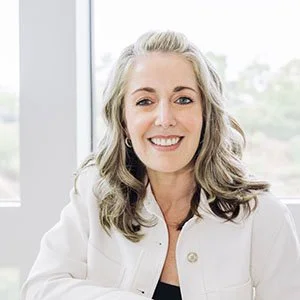
In this episode, Michelle Weinstein joins Ron and Ed to challenge many of the assumptions accountants have about sales, pricing, and client relationships. They discuss why so many professionals undercharge despite delivering tremendous value, how to overcome the discomfort of selling, and why moving from compliance work to trusted advisory starts with changing your mindset. Whether you’re struggling to raise your fees, attract better clients, or simply become more confident in business development, this conversation offers practical insights for building a more profitable—and more abundant—practice.

Michelle Weinstein believes that technical expertise alone isn’t enough to build a thriving accounting firm—you have to be able to confidently communicate your value. As founder of The Abundant Accountant and The Pitch Queen, Michelle has helped accounting professionals add millions in revenue by replacing fear-based selling with authentic, value-driven conversations.

About Michelle Weinstein

Michelle Weinstein is a seasoned entrepreneur, sales strategist, and founder of The Abundant Accountant. She helps accounting, tax, fractional CFO, and bookkeeping firm owners own their value and confidently sell high-level services without pressure or burnout. Her clients have collectively added over $38 million in additional revenue to their firms, all without working more hours, chasing more clients, or doing anything they didn’t want to do.

SHOW NOTES

Segment one

  • Why are accountants terrified of selling and asking for money? “I think the problem is that the profession wants to help everyone.” —Michelle Weinstein

  • “You think that more clients are going to solve your problem, and it’s not. It actually compounds the problem.” —Michelle Weinstein

  • “Prescription without diagnosis is malpractice.” —from Ron today on the show

Segment two

Segment three

  • Michelle Weinstein is the Abundant Accountant but she is also THE Pitch Queen! https://www.thepitchqueen.com/ 

  • “I think every firm owner is so unique and different and that what we sell is our knowledge…I would actually go against [a request for proposal]” —Michelle Weinstein

  • “What are the top 10 things that drive you crazy about the clients that you would want to fire right now, but you’re too scared to do it because you don’t want to lose the revenue? Those are the things that you should look for in walking the other way [from prospects].” —Michelle Weinstein

  • “We have to educate on the potential consequences at play. That’s another step int he sale process, is thinking about the cost and consequences of what your prospects could potentially pay financially, emotionally, time-wise, if they do not engage your firm.” —Michelle Weinstein

Segment four

  • “I actually have a rule that you’re not allowed to use any AI from my course for eight weeks, because you have to understand and learn the psychology of sales and how to sell. No AI is going to be in a sales meeting with a client.” —Michelle Weinstein

  • “You need to learn how to sell. If you’re in a job, you don’t have to the be one who’s the rainmaker brining in the revenue. But if you start a firm you signed up for a 24/7 sales career.” —Michelle Weinstein

  • A big THANK YOU to Michelle Weinstein for joining us today. She is THE Abundant Accountant! Learn more at https://theabundantaccountant.com/ 

Bonus Content is Available As Well

Did you know that each week after our live show, Ron and Ed take to the microphone for a bonus show? Typically, this bonus show is an extension of the live show topic (sometimes even with the same guest) and a few other pieces of news, current events, or things that have caught our attention.

Click the “FANATIC” image to learn more about pricing and member benefits. 

Episode #607 - Beyond the Software: Rethinking Accounting Technology

Ron and Ed welcome John Dierkhising of Bottom Line Accounting Services and returning guest Shannon Kaiser of Summit for a conversation at the intersection of accounting, technology, and service. John brings the perspective of a practitioner who supports businesses using Sage and other accounting technologies, while Shannon brings deep experience in application hosting, cloud infrastructure, and managed services. Together, they explore how the right technology environment can remove friction, improve support, and allow firms to serve more clients without adding unnecessary complexity. Expect a practical discussion about Sage, hosting, scalability, reliability, and what accounting professionals should really be looking for from their technology partners.

About John Dierkhising

John Dierkhising is the owner of Bottom Line Accounting Services, a Minnesota-based firm providing accounting, bookkeeping, and financial software consulting. John and his team specialize in helping businesses get more from systems including Sage, QuickBooks, Crystal Reports, and related technologies. A longtime Sage practitioner and consultant, John brings a hands-on perspective on how accounting technology, support, and hosting can help firms operate more efficiently and serve clients at scale.

About Shannon Kaiser

Shannon Kaiser is General Manager of Application Hosting at Summit and a veteran technology executive with extensive experience in cloud infrastructure, cybersecurity, application delivery, and managed services. He has led engineering, operations, and technology teams and today focuses on helping organizations build secure, scalable technology environments that support growth while reducing operational risk. Shannon previously joined TSOE for Episode #590, “Security, Scale, and Trust.”

SHOW NOTES

Segment one

  • What’s the biggest implementation gap today? John has seen over the last few years (after the rush to the cloud) has been the ability for long time business owners to come up to speed on existing technology. Which is where Bottom Line Accounting Services helps.

  • The emergence of AI in the SMB space is an area of opportunity that Shannon sees in the space today.

  • John’s team uses an agnostic tool to reach into Sage 50 and Sage 100 data, layer over a SQL mirror, and use AI to ask questions in real time.

  • Are there still misconceptions about the cloud, critical business data, and security? “Oh my goodness.” —Shannon Kaiser of Summit

Segment two

  • What’s the biggest accounting profession problem today (outside of technology) according to John Dierkhising of Bottom Line Accounting Services? Being real time with the clients and helping with succession planning

  • John had a great answer to “Should we work with a fewer number of customers?” during segment two of the show today. Mostly, yes but his answer was about the nuances of more vs less.

  • “Technology Agnostic, Outcome Obsessed: A New Rubric for Evaluating Infrastructure” by Shannon Kaiser https://summithq.com/new-rubric-for-evaluating-infrastructure/ 

  • From Shannon’s article, “In a recent Accenture study, only 20% of AI tokens used were tied directly to business outcomes. The rest? Experiments and tech for tech’s sake.” https://summithq.com/new-rubric-for-evaluating-infrastructure/ 

  • GREAT question from Ron to John today in segment three: “Do we rally have a talent shortage or do we have a shortage of companies offering jobs to young people worth doing?”

 Segment three

  • Regarding AI in the ERP space from John Dierkhising: “You don’t see as much on the customization side where you would need to worry about some of the growth later.” EXACTLY. AI provides much more flexibility (editor’s note: but not necessarily scalability)

  • Regarding AI in the ERP space from Shannon Kaiser of Summit: “Customization becomes less and less of a need [as a result of AI] because you can then ask for ad hoc reports.”

  • What about a Quickbooks replacement that is completely vibe-coded? “That’s definitely in play. I almost feel like migration to the cloud 3 years ago was big. […] And now coming off a legacy system, you will be going to an AI system.” —John Dierkhising of Bottom Line Accounting Services

  • John Dierkhising of Bottom Line Accounting Services called out a pretty important challenge related to AI adoption in a typical accounting business customer base: “I don’t see how it solves the issue on the client side where it’s hard to get clients move and change.”

Segment four

  • What KPIs need changing as a result of AI? The standard costing side, work in process, production control - just to name a few from John Dierkhising

  • Does agentic AI cause the whole concept of a software stack to disappear? “If I had to put my money on one bet, that would be it.” —Shannon Kaiser of Summit

  • A big THANK YOU to John Dierkhising of Bottom Line Accounting Services and Shannon Kaiser of Summit for joining us today! 

Bonus Content is Available As Well

Did you know that each week after our live show, Ron and Ed take to the microphone for a bonus show? Typically, this bonus show is an extension of the live show topic (sometimes even with the same guest) and a few other pieces of news, current events, or things that have caught our attention.

Click the “FANATIC” image to learn more about pricing and member benefits.