





april 2026

Episode #593 - Pricing AI Credit: Activity-based costing in a hoodie

Artificial intelligence vendors love to talk about tokens and credits, but are these pricing models really helping customers—or simply obscuring the true cost of AI? In this episode, Ron and Ed take aim at the growing trend of token-based pricing, arguing that it shifts uncertainty and risk from providers to customers while creating unnecessary complexity. Drawing on insights from pricing experts, recent industry commentary, and their own experiences, they examine why cost-based pricing has long been discredited and why customer value—not vendor costs—should determine price.

The conversation explores alternative approaches to AI pricing, including tiered models based on speed, complexity, and service levels. Along the way, Ron, Ed, and Greg discuss the rapid decline in AI infrastructure costs, the emergence of lower-cost large language models, and why today’s premium-priced AI services may face the same economic pressures that have driven technology costs downward for decades. If you’ve ever wondered whether AI credits are the modern equivalent of arcade tokens, this episode offers a provocative look at where AI pricing is headed—and why customer experience should be at the center of it.

SHOW NOTES

Segment one

Segment two

  • AI Credit Monetization: From Hype to Concrete Blueprint by Michael Mansard of Zuora https://www.zuora.com/resource/ai-credit-monetization-from-hype-to-concrete-blueprint/

  • One of the big takeaways from the Zuora white paper: Many companies are adopting AI credits because competitors are doing it, not because their business actually needs them.

  • “Activity based accounting is just cost accounting with its own wacky assumptions. It’s all bad math.” —Ron Baker 

  • “I’ve spent decades arguing against cost-plus pricing, and token-based pricing is simply cost-plus. So when I say token-based pricing makes sense right now, I want you to understand how much it pains me to type that.” The Case for Token-Based Pricing by Mark Stiving, Ph.D. (friend of the show) https://impactpricing.substack.com/p/the-case-for-token-based-pricing 

Segment three

Segment four

Bonus Content is Available As Well

Did you know that each week after our live show, Ron and Ed take to the microphone for a bonus show? Typically, this bonus show is an extension of the live show topic (sometimes even with the same guest) and a few other pieces of news, current events, or things that have caught our attention.

Click the “FANATIC” image to learn more about pricing and member benefits. 

Episode #592 - Smart People, Silly Systems: With Debra Kilsheimer

Debra Kilsheimer joins Ron and Ed for a lively discussion about leadership, culture, AI, persuasion, human nature, and the curious ability of professionals to simultaneously complain about a problem and defend the system causing it.

We'll also explore what wisdom comes with experience, why logic is a surprisingly ineffective tool for changing minds, and whether the accounting profession is finally approaching an inflection point—or just finding new ways to avoid one.

And yes, at some point we'll probably talk about the Pink Cadillac.

Debra's Bio
Debra Kilsheimer is what happens when you combine a CPA, a stand-up comic, a leadership coach, a technology enthusiast, and enough energy to power a small city. A longtime champion of helping accountants become better leaders, communicators, and human beings, Debra has spent years challenging firms to stop doing things simply because "that's the way we've always done it." 

She's a speaker, consultant, podcaster, AI enthusiast, former Mary Kay superstar, and one of the few people who can simultaneously make you laugh, think, and question your entire business model. She's a friend of the show, and recently returned from Scaling New Heights, where she was recognized for her work in AI innovation.

SHOW NOTES

Segment one

  • Debra just returned from Scaling New Heights where she was a main stage speaker https://www.woodard.com/speaker-listing-scaling-new-heights-2026 

  • On resistance to change in the accounting industry: “What’s the WORST thing that can happen if you make a mistake as an accountant? You pay a fine.” —Debra Kilsheimer

  • As a CPA, Debra did the tax returns for a Mary Kay salesperson. Thinking about leaving the accounting industry, Debra made the transition to Mary Kay early in her career. And yes, a pink Cadillac was involved.

  • Today I learned, on the basis of sales commissions, Mary Kay claims to have created more female millionaires than any other organization in the United States

Segment two

  • Why did Mary Kay choose pink? In the 1960s, most American bathrooms were white. So pink was chosen for the Company's packaging to give women beauty products they could keep conveniently on their bathroom counters.

  • Interesting conversational theme from Scaling New Heights this year: It mostly focused on AI and the reticence or fear around adoption. In other words, many accounting professionals are excited but do not know where to begin.

  • On magic vs logic work (with a hat tip to Tim Williams): “How are we creating additional value for those that we serve, and how can we use AI to do that?” —Ed Kless

Segment three

  • Ron: “We spend hardly any time discontinuing obsolete practices. Why do you think that is?”
    Debra: “Well, they’re easy. I’m used to doing it like that. Making a change is hard.”

  • Did you see new tech at Scaling New Heights that excited you? “People are getting really excited about the AI GLs that are coming out.” —Debra Kilsheimer

  • Rise2040: Co-creating our profession’s future https://www.aicpa-cima.com/advocacy/landing/rise2040 

  • How do we recruit new accountants with a message on a wrapped car? “If you want to make someone’s dreams come true, follow me!” —Debra Kilsheimer

Segment four

  • GetBlazr is a new venture from Debra Kilsheimer. Check it out here: https://getblazr.ai/ 

  • “I love being an accountant. I love it. I do think we change lives. So, I just want to make it more fun for the people on the side, the customers.” —Debra Kilsheimer 

  • A big THANK YOU to Debra Kilsheimer for joining us today. You can find her on LinkedIn at this link https://www.linkedin.com/in/debliberate 

Bonus Content is Available As Well

Did you know that each week after our live show, Ron and Ed take to the microphone for a bonus show? Typically, this bonus show is an extension of the live show topic (sometimes even with the same guest) and a few other pieces of news, current events, or things that have caught our attention.

Click the “FANATIC” image to learn more about pricing and member benefits. 

Episode #591 - Revolutionary Roundup: John Adams, the Semiquincentennial, and a Few Asides

Ron and Ed turn their attention to the upcoming Semiquintcentennial, with a little theatrical flair thrown in from Ed and his turn as John Adams in 1776. Along the way, they reflect on the ideas, personalities, and historical drama surrounding America’s 250th anniversary—and what those themes might still teach us about leadership, liberty, and public life today. If time permits, they’ll also weigh in on a few timely developments in the accounting profession and the ever-fascinating world of pricing.

SHOW NOTES

Segment one

Segment two

  • The actor who played John Adams in the original Broadway production of 1776, William Daniels (later famous as Mr. Feeny on Boy Meets World), was nominated for a Tony Award—but he actually declined the nomination because he felt the entire cast deserved recognition rather than just him. It's one of the rare instances of a performer turning down a Tony nomination.

  • The Americans Who Risked Everything https://www.101bananas.com/library2/limbaugh.html 

  • 18 were under 40 years old, 3 were under 20. What are we talking about? The signers of the Declaration of Independence 

  • Evidence heavily points to Francis Hopkinson, a signer of the Declaration of Independence and a delegate from New Jersey, as the designer of the American flag. https://www.nationalgeographic.com/history/article/betsy-ross-likely-didnt-sew-the-first-us-flag 

Segment three

  • “A land, perhaps, the only one in the universe, in which political or civil liberty is the very end and scope of the constitution.” —Sir William Blackstone

  • “The American, is the Englishman left to himself.” —Alexis de Tocqueville

  • Liberty “can be lost, and it will be, if the time ever comes when these documents are regarded not as the supreme expression of our profound belief, but merely as curiosities in glass cases.” —Harry Truman

  • “The President himself is no more than a representative of public opinion at the time of his election; and as public opinion is subject to great and frequent fluctuations, he must accommodate his policy to them; or the people will speedily give him a successor; or either House of Congress will effectually control his power.” —John Quincy Adams https://lonang.com/library/reference/jqadams-jubilee-constitution-1839/ 

  • The "original" First Amendment passed by Congress in 1789 was an unratified proposal detailing a formula to continuously increase the size of the House of Representatives as the population grew. Because it failed to secure enough state ratifications, the "third" proposed amendment regarding religious, speech, and press freedoms became today's First Amendment to the United States Constitution. https://archivesfoundation.org/newsletter/10-bor-facts/ 

  • “What the Founders’ Drinking Habits Have to Do with Gun Rights” by Charles C. W. Cooke https://www.nationalreview.com/2026/03/what-the-founders-drinking-habits-have-to-do-with-gun-rights/ 

Segment four

  • Timeline of the American Revolution https://en.wikipedia.org/wiki/Timeline_of_the_American_Revolution 

  • Lifelong frenemies Thomas Jefferson and John Adams died on the same day—July 4, 1826, exactly 50 years after the Declaration of Independence

  • “It had about it nothing of the lawless and disordered nature of a riotous insurrection. It was maintained on a plane which rises above the ordinary conception of rebellion. It was in no sense a radical movement but took on the dignity of a resistance to illegal usurpations.” —President Calvin Coolidge's 1926 speech on the 150th Anniversary

Bonus Content is Available As Well

Did you know that each week after our live show, Ron and Ed take to the microphone for a bonus show? Typically, this bonus show is an extension of the live show topic (sometimes even with the same guest) and a few other pieces of news, current events, or things that have caught our attention.

Click the “FANATIC” image to learn more about pricing and member benefits. 
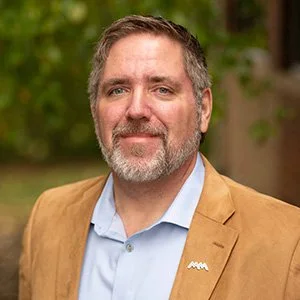
Episode #590 - Security, Scale, and Trust: A Conversation with Summit’s Shannon Kaiser

As part of our new partnership with Summit, Ron and Ed welcome Shannon Kaiser, a technology leader whose career spans cloud infrastructure, cybersecurity, application hosting, and managed services. Shannon shares how Summit helps organizations navigate the increasingly complex world of IT while maintaining the security, reliability, and performance businesses depend on every day.

About Shannon Kaiser
Shannon Kaiser is General Manager of Application Hosting at Summit and a veteran technology executive with extensive experience in cloud infrastructure, cybersecurity, application delivery, and managed services. Having led engineering, operations, and technology teams throughout his career, Shannon focuses on helping organizations build secure, scalable environments that support business growth while reducing operational risk.

SHOW NOTES

Segment one

  • Welcome to The Soul of Enterprise, Shannon Kaiser! Shannon is General Manager of Application Hosting at Summit. https://summithq.com/ 

  • What belief about business did Shannon hold in his 20s and has now completely abandoned? “That business was only about the dollars and cents.”

  • What do most accounting firm leaders consistently get wrong about technology? “That they think they can consume it as individual tools.”

  • What business or technology cliche would you like to see retired immediately? “That technology makes us more efficient”

  • What’s your approach to AI? Do you see this as utopia, or dystopia? “I think that the amount of productivity we will get from these tools will be amazing. […] We are not prepared for what is actually happening in real time today.”

Segment two

  • “Technology is a way to build trust, continuity, operationally, and the ability to continue to service.” —Shannon Kaiser, Summit

  • “The biggest misconception is that risk is a technology problem. Hollywood has taught us that there are hackers behind keyboards in dark rooms typing furiously at their keyboard.” —Shannon Kaiser, Summit

  • On why ransomware attacks are prevalent: “It isn’t the people per se. It’s the status quo and policy that the people are following and the lack of rigor in reviewing it.” —Shannon Kaiser, Summit

Segment three

Segment four

  • From Ed Kless on project management: “The number one reason for project failure is that very rarely is a project actually properly initiated.” 

  • From Ed again on project management: “Most people want to compress the planning process into a shorter time period because they want to get to execution. Then they execute. Then after that, there’s this really long phase called fix-it.”

  • A big THANK YOU to Shannon Kaiser for joining us today! Shannon is the General Manager, Application Hosting at Summit. Learn more at this link https://summithq.com/ 

Bonus Content is Available As Well

Did you know that each week after our live show, Ron and Ed take to the microphone for a bonus show? Typically, this bonus show is an extension of the live show topic (sometimes even with the same guest) and a few other pieces of news, current events, or things that have caught our attention.

Click the “FANATIC” image to learn more about pricing and member benefits. 

Episode #589 - Last Branch Standing: a conversation with Sarah Isgur

Ron and Ed welcom Sarah Isgur to discuss her book "Last Branch Standing," which explores the Supreme Court's role in American government, its counter-majoritarian function and its independence from partisan politics. Contray to popular belief, very few cases are decided along ideological lines and Sarah will emphasize the need to protect the court's independence and criticized Congress for failing to act on key issues. We will ask her about billing by the hour and red her thoughts on political strategy and the importance of aspirational goals in politics.

Sarah Isgur is lawyer, political analyst, and professional constitutional sparring partner, who has the ability to make Supreme Court procedure sound like a cross between stand-up comedy and a bar fight involving the Federalist Society. She’s a senior editor at The Dispatch and SCOTUSblog, co-host of one of Ed's favorite podcasts, Advisory Opinions with David French, and a survivor of many polical campaigns and the Department of Justice.

Her new and first book, Last Branch Standing: A potentially surprising, occasionally witty journey inside today’s Supreme Court is New York Times bestseller and currently #1 on Amazon in the Courts & Law category.

SHOW NOTES

Segment one

Segment two

Segment three

  • Fun bingo fact about The Soul of Enterprise: “I ran against Ken Paxton for Texas State Senate in 2012 as a Libertarian, and Angela Paxton in 2022.” —Ed Kless

  • The Professional’s Guide to Value Pricing by Ron Baker https://www.amazon.com/Professionals-Guide-Value-Pricing-Ronald/dp/0156072246

  • On the billable hour: “It’s why I decided I couldn’t work at a law firm.” —Sarah Isgur

  • “If you really think about it, the billable hour is based on the labor theory of value….which is actually Marxism.” —Ed Kless

Segment four

Bonus Content is Available As Well

Did you know that each week after our live show, Ron and Ed take to the microphone for a bonus show? Typically, this bonus show is an extension of the live show topic (sometimes even with the same guest) and a few other pieces of news, current events, or things that have caught our attention.

Click the “FANATIC” image to learn more about pricing and member benefits. 

Episode #588 - Pricing Update: AI, Discounting, and the Future of Value

This week, Ron and Ed deliver a wide-ranging pricing update, exploring the latest thinking shaping both accounting firms and the broader business world. Drawing from recent articles, posts, and commentary, they examine how AI companies like GPT, Claude, and Perplexity are positioning and pricing their offerings, including the growing role of token-based pricing models and what they signal about the future of value measurement.

The conversation also dives into the dangers and unintended consequences of discounting, inspired by recent insights from pricing experts in the PPS community. Along the way, Ron and Ed connect these ideas back to accounting firms, professional services, and the practical challenges businesses face when trying to price for value in rapidly changing markets.

SHOW NOTES

Segment one

Segment two

  • Value Protection is Not Optional by Jon Hubbard https://www.boomer.com/post/value-protection-is-not-optional 

  • “Time is not a resource because you can replenish a resource.” —Ron Baker

  • On the billable hour: “Ron, have you ever sat at your desk and was just thinking about something? And didn’t have your hands on the keyboard actually doing something? Don’t we want our professionals to think?!!?!?” —Ed Kless

Segment three

  • Byron Johnson, a CPA in Canada, sent in a great note to the show about three-tier pricing. Ron and Ed talked about this during the start of the third segment.

  • Let's Get Real or Let's Not Play by Mahan Khalsa https://www.amazon.com/Lets-Get-Real-Not-Play/dp/1591842263 

  • Quote from the show today: “How you sell is indicative of how you solve” (attributed to Mahan Khalso)

  • On offering three tier pricing to customers: “When you’ve got to sit down and come up with your three choices, you are effectively thinking through competing with yourself. And that’s important.” —Ed Kless

Segment four

  • If this intrigues you, LISTEN to segment four of the show today: “How do you change a service into an experience? You customize a service, and then that turns it into an experience. And we think the best way to do that is with subscriptions.” —Ron Baker 

  • Shameless plug: Threshold has a transformation class for those wondering about turning a service into an experience. https://thresholdnow.com/ 

  • On confident pricing: “You are 2-3 times any of your competitors” “Huh, that’s odd, because usually it’s like 5-6 times.”

Bonus Content is Available As Well

Did you know that each week after our live show, Ron and Ed take to the microphone for a bonus show? Typically, this bonus show is an extension of the live show topic (sometimes even with the same guest) and a few other pieces of news, current events, or things that have caught our attention.

Click the “FANATIC” image to learn more about pricing and member benefits. 

Episode #587 - Ron's Rummage: Clearing Ron's Stack of Stuff

In another installment of our fan-favorite miscellany series, Ron digs into the ever-growing stack of articles, ideas, trends, and observations he’s been collecting—and finally clears the deck. From developments in technology and AI to economics, business strategy, professional skepticism, and the occasional offbeat tangent, this episode is a rapid-fire tour through the topics that caught Ron’s attention but didn’t yet have a home of their own.

Along the way, Ron and Ed connect seemingly unrelated dots, challenge conventional wisdom, and share practical insights for entrepreneurs, accountants, and knowledge workers navigating a world changing faster than ever. Expect sharp commentary, unexpected connections, and plenty of classic TSOE banter in this wide-ranging conversation.

SHOW NOTES

Segment one

Segment two

Segment three

Segment four

Bonus Content is Available As Well

Did you know that each week after our live show, Ron and Ed take to the microphone for a bonus show? Typically, this bonus show is an extension of the live show topic (sometimes even with the same guest) and a few other pieces of news, current events, or things that have caught our attention.

Click the “FANATIC” image to learn more about pricing and member benefits. 
Episode #586 - Convergence Is Here: What AI Means for Your Future with Greg Tirico

In this episode of The Soul of Enterprise, Ron and Ed welcome back Greg Tirico to explore the accelerating convergence of technology, especially AI, and its profound implications for professionals. Drawing on insights from the “Convergence 2026” report, Greg unpacks how traditional firm boundaries are dissolving as tech, talent, and capital increasingly intersect.

The conversation dives into what this shift means for knowledge workers, from evolving skill expectations to the redefinition of value in professional services. As AI reshapes workflows and client expectations, firms must rethink not only how they operate, but what they offer.

If you’re trying to understand where the profession is headed and how to stay relevant in an AI-driven world—this episode provides a clear, informed perspective on the forces shaping the future.

SHOW NOTES

There are 10 total convergences identified by the FTSG methodology. We don’t have time for all of them :) 

ONE: Human augmentation

In the past this was eyeglasses and vaccines

Today:

These devices are not for the mobility challenged. They are meant for the able bodied.

What if your company requires augmentation for extremely physical roles?

TWO: Unlimited Labor

In the past:

  • Gutenberg printing press

  • Ford assembly line

  • VisiCalc 

Today:

  • AlphaEvolve from DeepMind: Algorithms automatically derived from basic inputs

  • Quite obviously, AI Agents

“The next internet isn’t being made for you. It’s being made for Agents. Pretty soon we won’t be the interface between decisions and execution anymore.”

So what happens when agents collide with robotics?

THREE: Automated factories or “lights-out industrialism”

This isn’t retrofitting factories with robots. These are first principle designs. Think, Adam Smith’s pin factory. 

Unlimited labor inverts the idea that labor is the engine for growth

  • Scale without population

  • Output without wages

  • Production without people

Most datacenters employ fewer than 35 people. 

Will we see an economy with an increasing GDP AND a high level of unemployment? In other words, what do we call an economy that is thriving and has no use for you?

FOUR: Emotional outsourcing

In the past:

  • Therapists

  • Meditation

  • Family and friends

Today:

What about the shift of comfort and companionship from people to machines?

  • In 2014, Microsoft launched a chatbot called Xiaoice (wikipedia link)

  • Character.ai

  • In the Convergent Report presentation, Amy Webb used an AI generated video to manipulate feelings and didn’t tell the audience until the end.

FIVE: The Corporate Panopticon

In the past:

  • showing a passport at a border

  • swiping a credit card at a checkout

  • entering a password at login

Today:

  • Wi-Fi Sensing: Commodity Wi-Fi hardware can now be used as a room-scale physiological sensor. Systems like Pulse-Fi can estimate heart rates, respiration, and gait by analyzing how signals reflect off a body

  • Ambient Audio Context: Microphones in smart devices do more than listen for voice commands; they analyze background "acoustic signatures" like HVAC rhythms, traffic patterns, and room echoes to infer your exact location

  • Payment Metadata Analysis: Even without seeing itemized receipts, payment networks analyze transaction timing and vendor codes to infer highly personal details, such as pregnancies, chronic illnesses, or addictions

  • Biometric Signatures: Identity is verified through markers you cannot "leave at home," such as the way you hold your phone, your gait, or your thermal signature

    • You can reset your password. You cannot reset your biometric signature

“We traded China’s iron fist for Silicon Valley’s velvet glove—same surveillance, better branding.”

SIX: Living Intelligence

In the past:

  • Most systems have operated in three distinct phases: collect data, analyze what they’ve gathered, wait for humans

Today:

  • Sensors track biological signals, environmental conditions, and behavioral patterns in real time. 

  • Adaptive AI models interpret what’s happening. 

  • Then the system acts, adjusting insulin doses, rerouting shipments, tweaking production lines, without pausing for human approval.

MIT engineers have designed capsules containing biodegradable radio frequency antennas that can confirm when a pill has been swallowed. These biosensors address a

major health care challenge: patients failing to take medication as prescribed.

Bonus Content is Available As Well

Did you know that each week after our live show, Ron and Ed take to the microphone for a bonus show? Typically, this bonus show is an extension of the live show topic (sometimes even with the same guest) and a few other pieces of news, current events, or things that have caught our attention.

Click the “FANATIC” image to learn more about pricing and member benefits. 
Episode #585 - Conversations from the Chaminade Leadership Summit

In this special episode of The Soul of Enterprise, Ron and Ed welcome a panel of speakers from the Chaminade Leadership Summit (CLS), an event focused on developing principled leadership and purposeful organizations.

Joined by Bro. Thomas J. Cleary and fellow summit speakers, the conversation explores the intersection of leadership, values, and organizational culture. Drawing from their diverse experiences, the panel discusses how leaders can foster trust, inspire accountability, and navigate complexity in today’s rapidly changing environment.

From practical leadership frameworks to personal reflections on mission-driven work, this episode offers insights for anyone looking to lead with clarity and purpose—whether inside a firm, a team, or a broader community.

SHOW NOTES

Segment one

  • One of the best-known Marianist schools in the United States is Chaminade High School on Long Island. The school was founded in 1930 in Mineola, New York, at a time when the surrounding area was still largely farmland and undeveloped suburban land. The Marianist brothers opened it as an all-boys Catholic college preparatory school focused on academics, faith formation, discipline, and community.

  • The original Chaminade High School class was 130 students. Today, there are 62 classrooms and 1,700 students. 

  • Louis V. Gerstner Jr. is one of Chaminade High School’s most notable alumni, graduating with the Class of 1959. Gerstner is best known for becoming the CEO of IBM in 1993 during one of the company’s most difficult periods. At the time, many analysts believed IBM would need to be broken apart, but Gerstner led a major turnaround that is often considered one of the most successful corporate recoveries in business history. He shifted IBM toward integrated services and enterprise computing rather than just hardware manufacturing.

  • “What drives any institution is the culture within that institution.” —Brother Thomas Cleary, S.M. ’81

Segment two

  • The Chaminade Leadership Summit (CLS) is a relatively new leadership and professional development conference created by Chaminade High School on Long Island. The inaugural summit launched in 2025 as part of the school’s broader vision leading up to its 100th anniversary. https://cls.chaminade-hs.org/ 

  • The 2026 Chaminade Leadership Summit (CLS) theme is “Connected Leadership,” emphasizing authentic relationships, collaboration, and values-driven leadership in an increasingly interconnected world.

  • It’s hard to overstate the impact of the Chaminade Leadership Summit. CLS in the future MIGHT include small regional events and virtual options. You heard it here first :) 

Segment three

  • We are joined by the Chief Academic Officer of Chaminade High School. A Chief Academic Officer (CAO) is the senior leader responsible for the overall academic vision, quality, and performance of a school, college, university, or education organization.

  • If you have a kid or know anything about high school AP classes, this stat is amazing. At Chaminade High School last year 27 kids took AP Advanced Calculus. 26 out of 27 received a 5 on their AP test!

  • School AI is an example of an AI tool in use at Chaminade High School. And it really gets to how they are integrating AI where appropriate and using it to help guide the overall education of students. https://schoolai.com/ 

Segment four

  • Mr. Robert Paul '92 is the current principal of Chaminade High School in Mineola, New York, named as the 12th principal in the school's history. He took over the role after Bro. Joseph Bellizzi, S.M. stepped down in June 2024 following 25 years of service.

  • HSD = High Satisfaction Day. Ron and Ed touched on this during episode 173 https://www.thesoulofenterprise.com/173 

  • The motto at Chaminade High School is “Fortes in Unitate” (Strength in Unity) https://en.wikipedia.org/wiki/Chaminade_High_School 

  • A big THANK YOU to Chaminade High School and the Chaminade Leadership Summit for hosting Ed Kless and Ron Baker today. The podcast will be available in just a few hours, the show notes will be at TheSoulOfEnterprise.com on Monday, and a series of short videos will go out on YouTube next week.

Bonus Content is Available As Well

Did you know that each week after our live show, Ron and Ed take to the microphone for a bonus show? Typically, this bonus show is an extension of the live show topic (sometimes even with the same guest) and a few other pieces of news, current events, or things that have caught our attention.

Click the “FANATIC” image to learn more about pricing and member benefits. 

Episode #584 - Accrual Intentions: Interview with Alexis Kingsbury

In this episode of The Soul of Enterprise, Ed Kless and Ron Baker speak with Alexis Kingsbury about a rather audacious experiment: running an entire accountancy practice staffed almost entirely by AI.

The firm—Accrual Intentions—had eleven AI “team members” and one human: Alexis. What began as a curiosity about the real capabilities of AI quickly became something far more interesting. The AI team produced accounts, onboarded clients, and developed surprisingly human-like dynamics—personalities, accountability, even a kind of culture.

But the experiment also ran into limits, particularly around compliance and professional judgment. The result is Kingsbury’s new book, a fascinating mix of business experiment, comedy, and serious reflection on what AI actually means for professional services.

SHOW NOTES

Segment one

  • Here is some background on our guest today, Alexis Kingsbury https://alexiskingsbury.com/#about 

  • “I started the world’s first, 100% AI accountancy firm. But it’s probably important to say from the start that it was very much set up as an experiment, arguably even a parody.” —Alexis Kingsbury

  • On the AI accountancy experiment: “I turned it into a book because I wanted to help other people go through the intellectual, but also emotional, journey that I went through.” —Alexis Kingsbury https://accrualintentions.com/ 

  • Meet the team behind the AI accountancy firm. Alexis is the only human and Grace Ledger (clever!) is the Managing Partner https://accrualintentions.com/#team 

Segment two

  • Great achievement for Alexis in 2025: “I’m incredibly proud (and still a bit stunned) to share that last night I was named Neurodiverse Entrepreneur of the Year at the Great British Entrepreneur Awards.” https://www.linkedin.com/posts/alexkingsbury_neurodiversity-entrepreneurship-adhd-activity-7396471129848193025-cm9W 

  • Regarding the book, Accrual Intentions, by Alexis Kingsbury….he has a review from a rather familiar person: “I loved it. A huge and important contribution. This is not a warning. It is a summons." — Ronald J. Baker https://accrualintentions.com/ 

  • Ron asked Alexis if he, the human in the loop, was always the bottleneck in the first 100% AI accountancy firm. The answer from Alexis? “Yes, absolutely.”

  • The conversation today about confidence (and being overly confident) is one of the most important lessons. The 100% AI accountancy firm from Alexis Kingsbury accidentally claimed it had professional indemnity insurance that didn’t exist, highlighting how confidently AI can invent information if not monitored carefully.

Segment three

  • “Everyone is about to become a manager. Not in the form of managing people in a corner offer. […] In terms of managing output, directing work and thinking about what’s the outcome I want.” —Alexis Kingsbury

  • The 100% AI accountancy firm created by Alexis came up with their OWN ideal client profile. One of the requirements? It must be a client that can communicate via email only because “we” can’t answer the phone

  • “The biggest sin in the economy today, in business today, is wasting your customer’s time.” —Ed Kless

  • Regarding AI: “It’s unfair to say it can’t do any innovation, because I think innovation is a spectrum.” —Alexis Kingsbury

Segment four

  • What’s a big mistake firms are making with AI right now? “It’s always been a good idea for any firm to document their business, to be clear on what their vision and values are, who their ideal customer is, what the process is for how they assess a get a new customer [and so on]. That becomes SUPER CRITICAL with AI.” —Alexis Kingsbury

  • I don’t think I could have said this better myself. Regarding AI: “This is a profoundly weird technology.” —Ron Baker

  • A big THANK YOU to Alexis Kingsbury for joining us today. The book, Accrual Intentions, is available today! Check it out here https://accrualintentions.com/ 

Bonus Content is Available As Well

Did you know that each week after our live show, Ron and Ed take to the microphone for a bonus show? Typically, this bonus show is an extension of the live show topic (sometimes even with the same guest) and a few other pieces of news, current events, or things that have caught our attention.

Click the “FANATIC” image to learn more about pricing and member benefits. 

Episode #583 - The AI Tools Changing Accounting: Fourth Interview with Hector Garcia

In this episode of The Soul of Enterprise, Ed Kless and Ron Baker sit down with Hector Garcia, one of the most recognizable educators in the accounting profession thanks to his hugely popular YouTube channel. Known for translating complex technology into practical insight, Hector joins the show to discuss the rapidly evolving ecosystem of AI tools for accounting professionals. The conversation moves beyond the hype to explore which tools are actually useful today, how AI is reshaping workflows, and what accounting professionals should be experimenting with right now if they want to stay relevant in an AI-augmented profession.

Artificial intelligence is everywhere in accounting right now. But separating the genuinely useful tools from the endless parade of demos, buzzwords, and vendor hype can feel like a full-time job. That’s why Ed and Ron invited Hector Garcia to the show.

Hector has become one of the most influential educators in the profession through his wildly popular YouTube channel, where hundreds of thousands of accounting professionals follow his explanations of emerging technologies, workflows, and software tools. His specialty is cutting through the noise and showing practitioners what actually works.

In this episode, Hector walks Ed and Ron through the latest generation of AI tools available to accounting professionals—what they can do, where they fall short, and which ones are worth experimenting with today.

But the discussion goes deeper than just tools. The trio also explores how AI is reshaping the role of the accounting professional, from automation of routine work to the emergence of new advisory opportunities.

For anyone trying to keep up with the pace of technological change in the profession, this episode offers a clear-eyed look at what matters—and what doesn’t.

SHOW NOTES

Segment one

Segment two

  • From Hector: The comments on this video about reaching limits are funny https://www.youtube.com/watch?v=t_LBECIQQqs 

  • Regarding tax information in AI tools: “ChatGPT and Claude, they tend to go to tangential sources, non-authoritative sources.” —Hector Garcia 

  • “Should people just use the API?” —Ed Kless. Hector’s answer was hilarious! “API.com is not something people are going to be able to use.”

  • “The solution right now is for all firms to build their own custom software. And they create their own customized needs around the UI, so the AI uses the things that they need them to.” —Hector Garcia

Segment three

  • “Taking care of oneself is the one thing you cannot delegate.” —Hector Garcia

  • How does Hector think about the word TRANSFORMATION? “To make a significant change in which you cannot go back. A lot of us seek that.”

  • “I did not know what it felt like to be a father until my daughter was born. [Regarding business transformations as a comparison], our best approach is to say we help you transform. We are just short for words. I don’t think we have the language.” —Hector Garcia

  • “I’m in love with the idea of being a numbers guy; of being the numbers Sherpa for my clients.” —Hector Garcia

Segment four

  • What’s the latest and greatest on AI, Hector? Opus 4.7 (the models are getting better and better), OpenAI came out with a competitor to Claude Cowork, also Dispatch in the Claude app

  • But I don’t code, Hector. Why should I use Claude Code? “Everything in your computer is code. You’re working in code. That means the lowest common denominator here is code.”

  • Something else Hector is excited about just launched today. It’s called Claude Design https://www.anthropic.com/news/claude-design-anthropic-labs 

  • A big THANK YOU to Hector Garcia for joining us today. His YouTube channel has HUNDREDS OF THOUSANDS of subscribers. Are you one of them? https://www.youtube.com/c/HectorGarciaCPA 

Bonus Content is Available As Well

Did you know that each week after our live show, Ron and Ed take to the microphone for a bonus show? Typically, this bonus show is an extension of the live show topic (sometimes even with the same guest) and a few other pieces of news, current events, or things that have caught our attention.

Click the “FANATIC” image to learn more about pricing and member benefits. 

Episode #582 - Agencies After AI: Reinvent or Decline - Fifth interview with Tim Williams

Ron and Ed welcome back strategy expert Tim Williams to explore a hard truth: AI is not just a new tool for professional firms, it is a structural shock to their traditional business model.

For decades, most firms have relied on time-based billing, headcount leverage, and labor-intensive processes. But when AI compresses project time and automates execution, what happens to a model built on hours? Tim argues that professional firms — from ad agencies to law firms — must rethink not just how they work, but how they price, position, and define value.

This conversation will dive into why AI accelerates the decline of cost-plus thinking, why intellectual capital is the real asset, and how professional firms can redesign their economics before the market does it for them. While Tim’s particular expertise is in the advertising/marketing business, the principles and practices he teaches apply to professional firms across the board.

If your revenue model depends on selling time, this episode may feel slightly uncomfortable. That’s the point. The future of the professional business won’t be determined by how much AI they adopt, but by whether they have the courage to change the way they get paid.

SHOW NOTES (AI GENERATED AS WE GRACIOUSLY ALLOWED GREG TO TAKE PTO)

  • AI is accelerating a major shift away from the billable hour toward outcome-based and value-based pricing models

  • Agencies must transition from selling effort and outputs to selling outcomes and business transformations

  • “Results-as-a-Service” is emerging as a new pricing paradigm enabled by AI-driven accountability and analytics

  • AI dramatically reduces time required for strategic work, shifting value from execution to thinking and problem-solving

  • Four agency value models were outlined: Busy by Design, Scaling with Strain, Expertly Undervalued, and Distinctly Scalable

  • The most successful firms (“distinctly scalable”) productize expertise into repeatable solutions and decouple revenue from headcount

  • Custom “scope of work” thinking keeps agencies trapped in labor-based pricing and limits scalability

  • Most professional services work is actually repeatable (known problem/known solution), enabling standardization and packaging

  • AI is pushing agencies back into strategic advisor roles as execution becomes automated and commoditized

  • Large global firms (e.g., major holding companies) are now publicly committing to outcome-based pricing models

  • Subscription and recurring revenue models (analytics, reporting, dashboards) are key to future agency stability and valuation

  • Agencies that build intellectual property and scalable solutions can command significantly higher valuations

  • AI enables smaller, leaner firms (even solopreneurs) to compete with large agencies using advanced tech stacks

  • The future agency model may split into two layers: AI-driven execution platforms and high-value strategic advisory services

  • Despite ad avoidance, highly targeted and relevant advertising (e.g., social platforms) proves the power of data-driven personalization

Bonus Content is Available As Well

Did you know that each week after our live show, Ron and Ed take to the microphone for a bonus show? Typically, this bonus show is an extension of the live show topic (sometimes even with the same guest) and a few other pieces of news, current events, or things that have caught our attention.

Click the “FANATIC” image to learn more about pricing and member benefits. 

Episode #581 - Every Decision You Make: Second interview with Tim Naddy

This week, we welcome Tim Naddy, CFO of the Savannah Bananas—a team that has redefined what it means to create value for fans (and, not incidentally, built a wildly successful business doing it). But this conversation goes well beyond yellow tuxedos and sold-out stadiums.

At the center is Tim’s book, EDYM: Every Decision You Make, a deceptively simple premise that turns out to be anything but: every choice—large or small—carries weight, compounds over time, and ultimately shapes both outcomes and identity.

We explore how this philosophy plays out inside an organization famous for breaking every conventional “rule” in baseball. From pricing and fan experience to internal culture and leadership, Tim shares how intentional decision-making—not spreadsheets alone—drives extraordinary results.

Along the way, we challenge the notion that financial leadership is about control and compliance, and instead reframe it as stewardship of choices, trade-offs, and consequences.

Because in the end, every decision you make… makes you.

If you think being a CFO is about reporting the past, this episode might just convince you it’s really about designing the future.

SHOW NOTES

Segment one

Segment two

Segment three

  • “Our job as CFOs is to make sure that the math works. But in addition to that, we also have to be the best storytellers on the planet because what comes into our office are a bunch of different rivulets of all these different things that need to be managed. What comes out of our office needs to be a consistent message — a consistent framework — so people can trust what’s coming out of our office.” —Dr. Tim Naddy of the Savannah Bananas

  • THIS is why people love the Savannah Bananas: “We are always talking about enhancing the fan experience. So what can we do to help fans and remove friction points?” —Dr. Tim Naddy of the Savannah Bananas

  • Dr. Tim Naddy’s new book, EDYM (Every Decision You Make), teaches you to think like a CFO: understand the numbers, protect your cash, and make smarter calls so your business (and dreams) actually survive. https://www.amazon.com/EDYM-Every-Decision-You-Make/dp/B0GSSND5Q3 

  • “At the end of the day, numbers have to make sense. There also is the other side of it. There’s so much more value that the number is not really telling you.” —Dr. Tim Naddy

Segment four

Bonus Content is Available As Well

Did you know that each week after our live show, Ron and Ed take to the microphone for a bonus show? Typically, this bonus show is an extension of the live show topic (sometimes even with the same guest) and a few other pieces of news, current events, or things that have caught our attention.

Click the “FANATIC” image to learn more about pricing and member benefits.