

Episode #430: LIVE from the 2023 Meeting of the Minds

Ron and Ed once again took the show on the road. For the third time, they were honored to appear at the Meeting of the Minds. Aside from taking questions from the attendees, they had a conversation about an Harvard Business Review article from Joe Pine et al entitled, The “New You” Business.

Use these notes to follow along with the show:

Segment one:

  • The “New You” Business is a recent article from Joe Pine et al. We spend the first part of the show talking about it. Link is here: https://hbr.org/2022/01/the-new-you-business 

  • So what is the “New You”? It’s about a hierarchy of value from products to services to experiences to transformations.

  • 1/4 When you sell things, you have a commodity business. How do you de-commoditize a commodity?

  • 2/4 What happens when your product becomes a commodity? You wrap some services around your product.

  • 3/4 What happens when your service becomes a commodity? If you can throw in an experience which is memorable…now you are in the experience business.

  • 4/4 What happens when your experience becomes commodity? Then you provide transformations because you are guiding the customer from where they are to a desired future state. That makes the customer the product.

  • “All too often fitness centers, medical providers, colleges, and organizations in many other industries seek to distinguish themselves only on the quality, convenience, and experience of what they sell.” From The “New You” Business by Joe Pine et al. Link is here: https://hbr.org/2022/01/the-new-you-business 

  • “A professional is someone who is responsible for creating a result instead of doing a task.” Ron Baker

Segment two:

  • Sponsored by @90Minds, our Patreon channel at Patreon.com/TSOE provides commercial free and bonus episodes to our members. Need a mind? Find one at 90Minds.com!

  • “The person has to want to be transformed.” —Ron Baker. So simple, kinda funny, and is at the heart of how you can guide a customer towards transformation.

  • “How many times have you completed 80% of the work but only 20% of the value was realized because you didn’t get to do the stuff at the end?” —Ed Kless

  • “Such business models [those focused on transformations] will be much harder to imitate than those that offer only goods, services, or experiences. And they promise to generate handsome rewards” — More here: https://hbr.org/2022/01/the-new-you-business 

  • Ed Kless told the landscaper story again today from Tim Williams (@timwilliamsicg) and it NEVER GETS OLD. An archived video of the story is here: https://www.youtube.com/watch?v=W5wzlVplZ34 

  • Referenced by Ron Baker today, here is a link to the “Willy Wonka” of coffee — Starbucks Reserve https://www.starbucksreserve.com 

Segment three:

  • It’s time for questions from the audience! The first one is from Gary Feldman of IBN: What is the end goal beyond the profitability when you are talking about transformations?

  • The result of your business is profit. The PURPOSE is not profit. John Mackey from Whole Foods says profit in a business is like red blood cells in your body. Nobody wakes up in the morning with the PURPOSE of producing red blood cells.

  • Another audience question: What is the nature of companies that are interested in a true transformation?

  • An audience question from Wayne Schulz: How, as consultants, do we start to convince our customer that it is a good idea to pay us to project manage a transformation when we’ve never done so in the past? 

  • Ron referenced the Direct Primary Care business model today and we’ve had a GREAT guest on the show several times. Dr. Paul runs a DPC and wrote the book on how to do it. More here: https://www.thesoulofenterprise.com/269 

Segment four:

  • In a previous show, Ed asked ChatGPT to produce an “ABOUT” page on a website for an accounting firm. It was eerily accurate because it was plain, boring, and pretty vanilla.

  • A few weeks ago, we had Chris Vanover on the show to talk about his audit subscription services. More here: https://www.thesoulofenterprise.com/423 

  • “People that have more money than time will pay for a level of convenience.” —Ron Baker

  • And that’s a wrap! Thank you VERY MUCH to our great audience at The Meeting of the Minds!

Bonus Content is Available As Well

Did you know that each week after our live show, Ron and Ed take to the microphone for a bonus show? Typically, this bonus show is an extension of the live show topic (sometimes even with the same guest) and a few other pieces of news, current events, or things that have caught our attention.

Click the “FANATIC” image to learn more about pricing and member benefits. 

Episode #429: One Thing! Part Two!

Inspired by A. J. Jacobs when he appeared on Russ Robert's great podcast EconTalk (and Curly from City Slickers), Ron and Ed have each been keeping a "One Thing" journal for the last few years. They first shared from this journal back in October 2021, but the time has come to share some more of their best "One Things."

Editor’s note:

  • Instead of the typical show note format, we have organized both Ron and Ed’s ONE THING into discrete lists below.

Ron’s ONE THING:

  • Prefer clarity over agreement. —meeting of the minds, Mortimer Adler

  • Unearned self-esteem is narcissism

  • DRIP = Data rich, insight poor

  • FISH = First In, Still Here

  • There are 2 types of laws. There is law and there is legislation. Laws are descriptive (like gravity). Legislation is prescriptive (and arbitrary like the 55MPH speed limit).

  • Want to get rich quick? Count your blessings

  • Wisdom enters through the wound

  • Pedro Domingos of the University of Washington (while on EconTalk) says, “People worry that computers will get too smart and take over the world, but the real problem is that they’re too stupid and that they’ve already taken over the world.”

  • When you have to express something that you are pessimistic about, Ron like’s to quote George Will’s “Ohio in 1895 Theory of history”: In 1895 in Ohio, there were two automobiles in entire state — and they collided!

  • Famous chefs have said that technique trumps ingredient

  • Paula Scher created the Citi logo on a napkin during the pitch meeting. She’s famous for saying, “People love to buy process”

  • From Ron’s list, he often uses this quote when people ask what is public choice theory? James Buchanan’s Public Choice Theory says, “It’s Government without romance.”

  • “Before we decide which opera singer is better, we should listen to both.” What George Stigler is talking about is capitalism vs. socialism — or reality vs. utopia

  • From Ron’s ONE THING list courtesy of Mark Twain: “If pro is the opposite of con, then the opposite of progress must be Congress.”

  • On defensive decision making from Rory Sutherland: B2C is where people are avoiding regret. B2B is where people are avoiding blame.

  • “The best history, is written when we realize that people acted in expectation of a future that was never going to happen.” - Roy Foster on Conversations with Tyler

  • “Thinking about the unthinkable is interesting.” —Herman Kahn

  • “Don't be thinking your ambition is corrupt." - Jordan Peterson when asked for his advice for incoming freshmen at college by Peter Robinson

Ed’s ONE THING:

  • What decision do you or your firm need to make over the next 3 to 6 months?

  • Regarding the The Vampire Problem: We don’t know if we would be better off becoming a vampire until after we become a vampire. Substitute parent, spouse or other life choice for vampire

  • Courtesy of Michal Munger, here is a ONE THING from Ed: Capitalism does NOT start with the premise that greed is good. Capitalism starts with the premise greed is a human failing and harnesses that to benefit consumer sovereignty

  • From Ed (with the obvious disclaimer that this is a personal view and nothing more): It should be just as discrediting to call someone a Marxist as it is a Nazi

  • The US Constitution is the prettiest pig in an ugly pig competition.

  • To insure something is to enter into a financial arrangement in which you pay premiums in exchange for a future payment in case of the loss of or damage to the thing insured. If you are making sure that something is going to happen, you ensure it. Different words, different meanings. - Kevin Williamson

  • Great improvisers are incredibly well prepared. Great improvisation requires an incredible amount of practice and preparation.

  • From Ed we have Christopher Buckley’s “Yuppie Nuremberg Defense” — “I was only paying the mortgage!”

  • We like it when our friends like what we like, but we really hate it when they don't hate what we hate.

  • If you think the sanctions against Russia will be an effective tool by isolating them economically AND you think we should buy American/locally to eliminate the “trade deficit,” it is time for you to pause and reflect.

  • This is a great ONE THING from Ed towards the end of the show. Courtesy of Rory Sutherland: “But what if we make it pink and increase the price.”

Bonus Content is Available As Well

Did you know that each week after our live show, Ron and Ed take to the microphone for a bonus show? Typically, this bonus show is an extension of the live show topic (sometimes even with the same guest) and a few other pieces of news, current events, or things that have caught our attention.

Click the “FANATIC” image to learn more about pricing and member benefits. 

Episode #428: The Muppets in Moscow with Natasha Lance Rogoff

Editor’s notes:

Show notes:

Ed and Ron were honored to welcome Natasha Lance Rogoff to The Soul of Enterprise. After the collapse of the Soviet Union in the early 1990s, the timing appeared perfect to bring Sesame Street to millions of children living in the former Soviet Union. With the Muppets envisioned as ideal ambassadors of Western idealistic values, no one anticipated just how challenging and dangerous this would prove to be. In Muppets in Moscow, Natasha Lance Rogoff brings the story to life. Lance Rogoff, a young American television producer fluent in Russian, was chosen to lead a crew of hundreds of American and Russian artists, producers, educators, writers, and puppeteers to create the Russian adaptation. During the production, against the backdrop of bombings and the assassination of her Russian broadcast partners, Lance Rogoff and the team remained determined to bring laughter, learning, and a new way of seeing the world to children in Russia. In her book, she illuminates how cultural clashes colored nearly every aspect of the production, from the show’s educational framework to scriptwriting to the new Russian Muppets themselves, often pitting Sesame Street’s Western values against nearly four centuries of Russian thought. In spite of the challenges, the show would go on to become a major hit, airing for over a decade. Muppets in Moscow explores post-Soviet societal tensions that continue to thwart the Russian people’s efforts to create a better future for their country. More than just a story of a children’s show, it provides a valuable perspective of Russia’s people, their culture, and their complicated relationship with the West that remains more relevant than ever today.

About Natasha Lance Rogoff

Natasha Lance Rogoff is an award-winning American television producer, filmmaker, and journalist who has produced television news and documentaries in Russia, Ukraine, and the former Soviet Union for CBS, NBC, ABC, and PBS. Lance Rogoff executive produced Ulitsa Sezam, the Russian adaptation of Sesame Street, between 1993 and 1997. She also produced Plaza Sesamo in Mexico. In addition to her television work, Lance Rogoff has reported on Soviet underground culture as a documentary director and magazine and newspaper writer for major international media outlets. Today, she produces content for television and digital platforms and is the CEO and founder of an ed-tech company. An associate fellow in Harvard University’s Art, Film, and Visual Studies department, she divides her time between Cambridge, MA and New York City.

Use these notes to follow along with the show:

Segment one:

  • Natasha’s story starts long before her book, Muppets in Moscow. She changed her name at 16 and briefly moved to Venezuela for a summer to learn how to speak Spanish. She was fascinated with other cultures from a very young age.

  • What was it like to live in Russian during the Cold War? “It was a period of stagnant Soviet leaders but also an incredibly vibrant underground culture.” —Natasha Lance Rogoff 

  • So how did Natasha end up bringing Sesame Street to Moscow? “Totally randomly” was her tongue in cheek answer and the book goes into the details. More information here: https://www.natashalancerogoff.com/ 

  • When bringing Sesame Street to the former Soviet Union, the whole idea was that the show would reflect the country’s values and culture, not that it would be a carbon copy of the American show.

Segment two:

  • Sesame Street, in part, teaches children about society. While in Moscow, Natasha suggested, “What about a lemonade stand?” The suggestion was met with horror (in a funny way) as it was illegal in the USSR to sell on the streets as an independent.

  • When creating content for Sesame Street in Russia, it was challenging because there wasn’t an opposition to Capitalism itself. However, it was more about a lack of understanding because the Russian people did not know how it looked.

  • In Chapter 5 of Muppets in Moscow, Natasha describes a financing meeting with 12 prominent men. She was the only woman in the room. Shockingly, the management team at Sesame Workshop said “no” to financing by the Russian Mafia :)  

  • Every Sesame Street international production involves bringing foreign staff and partners to Sesame Workshop in Manhattan. In segment two today, Natasha describes the gap in knowledge and understanding between the US and Russian staff.

Segment three:

Segment four:

  • During auditions for Sesame Street while in Moscow Natasha, quite obviously, needed children. She was looking forward to the beautiful soprano voices. Each choice of song by the children grew more and more depressing. More in the book here: https://www.amazon.com/gp/product/1538161281/   

  • The memes that go around today with “Russia for Russians” show classic Soviet images with the words like “sadness is for Russians”. This is reminiscent of Natasha’s time during the child auditions.

  • A big THANK YOU to Natasha Lance Rogoff for joining us today. Her book, Muppets in Moscow is AMAZING and available now at this link https://www.amazon.com/gp/product/1538161281/

Bonus Content is Available As Well

Did you know that each week after our live show, Ron and Ed take to the microphone for a bonus show? Typically, this bonus show is an extension of the live show topic (sometimes even with the same guest) and a few other pieces of news, current events, or things that have caught our attention.

Click the “FANATIC” image to learn more about pricing and member benefits. 

Episode #427: The Essentials of Strategy

Rock climbers call certain boulders “problems” and the toughest part “the crux.” Richard Rumelt, in his new book The Crux: How Leaders Become Strategists, uses this term to describe a three-part strategic skill: 1) judgment about what is important and what’s secondary; 2) judgment about the difficulties of dealing with these issues; and 3) being able to focus. Join Ed and Ron as they discuss the essentials of strategy.

Since Greg is on PTO we present the AI edition of Greg's Notes with no edits.

Summary from Otter.ai:

  • What did you want to call this? 0:05

  • What does it take to be successful in the knowledge economy? 3:21

  • The problem with strategy in business. 10:56

  • What is the crux of agnarly problems? 16:43

  • What’s the relationship of monkeys and flame throwers to strategy? 21:38

  • The importance of having timely access to the right people in your business. 28:22

  • Services are a means to an end, not an end. 37:44

  • The mistaken belief that the purpose of a business is to make a profit. 43:58

  • Ron’s book is not a strategy book. It’s a book of advice. 50:15

  • The low-price, low-performance disruption theory. 52:49

  • The 17 Sustainable Development Goals are aspirational, but they are not coherent. 57:40

Bonus Content is Available As Well

Did you know that each week after our live show, Ron and Ed take to the microphone for a bonus show? Typically, this bonus show is an extension of the live show topic (sometimes even with the same guest) and a few other pieces of news, current events, or things that have caught our attention.

Click the “FANATIC” image to learn more about pricing and member benefits. 
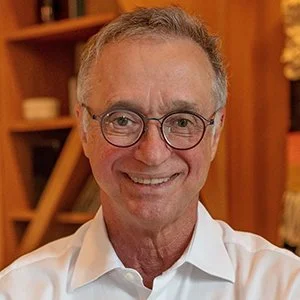
Episode #426: Interview with David Alfery, MD, Author of Saving Grace

Ed and Ron were honored to have Dr. David D. Alfery on the show. He is the author of Saving Grace: What Patients Teach Their Doctors about Life, Death, and the Balance in Between. We loved this book, because it will resonate with any professional. Please listen if you are prepared for a very moving and profound discussion.

About Dr. David Alfery

Dr. David Alfery was raised in the North but moved to Louisiana to attend Tulane University where he obtained a BA in English. After graduating from LSU Medical School in New Orleans, he spent a year as a surgical intern at the University of Kentucky in Lexington before doing his residency in anesthesia at the University of California in San Diego. He stayed on there for an additional year of fellowship training in cardiothoracic anesthesia. In 1980 he moved to Nashville, Tennessee where he spent a thirty-six-year career in private practice. Dr. Alfery has served as a Chief of Anesthesia, President of the Tennessee State Society of Anesthesiologists, and was a founding member of Anesthesia Medical Group, one of the largest anesthesia practices in the United States. For twenty years he served as an Oral Examiner for the American Board of Anesthesiology, ending his tenure as a Senior Examiner. He holds an academic appointment at Vanderbilt University Medical Center as Adjunct Associate Professor of Anesthesiology. Dr. Alfery has authored 10 chapters in medical textbooks and 41 peer reviewed articles in anesthesia medical journals. He invented several anesthesia devices for which he has been awarded 17 US and International patents.

Use these show notes to follow along with the audio:

Segment one:

  • “For 36 years, I had the greatest job in the world.” —Dr. Alfery, author of Saving Grace

  • Saving Grace, the title of Dr. Alfery’s book, is a play on words with several meanings. One of them is about Grace, a 19 year old patient that Dr. Alfery was able to treat during the course of his career. More info at this link https://www.amazon.com/Saving-Grace-Patients-Doctors-Balance/dp/1666737941 

  • Dr. Alfrey described the medical profession as, “99% boredom and 1% sheer terror”. I’m sure many of you out there can relate.

Segment two:

  • We are super excited to welcome a new sponsor to the show today. Work. Now Locally. Welcome to the Wonolo team! Check them out there: https://www.wonolo.com/soul/ @Wonolo

  • “Accept immediately that when a patient appears in acute distress they really are in as much pain as they appear.” —Dr. Alfery, author of Saving Grace

  • Ed talked about the axiom of the presenting problem today and asked Dr. Alfery to compare that to medicine and how best doctors determine the cause of acute pain.

Segment three:

  • As an intern, a mistake made by Dr. Alfery revealed a secret of medicine. Mistakes are commonly made. He has a great saying for this. “Forgive but remember.” 

  • Dr. Alfery told a great joke on the show today, “What do you call the person who finishes very last in your medical school class?” Doctor.

  • There is something significant about getting in touch with our inner core whether you are religious or not. Dr. Alfery stated that he doesn’t think anybody would ever object to “I’ve already prayed for you today.”

  • “The medical missions [to the Caribbean and Romania] were probably the most rewarding part of my career.” —Dr. Alfery

Segment four:

  • “I could be teamed with 4 or more total strangers coming to work for the first time in a complex operation and we still functioned well together.” Dr. Alfery talked about this quote from his book today and described HOW this is even possible.

  • “If you have enough fame and enough money, you can buy the worst [health]care in America.” —Dr. Alfery

  • A big THANK YOU to Dr. Alfery for joining us today. Folks, if you want an inside look into how Dr. Alfery has come to understand that having someone as a patient is an absolute privilege then you should read his book. More info here: https://www.amazon.com/Saving-Grace-Patients-Doctors-Balance/dp/1666737941 

Bonus Content is Available As Well

Did you know that each week after our live show, Ron and Ed take to the microphone for a bonus show? Typically, this bonus show is an extension of the live show topic (sometimes even with the same guest) and a few other pieces of news, current events, or things that have caught our attention.

Click the “FANATIC” image to learn more about pricing and member benefits. 

Episode #425: Second interview with Dr. Kimberlee Josephson

Ron and Ed were overjoyed to bring back to The Soul of Enterprise Dr. Kimberlee Josephson, associate professor of business at Lebanon Valley College, to talk about some of her more recent work on reputation vs regulation, why work won't love you back, and an update on her thoughts about the ESG movement.

About Dr. Kimberlee Josephson

Dr. Kimberlee Josephson is an Associate Professor of Business, Associate Dean for the Breen Center for Graduate Success at Lebanon Valley College in Annville, Pennsylvania, and Adjunct Research Fellow with the Consumer Choice Center. Her academic background is in international studies and strategic management and she teaches courses covering topics on global sustainability, international marketing, and workplace diversity. Prior to serving in academia, her professional career spanned from working in sales in Manhattan, as a producer for a web marketing firm, freelancing for on-air promotions at QVC, and as a research assistant for an international NGO. Her op-eds have appeared at University Business, Quartz at Work, and PA Capital Star. She holds a doctorate in Global Studies and Commerce from La Trobe University in Australia, a master’s degree in Political Science from Temple University in Philadelphia, another master’s degree in International Policy from La Trobe University, and a bachelor’s degree in Business Administration with a minor in Political Science from Bloomsburg University.

Use these show notes to follow along with the audio:

Segment one:

Segment two:

Segment three:

  • Professor Aswath Damodaran on ESG: “This is a concept that was born in sanctimony, nurtured with hypocrisy, and sold with sophistry all the way.” Our guest, Dr. Josephson, on the show today, “I AGREE.” Show notes and audio will be available by Monday at https://www.thesoulofenterprise.com/425 

  • Here is Professor Damodaran’s Musings On Markets website: https://aswathdamodaran.blogspot.com/ 

  • In summary during segment three today, Dr. Josephson made a great point: If you want to work at a non-profit or for an NGO, more power to you. But don’t demonize those who choose the private sector and offer a service that the market needs. 

  • Is Dr. Josephson optimistic that we will be able to push back on ESG or will it hang over the economy for years to come. Her concern is institutionalizing the concepts before we have a change to think rationally about the outcome.

Segment four:

  • “Work Won’t Love You Back, And That Is How It Should Be” — Are we being exploited by our employers? No. As Dr. Josephson says, “More often than not, a job is a means for making a living or furthering a skillset, rather than finding one’s passion or fulfilling a dream.” https://www.aier.org/article/work-wont-love-you-back-and-that-is-how-it-should-be/

  • “At least you have that option for a crappy job with crappy wages and you work at it until you find something better.” —Dr. Josephson

  • A big THANK YOU to Dr. Kimberlee Josephson for joining us today. We will publish links to her recent work in our show notes by Monday at this link https://www.thesoulofenterprise.com/425 

Bonus Content is Available As Well

Did you know that each week after our live show, Ron and Ed take to the microphone for a bonus show? Typically, this bonus show is an extension of the live show topic (sometimes even with the same guest) and a few other pieces of news, current events, or things that have caught our attention.

Click the “FANATIC” image to learn more about pricing and member benefits. 

Episode #424: Interview with Dr. Jay Baruch, The Tornado of Life

Ed and Ron were honored to host Dr. Jay Baruch, author of Tornado of Life: A Doctor’s Journey through Constraints and Creativity in the ER. When a patient comes into the hospital with cardiac arrest or a compound fracture, doctors know what to do. The problem is evident, and the solution is practically algorithmic. Dr. Baruch contends that the biggest challenge and the biggest part of an ER doctor’s work is often caring for people who come in with not just problems with their body, but also social issues, emotional issues, and substance use issues—and oftentimes all of them at once. In Tornado of Life, we come to see that the toughest part of an emergency physician’s work isn’t the high-wattage drama, the mayhem and the blood, that is portrayed on television, but rather the actual getting to the heart of the patient’s story—and figuring out how to address it. Because they’re real, these stories often end without closure or solutions. Sometimes underlying causes aren’t found. Sometimes serious problems are missed. Some patients leave against doctor’s orders. Some are simply discharged into the night. A profoundly human book, Tornado of Life is poised to change the way we view doctors, illness, and the “emotional and moral contact sport” that is emergency medicine. Join us for what was a profoundly human discussion.

About Dr. Jay Baruch

Jay Baruch, a practicing emergency room physician, is Professor of Emergency Medicine at Brown University’s Alpert Medical School and the author of two award-winning short fiction collections, What's Left Out and Fourteen Stories: Doctors, Patients, and Other Strangers. He lives in Providence, Rhode Island. His recent book, and the topic of today’s show, Tornado of Life: A Doctor’s Journey through Constraints and Creativity in the ER. It is poised to change the way we view doctors, illness, and the “emotional and moral contact sport” that is emergency medicine.

Use these show notes to follow along with the audio:

Segment one:

  • When did Jay know he wanted to be a doctor? He went to college to be a writer and then took a course that involved hospital visits. The privilege of taking to patients and hearing their stories changed the course of his career.

  • Specifically, why the emergency room for Dr. Jay? Being in an ER, Dr. Jay was both terrified and invigorated at the same time. “It felt like home” is the way he described it today on the show. 

  • We are going to speak mostly about Dr. Jay’s book today. It is called “Tornado of Life: A Doctor’s Journey through Constraints and Creativity in the ER” and there is more info at this link https://www.jaybaruch.com/ 

  • In chapter 3, Dr. Jay tells the story of Cheryl and reveals the impetus behind the title of his new book, Tornado of Life. Here is the Amazon link https://www.amazon.com/Tornado-Life-Doctors-Constraints-Creativity/dp/0262046970 

Segment two:

  • “More data doesn’t mean more certainty if it’s in the service of the wrong questions.” —Jay Baruch from his book Tornado of Life. More at this link https://www.jaybaruch.com/ 

  • Regarding the curiosity of children, “Sometimes we should just give kids answers and ask them to name five questions that this could be the answer to.” —a brilliant quote from Dr. Jay Baruch

  • “A convincing story is oftentimes believed on the virtue of it being a good story. Sometimes we do not ask ‘is this true?’ We don’t examine the power of stories the same way we examine the power of data.” —Dr. Jay Baruch

  • “The crisis of the ER department crowding...forces physicians like me to allocate compassion.” —Dr. Jay Baruch

Segment three:

  • Regarding the M&M (an acronym specific to the medical space): “The root of the problem isn’t a lack of knowledge but smart physicians who just go the story wrong.” Storytelling is the most common theme in Dr. Jay’s book. More here: https://www.jaybaruch.com/ 

  • “Think about the stories that you enjoy. You bring something to it. Your own experiences. The most enduring stories are the ones that leave a place for the reader or viewer to bring themselves into it.” —Dr. Jay Baruch

  • “It takes some work to embrace complexity.” —Dr. Jay Baruch. Read that again. Short and couldn’t be more true

  • Dr. Jay Baruch describes “the pause” in a trauma center as a moment in our day that is actually a profound human experience. Listen to his words as he describes the pause in segment three of our show today. Subscribe here https://link.chtbl.com/TSOE 

Segment four:

  • “We never went back to normal. There is no normal.” —Dr. Jay Baruch regarding the emergency room

  • Dr. Jay thinks about medical progress on the show today and wonders, “Are we pulling everyone forward or are we creating a widening disparity gap?”

  • A big THANK YOU to Dr. Jay Baruch for joining us today. This was an amazing show about his book, Tornado of Life. It is available at this link https://www.jaybaruch.com/  

Bonus Content is Available As Well

Did you know that each week after our live show, Ron and Ed take to the microphone for a bonus show? Typically, this bonus show is an extension of the live show topic (sometimes even with the same guest) and a few other pieces of news, current events, or things that have caught our attention.

Click the “FANATIC” image to learn more about pricing and member benefits. 

Episode #423: Interview with Chris Vanover

Chris Vanover is a founder of AuditClub, a group of former audit partners with a unique and valuable mix of Big 4, regional, and local firm experience. AuditClub provides flexible access to a seasoned team of Chief Auditors and specialists who bring more than 100 years of combined professional experience to their CPA Firm members, helping each of them succeed through better focus, better quality, and better results. They have a unique set of elements in their subscription pricing model.

About Chris Vanover

Chris is a Certified Public Accountant with over two decades of unique public accounting experiences, including distinctive auditing, regulatory, and educational roles with international and regional firms, the Public Company Accounting Oversight Board (“PCAOB”), and multiple universities. Chris currently serves on the leadership team and as a Chief Auditor for AuditClub, the Audit Service Center for CPA Firms (www.auditclub.cpa). With a mission to make public accounting better, AuditClub provides fractional chief auditors and audit specialists for on-demand AICPA & PCAOB support to Top 10, regional, and local CPA firms throughout the United States. By offering instant talent, deep expertise, and the power of collaborative consumption, AuditClub’s innovative membership model and passes are transforming how CPA firms deliver audits and simply how they get stuff done.

Use these show notes to follow along with the audio:

Segment one:

  • So what exactly is the AuditClub of which our guest, Chris Vanover, is a co-founder? It’s an audit service center for CPA firms.

  • Initially, the go to market strategy for AuditClub.cpa was to establish relationships with auditing partners at different firms. Eventually, those partners started to ask, “What type of work do you do?” and AuditClub became a fractional audit service.

  • They started out with a subscription model in the early days but the market wasn’t quite ready yet. Chris acquiesced and, unfortunately, started selling buckets of hours. That didn’t last long :)

  • Points of inspiration for Chris and his business model were the experiences with his family. Places like Disneyland and how they handle large groups helped shape his thoughts. 

  • The AuditClub.cpa model is so attractive that Chris and his team are NOT having a hard time finding more team members. This seems to be the exact opposite of every other CPA firm today.

Segment two:

  • What was attractive about the subscription model to Chris? It frees his team up to focus on solutions instead of tracking hours and trying to fill out time sheets.

  • “You can have access to our team and as long as we have the knowledge and competency, we will do it for you guys. It is all part of the contract.” —Chris Vanover, co-founder AuditClub.cpa 

  • Look for a big announcement from Audit Club next week regarding their WEEKLY SUBSCRIPTION PASSES for audit services. You heard it here first on The Soul of Enterprise.

  • What kind of KPIs do they use at AuditClub.cpa? Many of them are focused on staff betterment. What is the team doing to better themselves is one of the biggest questions they ask internally.

  • “CPA firm clients don’t understand the role they have in creating a successful outcome. Too often the CPA firm ends up being the victim of that.” —Chris Vanover, co-founder AuditClub.cpa

Segment three:

  • Chris Vanover of Audit Club has a GREAT article up on @cpapracadvisor called “The Parallel Problems of Public Accounting & Major League Baseball”. We are 25 days away from players reporting so here’s the link! https://www.cpapracticeadvisor.com/2023/01/18/the-parallel-problems-of-public-accounting-major-league-baseball/75940/ 

  • The baseball/accounting comparisons continue for Chris Vanover on the show today, “There’s so much data in baseball and there’s so much data in accounting but you don’t see the same level of analysis in accounting and that’s an important distinction.”

Segment four:

  • The incentive structure at a lot of the Big 4 firms stifles innovation. There is lots of innovation at lower levels but if you follow the incentives you will see why innovation seems to be stifled at the top.

  • Younger business generations understand subscription and they understand that businesses can be run in fundamentally different ways.

  • We talked baseball today on the live show and Ed was REALLY EXCITED about the fact that Sage is now an official partner of Major League Baseball! More info here https://www.mlb.com/press-release/press-release-sage-becomes-official-partner-of-mlb-in-tech-brand-s-first-north-a @SageUSAmerica

  • That’s a wrap! A big THANK YOU to Chris Vanover of AuditClub.cpa for joining us today! Did you miss us live? Subscribe here https://link.chtbl.com/TSOE 

Bonus Content is Available As Well

Did you know that each week after our live show, Ron and Ed take to the microphone for a bonus show? Typically, this bonus show is an extension of the live show topic (sometimes even with the same guest) and a few other pieces of news, current events, or things that have caught our attention.

Click the “FANATIC” image to learn more about pricing and member benefits. 

Episode #422: Best books of 2022

An annual favorite going back to 2015, Ron and Ed talk about the best books they read each year. Sometimes there is overlap, other times none. (I suspect overlap this year!) Let’s start with a quote: “One must always be careful of books," said Tessa, "and what is inside them, for words have the power to change us.” —Cassandra Clare, Clockwork Angel

Use these show notes to follow along with the audio:

Segment one:

Segment two:

  • Here are the show notes from episode number 395 featuring Father Robert Sirico: https://www.thesoulofenterprise.com/395

  • Number 4 on Ron’s list AND number 3 on Ed’s list is Wild Problems by Russ Roberts! https://amzn.to/3vZ9ktB (Folks….this is a surprise to both Ron and Ed each year as they do not share lists until the show goes live)

  • Number 3 from from Ron is called Fossil Future and has a great subtitle, “Why Global Human Flourishing Requires More Oil, Coal, and Natural Gas--Not Less” https://amzn.to/3QGOV5R 

  • Our Patreon channel is at Patreon.com/TSOE where you will find commercial free and bonus episodes. It is sponsored by @90Minds. Need a mind? Find one at mind at 90Minds.com

Segment three:

  • Ron’s number 2 pick for best books of 2022 was a very close number 2. It is deeply uncomfortable and absolutely profound. It is “From Strength to Strength: Finding Success, Happiness, and Deep Purpose in the Second Half of Life” https://amzn.to/3H3xdq4 

  • Why is this book deeply uncomfortable? Ron talks about it during segment three of the show today and it has a lot to do with the FACT that we all face cognitive decline later in life. It’s one of those books Ron wishes he read in his 20’s.

  • Ed’s number 2 pick for best books of 2022 is by two guys you’ve probably never heard of, Ron Baker and Paul Dunn. It’s Time’s Up! https://www.amazon.com/dp/1119893526?tag=verainst-20&linkCode=osi&th=1&psc=1 

  • Chapter 5 is Ed’s favorite chapter. It’s called, “This could be the most important business question ever”

  • Ed’s favorite quote from Chapter 5 of Time’s Up is, “Questions can change the future before the answers even arrive.”

Segment four:

  • It a rare turn of events, both Ron and Ed picked the SAME BOOK as number 1 in their best books of 2022 list. It is Superabundance: The Story of Population Growth, Innovation, and Human Flourishing on an Infinitely Bountiful Planet https://amzn.to/3ZwKPRT

  • Marian Tupy’s second appearance on The Soul of Enterprise was focused on Superabundance. Here are the show notes: https://www.thesoulofenterprise.com/409 

  • Gale Pooley also joined us in 2022 to talk about Superabunance. Here are the show notes: https://www.thesoulofenterprise.com/418 

  • That’s a wrap! Next week is Chris Vanover, CPA from AuditClub to talk about his subscription business. See you in 167 hours!

Bonus Content is Available As Well

Did you know that each week after our live show, Ron and Ed take to the microphone for a bonus show? Typically, this bonus show is an extension of the live show topic (sometimes even with the same guest) and a few other pieces of news, current events, or things that have caught our attention.

Click the “FANATIC” image to learn more about pricing and member benefits. 

Episode #421: 2022 - The Year in Review

One of two recap shows we do each year (the other will be next week's Best Books of 2022), Ron and Ed take a look back at trends (business and otherwise), highlights, and lowlights from the year just past. We review our favorite shows as well as the fan favorites and pay homage (or disparage when appropriate) those who crossed to the other side of the river in 2022.

Use these show notes to follow along with the audio:

Segment one:

Segment two:

Segment three:

Segment four:

Here is a quick list of The Soul of Enterprise “best of” for 2022 based on various data points:

Listened to episodes

  1. #61 - Pricing on Purpose: Price Sensitivity Factors

  2. #393 - Interview with Brian Terrell

  3. #64 - Famous Last Words

  4. #217 - The Subscription Business Model

  5. #175 - The Laws of Systems Thinking

Released in 2022 - SquareSpace

  1. #393 - Interview with Brian Terrell

  2. #400 - Tackling Objections to the Subscription Pricing Model

  3. #381 - On David Maister's book - True Professionalism

  4. #378 - Subscription Economy Update - February 2022

  5. #418 - Interview with Gale Pooley - Superabundance

Released in 2022 - Chartable

  1. #395 - Fifth interview with Fr. Sirico

  2. #381 - On David Maister's book - True Professionalism

  3. #378 - Subscription Economy Update - February 2022

  4. #373 - Best Books of 2021

  5. #388 - The Problem with CPE

Bonus Content is Available As Well

Did you know that each week after our live show, Ron and Ed take to the microphone for a bonus show? Typically, this bonus show is an extension of the live show topic (sometimes even with the same guest) and a few other pieces of news, current events, or things that have caught our attention.

Click the “FANATIC” image to learn more about pricing and member benefits. 
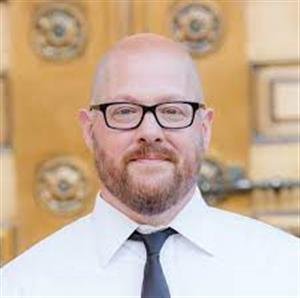
Episode #420: CPA Comedian Greg Kyte

Ed and Ron discussed the controversies surrounding behavioral economics—including some of Dan Ariely’s research. And with Greg, you never know where the conversation will go. What you do know, is it is entertaining, hilarious, and possibly even educational. Greg Kyte is one of the funniest CPA/MBA comedians out there, and Ron’s hero!

About Greg Kyte

Greg Kyte is the G. Robert Newhart Non-value-added Fellow at VeraSage Institute. In 2016 I started Exposure Drafts, a cartoon series for the accounting profession. My cartoons have been featured on GoingConcern.com, and I've created custom cartoons for Intuit and the Thriveal CPA Network. My cartoons are also available as holiday cards from RuBook Creative (rubookcreative.com). I've been performing stand up comedy since 2002, and I've brought that experience, energy, and humor to the stage as the emcee for Xero's Xerocon and Thriveal's Deeper Weekend conference, and this October to Gusto's Gusto Next conference. My experience as a comedian and as a teacher (I taught junior high math for ten years in a former life) have allowed me to create entertaining, engaging, NASBA-certified CPE content. Literally tens of thousands of CPAs have attended my fraud and behavioral ethics courses on the CPA Academy and Encoursa platforms. I've also created custom CPE content for Gusto and Xero. I'm also a licensed CPA in the State of Utah where I'm the controller for a group of medical office buildings.

Use these show notes to follow along with the audio:

Segment one:

  • Our Patreon members (Patreon.com/TSOE) have paid good money to NOT hear the Greg Kyte commercials. Today, they get an entire hour of Greg! Welcome @gregkyte as our guest for episode 420.

  • “I’m not going on a blind date with some accounting nerd.” That’s how Greg’s relationship with Jason Blumer (@jasonmblumer) started. And ultimately it led to ThriveCast! https://thriveal.com/thrivecast/  

  • Today, Greg does "Oh My Fraud" — an irreverent podcast with Greg and blogger/former CPA Caleb Newquist (@cnewquist) https://ohmyfraud.com/ 

  • Also by Greg…Drunk Ethics is a limited edition podcast on @EarmarkCPE with MBA and comedian @adambroud. The trailer is all you need to see to get excited about it. https://www.youtube.com/watch?v=dybYTgoRjEY  

Segment two:

Segment three:

  • Back to this story about fraudulent data. Did you know about the fraud triangle? Greg talked about this today: opportunity, pressure, and rationalization.

  • Ron mentioned The Economist and their pricing models during the show today. Here is an article that talks about it (keep in mind that The Economist no longer uses these pricing options so…..did they work???) https://cxl.com/blog/pricing-experiments-you-might-not-know-but-can-learn-from/ 

  • Do you like what you hear on the show today? Do you hate what you hear? Doesn’t matter! We read all reviews on the air and it only takes you 15 seconds at this link: RateThisPodcast.com/TSOE

Segment four:

  • 1/2 Ron loves this from Deidre McCloskey: Other recent neobehaviorist fashions, such as neuroeconomics and behavioral finance and happiness studies, are dubious—or, they treat creative adults like a flock of little children. 

  • 2/2 [continued…] We need, they say, merely to “observe their behavior,” omitting for some reason linguistic behavior.

  • “Let’s smoke some marijuana and have an out of body experience.” —Greg Kyte’s closing statement for episode 420. Folks, he’s a comedian and he’s freaking hilarious! Check out more of him here: https://www.instagram.com/gregkyte 

  • A big THANK YOU to Greg Kyte for joining us today. Check out his newest podcast, Oh My Fraud!, with @cnewquist https://ohmyfraud.com/

Bonus Content is Available As Well

Did you know that each week after our live show, Ron and Ed take to the microphone for a bonus show? Typically, this bonus show is an extension of the live show topic (sometimes even with the same guest) and a few other pieces of news, current events, or things that have caught our attention.

Click the “FANATIC” image to learn more about pricing and member benefits. 

Episode #419: LIVE from the ITA 2022 Fall Collaborative

Ron and Ed always enjoy taking the show on the road and on this episode we had some of that live energy from the crowd in Austin, Texas. We talked subscription, of course… as well as other ideas relating to technology consulting. As usual, it was the fastest hour of the week!

Our Featured Guest

Brian Terrell founded BTerrell Group in 1991 and oversees management and strategy for this Dallas based provider of Sage Intacct financial management software. Sage Intacct is the only accounting application ever to be designated by the AICPA as their Preferred Provider of Financial Applications. In addition, BTerrell’s experienced developers tailor the application’s business functionality to exact customer requirements, when necessary. Born in Plainview, Texas, Brian grew up on a farm where he learned the importance of a strong work ethic and conservative principles. From there, he received his Bachelor of Science degree from Texas A&M University before starting a career with Arthur Andersen & Co. In February 1991, Brian and his wife Nancy began practicing public accounting with Terrell & Terrell, CPAs. Within a year, the firm refocused all professional services exclusively on accounting software and business automation and eventually rebranded as BTerrell Group in 2008. Brian rides 125 miles a week as an avid cyclist and ride leader for the Plano Bicycle Association. He and his wife Nancy live in Dallas and recently celebrated the birth of their third grandchild.

Bonus Content is Available As Well

Did you know that each week after our live show, Ron and Ed take to the microphone for a bonus show? Typically, this bonus show is an extension of the live show topic (sometimes even with the same guest) and a few other pieces of news, current events, or things that have caught our attention.

Click the “FANATIC” image to learn more about pricing and member benefits. 

Episode #418: Interview with Gale Pooley — Superabundance

Ron and Ed were honored to welcome Gale L. Pooley to The Soul of the Enterprise to discuss his 2022 book, co-authored with Marian L. Tupy, Superabundance: The Story of Population Growth, Innovation, and Human Flourishing on an Infinitely Bountiful Planet. We interviewed Marian Tupy on the book back on September 23, 2022 (Episode #409). This is a groundbreaking book, a new way to measure standards of living, economic dynamism, innovation, growth, and resource abundance. It's certainly in our Top 5 books for 2022. You don't want to miss this discussion.

Use these show notes to follow along with the audio

Segment one:

  • The more people, the more wealth we create. In summary, of course :) Marian Tupy and Gale Pooley, co-authors of Superabundance, most definitely celebrated the arrival of the 8 BILLIONTH person on the planet recently. https://www.superabundance.com/

  • Using the ideas in Superabunance, you can go to any place on the planet, at any time, with any currency and figure out the time price. This can then be compared to the time price of today which is a more accurate measurement compared to others.

  • Time inequality is dramatically decreasing. People enjoy more time to themselves today than at any time before. If you think in terms of time instead of dollars this becomes an excellent starting point for Superabunance.

  • In Superabundance, Marian and Gale want us to move beyond “atoms and money” to knowledge and time. This is knowledge stacking and here’s a snippet from the book that speaks more to this https://bit.ly/3XUYP76

Segment two:

  • “This universe is finite, its resources, finite.” —Thanos, Infinity War. Well…the first part of Thanos’ statement is true. However, resources are a function not of atoms but a function of knowledge. We are not limited in the discovery and creation of knowledge.

  • A piano has 88 keys. Here’s a trick question: How many songs are in a piano? Zero. There are no songs in a piano. The songs are in the minds of human beings.

  • Here’s the Superabundance analogy: The size of a slice in pizza is your individual personal resource abundance. The size of the entire pizza is when you put all the individuals together. Both the slice AND the pizza are getting bigger.

Segment three:

  • “Ants don’t innovate.” This is easily the best thing Gale said today during the show. It makes a LOT of sense if you read the first chapter in Superabundance. More at this link: https://www.amazon.com/Superabundance-Population-Innovation-Flourishing-Infinitely-ebook/dp/B0B196K1XT

  • An increase in knowledge is non-rivalrous. As we increase our knowledge individually, everyone benefits.

  • For those that already own the book Superabundance, one of Ed’s favorite graphics from the book is box 8.4 labeled “Calculating the calculation costs”. Enjoy!

  • There are two significant categories in which products are becoming LESS abundant. One usually involves the government on the supply or demand side and the other is typically a status product (in which less abundance is the point).

Segment four:

Bonus Content is Available As Well

Did you know that each week after our live show, Ron and Ed take to the microphone for a bonus show? Typically, this bonus show is an extension of the live show topic (sometimes even with the same guest) and a few other pieces of news, current events, or things that have caught our attention.

Click the “FANATIC” image to learn more about pricing and member benefits. 

Episode Reprise — Scroogenomics: Why You Shouldn’t Buy Presents for the Holidays

[Editor’s Note: Some things are just too good not to share again. While our most ardent listeners are familiar with Episode #22, Scroogenomics, many may not be familiar with this specific show. This past Friday was Black Friday in the United States which means it’s time - once again - to talk about why you shouldn’t buy presents. Bah, humbug!!!]

[Additional Editor’s Note: Coincidentally, this year the replay of the Scroogenomics episode pairs quite well with last week’s episode featuring Professor Tony Gill in which we discussed the benefits of gift giving in the broader economy. Two shows, two different perspectives.]

On Black Friday, and right before Cyber Monday—the biggest shopping days of the year—Ed and Ron thought it would be fun to discuss the interesting, funny, and thought-provoking book by Joel Waldfogel: Scroogenomics: Why You Shouldn’t Buy Presents for the Holidays.

The author makes the case that the deadweight loss to the economy from gift giving, in 2007, totaled $12 billion, out of approximately $66.5 Billion spent (about 12%). Citizens Against Government Waste would classify Christmas as a wasteful government program.

Gift giving severs link between buying decision and item’s value to its user—the transaction actually destroys value. To add insult to injury, we are obliged to pretend to be grateful!

His complaint is not the level of spending or the consumption, but the waste.

We discussed the four ways you can spend money in the economy:


Former Congressman Dick Armey pointed out how difficult spending is in Category II (Gift), let alone Category IV (Government):

Every year, I worry and fret select the right birthday gift for my wife, Susan. Every year, try as I might, I manage to choose the wrong thing. If I can’t figure the needs and desires of the one person who is closest to me in the world and who I deeply love and care for, how can we expect the government to do a better job?

Three groups spend other people’s money: children, thieves, politicians. All three need parental supervision.

Hierarchy of value of gift giving

  • Aunts & uncles & grandparents = 75%

  • Parents = 97%

  • Friends =91%

  • Siblings =99%

  • Significant others = 102%

Further, we spend approximately 2.8 billion hours shopping in December. To put that number in context, the old USSR—before it imploded—spent 35 billion hours annually standing in line for everyday products and services.

Infographic from Deloitte’s 2018 annual holiday survey

Economist Ian Ayres said this about Waldfogel’s book:

Joel Waldfogel is one of the smartest and funniest economists on the planet. I think of him every time I start to unwrap a present. Buy Scroogenomics for your friends and family. It makes the perfect Christmas gift.

Episode #417: Interview with Tony Gill

Waaay back in Episode 22, Ron and Ed detailed the ideas behind Joel Waldfogel's book, Scroogenomics: Why You Shouldn’t Buy Presents for the Holidays. Waldfogel makes the case that the deadweight loss to the economy from gift giving, in 2007, totaled $12 billion, out of approximately $66.5 Billion spent (about 12%) and that we should all give cash rather than presents. In this episode, we spoke with Professor Tony Gill about his ideas around Rethinking Scroogenomics and some of his other writings.

Use these show notes to follow along with the audio…(scroll a bit further to see what a bot came up with)

Segment one:

  • Political science, sociology, and economics? Tony wanted to be a lawyer for about 1 week, was interested in politics, and was interested in economics. That doesn’t sound TOO far fetched now that Tony Gill has shared his background with us.

  • Adam Smith called himself a moral philosopher. This makes sense for Tony given his interest in both economics and religion.

  • What was the trigger for Tony’s interest in the Austrian school of economics? Paraphrasing his response: Being interested in both religion and economics already makes you a bit of an outcast so the Austrian approach made some sense.

  • Tony is a proud member of the Mount Pelerin society. It’s founders include Friedrich Hayek, Frank Knight, Karl Popper, Ludwig von Mises, George Stigler and Milton Friedman. More info here: https://en.wikipedia.org/wiki/Mont_Pelerin_Society

  • Related to Scroogenomics, Tony Gill wrote an article called “Gift Giving Is Better for Society than Economists Think” and you can read it here https://www.aier.org/article/gift-giving-is-better-for-society-than-economists-think/

  • Gift giving creates deadweight loss. Yes. But if the economy is so efficient why is gift giving persistent for so long? This is the root of Tony Gill’s argument discussed on the show today.

Segment two:

  • You have to overcome a burden of trust in order to successfully trade. One of the ways we do this is by giving up a resource up front. Some would call this gifting which is really important for building trust in society.

  • Why do stores decorate for Christmas? They want to be a part of the community and are willing to invest resources to show their commitment. This could even be true of business owners who do not celebrate.

  • Sumptuary laws (taxes) are seen a lot throughout history. They are taxes on consumption above and beyond what is considered necessary such as fancy clothes or expensive food. Tony asks, “Is Wokeness the New Sumptuary Laws?” at this link: https://www.aier.org/article/is-wokeness-the-new-sumptuary-laws/

  • At a certain level of Patreon membership - Patreon.com/TSOE - you can get a shout out like Blake Oliver did! Check out Blake’s podcast and earn CPE credits for listening. https://earmarkcpe.com/

Segment three:

  • Inequality has been ubiquitous throughout society and is usually examined at a national level. Where you tend to see it at a much more salient level is locally…in your neighborhood and at your job, for example.

  • Paraphrasing from Tony today: While studying inequality at the national level can be helpful, rarely do we stop and look at people in their local neighborhoods and determine what they are doing to solve common problems.

  • “No, the Business Roundtable Did Not Repudiate Capitalism” from Tony Gill was discussed today during segment three. Tony mentioned that he is rethinking it a little bit but you’ll need to listen to the show for the details. https://www.aier.org/article/no-the-business-roundtable-did-not-repudiate-capitalism/

Segment four:

The bots are coming for us!

For a few weeks now, we have been experimenting with a new feature from Otter.ai. Many of you will know that some of the current AI solutions have caught Ron and Ed’s attention during the bonus episodes. We let Otter.ai loose on the audio version of this show and here is what it (he? she? they?) came up with:

  • Copyright claim on every episode. 2:33

  • Welcome to the show. 7:02

  • Anthony Gill’s bio. 8:43

  • What is the Mont Pelerin Society and how did it start? 14:36

  • Why do we give a diamond engagement ring? 21:00

  • Gift-giving as a way to generate discussion. 23:54

  • What are the sumptuary laws and how does Wokeness fit into that? 30:30

  • Anthony Gill’s thoughts on inequality in the US. 37:32

  • Where do you see inequality at the local level? 40:02

  • Trade is about human interaction and relations. 46:11

  • The role that religion is playing in the war in Ukraine. 51:54

  • We need to engage with people before transactions. 58:28

Episode #416: Interview with James Geraghty

Ron and Ed welcomed to the show James Geraghty. As a biotechnology executive, Jim has been a passionate participant in the orphan drug revolution since its inception. We talked about his book, Inside the Orphan Drug Revolution, The Promise of Patient-Centered Biotechnology, which is in part a history, with eye-witness accounts of advances as they occurred and portraits of the pioneering scientists and physicians, tireless activists, and visionary business leaders who made the revolution happen. And it tells deeply personal stories of patients and parents willing to risk new, untried therapies.

Use these show notes to follow along with the audio…(scroll a bit further to see what a bot came up with)

Segment one:

Segment two:

  • Abbey Meyers is considered the mother of the orphan drug revolution. She is referenced in Jim’s book and also on the FDA website at this link: https://www.fda.gov/industry/fdas-rare-disease-day/story-behind-orphan-drug-act

  • The 1983 Orphan Drug Act completely changed the face of therapeutics for rare disorders. By 1990 FDA had designated 370 products for orphan status, and of these 49 were approved for orphan indications.

  • Initially, President Reagan was going to veto the Orphan Drug Act of 1983. He was not in favor of government intervention. Mothers who knew Nancy Reagan worked in the background to help President Regan see the benefits. Ultimately, he signed.

  • Every year there are hundreds of drugs passed for orphan diseases. Patients today who benefit are in the millions. This has been a global revolution with patients who benefit all around the world.

Segment three:

  • Ceradase was the initial orphan drug developed by Genzyme. In the initial trial of 7 patients, 6 showed no improvement. “That’s an anecdotal case and you can’t build a company on it.” Well, they did. And it worked.

  • Our understanding of genetics continues to explode in large part due to the human genome project. Science has come to understand DNA and RNA and much of our understanding about mRNA was developed in the pursuit of treating rare diseases.

  • In the context of orphan drug development, “N of 1” is an important concept. An N of 1 trial is a clinical trial in which a single patient is the entire trial. They are a single case study.

  • Can we get to a point where the FDA can approve a broad platform and then patients can be treated as individuals who have ultra-orphan diseases? Jim certainly hopes so although we are not there yet.

Segment four:

  • International rare disease day is on February 28th. This is closely tied to Jim’s book, “Inside the Orphan Drug Revolution”. Learn more at this link: https://www.rarediseaseday.org/ @rarediseaseday

  • Even in countries with universal health insurance, they have other ways to block orphan drug treatments and make it difficult to obtain for those in need.

  • A big THANK YOU to Jim Geraghty for joining us today to discuss his book! “Inside the Orphan Drug Revolution” is available at this link: https://www.amazon.com/Inside-Orphan-Drug-Revolution-Patient-Centered/dp/1621824683

The bots are coming for us!

For a few weeks now, we have been experimenting with a new feature from Otter.ai. Many of you will know that some of the current AI solutions have caught Ron and Ed’s attention during the bonus episodes. We let Otter.ai loose on the audio version of this show and here is what it (he? she? they?) came up with:

  • Casa Bonita updates. 0:00

  • Why didn’t Trey Parker invest in that? 2:21

  • Cannibal the Musical –. 3:20

  • Introduction to James Garrity and his book. 8:19

  • What is an “orphan drug”? 13:00

  • Drug pricing as a problem for patients. 18:30

  • Jim’s favorite story from the book. 21:40

  • The Orphan Drug Act of 83. 27:03

  • What is the term “n=1”? 31:44

  • How the FDA is understaffed and underfunded. 36:33

  • N equals one technology and pandemic preparedness. 41:25

  • What is an ultra-orphan disease? 45:51

  • How do we make these things affordable for all of these patients? 49:09

  • Jim talks about the challenges of orphan drug access in the developing world. 52:53

  • What is the full-loaded cost of gene therapy? 57:04

Bonus Content is Available As Well

Did you know that each week after our live show, Ron and Ed take to the microphone for a bonus show? Typically, this bonus show is an extension of the live show topic (sometimes even with the same guest) and a few other pieces of news, current events, or things that have caught our attention. 

This past week was bonus episode 416 - It's all about payments. Here are some links discussed:

Click the “FANATIC” image to learn more about pricing and member benefits. 

Episode #415: Stack of Stuff

It’s a stack of stuff. Despite the weekly bonus episodes in which Ron and Ed go through their stack, things can build up over time. What better way to talk through the Twitter ownership change and how morticians are putting the fun in funerals?

Use these show notes to follow along with the audio…(scroll a bit further to see what a bot came up with)

Segment one:

Segment two:

Segment three:

  • Ed shared a great article from the WSJ today. It’s called, “How Morticians are Putting the Fun in Funerals” and it very much feels like the start of a subscription funeral. https://www.wsj.com/articles/the-funeral-industry-plots-a-rebrand-were-fun-11667486178

  • 1/2 We did a show called “Generational Astrology”. It’s episode number 142 and is linked here: https://www.thesoulofenterprise.com/142

  • 2/2 As a follow up to that show, Ron has been thinking a lot about Ronald Reagan’s book, “The Creative Society”. It is a series of speeches Reagan gave starting in the late 50s until the time he was elected Governor of California.

  • “Some people describe the early days of my administration as a honeymoon. If it was a honeymoon, I was sleeping alone.” —President Ronald Reagan

  • Permacrisis: The Collins Dictionary word of the year (with a full list of the others at the link) https://www.collinsdictionary.com/us/woty

Segment four:

Bonus Content is Available As Well

Did you know that each week after our live show, Ron and Ed take to the microphone for a bonus show? Typically, this bonus show is an extension of the live show topic (sometimes even with the same guest) and a few other pieces of news, current events, or things that have caught our attention. 

Click the “FANATIC” image to learn more about pricing and member benefits. 

Episode #414: Interview with Brian Domitrovic

Ron and Ed welcomed to the show one of the co-authors of the new book Taxes Have Consequences, Brian Domitrovic. Ever since 1913, when the United States first imposed the income tax via constitutional amendment, the top rate of that tax has determined the fate of the American economy. When the top rate has been high, as in the late 1910s, the 1930s, 1940s, 1950s, and 1970s, the response of those with money and capital has been to curtail real economic activity in favor of protecting assets and income streams. Huge declines have come to the economy in these circumstances.

A bit more about Brian Domitrovic…

Brian Domitrovic is an intellectual historian interested in the history and development of supply-side economics. He is the author of six books, beginning with the now standard history of supply-side economics — Econoclasts (2009) — and extending to the history of the income tax — Taxes Have Consequences (2022 and co-authored with Arthur B. Laffer and Jeanne Sinquefield). He has been a professor at institutions in Texas and Colorado and is the Richard S. Strong Scholar at the Laffer Center in Nashville. He holds a Ph.D. in history from Harvard University.

Use these show notes to follow along with the audio…(scroll a bit further to see what a bot came up with)

Segment one:

  • Adam Smith in 1776: “High taxes, sometimes by diminishing the consumption of the taxed commodities, and sometimes by encouraging smuggling, frequently afford a smaller revenue to government than what might be drawn from more moderate taxes”

  • Who remembers this amazing scene with Ben Stein featuring the topic of Voodoo Economics? https://www.youtube.com/watch?v=X_wHBlouFSc

  • That same clip also makes reference to the Laffer Curve. Who needs a refresher on that phrase? Link is here: https://www.investopedia.com/terms/l/laffercurve.asp#:~:text=The%20Laffer%20Curve%20is%20based,in%20increased%20total%20tax%20revenue.

  • From Brian on the show today, “The Laffer Curve is a simple representation of the tax rate against tax revenues”.

  • As tax rates go up, the wealthy shelter more money and earn less income. The consequences are severe and detailed in Brian’s book, “Taxes Have Consequences” — Link is here: https://www.amazon.com/Taxes-Have-Consequences-Income-History/dp/1637585640

Segment two:

  • Ron opened segment two today with a point from Brian’s book. It doesn’t matter what you call it, aren’t all taxes effectively income taxes? From consumption taxes to investments to gifts to wealth. Shouldn’t all taxes be called income taxes?

  • Brian’s effectively lays out the argument that WWII did not end the Great Depression. Tax cuts in the 1940’s did. After hearing him speak today, it’s hard to argue against that.

  • President Wilson raised the tax rate to an unconscionably high 77% in 1918. As a result, all sorts of businesses were starved for capital.

  • The autobiography of Thomas Mellon might be Brian’s favorite business book of all time. Link is here: https://www.amazon.com/Judge-Thomas-Mellon-Founder-Fortune/dp/0300167148

Segment three:

  • Wrap your head around this: In the 1970’s in Great Britain, tax rates were upwards of 98%! I’m sure those taxes had consequences. Oh, wait. There’s a book about that. Link is here: https://www.amazon.com/Taxes-Have-Consequences-Income-History/dp/1637585640

  • “A tax system with distortions is automatically inefficient.” —Brian Domitrovic

  • Warren Buffet is very admirable in many important ways. His opinions on tax returns are public and well known. Does his secretary really pay a higher tax rate? He had $62M in income in a year when his net worth increased by billions (with a B). In short, it’s a bit more complicated than a tax rate.

  • Government based digital currently is a bad idea. Brian has never seen a soft power quite like Bitcoin.

Segment four:

  • State and local tax collections were 80% of all tax collections in 1932. The Federal government only represented 20%. This caused the housing foreclosure crisis and the banking crisis.

  • It’s amazing that we lionize the 1950s as a decade of high tax rates and prosperity. The corporate tax rate was 52%. The progressive tax ladder goes all the way to 91%. Top executives avoided taxation as a national pastime in the 1950s.

  • The official IRS figures state that 84% of taxes owed are collected. They concede that 15% of taxes are not collected. Taxes have consequences and that’s the title of Brian’s book https://www.amazon.com/Taxes-Have-Consequences-Income-History/dp/1637585640

  • A big THANK YOU to Brian Domitrovic for joining us today. “Taxes Have Consequences” is the new book and you owe it to yourself to read it. https://www.amazon.com/Taxes-Have-Consequences-Income-History/dp/1637585640

The bots are coming for us!

For a few weeks now, we have been experimenting with a new feature from Otter.ai. Many of you will know that some of the current AI solutions have caught Ron and Ed’s attention during the bonus episodes. We let Otter.ai loose on the audio version of this show and here is what it (he? she? they?) came up with:

  • Who coined supply-side economics? 0:04

  • The CFO revolution of the ’80s. 11:13

  • The Laffer Curve. 13:21

  • What about tax rates in relation to spending? Is spending really the problem? 21:53

  • The correlation between high tax rates and income inequality. 25:32

  • The idea that taxes don’t influence behavior. 29:08

  • The myth that World War 2 ended the Great Depression. 32:14

  • What caused the Great Depression? 37:55

  • What should be the ideal system of taxes? 43:31

  • The argument that we need taxation to compete with other countries. 48:06

  • Brian’s thoughts on government-based digital currency. 54:31

  • The causes of the Great Depression. 58:09

  • How tax evasion was widespread in the 1950s and 60s. 1:03:35

Bonus Content is Available As Well

Did you know that each week after our live show, Ron and Ed take to the microphone for a bonus show? Typically, this bonus show is an extension of the live show topic (sometimes even with the same guest) and a few other pieces of news, current events, or things that have caught our attention. 

This past week was bonus episode 414 - Only people pay taxes. Here are some links discussed:

Click the “FANATIC” image to learn more about pricing and member benefits. 

Episode #413: Interview with Dr. Reginald Lee

Ed and Ron welcomed back Dr. Reginald Lee for the 6th time! He joined us for a free-wheeling discussion on a variety of topics.

A bit more about Dr Reginald Lee…

Business Dynamics & Research was co-founded by Dr. Reginald Tomas Lee in 1994 using cash-based business models he created. An engineer with a passion for business and math, Reginald is a pioneer in debunking the validity of accounting information for managerial purposes. As a replacement, he developed Business Domain Management, a mathematically sound operations and cash business framework that provides significantly more accurate and effective managerial and cash-based data and information than accounting. His work has proven valuable in helping leaders see, understand, and manage their operational and cash performance. In addition to his work at BDR, Dr. Lee is a professor at Xavier University's Williams College of Business. Previously, he has worked for a number of major global brands including EY, GM, IBM, and Oracle. In addition to teaching business at Xavier, he has also been a professor of industrial engineering, mechanical engineering, and business at other schools, most recently, Miami University's Farmer School of Business. Dr. Lee is the author of five books, Project Profitability: Ensuring Improvement Projects Realize Maximum Cash ROI, Strategic Cost Transformation, Lies, Damned Lies, and Cost Accounting, Essentials of Capacity Management, and Explicit Cost Dynamics. He has two books under contract: Essentials of Managing Capacity, and Engagement Economics: Planning and Managing Engagements to Improve Cash Profitability

Use these show notes to follow along with the audio…(scroll a bit further to see what a bot came up with)

Segment one:

  • “Lies, Damn Lies, and Cost Accounting” is still the best title of any accounting book. Let’s all thank Dr. Lee for it! Link is here https://www.amazon.com/Lies-Damned-Cost-Accounting-Management/dp/163157065X

  • A question posed recently: “Without time sheets, how do we know we did it profitably?” What we really need to answer is how are we defining profit? 1) Did I make money? Or 2) From an accounting perspective did revenue generated exceed the costs?

  • Dr. Lee looks at capacity as being a key component to managing cash — people, labor, materials, space, technology, and so on. When doing work, you should be able to estimate the consumption requirements in order to deliver the work.

  • In the book, “Strategic Cost Transformation”, Dr. Lee breaks down business into two domains: the operations and cash domain AND the accounting domain. More here: https://www.amazon.com/Strategic-Cost-Transformation-Business-Management/dp/1631578790

  • “Accounting costs are arbitrary.” —Dr. Reginald Lee. There’s no relation between what you pay a person and the work that they do.

Segment two:

  • Accounting profit is a dangerous metric. If you think profit is money, then you might rationalize the wrong things in your business.

  • If you create incentives through inter-departmental allocations for orgs to not work with each other then what are the negative ramifications? How is that good for doing business? It makes it easy from an accounting business but might not be right for the actual business.

  • During segment two of the show, Dr. Lee asked how regulations are working out for us and if it helps to improve business. He wondered (with chilling effect), how many companies just give up?

Segment three:

  • Another recent question: “How do we manage staff utilization when we can’t see them?” That’s like trying to find a gas tank on a Tesla. Managing the staff isn’t the issue. The issue is getting the required output.

  • “With benchmarking, how I choose to calculate the benchmark metric and the data I use to calculate the metric is going to be different company by company.” —Dr. Lee

  • It’s no fun to do benchmarking or look at best practices (which is just copying). Let’s figure out the best way to do business and be better than everyone else.

  • The Theory of Constraints was mostly derived from a book called “The Goal” by Eliyahu M. Goldratt. More here: https://www.amazon.com/Goal-Process-Ongoing-Improvement/dp/0884271951

Segment four:

  • As a professor, what is Dr. Lee’s perception about his student’s overall attitude towards business? His experience has been pretty positive and it excites him. There is a level of curiosity that he helps to grow.

  • What does Dr. Lee think about Six Sigma? It has its place but people think it’s place is much bigger than it really is. Things go sideways when focusing on things like cost savings based on Six Sigma team successes.

  • People come up with huge savings using SS but if you go back and question if they really saved $40M in operational costs as a result, the answer is probably no.

  • A huge THANK YOU to Dr. Lee for joining us today! Check out his many books here: https://www.amazon.com/Reginald-Tomas-Lee/e/B001HCWBO8/ref=dp_byline_cont_pop_book_1

The bots are coming for us!

For a few weeks now, we have been experimenting with a new feature from Otter.ai. Many of you will know that some of the current AI solutions have caught Ron and Ed’s attention during the bonus episodes. We let Otter.ai loose on the audio version of this show and here is what it (he? she? they?) came up with:

  • Good day to you, Greg! 0:03

  • Where are they going to put it? 3:30

  • Introduction to this episode. 6:44

  • How do you know if a business is profitable or not? 12:11

  • How can we improve through the after-action review? 17:16

  • The biggest roadblock for entrepreneurs today is dealing with government. 24:05

  • It’s all about free cash flow 28:51

  • What if we know that people are not telling the truth on their times? 32:11

  • How are we in a pro-business type of environment while we’re creating barriers for companies to be able to do business? 35:29

  • How do we manage staff utilization when we can’t see them? 39:34

  • What’s wrong with benchmarking? 45:13

  • What are you seeing with regard to students coming through school with a positive attitude toward business? 52:48

  • When the real world resonates with your students. 57:47

  • How do we organize the work to get it the most effectively through the system? 1:03:08

  • What do you think about Lean? 1:06:25

  • Is supersonic flight going to happen again? 1:12:23

Bonus Content is Available As Well

Did you know that each week after our live show, Ron and Ed take to the microphone for a bonus show? Typically, this bonus show is an extension of the live show topic (sometimes even with the same guest) and a few other pieces of news, current events, or things that have caught our attention. 

This past week was bonus 413 - Green jobs gone. Here are some links discussed:

Click the “FANATIC” image to learn more about pricing and member benefits. 

Episode #412: Interview with John Farrell, The Clock and the Camshaft

Join Ed and Ron for a discussion with John Farrell, author of The Clock and the Camshaft: And Other Medieval Inventions We Still Can’t Live Without.

A bit more about John W. Farrell…

John W. Farrell is a writer and producer working in Boston. He is the author of The Day Without Yesterday: Lemaître, Einstein and the Birth of Modern Cosmology from Basic Books, and The Clock and the Camshaft: And Other Medieval Inventions We Still Can’t Live Without, just out from Prometheus Books. A graduate of Harvard College with a B.A. in English and American Literature, Farrell has written for Commonweal, Aeon, Skeptic, Cosmos Magazine, New Scientist, The Wall Street Journal, The Guardian, The Boston Globe, Salon, National Review, Forbes and The Tablet of London. His fiction has appeared in Dappled Things, his poetry in Penwood Review and First Things, and he is a longstanding member of Boston’s creative writing community at Grub Street.

Use these show notes to follow along with the audio…(scroll a bit further to see what a bot came up with)

Segment one:

  • So what are we talking about with John today? His new book is called “The Clock and the Camshaft: And Other Medieval Inventions We Still Can't Live Without” https://www.amazon.com/Clock-Camshaft-Medieval-Inventions-Without-ebook/dp/B07P9MQFPS

  • In the case of farming tools, many breakthroughs were “breakwiths”. People would pick up tools nearby and repurpose them in ingenious ways starting with the fall of the Roman Empire.

  • One thing John discovered while researching his book is that humanity had the hand crank for quite some time. Then it sort of disappeared and THEN showed up again a few centuries later. More in his book: https://www.amazon.com/Clock-Camshaft-Medieval-Inventions-Without-ebook/dp/B07P9MQFPS

  • Let’s talk about the evolving camshaft. It was probably used earliest in China and then in the Roman Empire, the camshaft eventually was picked up by a Muslim scientist and continued to spread. The inventor is likely lost to history.

Segment two:

  • John defines technology in quite a cool way: Tools and techniques plus practical skills AND knowledge needed to invent, manufacture, and improve upon things.

  • Watermills were initially put together from pieces of constituent parts used for farming. Not only were the original mills used to power other tools, they were also used to help drive water out into fields for irrigation especially in the Middle East.

  • More often than not, large tools after the fall of the Roman Empire were simply too expensive for an individual and required public investment from the community.

  • While the horse ultimately replaced the oxen, horses required significantly more maintenance. They were initially adopted by feudal lords and monasteries — in other words, those who could afford them.

  • The camshaft is the first example of programming in human history. Depending on the mlll you were developing, the way you positioned the cams allowed you to time the hammers.

Segment three: 

  • Chapter 7 is John’s new book is called “From Greek to Arabic and back again”. It talks about one of the Medieval translation movements and how many of the Classics (such as Aristotle’s works) were almost completely lost. https://www.amazon.com/Clock-Camshaft-Medieval-Inventions-Without-ebook/dp/B07P9MQFPS

  • The fact that everyone could speak Latin along with the return (and translation) of many of the Classics directly resulted in a scientific revolution in Europe.

  • It seems that we had some knowledge of lenses for quite a while but it was some time until we arrived at eyeglasses. For years, people would use a natural ball filled with water as a reading aid!

Segment four:

The bots are coming for us!

For a few weeks now, we have been experimenting with a new feature from Otter.ai. Many of you will know that some of the current AI solutions have caught Ron and Ed’s attention during the bonus episodes. We let Otter.ai loose on the audio version of this show and here is what it (he? she? they?) came up with:

  • Ron’s book orders are up. 0:02

  • Introduction to the show. 4:04

  • What’s next for the podcast? 5:58

  • Introduction to John Farrell. 8:04

  • What are some of the breakthroughs in medieval technology? 11:25

  • The evolution of water-powered mills. 15:42

  • Sponsor: Melio, an accounts payable solution. 22:22

  • How much of medieval technology still comes down to the modern day and how much of it comes from the caveman. 24:38

  • Horses as the primary draft animal in the Middle Ages. 31:12

  • Sponsor: 90Minds.com. 37:46

  • The Re-conquest of Spain. 41:05

  • The dangers of inventing in the Renaissance. 47:47

  • How the Romans were more innovative than the Greeks, and why the Greeks were ashamed of innovating. 52:28

  • The Cathedral Crusade and how it was financed. 59:36

  • John’s other book, Day Without Yesterday. 1:02:57

Bonus Content is Available As Well

Did you know that each week after our live show, Ron and Ed take to the microphone for a bonus show? Typically, this bonus show is an extension of the live show topic (sometimes even with the same guest) and a few other pieces of news, current events, or things that have caught our attention. 

This past week was bonus episode 412 - podcast.ai. Here are some links discussed:

Click the “FANATIC” image to learn more about pricing and member benefits.