

Episode #411: Interview with Nicholas Eberstadt

Current low rates of unemployment, touted by pundits and politicians, are grievously misleading. The truth is that fewer prime-age American men are looking for readily available work than at any previous juncture in our history. Ron and Ed spoke with Nicholas Eberstadt, author of Men Without Work: Post-Pandemic Edition. In addition to the book, they also talked about Nicholas's other area of expertise, North Korea.

A bit more about Nicholas Eberstadt…

Nicholas Eberstadt holds the Henry Wendt Chair in Political Economy at the American Enterprise Institute (AEI), where he researches and writes extensively on demographics and economic development generally, and more specifically on international security in the Korean peninsula and Asia. Domestically, he focuses on poverty and social well-being. Dr. Eberstadt is also a senior adviser to the National Bureau of Asian Research (NBR). His many books and monographs include “Poverty in China” (IDI, 1979); “The Tyranny of Numbers” (AEI Press, 1995); “The End of North Korea” (AEI Press, 1999); “The Poverty of the Poverty Rate” (AEI Press, 2008); and “Russia’s Peacetime Demographic Crisis” (NBR, 2010). His latest book is “Men Without Work: Post-COVID Edition” (Templeton Press, 2022).

Use these show notes to follow along with the audio…(scroll a bit further to see what a bot came up with)

Segment one:

  • First published in 2016 and then updated post-covid, Nick’s book talks about how American men are suffering depression-era unemployment rates. It’s called “Men Without Work” https://www.amazon.com/Men-Without-Work-Post-Pandemic-Threats/dp/1599475979

  • 7 million or more American men have dropped out of the workforce. This is the biggest distinction between depression-era unemployment and today. You’ve got to look in the shadows to see the effects today because there are no breadlines, per se.

  • The received wisdom has been that unemployment is due to a skills shortage. There’s some truth to that but it doesn’t get at the whole story. HELP WANTED signs are everywhere and they are looking for low-skilled applicants. So it’s not just a skills shortage.

  • So how do 7 million or more unemployed American men sustain themselves? It’s hard to tell directly but definitely includes government assistance in the form of disability programs, family members, and moonlighting gigs.

  • Nick mentioned the “flight from work” today on the show and has a GREAT article at AEI on this very topic. More here: https://www.aei.org/op-eds/whats-behind-the-flight-from-work-in-post-pandemic-america/

  • Nick coined the term “archipelago of disability”. They do not provide for a princely life but do have a negative impact on economic productivity in the United States. More here: https://www.wsj.com/podcasts/opinion-free-expression/the-decline-of-men-in-the-workforce/b2e11b0d-5ec6-4652-a974-5a2ede320760

Segment two:

  • “Watching something” is one of the most common traits amongst the under or unemployed 7 MILLION plus American men we are discussing with Nick Eberstadt today.

  • In Nick’s book — “Men Without Work” — he talks about how the US Government accidentally stumbled upon Universal Basic Income with payments made during Covid.

  • As a measure of GDP and overall economic performance, corn and steel were relatively easy to measure. However, with so many in the service sector now it is much harder to measure “hours worked”.

  • So who are these “Men Without Work”? They are NILFs — Not In Labor Force. They are 25-54. African Americans are overrepresented. Latinos are underrepresented. The less educated are overrepresented. Never married? You are more likely in the pool. The foreign born — regardless of ethnic group — are way underrepresented.

Segment three: 

  • So what if 7 million American men have dropped out of the workforce? America is rich. What’s the harm? The harm is slower economic growth, bigger wealth gaps, more dependence on social welfare, more public debt, more pressure on family, and less trust on our institutions of basic life.

  • Since 2000, labor force participation rates for women have been going down. There is a group of women not in the labor force, not currently married, and not with children at home. It’s not as severe as “Men Without Work” but is growing.

  • There are some feasible solutions: 1) Bulking up on vocational skills, 2) Reinventing our disability insurance system so as not to incentivize helplessness, and 3) Paying attention to the 20M+ ex-cons in America. They want to be back at work and accepted members of society.

  • A great recommendation from Nick Eberstadt today! Charles Murray’s book “Losing Ground: American Social Policy” is a great example of changing politics in a very positive way. https://www.amazon.com/Losing-Ground-American-Social-1950-1980/dp/0465065880

  • At the end of segment three today, Nick Eberstadt told the story of Mollie Orshansky. she developed the poverty thresholds that became the federal government's official statistical measure of poverty.

Segment four:

  • From Nick today: The unintended consequence in the real world of “ban the box” means that employers will assume criminality of those coming from a disadvantaged background.

  • Getting rid of overall occupational licensure requirements “looks like low hanging fruit” to Nick. We need to look at public safety vs collusion and cartel in licensing.

  • Nick is an absolute expert on North Korea. He thinks the NK government is unconditional about wanting to absorb the entire peninsula. Given their economic failure, this requires a nuclear arsenal to drive out the allies of their adversaries.

  • The book is Men Without Work and the author is Nicholas Eberstadt. Thank you VERY MUCH for joining us today and sharing your wealth of knowledge and experience. More on the book is here: https://www.amazon.com/Men-Without-Work-Post-Pandemic-Threats/dp/1599475979

The bots are coming for us!

For a few weeks now, we have been experimenting with a new feature from Otter.ai. Many of you will know that some of the current AI solutions have caught Ron and Ed’s attention during the bonus episodes. We let Otter.ai loose on the audio version of this show and here is what it (he? she? they?) came up with:

  • Introduction. 0:00

  • The tyranny of numbers and consumption. 4:37

  • Introducing Nick Eberstadt. 7:08

  • What is the impact of social welfare on the unworking class? 13:28

  • What’s going to happen to the age for disability? 23:21

  • Is the number of people working from home going to mess with your numbers of hours worked? 30:15

  • Marital status is becoming more important to men than women. 34:27

  • Three areas that society should pay closer attention to in New York. 40:06

  • Are you optimistic about these trends? 45:15

  • You can’t just look at income to determine standard of living, you have to look at consumption. 50:07

  • Would getting rid or modifying the infamous “Have you been convicted of a felony?” checkbox be helpful? 55:22

  • The North Korean government’s only option is a new nuclear arsenal to make Uncle Sam blink. 59:24

  • The world as told by Charles Murray. 1:04:27

  • What’s going to happen in North Korea? 1:09:00

Episode #410: Interview with David Leary

Ron and Ed were thrilled to welcome David Leary, co-host of The Cloud Accounting Podcast to this past week's episode to talk about various and sundry issues facing the accounting profession. We included a conversation (read diatribe) about LEAN Six-sigma and how it ruins companies.

A bit more about David Leary…

David Leary is an innovative and influential force in the small business accounting world. With over 22 years of QuickBooks experience, David has provided many small businesses, accountants, and developers with technical tools, deep industry knowledge, strategy, and solutions. His business sense, vast technical knowledge, and domain expertise have helped bridge the gap between developers, small business owners, and accountants. His unique style and impressive network have influenced and helped shape the new generation of accounting professionals.

  • Named one of the "40 under 40" honorees by CPA Practice Advisor in 2014

  • Named by Accounting Today as a "One to Watch" in their Top 100 Most Influential People 2015 issue

  • Current Top 10 ranking in Avalara's "The Accounting Top 100" social media leaderboard

  • 21+ year career at Intuit

  • Principal Technology Evangelist at AutoEntry

  • President and Founder of Sombrero Apps Company

  • Co-Host of the Cloud Accounting Podcast

Use these show notes to follow along with the audio…(scroll a bit further to see what a bot came up with)

Segment one:

  • Thank you to our guest today — David Leary — for being the impetus behind the creation of The Soul of Enterprise Patreon page! He wanted a way to listen without the commercials and we delivered for him. Check it out at Patreon.com/TSOE for the details.

  • David is the co-host of the Cloud Accounting podcast along with Blake Oliver. It is the number one accounting, bookkeeping, and tax podcast in the world!??! It is a summary of the week’s news in the accounting industry. https://www.cloudaccountingpodcast.com/

  • “Hey, the Cloud Accounting Podcast is so valuable. Can I get CPE credit for listening?” That’s when Blake and David started their journey towards Earmark CPE and the answer today is, “Yes. You can get CPE credits for listening to a podcast.” https://earmarkcpe.com/

  • For many, the podcast format is just a better format for learning. There are lots of exciting things happening that will make podcasting even better with the advent of Podcasting 2.0. Here’s an article with some of the details: https://9to5mac.com/2022/06/26/podcasting-2-0/

  • Podcasting has a fascinating backstory that involves one of the very first MTV video deejays — Adam Curry. Read more here: https://internationalpodcastday.com/podcasting-history

Segment two:

  • David worked for a CEO, formerly of GE, who was fanatical about implementing Six Sigma. That company almost died as a result. Name that company? I’ll help you…..Intuit.

  • Six Sigma is largely focused on eliminating waste. That’s great for a manufacturer but what about a knowledge worker in a software environment? “Everybody became very specialized and made decisions for themselves” —David Leary

  • To be clear, Lean Startup is the opposite of (Lean) Six Sigma. It’s almost like the Six Sigma folks co-opted the word Lean to create market confusion.

  • Just like Starbucks, it took a founder to return to his roots in order to help save Intuit from Six Sigma. Incorporating the DNA of the book, Lean Startup, is what helped turn them around.

Segment three:

  • While at Intuit, David knew that the way they launched products was wrong. He just didn’t know what the right way was and that’s when he discovered The Lean Startup http://theleanstartup.com/

  • You iterate, you listen, you fix. Rinse and repeat. That’s the core of what David took away from The Lean Startup when launching new products.

  • David still uses several principles The Lean Startup today. He takes phone calls and talks to customers. He doesn’t rely on a significant budget to launch tests. He recognizes the value of testing LIVE in the app itself.

  • “Six Sigma is designed to take human judgement out of the equation.” —David Leary

  • David does recognize some pitfalls to using Lean Startup principles: It’s a science and an art. There is a formula, yes. But you need to interpret things as well which is where the art comes in. It requires judgement and interpretation.

Segment four:

  • How is innovation going in the accounting space? For David, he sees a need to improve the overall client experience. There is a portal to upload documents, a separate payments system, and various other disparate requests placed on him from accounting firms

  • The biggest challenge facing the accounting profession is talent. “I’ve talked to firm owners and they almost have to solve for employees first over customers just to keep them.” —David Leary

  • What does remote work do for the accounting space? For a decade the whole profession said, “We can’t do remote work.” — and then it changed overnight and nothing fell apart.

  • The biggest opportunity for the accounting profession is customer service. The next generation wants a mission driven company. Your mission can simply be, “Our customers get great service.”

  • A big THANK YOU to David Leary for joining us today. Check out his podcast with Blake Oliver — The Cloud Accounting Podcast — at this link https://www.cloudaccountingpodcast.com/

The bots are coming for us!

So we ran a little experiment with this show and let an artificial intelligence note-taking app create the show notes for us. Here is what it (he? she? they?) came up with:

  • David joins the show at 0:07

  • Introduction to today’s guest, David Leary at 8:54

  • What does segmentation do for the cloud accounting podcast? at 11:54

  • What are some of the new tools that you’re seeing with podcasting? at 16:14

  • David shares a story about how his previous employer was almost killed by a former GE executive who was fanatical about implementing Six Sigma at 23:33

  • Lean is about speed, and 6 Sigma is about quality at 28:45

  • Lean startup vs Lean Six Sigma at 31:06

  • What happened to Starbucks after they lost the founder at 35:07

  • How he got started in tech support at 39:54

  • The importance of listening to your customers at 44:07

  • What are some pitfalls to watch out for when using lean? at 48:30

  • What’s going on in the accounting world at 52:45

  • Why do you need an accountant? at 56:15

  • Next week on The Soul of Enterprise, we have Nicholas Eberstadt at 1:03:12

  • David’s experience with a VW dealership.

Episode #409: Second Interview with Marian Tupy

Even the most casual listener of the show will know that Ed and Ron rail on the billable hour as modern day Marxist thinking. "Time is money!" defenders of the billable hour declare. No, no, no. In his recent book, Superabundance: The Story of Population Growth, Innovation, and Human Flourishing on an Infinitely Bountiful Planet, this week's Guest, Marion Tupy offered the idea that while time is not money, however, MONEY IS TIME. Get ready for some cognitive dissonance!

A bit more about Marian Tupy…

Marian L. Tupy is the editor of HumanProgress.org, a senior fellow at the Center for Global Liberty and Prosperity and co-author of The Simon Project. He specializes in globalization and global well-being, and politics and economics of Europe and Southern Africa. His articles were published in the Financial Times, The Washington Post, Los Angeles Times, The Wall Street Journal, The Atlantic, Newsweek, The U.K. Spectator, Foreign Policy and various other outlets both in the United States and overseas. He appeared on BBC, CNN, CNBC, MSNBC, FOX News, FOX Business and other channels. Tupy received his BA in international relations and classics from the University of the Witwatersrand in Johannesburg, South Africa, and his PhD in international relations from the University of St. Andrews in Great Britain. He is the co-author of an upcoming book, Ten Global Trends that Every Smart Person Needs to Know: And Many Other Trends You Will Find Interesting.

Use these show notes to follow along with the audio…

Segment one:

  • Welcome to Marian Tupy, the editor of HumanProgress.org, guest on episode 304, and co-author of a new book — #Superabundance https://www.amazon.com/Superabundance-Population-Innovation-Flourishing-Infinitely/dp/1952223393

  • The resources don’t change. The number of atoms on the planet are always the same. But our civilization is SO much richer than, say, during the cave man times. Why can’t we take this even further and create an even more abundant future?

  • 1/2 Time is an independent variable. It does not change based on the environment and cannot be inflated the way dollars can be inflated. Inflation is a contentious measurement at best. Instead…

  • 2/2 What is the price of a good in the 1850s and what were people making. Compare that to today and form a ratio. That is how Marian approaches the alternative to something like measuring inflation.

  • Time prices are superior to using real dollars or nominal dollars. A real price will only tell you if oil is more in dollars compared to 1960. But time price also tells you how much YOUR income has increases during that same period of time.

  • One of the great reasons that time prices are so cool is that they allow you to see the change in the standard of living between two periods of time. You can compare an American worker in 1850 to an American worker today.

  • Marian Tupy referenced Mark Perry’s chart of the century today during the show. Check out this link for the chart and thank you Mark! https://www.aei.org/carpe-diem/chart-of-the-day-or-century-8/

  • Did you know that there is a story about Time Prices in Mark Twain’s “A Connecticut Yankee in King Arthur's Court”? https://fee.org/articles/the-mark-twain-novel-that-contains-one-of-the-best-and-funniest-economic-lessons-in-all-of-literature/

Segment two:

  • 1/2 Resources can increase at two different speeds: lower than the population rate or higher than population rate. So…

  • 2/2 What is Superabundance? It happens when resources are becoming more abundant at a HIGHER rate than the population. All 18 data sets in Marian’s book fall into the superabundance category meaning we create more than we destroy.

  • A very small fraction of humanity invents or innovates. That’s somewhere around 3-6%. As the population increases, we see more inventors and innovators than ever before.

  • It’s completely intuitive to think that because the number of atoms in the world are finite, therefore a massive increase in population means we will eventually run out of things. But the key here is while resources are finite, they can be re-arranged in different ways.

Segment three:

  • Why is pessimism the default for humans? It’s an overreaction to potential threats. A protection mechanism of sorts. We feel slights and criticisms much more than we feel praise and encouragement.

  • People can do with superabundance whatever they want. With an extra few hours in the day, you can read a book or spend it smoking pot watching a show. It’s up to you.

  • If bushels of wheat and rice are coming down in price then we are all better off given a time price measurement. Raj in India and Ray in Indiana is a GREAT example in Marian Tupy’s book #Superabundance

  • Birth rates in Hong Kong have fallen as much as they have fallen in China under the one child policy. By growing massively, Hong Kong has seen more women enter the workforce and become extremely successful. Free markets work as great birth control.

Segment four:

  • The US employment rate as a percentage of the labor force is headed to 60% which is ridiculous. International statistics around labor force participation rates in Switzerland are around 85% which is a richer country than the US.

  • Why does Marian Tupy measure abundance instead of scarcity? Because there will always be scarcity. This is explored in more detail during segment four of our show with Marian today.

  • Cultural capital explores what your society is like. If Steve Jobs’ father didn’t leave Syria then we wouldn’t have Apple. A culture that doesn’t value human capital will lose compared to countries like the US and Western Europe.

  • A big THANK YOU to Marian Tupy of Cato and HumanProgress.org for joining us today and talking about his book, Superabundance. Check it out at this link: https://www.amazon.com/Superabundance-Population-Innovation-Flourishing-Infinitely/dp/1952223393

Bonus Content is Available As Well

Did you know that each week after our live show, Ron and Ed take to the microphone for a bonus show? Typically, this bonus show is an extension of the live show topic (sometimes even with the same guest) and a few other pieces of news, current events, or things that have caught our attention. 

Click the “FANATIC” image to learn more about pricing and member benefits. 

Episode #408: Interview with Scott Lincicome

A bit more about Scott Lincicome…

In addition, to his work at CATO, Lincicome also is a senior visiting lecturer at Duke University Law School, where he has taught a course on international trade law, and he previously taught international trade policy as a visiting lecturer at Duke. Prior to joining Cato, Lincicome spent two decades practicing international trade law at White & Case LLP, where he litigated national and multilateral trade disputes and advised multinational corporations on how to optimize their transactions and business practices consistent with global trade rules and national regulations. From 1998 to 2001, Lincicome was a trade policy research assistant at Cato; he became an adjunct scholar in 2013. During that time, Lincicome authored or coauthored several policy papers, as well as numerous op-?eds on trade and economic issues. He is routinely featured on TV, radio, and print media. Lincicome has a BA in political science from the University of Virginia and a JD from the university’s School of Law.

Use these show notes to follow along with the audio…

Segment one: 

  • Not only is Scott’s article, The (Updated) Case for Free Trade, fun to read it also LOOKS great. Seriously. Click/tap this link and check it out. https://www.cato.org/policy-analysis/updated-case-free-trade

  • Government’s don’t trade. People do. Giving the credit to government is the number one fallacy when it comes to trade.

  • Scott says, “Trade is two people wanting to do business together for their own mutual benefit.” How is that for straightforward and simple?

  • Comparative advantage is counterintuitive. In any trading relationship, the parties gain more by cooperating in all circumstances. Even in situations where one party might have an absolute advantage. https://en.wikipedia.org/wiki/Comparative_advantage

  • WRT Comparative Advantage: The US is the second largest manufacturer in the world. However, the US is focused on high value goods like satellites and weaponry. This leaves the US to trade for lower value goods such as textiles or footwear (as examples).

Segment two:

Segment three:

Segment four:

  • The Foreign Dredge Act is basically an extension of The Jones Act and that’s part of the reason that America’s ports problem is decades in the making. Which is a great title for one of Scott’s articles @CATOInstitute https://www.cato.org/commentary/americas-ports-problem-decades-making #EndTheJonesAct

  • …AND cabotage laws are comparable to The Foreign Dredge Act and The Jones Act. Scott wrote an article about your summer cruise and why it got cabotaged. https://www.cato.org/commentary/summer-cruise-just-got-cabotaged

  • “The Chips Act is about 5 times too big.” Scott let us know today that it includes funding for chip facilities at the low end and also includes funding for chip factories that were already planned in the United States.

  • A big THANK YOU to Scott Lincicome for joining us today. Check out his INSIGHTFUL free trade article on the @CATOInstitute website. Is it smart and also features a truly beautiful design. https://www.cato.org/policy-analysis/updated-case-free-trade

Episode #407: Interview with Brett Haralson

Ron and Ed welcomed to the show Brett Haralson, director of community at our sponsor Melio. Brett has robust experience as a strategic leader focused on community strategy, and has been integral to influencing business growth while focusing on program development and management. Join us as he shares his thoughts on community (and maybe even talk a little BitCoin.)

brett haralson melio community

A bit more about Brett Haralson…

Brett Haralson has robust experience as a strategic leader focused on community strategy, he has been integral to influencing business growth while focusing on program development & management. As a User Success Expert, Brett has consistently led transformational efforts to drive customer retention through global & cross-functional collaboration. He is well versed in relationship building, critical partnership development, & event management, delivering solutions while managing product life cycles efficiently.

Use these show notes to follow along with the audio…

Segment one:

  • Brett loves people and communities. He’s basically a huge geek and loves gaming. “Communities are probably the strongest force on the planet.” —Brett Haralson

  • At one point, Brett had 6 or 7 MMOs to play at a time with a large community to support him. He is definitely a huge geek and he’s amongst his kind on the show today :)

  • What is a user success focused community? If someone comes to your company to use your product, it’s a means to an end for them. But there is a community of customers that can help with a much larger conversation.

  • How do you translate online community to success? Ask, “What’s the purpose? What’s the intent?” The best ones have clear and concise goals for existing.

  • What do you love the most about community? “You can create an online environment that suppresses jerks. You can’t do that in physical settings as easily.” —Brett Haralson

  • A HUGE shout out to our sponsor, Melio (and our guest today, Brett Haralson)! Melio is an accounts payable solution that both you and your clients will love. Use this link to check them out: https://go.melio.com/TSOE

Segment two:

  • Business owners and entrepreneurs that are using Melio can rely on the community to find success together. That’s kind of the point of any business community, right? And Melio was smart to bring their customers together like this.

  • What is community really about? “It’s about giving business owners and people tools and access to find all the success they want. Business ownership is a wild adventure!” —Brett Haralson

  • When it comes to Melio’s power users, THEY are the ones who know the most about the software and the platform. The employees know a ton as well but the customers live in it 24/7. That’s why community is so valuable.

  • When you use online spaces, we marketers may think people are searching for something about ACH deposits or checks. But in a community, they use their own lingo and that’s what someone of equal status will recognize and respond to.

  • How do you build community in a way that encourages those that have knowledge with those that don’t? And what’s the reward for it? These are some of the more interesting questions to be asked about community.

Segment three:

  • In short, you do not need to pay to see value inside of a community. There are gated communities that exist and they work well, especially when focused on an individual’s expertise.

  • Building a community, maintaining it, and nurturing it is an art. It’s difficult to measure and Ron commented that he likes the ambiguity around it.

  • What other technology gets Brett excited? Obviously he loves the innovation that Melio is bringing to the marketplace. Gone are the days that small biz owners have to pay via the method demanded. Get your points and always pay by credit card, for example.

  • What other technology gets Brett excited? Bitcoin and the blockchain. It’s independent. It has its own cycles of innovation. There is no other digital asset that is anywhere to close to this decentralized, unowned tech.

  • TIL that a part of 1 Bitcoin is called a Satoshi. More here: https://www.investopedia.com/terms/s/satoshi.asp#:~:text=Investopedia%20%2F%20Mira%20Norian-,What%20Is%20a%20Satoshi%3F,million%20satoshis%20to%20one%20bitcoin.

  • Bonus episodes, monthly happy hours, and a pre-order community for Ron’s new book. All of this is at Patreon.com/TSOE which is sponsored by 90Minds. Need a mind? Find one at 90Minds.com

Segment four:

  • “For community, Twitter’s best play is to create a way for people to self-identify and congregate together.” —Brett Haralson

  • “You’re never going to solve an argument over Twitter but you do not want to isolate yourself from other opinions which is what a lot of social media has done.” —Brett Haralson

  • “Companies that pay close attention to the communities they can build around themselves — towards a higher goal than themselves — those companies will last longer in the future.” —Brett Haralson

  • A big THANK YOU to Brett Haralson and Melio for being a part of a great conversation today. We geeked out pretty hard and it was amazing!

Bonus Content is Available As Well

Did you know that each week after our live show, Ron and Ed take to the microphone for a bonus show? Typically, this bonus show is an extension of the live show topic (sometimes even with the same guest) and a few other pieces of news, current events, or things that have caught our attention. 

This past week was bonus episode 407 - Apple Cars and QEII
Here are a few links Ron and Ed discussed on the bonus episode:

Click the “FANATIC” image to learn more about pricing and member benefits. 

Episode #406: Interview with Reza Hooda

Ron and Ed welcomed Reza Hooda, a chartered accountant in the UK who transformed his firm and subsequently himself. Back in 2008, he acquired a small firm called Walji & Co after he left his position as an accountant at PwC. He wanted to be his own boss as well as make a noticeable impact in some way to the accounting industry. We are excited to hear his story of how he has done just that. Reza can be found at www.rezahooda.com and is most active on Linkedin at https://www.linkedin.com/in/rezahooda/

A bit more about Reza Hooda…

Reza Hooda is a mentor and coach to ambitious accounting firm owners who want to win higher paying clients, make more money and free up time. He also runs an accounting firm for property owners and content creators/influencers.

Use these show notes to follow along with the audio…

Segment one:

  • Reza went straight to PWC from graduation and he was there for 5 years. Today he helps to transform accounting firms and the LIVES of those who work there. This is going to be a great show. Miss it live? Subscribe here: https://link.chtbl.com/TSOE

  • The corporate tax deadline in the UK is based on the financial year of the company as opposed to one deadline for all. That’s for our listeners outside of the UK who might not know.

  • Reza introduced timesheets into his small firm from the beginning based on his time at PWC. This was him “being dynamic and forward thinking” :) Fortunately, Mark Wickersham introduced him to value pricing!

  • So obviously Reza learned the hard way on his journey to bury the billable hour. You do not need to learn the hard way because of his experience.

  • On niching down: “When you appeal to everyone, you actually appeal to no one.” —Reza Hooda

Segment two:

  • The value pricing journey for Reza took a few years. He saw immediate success with one-off projects like tax planning where an economic value was obvious. It took longer to adapt value pricing to the recurring work but it wasn’t impossible by any means.

  • One of the most helpful resources in moving away from the billable hour was the Results One Work Environment from @JodyROWE (a fantastic resource and former guest!)

  • Paraphrasing from Reza: How well you use the intellectual capital in your firm is the key to success….NOT how long it takes you to do something.

  • Profitability is quite simple. Maximize your top line and minimize your costs. Your positioning is really important. If you try to appeal to everyone you don’t differentiate and are seen as a commodity. Commodities do not command higher prices.

  • “It’s your strategy and positioning that dictate the pricing. It’s not the other way around.” —Ron Baker

  • Reza has a great model for accounting firm transformations: Pricing, Positioning, Process, and People are the 4 pillars to a more successful profitable accounting firm.

Segment three:

  • Is there resistance to burying the billable hour amongst Reza’s clients? Yes, but it is primarily around the idea of positioning and niching down. They still think that the doors should remain open to everyone as a generalist.

  • Some questions to consider around niching down: Who do you enjoy working with? What is the segment in your client in which you get value and they get value? This is what Reza calls profit, passion, and value.

  • This is a great quote on niching down: “Go narrow and go deep.” —Reza Hooda

  • In Reza’s experience, there are three ways to niche down. You can niche by industry, lifecycle or activity.

  • Pricing doesn’t come from costs. Pricing is simply taking a share of the value you are creating. If this resonates with you then it is a MUST that you listen to our interview with Reza Hooda. Subscribe here: https://link.chtbl.com/TSOE

Segment four:

  • “The value we provide is the peace of mind that we give a client.” Access to you is value.

  • Reza has a pricing model that caters for various sizes of businesses. The parameters and variables he has identified allow for the pricing to change as businesses grow. He spoke in great detail about this during segment four of the show.

  • A big THANK YOU to Reza Hooda for joining us today! Check out more of his work at https://www.rezahooda.com/

Bonus Content is Available As Well

Did you know that each week after our live show, Ron and Ed take to the microphone for a bonus show? Typically, this bonus show is an extension of the live show topic (sometimes even with the same guest) and a few other pieces of news, current events, or things that have caught our attention. 

This past week was bonus episode 406 - Timesheets kill
Here are a few links Ron and Ed discussed on the bonus episode:

Click the “FANATIC” image to learn more about pricing and member benefits. 

Episode #405: Interview with Pano Kanelos - Founding Trustee UATX

Ron and Ed welcome Pano Kanelos, a founding trustee of UATX, a nonprofit dedicated to founding a university. It is currently in the process of applying for accreditation of the institution and its programs. The University will be devoted to the unfettered pursuit of truth as the cornerstone of a free and flourishing democratic society.

A bit more about Pano Kanelos…

Pano Kanelos is a founding trustee of UATX, a nonprofit dedicated to founding a university. Previously he served as the President of St. John's College in Annapolis, MD. Kanelos holds a Ph.D. from the Committee on Social Thought at University of Chicago, a M.A. in Political Philosophy and Literature from the University Professors Program at Boston University, and a B.A. in English from Northwestern University.

Use these show notes to follow along with the audio…

Segment one:

  • The idea for UATX really started to move forward about one year ago during a conversation about the state of American universities and the dangers associated with allowing them to continue to move forward in their current direction. “We should start a university.”

  • A good friend prodded Pano, “If people like you don’t step up, who’s going to do it? What are you waiting for?” For starters, we haven’t seen great American universities built in over a century.

  • How does it feel to go head to head against the status quo when starting an American university today? “Oh, it feels great!” — Those were the words of Pano WITH excitement. He’s deadly serious.

  • What does success for UATX look like to Pano? “Success for me is when we have dozens of competitors who are pushing us to be even better.”

  • “There’s a reason we call it higher education. We should be aiming for what’s higher. We should be aiming for what’s transcending.” —Pano Kanelos

Segment two:

  • Pano and the team have had about 5,000 faculty at other institutions reach out about jobs and the employment process for UATX. FIVE THOUSAND!!!

  • The price point of higher education has risen precipitously and it’s not because more money is being channeled into classroom instruction. That has remained flat. Pano wants to try and undo some of the habitual spending practices.

  • Ed mentioned the South Park episode that spoofs the NCAA. For those that are fans, check it out: https://www.imdb.com/title/tt1932265/

  • What would it look like if all graduate students could apply for a startup grant the moment they graduate? That’s an example of the kind of creative thinking that can be done today when you are creating a university from the ground up.

  • If institutions become responsible for the results of their graduates post-graduation, institutions will ensure those graduates have optimal results.

Segment three:

  • “The age of the college major is ending.” —Pano Kanelos of UATX. The statistics are clear. Over 70% of the people working today are working in a field unrelated to their college major.

  • UATX will have centers for academic inquiry instead of traditional major based schools within the college. Students will be taught by people who have studied deeply and also those that have worked — as examples — for the Federal Reserve or opened their own business.

  • Rather than have a traditional major students will become junior fellows within their centers for academic inquiry as they learn through example and participation regarding how to get things done in the real world.

  • “Politics should be studied at universities. Politics should not be the operating system of universities.” —Pano Kanelos

  • “What we need to find is the HIGHEST common denominator. Not the lowest. We are truth seeking creatures.” —Pano Kanelos

  • The Forbidden Courses 2022 summer program at UATX brought together undergraduates to cultivate the habits of civil discourse. There were 80 spots and 40,000 students reached out about it. https://www.uaustin.org/forbidden-courses

  • A big THANK YOU to Pano Kanelos of UATX for joining us today and talking about THE FEARLESS PURSUIT OF TRUTH. Great stuff!

Bonus Content is Available As Well

Did you know that each week after our live show, Ron and Ed take to the microphone for a bonus show? Typically, this bonus show is an extension of the live show topic (sometimes even with the same guest) and a few other pieces of news, current events, or things that have caught our attention. 

This past week was bonus episode 405 - Student Loan Forgiveness
Here are a few links Ron and Ed discussed on the bonus episode:

Click the “FANATIC” image to learn more about pricing and member benefits. 

Episode #404: Interview with Kevin Smoot, EA, AccountAbility, Inc.

Ed and Ron were honored to have Kevin Smoot on the show, who Ron met at various accounting conferences. After the first time Kevin heard Ron speak, he went back to his firm and completely transformed his business model. We dove into the details of this transformation, Kevin’s current strategy, and future plans.

A bit more about Kevin Smoot…

Since preparing his first tax returns as a senior in high school, Kevin has dedicated his entire professional career to assisting and educating clients on how to become better stewards of their finances. He has worked for CPA firms in the DC area and has extensive experience in the preparation of both personal and corporate tax returns along with identifying the unique tax deductions associated with each of these entities and their relationship to the owners. Kevin has a love for art, mainly photography, and finds it intriguing to look at things from multiple points of view. He uses this method when looking at tax returns to implement strategies to achieve the optimal results for his clients. Kevin has been interviewed on a number of podcasts such as Ben Haggerty’s Black With No Cream and YouTube channels with Kai Andrew. He has also been featured on platforms such as Practice Ignition and continues to serve as an advisor to Intuit and QuickBooks on software development. Kevin’s Designations: Enrolled Agent, Certified Concierge Accountant, Certified Tax Coach, Registered Investment Advisor, QuickBooks ProAdvisor

Use these show notes to follow along with the audio…

Segment one:

  • Kevin prepared his first tax returns in high school! He took an accounting class in high school, fell in love with it, and dove right in with some help from his cousin who owned a firm. It was a 1040EZ but Kevin was in HIGH SCHOOL!

  • Kevin likes puzzles and he likes numbers. He would iron all of his money from chores at a young age. He knew he was “an organizer of money” (his words…..GREAT words).

  • Once college hit, Kevin didn’t have any questions. He wanted to be an accounting major. After that he wanted to jump into his own business but needed experience and went to work at a tax firm.

  • Around 25 years old, Kevin quit his job and went out on his own. Then a recession hit and he learned a lot about business beyond simply having ambition. So he went back to CPA firms until about 4 years ago when he struck out on his own again.

  • When hiring, Kevin prefers someone who is able to nurture the customer relationship and also has an accounting background. He admits, it’s an odd combination but works really well.

  • Check out the brief onboarding questionnaire on Kevin’s website. It’s on the homepage and at the top. Really well done and it’s only 4 questions. https://www.accountability-inc.com/

Segment two:

  • What made Kevin select the EA designation instead of the CPA designation? He knew he wanted to focus on tax from he very beginning. It’s a bit of a non-traditional route but Kevin knew he wanted to be very specific in his focus.

  • What is Kevin’s why? He is focused on employees and the clients. For employees, it’s all about work/life balance with unlimited PTO. For clients, it’s about using tax to build and preserve wealth.

  • In 2016, Kevin saw Ron speak for the first time. It was mostly about value pricing but — even back then — Ron touched on subscription pricing during the talk.

  • Before the 2016 talk from Ron, Kevin’s “pricing was terrible” (his words, not mine!). He knew this and began to study the resources available to help him improve. He started with The Pumpkin Plan by Mike Michalowicz!

  • “The consumer’s not an idiot. She’s your wife.” —Ron Baker

Segment three:

  • What does the value conversation look like for Kevin? His clients want more than just a transaction. He’s done a lot to focus on the broader relationship. 

  • Kevin’s client interview is a bit different than most. He knows who he is going to work with in the first 30 seconds. Your personality needs to be a good fit. “One of us has to laugh in the first 30 seconds or it’s not going to be a good fit.” —Kevin Smoot

  • Have you considered joining us at Patreon.com/TSOE for access to bonus shows and commercial free shows? Now sponsored by @90Minds! Need a mind? Find one at 90Minds.com 

  • Does Kevin have a minimum price? Yes. He could really like you but the relationship needs to be equitable for all involved and that includes a minimum price.

  • What does the value conversation look like in years 2 and 3 as a client, for example, goes from 10 rental properties to hundreds of properties? Most clients now it’s coming. It’s not a surprise.

  • Real estate and service based entrepreneurs are what Kevin’s organization has niched down to recently. https://www.accountability-inc.com/

Segment four:

  • How long did the subscription transformation take for Kevin’s firm? Each year he takes about 1/5th of the firm and helps transform the relationship.

  • At RateThisPodcast.com/TSOE, you can — Yep! — Rate. This. Podcast. We read all reviews on the air. Good, bad, or indifferent.

  • Kevin’s firm is virtual so how does he view KPIs since there is no time tracking? It’s straightforward, he looks at margins and general turnaround time of assigned projects.

  • The shift to subscription pricing has done two important things for Kevin: 1) He’s just much happier now and 2) He has been able to hire 5 teammates since making the shift.

  • A big THANK YOU to Kevin Smoot for joining us today and talking about his journey to subscription pricing. Real estate and service based entrepreneurs are his thing! Find out more at https://www.accountability-inc.com/

Bonus Content is Available As Well

Did you know that each week after our live show, Ron and Ed take to the microphone for a bonus show? Typically, this bonus show is an extension of the live show topic (sometimes even with the same guest) and a few other pieces of news, current events, or things that have caught our attention. 

This past week was bonus episode 404 - Roomba and furniture ads
Here are a few links Ron and Ed discussed on the bonus episode:

Click the “FANATIC” image to learn more about pricing and member benefits. 

Episode #403: Interview with Andrew Stuttaford

Ron and Ed welcomed Andrew Stuttaford to the show this week. Andrew edits National Review's Capital Matters which focuses on financial and economic coverage. We talked about a wide range of topics including: inflation, energy in Europe in the wake of war, China and Taiwan.

A bit more about Andrew Stuttaford…

Andrew Stuttaford is the editor of National Review's Capital Matters. He took up full-time positions with National Review and National Review Institute in March 2020 and is now the editor of National Review's Capital Matters, a new initiative focused on financial and economic coverage. Prior to joining National Review and National Review Institute, Andrew, who qualified as an attorney in the U.K., worked in the international financial markets for nearly four decades, latterly as the CEO of the U.S. subsidiary of a Nordic investment bank. Andrew has written for a wide range of publications over the years including the Wall Street Journal, The New Criterion, The Weekly Standard and Standpoint on political, economic and cultural matters and has been writing for National Review since his debut with the magazine in 1992. Andrew tweets at as @astuttaford and a sporadically updated archive of his work can be found at andrewstuttaford.com.

Use these show notes to follow along with the audio…

Segment one:

  • Andrew Stuttaford has been writing for National Review since 1992. Capital Matters has been running since 2020.

  • Andrew was lucky to have met William F. Buckley at a dinner. “Now, tell us what’s going on in Europe…” was Buckley’s first question to Andrew. No pressure!

  • Having investments in products that are tailored to the needs of clients is perfectly acceptable. But how did ESG fuse so fast? The cynical answer is money.

  • ESG is part of a broader shift from shareholder theory to stakeholder theory. Andrew commented on this as “the vice or the virtue”. Very clever turn of phrase.

  • The whole point of free markets is consumer welfare — not shareholder or company welfare.

  • Stakeholder capitalism can be traced back to the Middle Ages under various names and it took form in the 20th century during the post war years.

  • Under the Chinese model, you can have a free market - sort of - but it is subordinated to the interests of the state.

  • Our bonus episodes (and commercial free shows) are at Patreon.com/TSOE and are sponsored by @90Minds! More minds meld at 90Minds.com!

Segment two:

  • Ed referenced this interview during the show today — Whole Foods' John Mackey: 'I Feel Like Socialists Are Taking Over' https://reason.com/podcast/2022/08/10/whole-foods-john-mackey-i-feel-like-socialists-are-taking-over/

  • Milton Friedman was right in that the first duty of managers is to maximize shareholder value — within the bounds of the law — so as to increase profitability.

  • Stakeholderism is a way of getting around the law — not in the sense of law breaking — but in the sense of activities being imposed in the name of ESG.

  • There are two sides to the struggle of stakeholderism: The boardroom and day-to-day management of the business vs the bastardization of the concept of what ownership of a share means.

  • 1/2 The giant institutional shareholders - particularly the index funds - own a huge slice of corporate America and are now saying, “If we are invested in you, we want you to pursue A, B, and C.”

  • 2/2 However, these shareholders are insisting that companies behave in a way that is not in the interest of increasing profitability.

Segment three:

  • Andrew wrote an article just a few days ago called, “China and an ESG ‘Dilemma’“ https://www.nationalreview.com/2022/08/china-and-an-esg-dilemma/

  • “Any ESG fund that invests in China ought to be laughed out of court.” —Andrew Stuttaford

  • “There’s no dilemma when slave labor is involved.” —Andrew Stuttaford

  • The problem for the world is that China is a massive part of the global economy. What you need to do is reorient your supply chains.

  • If we have a revised nuclear industry in the US (and Andrew stipulates we will), how are people going to react if there is a disaster? Not a Chernobyl-level disaster but an accident such as a leak. Will it shut us down completely again?

Segment four:

  • Paraphrasing Andrew: Europe became dangerously reliant on Russian gas but simultaneously invested in renewables. Prices have soared for natural gas and renewables infrastructure is not ready for prime time.

  • A big THANK YOU to Andrew Stuttaford for joining us today. Please check out National Review’s Capital Matters, of which Andrew is the editor. More at this link: https://www.nationalreview.com/capital-matters/

Episode #402: A Pricing Miscellany

Over the past few weeks, Ron and Ed have collected a few pricing related items including some listener email and podcasts that raise some interesting questions about value and subscription base pricing. This episode addresses all that and more.

Use these show notes to follow along with the audio…

  • We’ve had a bric-a-brac, a potpourri, and…..miscellany. All show titles with a grab bag of topics. Today’s miscellany is all about pricing.

  • Stay tuned for some upgraded technology that will let our listeners (our AMAZING listeners) call in and talk LIVE on the show with Ron and Ed.

  • We started the show off today with a great comment/question from Mark Stiving, former TWO time guest — episode 246 and 348

  • Billing by the hour leads to customer surprises. “The lawyer never told me it would be $100k.” The Professional Pricing Society is on a crusade to bury the billable hour.

  • There is a scene in The Firm with Tom Cruise in which he is called out for billing 33 hours in a month. Cruise remarks, “That’s what you were billed?” The customer, “You don’t look at the bill?” Cruise, “I just submit my timesheets.”

  • We’d like to give a shout out to Mark Gandy at CFOBookshelf.com. He’s a great Patreon member (Patreon.com/TSOE) and at a certain level, you can get a shoutout as well.

  • Subscription pricing blows up lots of issues associated with scope of work. Most importantly, it de-emphasizes scope. The more complex the project, the more benefit you will see from the subscription model.

  • It’s Value Pricing…not value billing. Billing takes place in arrears.

  • One of our listeners sent in a great email about subscription pricing. Among other things, it turns out he has been subscribing to his veterinarian….for 20 years!

  • For those interested in all the shows we have done on the topic of subscription pricing, check out this page on the website (under the Categories navigation menu): https://www.thesoulofenterprise.com/subscription-model

  • So what is considered subscription pricing? Ron shared a top 10 list today, including that It’s a periodic payment for recurring (increasing) value. “You’ve gotta bake in plussing.”

  • Subscription pricing is also…

    • Frictionless interaction

    • Convenient - you have to save the customers time and hassle

    • A lower transaction cost

    • Giving your customers insurance (What you need, you’re covered)

    • Continuous innovation

    • Focus on the relationship

  • Here’s a working definition for subscription pricing: “Periodic recurring payments for ever increasing value and serial transformations.”

  • In episode 34, we had a discussion with Joe Pine on The Experience Economy, and especially how professional firms are poised at the top of his Economic Value Progression graph, providing transformations for their customers. https://www.thesoulofenterprise.com/34

  • Ron Baker and Paul Dunn are BACK with a new book, “Time’s Up” — You can be a part of private Zoom calls and other perks simply be pre-ordering. More details are here: https://www.thesoulofenterprise.com/timesup

  • We can’t fit this in a tweet but Ron and Ed talked about THREE DIFFERENT WAYS you can incorporate subscription pricing into your firm today. Start a new firm, slowly roll it out, or rip the band-aid off. This was during segment three of the show.

  • Lions, and tigers, and bears! Or, in our case, commercial-free episodes, bonus episodes, and special events. Oh my! Only at Patreon.com/TSOE which is sponsored by 90Minds. Need a mind? Hire one at 90Minds.com

  • RateThisPodcast.com/TSOE - What do you think you can do there in 15 seconds or less?

  • It’s really hard for a business to disrupt itself. REALLY hard. When thinking about the options for transitioning to subscription pricing, option A discussed today (a new entity) gives you the freedom you need.

  • Why does Ron want Apple to shift to a subscription? Why is it better to rent a product instead of buying one? Many think of it as a lease mindset. That might be a barrier/issue for some in terms of their thinking. “Plussing” is a much better approach/mindset.

Bonus Content is Available As Well

Did you know that each week after our live show, Ron and Ed take to the microphone for a bonus show? Typically, this bonus show is an extension of the live show topic (sometimes even with the same guest) and a few other pieces of news, current events, or things that have caught our attention. 

Click the “FANATIC” image to learn more about pricing and member benefits. 

Episode #401: Aiming Higher — Fourth Interview with Chris "Elroy" Stricklin

Ed and Ron were delighted to welcome back, for the fourth time, Chris “Elroy” Stricklin to discuss his new book, Aiming Higher: A Journey Through Military Aviation Leadership, published earlier this year. What can the military teach us about leadership? A lot. Given the endemic failure of leadership in the business world, in spite of all the focus on the topic, why is excellence in leadership so rare? There’s no better person to talk about these issues than Chris.

A bit more about Chris

Chris “Elroy” Stricklin, Air Force Colonel (retired), is the award-winning, best-selling co-author of Survivor’s Obligation: Navigating an Intentional Life where he details his ongoing journey in life to survive and thrive through the trauma of an aircraft ejection as an Air Force Thunderbird. His latest book is Aiming Higher: A Journey Through Military Aviation Leadership. He is a highly sought-after motivational keynote speaker and combat-proven senior military leader, retiring after 23 years of service, which culminated with CEO-level leadership of a 7,000-person strong, $7B worldwide organization. His unique leadership style and skill have afforded him roles as a partner in a Forbes “25 Best Small Companies in America” leadership consulting firm with impact across multiple Fortune 500 businesses. He now serves as the founding president of a first-of-its kind talent development and management organization, with leadership presentations and publications before millions of business leaders. A combat-decorated Fighter Pilot, Chris is also a Certified Manager with degrees in Economics, Financial Planning, Management, Real Estate, Strategic Studies and Operational Art and Science. He authored a negotiation primer subsequently published and adopted as required Air Force Pentagon new action officer orientation. Chris and his wife, Terri, have been blessed with four amazing children. Visit www.ChrisStricklin.com.

Use these show notes while listening to the audio

  • Welcome Chris! The 4th time is a charm. You can visit TheSoulOfEnterprise.com slash episode number to see all of his appearances. They are episodes 166, 214, 262, and now…401!

  • “You are the average of the 5 people you spend the most time with.” —Jim Rohn. This is one of Chris’ favorite quotes.

  • Aiming Higher is the book that Chris never meant to write. It came as a result of a group of peers working through leadership during COVID times. Here is the link on Amazon.

  • Leadership is defined by the people you are trying to lead at this very moment. You have to be the leader that your group needs on your project on this day.

  • Paraphrased from Chris today: The purpose of a high performing team is that any one at any time can be called up to lead on any given day. If each person on the team is prepared to do this then you will be more successful.

  • “I truly believe leadership is a universal skill. It’s just the actions of your company that change.” —Chris Stricklin

  • “In order to embrace failure we must leave ego by the wayside and absolutely learn to get over ourselves and get out of our way.” —Robert “Cujo” Teschner

  • “Failure isn’t all bad. In fact, it’s mostly good.” —Robert “Cujo” Teschner

  • Play to win cultures do exactly that. They play to win. They DO NOT play not to lose. See the difference?

  • Businesses that put making money as the purpose of the organization tend to go sideways. Making money is a result but you need to define your purpose separately. “Money is a second order effect.” —Chris Stricklin

  • One of the chapters in “Aiming Higher” is called Purposeful Peers. Leading up to this chapter, Chris had people around him aligned on purpose, passion, drive, and determination.

  • Commercial free AND bonus episodes are available at Patreon.com/TSOE which is sponsored by @90Minds. Find a mind at 90Minds.com!

  • Many know that Ron has been teaching ethics for about 15 years. He always talks about the Air Force core values: Integrity First, Service Before Self, and Excellence In All We Do

  • There is a relatively famous movie in the theaters right now (hint: Top Gun) that talks about the wingman. Skip the fluff and go straight to the source: “Aiming Higher” by Chris Stricklin and Cujo tackles wingmen culture through a dedicated chapter in the book.

  • “Anything that ends in -ing means we haven’t gotten to it and it’s on a to do list.” —Chris Stricklin

  • Chris does not make any money off of the book, Aiming Higher. All profits go to charities that have been selected by the authors. Books sales are not how they make their livelihood. It is a way to give back based on what they have learned.

  • “The purpose of leadership is to motivate individuals to the common purpose and common good.” —Chris Stricklin

  • Paraphrasing from Chris today: When you do fail and you do let people down, you need to admit it and move forward. It’s about accountability. The best thing to do is own up to it and tell your team what you plan is to better tomorrow. #FailForward

  • A big THANK YOU to Chris Stricklin for being such a great guest today. Check out “Aiming Higher” for one of the best leadership books Ron has ever read. Yep….Ron! The man that doesn’t read leadership books.

Episode #400: Tackling Objections to the Subscription Model for Professionals

Recently, two noted consultants wrote up a list of their objections to using the subscription model for professional firms. In this episode, Ron and Ed take these arguments point by point and deliver their refutation of the ideas. Hang on! This one is a rollicking good time. Before we get to the show, let’s take this time to remind everyone that Ron has a new book coming out! If you want to get in early and join the pre-order book club (with special membership benefits including time with Ron) just click here and follow the easy instructions.

Did you miss this show live?

Don’t worry about it! You can always subscribe to the podcast here or listen to the embedded audio on this very page. Either way, you do NOT want to miss this show.

Here is a GREAT CLIP from the show. Check this out and then listen to the full show for even more.

Episode #399: Interview with David Bahnsen

Ron and Ed welcome David Bahnsen, private wealth manager and author of There's No Free Lunch: 250 Economic Truths. In the book What David Bahnsen pulls from the masters—the great economic voices of the past and the present—to remind readers of the basic economic truths that must serve as our foundation in understanding the challenges of today.

A Bit More About David Bahnsen

David L. Bahnsen is the founder, Managing Partner, and Chief Investment Officer of The Bahnsen Group, a bi-coastal private wealth management firm with offices in Newport Beach, CA, and New York City, managing over $3 billion in client assets. David is consistently named as one of the top financial advisors in America by Barron’s, Forbes, and the Financial Times. He is a frequent guest on CNBC, Bloomberg, and Fox Business and is a regular contributor to National Review and Forbes. He has written his own political viewpoint blog at www.bahnsenviewpoint.com for over a decade. David is passionate about opposition to crony capitalism and has lectured and written for years about the need for pro-growth economic policy. Every part of his political worldview stems from a desire to see greater freedom as a catalyst to greater human flourishing.

Did you miss this interview live?

Don’t worry about it! You can always subscribe to the podcast here or listen to the embedded audio on this very page. Either way, you do NOT want to miss this interview with David Bahnsen.

Bonus Content is Available As Well

Did you know that each week after our live show, Ron and Ed take to the microphone for a bonus show? Typically, this bonus show is an extension of the live show topic (sometimes even with the same guest) and a few other pieces of news, current events, or things that have caught our attention. 

Click the “FANATIC” image to learn more about pricing and member benefits. 

Episode #398: Potpourri

potpourri - po-poo-re' - noun

A combination of incongruous things. A miscellaneous anthology or collection. A mixture of dried flower petals and spices used to scent the air. A dish of different kinds of meat and vegetables cooked together; a stew. Hence a miscellaneous collection; a medley. A ragout composed of different sorts of meats, vegetables, etc., cooked together. A jar or packet of flower leaves, perfumes, and spices, used to scent a room. A piece of music made up of different airs strung together; a medley. A podcast production composed of parts brought together without order or bond of connection.

Here are the show notes. Use these to follow along with the podcast:

  • What’s on the docket for today? It’s a potpourri of stuff starting with a great question, “Does Ron get nervous during the show?”

  • Exciting news! We have a new sponsorship on the show. Please say hello to @MelioPayments! Give them a retweet or a like for us?

  • For those in the accounting space check out https://go.melio.com/TSOE. Welcome again folks! Happy to have you here :) @MelioPayments

  • What did Ed talk about at Scaling New Heights? He did a session called “Innovation beyond technology.” He had a chance to talk about the Shreddies commercial which is always great fun. https://www.youtube.com/watch?v=bccNH82DIo0

  • Chunking is the strategy of breaking up information into shorter, bite-sized pieces that are more manageable and easier to remember. More here https://wiobyrne.com/content-chunking/#:~:text=Chunking%20is%20the%20strategy%20of,or%20unit%20of%20our%20memory.

  • What did Ron talk about at Scaling New Heights? His new book! Time’s Up. Here is a link for more information about the upcoming book launch party. https://www.thesoulofenterprise.com/timesup

  • Ed had the opportunity to talk to the audience at Scaling New Heights about the value conversation. He spent half the session talking about moving off the solution and towards the value conversation. It was a light bulb moment for everyone in attendance which is always great.

  • Ed mentioned the 5 golden questions today. It comes from this great book https://www.amazon.com/Lets-Get-Real-Not-Play/dp/1596592060

  • What are the business decisions that your company needs to make in the next 6 months (or some other extended period)? This is a GREAT value conversation starter question.

  • DYK that bonus episodes and commercial free episodes are available at Patreon.com/TSOE ? Every week you get even more value and we have a few fun things planned for Ron’s upcoming book launch as well.

  • The business side of the New York Times has a rule. No decisions are made after lunch. They are always made in morning meetings. Why? They believe you are more likely to make a poor decision as the day gets longer.

  • Ron is convinced we are designed to sleep after we eat. Here, here! I’m in strong agreement on this one.

  • Ron noticed that people POUNCE on the pricing when thinking through subscription. Just like they did when thinking through value pricing 1.0. Folks….strategy and positioning comes first. Pricing is last.

  • Walt Disney’s idea of “plussing” is really resonating with Ron and Ed’s audiences when thinking about moving to subscription.

  • Shameless plug! Visit RateThisPodcast.com/TSOE where you can rate this podcast and we will read your review LIVE on the air.

  • Our guest next week will be David Bahnsen, author of “There's No Free Lunch: 250 Economic Truths”. Just 10 bucks on Kindle if you want to get ahead! @davidbahnsen https://www.amazon.com/Theres-No-Free-Lunch-Economic-ebook/dp/B09F3SRTHL/ref=tmm_kin_swatch_0?_encoding=UTF8&qid=&sr=

  • We also have some GREAT upcoming guests! Chris Strickland for the FOURTH TIME, Andrew Stuttaford from National Review, Kevin Smoot (accountant who moved his entire firm to value pricing). Subscribe here and never miss an episode. https://link.chtbl.com/TSOE

  • Ron has a new book coming out in November! Go to TheSoulofEnterprise.com/timesup where you can pre-order the book and get invited to an exclusive book launch club! Patreon members at the Bonus Me level or higher are already included.

Bonus Content is Available As Well

Did you know that each week after our live show, Ron and Ed take to the microphone for a bonus show? Typically, this bonus show is an extension of the live show topic (sometimes even with the same guest) and a few other pieces of news, current events, or things that have caught our attention. 

Click the “FANATIC” image to learn more about pricing and member benefits. 
Episode #397: Interview with Yashwanth Madhusudan

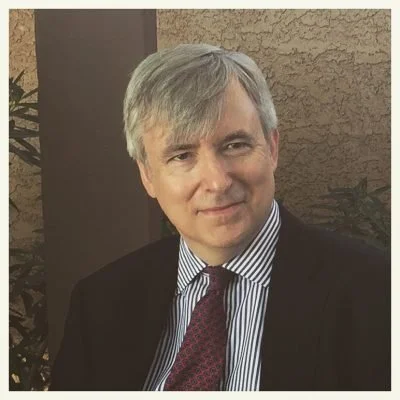
Ron and Ed welcomed Yashwanth Madhusudan, co-founder and CEO of Fyle, the next-generation spend management platform for small and medium businesses. They talked about entrepreneurship and technology especially as it relates to accounting professionals and SMBs.

About Yashwanth Madhusudan

Yash loves building and connecting things that don't seem connected to everyone. He is passionate about developing Products / Markets and has been fortunate to have been doing so for over 17+ years. He is crazy about Customer / user experience and particularly interested in working on 3 areas - Analytics, SaaS & Big data. He has excelled in Enterprise sales and Solution sales working for Global MNCs and early stage to mid stage venture backed Start-ups. He is also a keen networker and love making professional acquaintances.

Here are the show notes. Use these to follow along with the podcast:

  • How did Yash end up as the head of Fyle? He jumped into sales just after an engineering background in college. Submitting expense reports was something that really frustrated him as a sales person.

  • Yash and his co-founder have known each other for more than a decade. In conversation they kept coming back to why it takes a Saturday afternoon to file expenses when you should be spending time with family and friends. Then Fyle was born…

  • What are the first few words that come out of your mouth when you think of expense management? They are probably: boring, frustrating and I’d rather not do it. That was part of the founding journey for Fyle.

  • A sales persons primary job is selling. Nobody pats you on the back for filing your expense reports on time. It’s not the primary focus for the accounting team either. It’s draining work to chase this stuff down. Yash could relate to this and wanted to fix it with Fyle.

  • We can’t expect people to learn new apps every few years. With SMBs and mid-market companies, the training is expensive. Fyle thought about a great user experience as the starting point for their product development.

  • You have the burden of explaining how simple something is when taking on incumbents in the market that have forced customers to accept complexity. Well said Yash!

  • People start believing they should not be spending time doing something. That’s the connection between the simplicity of a product and realizing that there is a better solution out there.

  • What is Machine Learning? ML is a way to automate a set of repetitive tasks based on it learning from past examples. It’s very contextual with a focus on a specific task and data from past learning experiences.

  • In the context of expense reports, machine learning can be used because employees are given company credit cards in exchange for a set of expectations like receipts and categorization. But you get much more data. It’s not completely structured but you can make sense from it.

  • There are various machine learning frameworks now that are capable of things like writing a book. We have casually mentioned GPT-3 from OpenAI before. Here’s more info: https://en.wikipedia.org/wiki/OpenAI

  • Our Patreon channel at Patreon.com/TSOE has bonus episodes, commercial free episodes, and additional perks. Join us! It is sponsored by @90Minds. Get ahead. Hire a mind at 90Minds.com.

  • By the time a tech acronym like AI or ML reaches customers/consumers, what they really care about is, “How is it going to make my life easier?” Great point Yash and probably something that the Fyle team thinks about constantly.

  • No amount of AI will make customers change their mind. What will make a customer change their mind is saving time, adding value to their customers, and having time to be an expert. That should be the REAL impact of AI and machine learning on our business lives.

  • Golden words to live by for product teams: “The closer we are to the customers understanding of the problem, the better chance we have at not failing.”

  • What’s next for Yash and Fyle? There are very few products that can be called “generational” products (or category creators). Today, it is things like real time visibility into transactions on all of the company credit cards.

  • TIL that it only takes 15 seconds to rate The Soul of Enterprise. Every review — good, bad, or indifferent — is read LIVE on the air. Just click or tap RateThisPodcast.com/TSOE

  • As a remote first company, how does FyleHQ handle the leadership challenges? It starts with CULTURE. How do employees feel when they start working each day?

  • If you take care of the culture you can be confident that the entire team is 100% focused on the customer. An environment that makes people feel that they are achieving something constantly is a path to success.

  • A big THANK YOU to the Fyle team for making Yash available today. Check them out at FyleHQ.com if your employees HATE filing expense reports.

Bonus Content is Available As Well

Did you know that each week after our live show, Ron and Ed take to the microphone for a bonus show? Typically, this bonus show is an extension of the live show topic (sometimes even with the same guest) and a few other pieces of news, current events, or things that have caught our attention. 

Click the “FANATIC” image to learn more about pricing and member benefits. 

Episode #396: Live from Scaling New Heights - THRIVE

Ron and Ed took the Mainstage at Scaling New Heights where they were joined by Joe Woodard and over 1,000 audience members who will be providing the questions. Conversations include subscription pricing, Marxism, and ESG! No we are not kidding.

This show was LIVE. Really live. Not sort of live. It was on stage with Joe Woodard at Scaling New Heights in front of over 1,000 attendees. Here are some of the great questions from the audience:

  • On the recent show that you did with Dr. Robert Sirico, you made the comment that they're practicing Marxists when they bill by the hour. I want to understand what you meant.

  • If you are a sole practitioner, and you offer advisory, bookkeeping and tax preparation, how do you fit in the subscription billing in that platform?

  • How does a firm leader train their team on better judgment?

  • In a session earlier this week, you said that our firms will be identified by the clients we don't have in the services we don't provide, if that's a good paraphrase. Can you expand on that a little bit?

  • Which KPIs or metrics have you found very useful or practical for tax or accounting practices?

  • You shared with me that you're not a big fan of ESG. And I would love to hear why.

  • So if [subscription] is something we're interested in, what resource, book, podcast, or show will help us model towards that approach? How do I make that transition? What are the steps involved?

  • You mentioned the employee that got the work done in one hour when there was a four hour budget, and then you mentioned 92% effectiveness. Isn't that a judgment? And if it isn't a judgment, why isn't it or isn't that a bad thing?

Joe Woodard also asked SEVERAL questions throughout the show and acted as a gracious host to Ron and Ed.

Bonus Content is Available As Well

Did you know that each week after our live show, Ron and Ed take to the microphone for a bonus show? Typically, this bonus show is an extension of the live show topic (sometimes even with the same guest) and a few other pieces of news, current events, or things that have caught our attention. 

Click the “FANATIC” image to learn more about pricing and member benefits. 
Episode #395: Father Robert Sirico on The Economics of the Parables

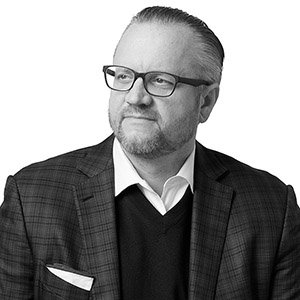
Ron and Ed were thrilled to have one of their favorite guests back for a fifth time on the show, Fr. Robert Sirico of The Acton Institute. He along with Rabbi Lapin inspired the name of our show. This time we discussed his new book The Economics of the Parables.

Before we get to the show notes, here is a bit more about Father Robert Sirico…

Rev. Robert A. Sirico is the president and co-founder of the Acton Institute and the pastor of Sacred Heart of Jesus Parish, both in Grand Rapids, MI. A regular writer and commentator on religious, political, economic, and social issues, Rev. Sirico's contributions have been carried by the New York Times, the Wall Street Journal, Forbes, the Washington Times, CNN, ABC, CBS, NPR, and the BBC, among others.

Here are the show notes. Use them to follow along with the audio.

  • For the FIFTH TIME, we welcome Rev. Robert Sirico to the show. His previous episodes were #16, 134, 226, and 318. Use TheSoulOfEnterprise.com “slash show number” to find any of those episodes.

  • Ron asked about Jimmy Lai's struggles at the top of the show. THE HONG KONGER is a documentary by the Acton Institute. More here https://thehongkongermovie.com

  • So let’s talk about Rev. Robert Sirico’s new book. But first, what is the difference between a fable and parable? A fable usually is something that deals with fantasy. A parable comes from the latin/greek which means to “put side by side” (or is a comparison).

  • One of the chapter’s in Rev. Robert Sirico’s book covers the parable of the hidden treasure. Treasure is often a metaphor for wisdom in scripture. Hidden treasure uses the capacity of human beings to speculate.

  • In “The Economics of the Parables”, Rev. Robert Sirico pulls back the veil of modernity to reveal the timeless economic wisdom of the parables. Ron and Ed devoured the book! https://www.amazon.com/Economics-Parables-Robert-Sirico/dp/1684512425

  • For each parable in his book, Rev. Sirico tries to bring economic awareness and theological awareness together.

  • “Economic value is subjective. But virtues are objective values.” — Rev. Robert Sirico

  • Check out our Patreon channel and become a member at Patreon.com/TSOE. Now sponsored by @90minds. Be kind to your mind, hire one at 90Minds.com!

  • Ed talked about the Parable of the Laborers in the Vineyard and its economic lessons on the show today. For those note familiar, here is an overview of the parable. https://en.wikipedia.org/wiki/Parable_of_the_Workers_in_the_Vineyard

  • “They’re practicing Marxists when they bill by the hour.” —Ed Kless today on the show.

  • What is it that sends some workers home without a feeling of content in the Parable o the Laborers in the Vineyard? “It’s their envy.” —Rev. Sirico

  • The Parable of the Rich Fool is a parable of Jesus which appears in The Gospel of Luke. It depicts the futility of the belief that wealth can secure prosperity or a good life. This is also covered in Rev. Sirico’s new book. https://www.amazon.com/Economics-Parables-Robert-Sirico/dp/1684512425

  • At a certain level, out Patreon members get a shoutout just like Blake Oliver from EarmarkCPE.com. Check them out and also his recent guest spot on The Soul of Enterprise! https://www.thesoulofenterprise.com/388

  • To paraphrase a Winston Churchill speech referenced by Rev. Sirico today: “The socialists of the early church said everything that I have is yours. The socialist today says everything you have is mine.”

  • From “The Tragedy of American Compassion”: Compassion is not giving to, it is suffering with. https://www.amazon.com/Tragedy-American-Compassion-Marvin-Olasky/dp/089526725X

  • Also in Rev. Sirico’s book is “The Parable of the Talents” in which a master puts his servants in charge of his goods while he is away on a trip. Upon his return, the master assesses the stewardship of his servants.

  • “The Parable of the Two Debtors” reminded Ron about the current debate surrounding student loan forgiveness. https://en.wikipedia.org/wiki/Parable_of_the_Two_Debtors

  • Rev. Sirico mentioned this poem during the show today - “Tom Smith and His Incredible Bread Machine” https://mises.org/library/tom-smith-and-his-incredible-bread-machine

  • “The wealth of the wealthiest people is invested in businesses”….not their luxury goods. —Rev. Sirico

  • A big THANK YOU to Rev. Robert Sirico for joining us today for his FIFTH appearance. His new book, The Economics of the Parables, is available most everywhere books are sold including this link https://www.amazon.com/Economics-Parables-Robert-Sirico/dp/1684512425

Bonus Content is Available As Well

Did you know that each week after our live show, Ron and Ed take to the microphone for a bonus show? Typically, this bonus show is an extension of the live show topic (sometimes even with the same guest) and a few other pieces of news, current events, or things that have caught our attention. 

This week was bonus episode 396 - “An elephant is NOT a person” and here are a few links discussed:

Click the “FANATIC” image to learn more about pricing and member benefits. 

Episode #394: Susan Bryant and Janet Haston on Jettisoning the Billable Hour

For the second week in a row Ron and Ed welcomed practitioners who are changing their business models. This week they spoke with Susan Bryant and Janet Haston, principals of The MB Group about their jettisoning the billable hour in January of this year. The conversation provided insight into the effects on the firm, particularly the relationships with customers and among the team members at The MB Group.

Before we get to the show notes, here is a bit more about both Susan and Janet…

Susan Bryant's passion is to transform businesses and the lives of their owners by professionalizing the finance function in their organizations. This looks different for every business/owner and can encompass everything from designing and implementing efficient, effective and disciplined accounting processes to developing highly-customized strategic tax plans as well as the many, many things in between. She works with business owners whose mindset is focused on building the company of their dreams and they do that by leveraging the knowledge, expertise and resources at the firm to propel their organizations forward.

Raised by two teachers, Janet approaches every client’s individual tax needs with the heart of an educator. Her goal is to ensure each client has the insight and confidence to make the best financial decisions for their business or family. At MBG, she oversees all tax services as well as providing tax consulting when complex issues arise. Presenting creative tax solutions is one of Janet's favorite ways to help her clients succeed. Away from work, Janet loves spending time with her husband, children, and grandchildren.

Here are the show notes. Use them to follow along with the audio.

  • Susan and Janet trashed their timesheet as of 2022. How is it going? Great! There are some complexities with abandoning the traditional firm mindset.

  • “It’s kind of liberating because we don’t have to account for every 15 minutes of the day.” —Susan and Janet

  • We’ve completely eliminated what was a mind boggling amount of time. We’ve simplified it, streamlined it, and really gotten back some of our time.

  • Not having to track time has forced us to think about what we are really doing for our clients. We are more thoughtful and intentional about the work we are trying to create for the client.

  • What has been the reaction from the staff at MB Group after ditching the timesheet? Two words. “Thank you.”

  • Susan and Janet can think of one person for which the billable hour was difficult to walk away from. The rest of the MB Group staff understood that there were some things to figure out and that training would be needed. Overall, it was absolutely a net positive (see the prior tweets today).

  • Regarding the billable hour: We can go back to 2012 and see what I was doing down to the 15 minute interval. That’s crazy! What other job makes you do that?

  • From marketing to internal auditing to public accounting. That’s quite a path for Susan!

  • Janet didn’t start her career until in her 30s. She started with a big four and it was a very natural transition for her.

  • “One advantage of trashing time sheets: Humanizing work” — That’s the title of the INC Magazine article written about Susan, Janet, and the MB Group! https://www.inc.com/magazine/202205/lindsay-blakely/the-mb-group-employee-benefits.html

  • Susan felt quite a bit of microagression and talked about it in the INC article: “I've been in situations where the partners wouldn't even look at me or introduce me to the clients," Bryant says. "You don't exist."

  • Susan is listening to a book right now called “Machiavelli for Women” — link is here https://www.amazon.com/Machiavelli-Women-Playbook-Getting-Ahead/dp/1982121750

  • “We just want to give an opportunity to everyone based on the opportunities we did NOT have.” —Susan and Janet

  • At one point, someone was spending 10 hours a week at MB Group tracking PTO. Now Susan and Janet have “flex PTO” which is effectively unlimited PTO.

  • Susan and Janet’s path towards value pricing all started with a podcast. Help the ones you love who are stuck in a billable hour relationship and tell them about The Soul of Enterprise.

  • Standardizing on packages is the way that MB Group pitches clients now. They talk about what is included and what is not included. But they don’t talk about hours anymore.

  • The original podcast that turned Susan and Janet on to value pricing was from Ryan Lazanis, a former TSOE guest! https://www.thesoulofenterprise.com/tsoe/lazanis

  • “They care about our business and they care about us as people.” That is how customers view MB Group now because they have moved into a more trusted role.

  • How do you know if you are making any money on this customer without timesheets? Susan and Janet refer to The Firm of The Future for their business metrics. https://www.amazon.com/Firm-Future-Accountants-Professional-Services/dp/0471264245

  • What does the future hold for MB Group? They are figuring out who they work best with and avoiding the things that are outside of what they are great at.

  • What other KPIs do you look at that are non-financial? Susan and Janet take a look at the number of times they are interacting with their customers.


Bonus Content is Available As Well

Did you know that each week after our live show, Ron and Ed take to the microphone for a bonus show? Typically, this bonus show is an extension of the live show topic (sometimes even with the same guest) and a few other pieces of news, current events, or things that have caught our attention. 

Click the “FANATIC” image to learn more about pricing and member benefits. 

Episode #393: Interview with Brian Terrell

Ron and Ed welcomed Sage Intacct Partner Brian Terrell to the show to talk about his transition to offering implementations as a subscription service. The BTerrell Group has offered this option for over a year and we talked with Brian about the results thus far.

Before we get to the show notes, here is a bit more about Brian…

Brian Terrell founded BTerrell Group in 1991 and oversees management and strategy for this Dallas based provider of Sage Intacct financial management software. Sage Intacct is the only accounting application ever to be designated by the AICPA as their Preferred Provider of Financial Applications. In addition, BTerrell’s experienced developers tailor the application’s business functionality to exact customer requirements, when necessary. Born in Plainview, Texas, Brian grew up on a farm where he learned the importance of a strong work ethic and conservative principles. From there, he received his Bachelor of Science degree from Texas A&M University before starting a career with Arthur Andersen & Co. In February 1991, Brian and his wife Nancy began practicing public accounting with Terrell & Terrell, CPAs. Within a year, the firm refocused all professional services exclusively on accounting software and business automation and eventually rebranded as BTerrell Group in 2008. Brian rides 125 miles a week as an avid cyclist and ride leader for the Plano Bicycle Association. He and his wife Nancy live in Dallas and recently celebrated the birth of their third grandchild.

Here are the questions Ron and Ed presented to Brian during the show.

  • How did you go from farming to being a CPA?

  • I have to ask you, Brian, because I was asked this recently and it just kind of stuck in my mind. If you were starting your practice over, what would you do differently?

  • When did you pivot to subscription? And why did you do it? What was the motivation?

  • What's the difference between a subscription and taking an annual price and dividing it by 12?

  • What has been the reaction that you've gotten from some of your fellow Sage partners that you've talked to about doing this?

  • Have you been asked to go back to doing implementations the old way by some prospects?

  • When charing for implementations by subscription, what happens after they're implemented? Aren't customers going to want to lower price?

  • What has been the reaction of the folks inside your organization as you made this transition to subscription? Let me ask it a little bit differently: Did they think you were crazy, too?

  • Talk to us about what you consider a cost of goods sold. Why would you why would you think that that's the right way to go with an implementation as a subscription?

  • What does subscribing to your firm do to the customer from a psychological perspective? I think there's a huge psychological difference between entering into a transaction with a professional or getting a bunch of services, versus subscribing to their firm.

  • Do you also find the subscription business model to be a competitive advantage in that it's very hard to compare your offering to the competition?

  • Have you found better pricing power with the subscription model?

  • Have you found a way to model customer lifetime value?

  • Do you use any specific software to track your financial subscription KPIs?

  • What other KPIs do you look at besides the financial ones?

  • What is the future of ERP software maybe five or even 10 years out? What's your thinking on that?


Bonus Content is Available As Well

Did you know that each week after our live show, Ron and Ed take to the microphone for a bonus show? Typically, this bonus show is an extension of the live show topic (sometimes even with the same guest) and a few other pieces of news, current events, or things that have caught our attention. 

This week was “bonus episode 394 - Umpteenth subscription economy update”. Here are a few links discussed:

Click the “FANATIC” image to learn more about pricing and member benefits. 
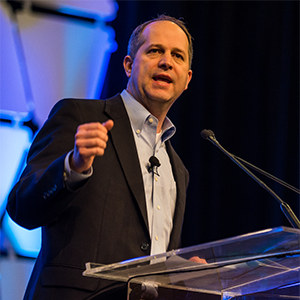
Episode #392: Fourth interview with Joe Woodard

A perennial TSOE fav, Ron and Ed were pleased to welcome back to the show for a fourth time, Joe Woodard. They talked about the state of the accounting profession and shared a preview of what will be happening at Joe's upcoming conference, Scaling New Heights.

joe woodard scaling new heights 2022

Before we get to the show notes, here is a bit more about Joe…

As an author, consultant, business coach, and national speaker, Joe has trained over 125,000 accounting and business professionals in areas of practice development, changing technology trends, strategic consulting, and how to maximize the use of accounting software in their practices. In 2012, 2014-2019, Joe was recognized by Accounting Today as one of the Top 100 Influential People within the accounting profession. Joe has been featured repeatedly in Insightful Accountant, Accounting Today and AccountingWEB in both articles and in video interviews. Joe is the managing member of Woodard Events, LLC which provides education, coaching, resources and a Community for small business advisors.

Here are some brief show notes. Use these to follow along while listening to the show.

  • 4 times on the show for Joe! Congratulations as you are only one step away from joining the 5-timers club.

  • It turns out that Joe’s conference — Scaling New Heights — is the nation’s largest accounting technology showcase under a single roof. Well done!

  • Joe noticed an interesting sub-demographic slice when he ran a live show during COVID times. The attendees were risk tolerant, entrepreneurial, and always moving forward.

  • Joe noticed that bookkeepers went from “adopt” to “adopt more strategically” as COVID forced technology choices. In other words they were much more intentional, careful, structured, and standardized in their technology choices.

  • Ed, Joe, and Ron are lucky because they are in a bubble when it comes to technology adoption and the bookkeepers they are exposed to. These folks really get it! (And if you are reading this, you’re probably one of them)

  • Lots of great things happened to the accounting tech industry over the last two years. What opportunities did bookkeepers and accountants miss over that time period? As an industry, we didn’t charge for work related to PPP.

  • On Joe’s site at https://www.woodard.com/webinars there is a class called “I can’t see” which features the 10 pain points accountants and bookkeepers face with the day in, day out interactions with their clients.

  • “Anything you can pull off a financial statement is by definition a lagging indicator. It’s like timing your cookies with a smoke alarm.” —Ron Baker

  • Clients don’t value your services because they are like all of your competitor’s services. Differentiated nature of your services and differentiated brand are just two ways to move further out on the y-axis.

  • Take a moment to refresh yourself about the Cobb Value Curve, explained by William Cobb at this link: https://www.youtube.com/watch?v=PDGoTjF6RI4

  • “We’re not paying our people enough and that’s because we’re not charging our clients enough.” There is absolutely nothing wrong with this statement from Joe.

  • 15 seconds in exchange for your 5 minutes of fame! Spend 15 seconds rating our podcast and every written review will be read on the air — good, bad, or indifferent. RateThisPodcast.com/TSOE

  • Our Patreon channel at Patreon.com/TSOE features bonus and commercial free episodes. Now sponsored by @90Minds. If you need a mind, get one at 90Minds.com ESPECIALLY if you are a Sage 100 customer.

  • The secret is purpose according to Disney. For example, Disney’s purpose statement is, “We create happiness.” Thinking through this, you can be off task as long as you are on purpose.

  • What is Joe concerned about in the business world, particularly in the United States? He’s concerned about small businesses lack of ability to break past the barrier of taxation and regulation.

  • Speaking of purpose, what does Joe state as the purpose of the Woodard organization? “We empower small business advisors.”

  • Ed has future glee! And so does Joe. In fact, Joe has future glee about the fact that we can elevate accountants and bookkeepers into business coaches.

  • One of Joe’s favorite quotes, “Business must be run at a profit, else it will die. But when anyone tries to run a business solely for profit, then also the business must die, for it no longer has a reason for existence.” —Henry Ford

  • Joe nailed it today —> For bookkeepers and accountants, the biggest barrier to the subscription model is a focus on the individual profitability by client.

  • “If you let the camel’s nose in the tent, you get a camel in the tent.” This is a great quote Joe used to describe why NO change order is too small. Hilarious and fitting!

  • A big THANK YOU to Joe for joining us today. His conference — Scaling New Heights — is coming up next month! More info at this link https://www.woodard.com/2022-scaling-new-heights


Bonus Content is Available As Well

Did you know that each week after our live show, Ron and Ed take to the microphone for a bonus show? Typically, this bonus show is an extension of the live show topic (sometimes even with the same guest) and a few other pieces of news, current events, or things that have caught our attention. 

This week was bonus episode 393 - “Purpose and the employee”. Here are a few links discussed:

Click the “FANATIC” image to learn more about pricing and member benefits.