


Episode #298 - Third interview with Dr. Paul Thomas

In his previous appearances, Dr. Paul has shared his experiences with subscription based pricing and COVID-19. In this episode, we spend the balance of our time talking about his new book, Startup DPC: How To Start And Grow Your Direct Primary Care Practice.

From the Foreword: We all know that our current healthcare system is broken, especially for primary care doctors and their patients. Primary care physicians have to see more and more patients in less and less time in order to keep up with declining reimbursement from insurance companies. This leads to rushed office visits, missed opportunities for genuine connections between doctors and their patients, frustrated patients, and burned out doctors. But it doesn't have to be this way.

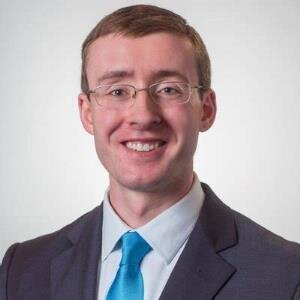
dr paul.png

But first…a bit more about Dr. Paul Thomas
Dr. Paul Thomas is a board-certified family medicine physician practicing in Corktown Detroit. His practice is Plum Health DPC, a Direct Primary Care service that is the first of its kind in Detroit and Wayne County. His mission is to deliver affordable, accessible health care services in Detroit and beyond. He has been featured on WDIV-TV Channel 4, WXYZ Channel 7, Crain's Detroit Business and CBS Radio. He has been a speaker at TEDxDetroit. He is a graduate of Wayne State University School of Medicine and now a Clinical Assistant Professor. Finally, he is an author of the book Direct Primary Care: The Cure for Our Broken Healthcare System.

Segment One Questions

  • We had you back Episode 286 right as the Coronavirus was just starting to break loose. Let's quick talk about that to get that out of the way so we can move on to the more important things which is your book, what's going on in your neck of the woods with Corona?

  • How about your practice, though? Just your practice is good from that perspective. You haven't had too many people come down?

  • Your book, released in May is, Startup DPC, how to start and grow your direct primary care practice. How's the book doing?

  • What is the difference between direct primary care and concierge medicine?

  • One of the questions that we get on a frequent basis is one that you get, which is, what about the hybrid model where you're taking insurance and trying to do direct primary care you recommend against that, don't you?

  • One of the things that you talked about at the beginning of the book is that electronic medical records were billing tool, not clinical care tools. And I'd really love for you to explain that.

Segment Two Questions

  • I wanted to talk with you a little bit about starting from scratch versus converting your practice now you started your practice from scratch?

  • Talk about if you're mid-career, can you start from scratch? Or can you convert? Which one would you lean towards?

  • You say that one of the more common criticisms is, “abandoning patients who are not in your practice, and that they'll people will say to you that if every primary care physician became a direct primary care doctor, there would be a shortage.” Do you believe that to be true? And if so, why or why not?

  • Yeah. Well, you write that one of the greatest lessons that you've learned as a maxim, “It's not the decisions. It's the decisiveness.” I really love that. I'd like to expand on that for me,

  • So I want to ask you something on a very personal note, but you write this in the book that you had to get over your “personal discomfort with money.” Why talk about that struggle? I'm really interested in that that part of your life.

Segment Three Questions

  • How did you come up with your pricing model?

  • Did you consider a family plan?

  • And you haven't had a price increase as of yet, correct?

  • And while we're on the subject of pricing, one of the things that you do talk about also is whether or not you should charge an enrollment fee. What are your thoughts on that?

  • How's your churn rate?

  • Companies contracting with you for it for a group of people, who does that work?

  • Talk about Mapper.DPCfrontier.com. Is that your site or is that just a site that you are aware of?

Segment Four Questions

  • I want to share this great quote with that you said that a marketing specialist once told you, “If your website sucks, you suck.”

  • And you are, as am I, a big fan of Gary Vee Gary Vaynerchuk of VaynerMedia and I want you to expound on his great quote “Document don't create.”

  • Do you have you have a newsletter I think that you send out to folks Is that for your practice, but it is and but also for your consulting practice as well?

  • And you quote, Benjamin Foley, who said, “Building a personal brand is all the rage right now, personal brands have always been around, they just used to be referred to as a different word, character.” Talk a little bit about that.

  • This direct primary care business is all about developing trusting relationships between doctors and their patients, wrap up on that point.


Bonus Content is Available As Well

Did you know that each week after our live show, Ron and Ed take to the microphone for a bonus show? Typically, this bonus show is an extension of the live show topic (sometimes even with the same guest) and a few other pieces of news, current events, or things that have caught our attention.

Click the “FANATIC” image to learn more about pricing and member benefits. 
Episode #297: Blockchain Update: Interview with Ron Quaranta and Sean Stein Smith

"We will know the blockchain has really made it when we stop talking about blockchain." So said Ron Quaranta, founder of the Wall Street Block Chain Alliance, during his last appearance on The Soul of Enterprise.

This time Ron was joined by Sean Stein Smith, professor at Lehman College, to share their insights into the latest news and use cases of the blockchain. Sadly, Ron Baker is working through a medical situation and was unable to be on the show.

sean_steinsmith.jpeg

But first…a bit more about Sean Stein Smith
Dr. Stein Smith is an Assistant Professor in the Business and Economics department. Before transitioning to academia full time, beginning with his appointment to a faculty position at Rutgers University, he worked in several corporate financial planning and accounting roles in both the for-profit and non-profit sectors. Dr. Stein Smith is actively engaged in the accounting community, having been awarded the NJCPA 30 under 30 in 2015, the Institute of Management Accountants Young Professional of the Year Award in 2016, and currently serves on the Fairleigh Dickinson University Alumni Association Board of Governors. Sean is also a member of the 2017 Class of the AICPA Leadership Academy.

ron_quaranta.jpeg

Also, here is a bit more about Ron Quaranta
Ron possesses almost three decades of experience in the global financial services and technology industries. He currently serves as Chairman and Chief Executive Officer of the Wall Street Blockchain Alliance, the world’s leading non-profit trade association promoting the comprehensive adoption of blockchain technology and cryptoassets across global financial markets. Prior to this, Ron served as CEO of DerivaTrust Technologies, a pioneering software and technology firm for financial market participants. Ron is the editor and contributing author of the book “Blockchain in Financial Markets and Beyond: Challenges and Applications”, published Risk Books, as well as contributor to “Blockchain & Cryptocurrency Regulation 2019”, published by Global Legal Insights.

Segment One Questions

  • To Ron Q: You were last on our show in October of 2018 which in COVID years is a decade ago, but even in crypto world, that's a long time. Talk a little bit of what what's happened for you specifically at the Wall Street Blockchain Alliance in the last 18 months.

  • To Sean: You have spent a lot of time thinking about or concerned with blockchain as well as Bitcoin even and the integration into the accounting market space. Talk a little bit about your journey through that process.

  • To both: But what are some of the newer use cases that we're seeing that you're working on right now?

  • To both: What I'm hearing from both of you is that the possible small business use case will be that if you want to sell your product to these guys [big box retailers], you're going to be have to be on a system capable of doing that [using their blockchain]. And whether that's appified on their iPhone, or whether that's an accounting system that ties into blockchain, that's going to be the place where that's going to connect. Did I get that about right?

Segment Two Questions

  • To Sean: You just were completed, I believe last summer, a fellowship with AIER up in Massachusetts and would love to hear the about the connections that you made when you were up there last summer.

  • To Sean: Did you get a chance to talk with one of our favorite people on the planet here at The Soul of Enterprise George Gilder?

  • To Sean: I attended the Acton Institute's online on Acton University this week, and George Gilder was one of the speakers there. He thinks people are crazy and nuts about the privacy issues as they exist today. He just dismisses it as a total non issue because he truly believes that the blockchain is going to replace the internet as it is right now with an internet where security and individuality is baked into the system. Do you think that George has that right?

  • To Ron Q: What are your thoughts on that security and the blockchain being an answer to some of the security holes that we see now?

Segment Three Questions

  • To Ron Q: What if you connect via blockchain, your 23andme result, the DNA ,the essence of who you are in some kind of a blockchain technology and that goes with your profile, not only to the first doctor, but to all doctors [on your case].

  • To Sean: The [killer] application from an accounting perspective might be something more along the lines of preventing identity theft or income tax filing, or even perhaps voting. What about thoughts on that?

  • To Ron Q: When you were on last with Eric Assgeirson [of CPA.com], we talked about the interplay and interchange between private blockchains and public blockchains. And how we saw that that might be something that emerges. Have you started to see that at the at the Wall Street level?

  • To Ron Q: How about with respect to COVID-19 and or any other future pandemic or disease that comes down the pike and using blockchain for contact tracing?

Segment Four Questions

  • To both: I want to talk to you a little bit more about the most famous use case and that is Bitcoin. Using the date of Ron's last appearance it was just after the Bitcoin Cash split when Bitcoin Cash split it was about 10% of the price of current of what Bitcoin was at. Bitcoin was at $3,300 and Bitcoin cash was at $330, that's a 10% ratio. Well, I checked today and Bitcoin Cash is now 2.5% of the value with Bitcoin being at $9,333 versus $230 for Bitcoin Cash today. What's up with that?

  • To both: Bitcoin is not classified by the government as a currency, it’s property, but I think we are headed for a time when there's good where there's going to be a challenge. I don't know if it's going to happen at the Supreme Court level, but, it's going to have to be dealt with and perhaps recognized to a certain extent as a currency.

  • To both: I believe it was about a month ago, the Chinese government has released a fiat currency based on blockchain. And it's a major state trial of this with transactions flowing through, so is China ahead of us on this?

  • To Ron Q: What do you think Facebook pulled back on that [Libra]?

  • To both: What is BitCoin going to be priced at in one year, five years, and ten years from now?


Bonus Content is Available As Well

Did you know that each week after our live show, Ron and Ed take to the microphone for a bonus show? Typically, this bonus show is an extension of the live show topic (sometimes even with the same guest) and a few other pieces of news, current events, or things that have caught our attention.

Click the “FANATIC” image to learn more about pricing and member benefits. 

Episode #296: Subscription Pricing at Summit CPA — Jody Grunden

We were thrilled to interview Jody Grunden, CEO and Co-Founder of Summit CPA. The firm adopted a subscription pricing model and we are eager to learn how he grew the firm from $600,000 in revenue in 2004 to $7,000,000 today.

jody grunden.jpg

But first…a bit more about Jody
Jody Grunden is the managing member of Summit CPA Group. Jody focuses his attentions primarily on Virtual CFO Services. Jody meets with business owners on a weekly basis to assist them with Cash Flow Management, Forecasting, Budgeting, Debt Restructuring, Cost Accounting, and Cutting Edge Tax Planning. He takes great pride in helping business owner strive in all economic conditions. He strongly believes that a well-run company will excel in both a good and bad economy. Jody is also the author of Digital Dollars and Cents. Jody graduated from Indiana University with a bachelor's degree in accounting. Jody has been happily married to his wife, April for over 25 years. April is an estate planning attorney for Grunden Law Offices where she concentrates her practice on estate planning, succession planning, and business formations. They have two children, Tyler and Lexi.

Here are Ed’s questions from the interview

  • You have a fairly unique pricing model, a weekly subscription. But before we get to that, let’s talk about your background. How did you get to Summit CPA?

  • For how long did you do timesheets? You started with them when you first started the firm?

  • Other than timesheets and hourly billing, why did you want to change your business model?

  • Talk to us about the time of transition from billing by the hour for about two years to fixed pricing? How did you change? Did you start with current customers, new customers, how did it happen?

  • What was the secret sauce, the magic that helped you turn the corner?

  • You mentioned you brought the pricing into equilibrium with what is valuable in the minds of the customers. What conversations did you have with your current customers as you were trying to help them make the transition. Was there pushback from them to the new pricing and just wanted to stay on the old method?

  • I noticed on your website, you talk about offering flat-fee pricing, but it’s unique because it’s done on a weekly basis, as well as you offer them choices. Why weekly?

  • You have three distinct categories: Transactional, Controller, and Virtual CFO, and priced as of June 12, 2020 at $750/week, $1,000/week, and $1,500/week. Talk to me about how you got to those prices for those three distinct levels?

  • You also offer some bundled services on top of those levels, such as individual and business tax returns—listed as optional—and also paying bills, cash flow management, payroll that are a la carte. What’s the difference between optional and a la carte?

  • Do you consider this to be more subscription-based pricing than, say, value pricing?

  • Do you have a lot of customers who jump on and jump off after they get their mess cleaned up?

  • You also mentioned that you teach what you call “profit-focused accounting.” Talk to me about that.

  • Let’s discuss marketing. You have a great website, it’s really well organized. You have a podcast, a blog. Talk to me about how you use that as an integrated marketing approach to get new customers.

  • One of the things most intriguing on your website is that you’ve created an accountant community, The CFO Community, for CFOs as well as firm owners. Give us a little run down on that?

  • If you were to give one or two pieces of advice to someone who has an accounting firm right now and is thinking of going to a new model, either going virtual or to a subscription model, what would it be?

  • If you are talking to a recent graduate who has their degree in accounting, and is interested in doing this, would you recommend they go right into it, or should they spend some time doing pain work with a regular CPA?


Bonus Content is Available As Well

Did you know that each week after our live show, Ron and Ed take to the microphone for a bonus show? Typically, this bonus show is an extension of the live show topic (sometimes even with the same guest) and a few other pieces of news, current events, or things that have caught our attention.

Click the “FANATIC” image to learn more about pricing and member benefits. 

Episode #295: The Perennial Gale of Creative Destruction

Evolutionary biologists have proven that the more adapted you are in your existing environment, the less able you are to adapt to environmental changes. We blindly cling to “that is the way we have always done it” in defiance of the evidence that this way is no longer relevant to success.

This is the history of business. New ideas, inventions, and business models from the tinkerer in the garage change the world, while rendering obsolete the existing modes of production, infrastructure, and business models. The automobile replaced the horse and buggy, the calculator replaced the slide rule, and the personal computer replaced the typewriter, and so on in a never-ending “perennial gale of creative destruction,” as described by economist Joseph Schumpeter.

Generally, the leading practitioners of the old order become the victims of disruption, not the initiators of it.
— Clayton Christensen


Background on Schumpeter

Schumpeter was to capitalism what Sigmund Freud was to the mind: someone whose ideas have become so ubiquitous and ingrained that we can’t separate his foundational thoughts from our own. There are many mini-narratives in economics: Adam Smith’s “invisible hand,” Thorstein Veblen’s “conspicuous consumption,” Paul Samuelson’s “revealed preference,” Larry Summers, “Nobody ever washed a rental car,” even Ron’s, “surgeons piercing ears.” Schumpeter “Enjoyed saying he aspired to become the greatest economist, horseman, and lover in the world. Things were not going well with the horses.”

Origins of the phrase, creative destruction

He first used the phrase in 1942: “Creative destruction is the essential fact about capitalism. Stabilized capitalism is a contradiction in terms.” 

Every piece of business strategy acquires its true significance only against the background of that process and within the situation created by it. It must be seen it its role in the perennial gale of creative destruction; it cannot be understood irrespective of it.
— Joseph Schumpeter

Economic progress, in capitalist society, means turmoil. Dynamic Disequilibrium. Every day, businessmen feel themselves in a situation that is sure to change presently. They are standing on ground that is crumbling beneath their feet. 

Generally, the leading practitioners of the old order become the victims of disruption, not the initiators of it.
— Clayton Christensen

One problem with creative destruction is the destruction is visible and measurable, but the creativity is not. New ideas hurt people earning their income from old ideas. But if we don’t allow anyone to get hurt, we stay at $3/day. If we allow creative destruction we achieve $137/day, and we can provide a safety net.

The acceptance of creative destruction relieved poverty, not wage regulations or other legislation, or even labor unions. Those preserved poverty by preserving old jobs. 

The capitalist achievement does not typically consist in providing more silk stockings for queens. The Achievement consists in bringing silk stockings within the reach of factory girls in return for steadily diminishing amounts of effort.
— Joseph Schumpeter

Schumpeter said in a speech to businesspeople: “I’m not into remedies: I am not running a drug store. I have no pills to hand out; no clear-cut solutions for any practical problems that may arise.”

In 1911, Schumpeter laid out five types of innovation that define the entrepreneurial act:

  1. Introduction of a new good

  2. New method of production

  3. Opening a new market

  4. New source of supply of raw materials

  5. Carrying out of new organization of any industry (business model)

Michelin producing radial tires in 1940s ended Akron’s reign as rubber capital of the world, killing off five tire companies (except Goodyear). GM’s innovation in financing is how it beat Ford in market share.

Another book on creative destruction is Openness to Creative Destruction: Sustaining Innovative Dynamism,  by Arthur M. Diamond Jr. In it, the author explains two epiphanies he had: Innovative dynamism (ID) can give consumers both lower prices and new goods; and, both consumers and workers benefit. Inevitablists, those who believe innovation runs on autopilot, with the entrepreneur a bystander (if Edison hadn’t invented the light bulb many others would have). But we can be open or closed to innovation, as history has proven. There’s nothing inevitable about it. Bad government and bad policies can shut it down. Chinese culture valued credentialed civil service more than entrepreneurship. Kevin Kelly once argued that innovation is so inevitable that no Marxist could slow it. But under Stalin that’s exactly what happened.

Innovative Dynamism is not inevitable. The entrepreneurs swan song is the best way to predict the future is to invent it. Necessity is not the mother of invention. You are.

The difference between the economist’s vision and the management consultants vision: “Is it necessarily tragic for a firm to die? Why not celebrate what it did or tried to do and move on to new projects pursued by new firms?”

Daniel Kahneman posits “theory-induced blindness” that leads us to see what our theories predict, rather than what is actually in front of us.

Warren Buffet popularized the term moat, shield yourself from the competition, thereby creating a sustainable competitive advantage. The following can create a moat around your business:

  1. intellectual property

  2. Specialized skills or business processes

  3. Exclusive access to relationships, data, or cheap materials

  4. Strong, trusted brand

  5. Substantial control of a distribution channel

  6. Team of people uniquely qualified to solve a particular problem

  7. Network effects or other types of flywheels

  8. A higher pace of innovation

Elon Musk, on a May 2, 2018, Tesla earnings call said: “Moats are lame,” and “If your only defense against invading armies is a moat, you will not last long.” His opinion is that the most important sustainable competitive advantage is creating a culture that supports a higher pace of innovation.

Eastman Kodak Company had all of Buffet’s criteria, but still declared bankruptcy in 2012 after a century of market dominance. And Kodak developed the very first digital camera, way back in 1975! Kodak was even initially market leader in digital cameras too, with a 27 percent share as late as 1999. But it didn’t invest heavily enough in the technology relative to its competitors, the way Intel did when pivoting to microprocessors. Kodak simply wasn’t paranoid enough.

Richard Feynman famously wrote in his 1988 book, What Do You Care What Other People Think?, “I learned very early the difference between knowing the name of something and knowing something.”

George Gilder, author, economist—and Ron’s mentor—wrote of the ultimate conflict in Wealth and Poverty:

In every economy there is one crucial and definitive conflict.  This is not the split between capitalists and workers, technocrats and humanists, government and business, liberals and conservatives, or rich and poor. All these divisions are partial and distorted reflections of the deeper conflict: the struggle between past and future, between the existing configuration of industries and the industries that will someday replace them. It is a conflict between established factories, technologies, formations of capital, and the ventures that may soon make them worthless—venture that today may not even exist; that today may flicker only as ideas, or tiny companies, or obscure research projects, or fierce but penniless ambitions; that today are unidentifiable and incalculable from above, but which, in time, in a progressing economy, must rise up if growth is to occur.

This YouTube video complements our show notes and provides a broad overview of creative destruction.


Bonus Content is Available As Well

Did you know that each week after our live show, Ron and Ed take to the microphone for a bonus show? Typically, this bonus show is an extension of the live show topic (sometimes even with the same guest) and a few other pieces of news, current events, or things that have caught our attention.

Click the “FANATIC” image to learn more about pricing and member benefits. 

Here are a few topics discussed from the most recent bonus episode:

Episode #294: Evasive Entrepreneurs with Adam Thierer

Adam Thierer is a senior research fellow at the Mercatus Center at George Mason University. He has spent more than 25 years covering the intersection of emerging technologies and public policy and has authored or edited eight books

Book topics range from media regulation and child safety issues to the role of federalism in high-technology markets, including Permissionless Innovation: The Continuing Case for Comprehensive Technological Freedom.

adam_thierer.jpg

A bit more about Adam Thierer
Adam Thierer is a senior research fellow at the Mercatus Center at George Mason University. He has spent more than 25 years covering the intersection of emerging technologies and public policy and has authored or edited eight books on topics ranging from media regulation and child safety issues to the role of federalism in high-technology markets, including Permissionless Innovation: The Continuing Case for Comprehensive Technological Freedom. Previously, Thierer was president of the Progress and Freedom Foundation, director of Telecommunications Studies at the Cato Institute, and a senior fellow at the Heritage Foundation. He received his MA in international business management and trade theory at the University of Maryland and his BA in journalism and political science from Indiana University.

Here are Ed’s questions from the interview…

  • Welcome to TSOE, Adam. We had our mutual friend Professor Deirdre McCloskey on the show last week (Episode #293), and I know you cite her a couple of times in your book [Evasive Entrepreneurs and the Future of Governance: How Innovation Improves Economies and Governments]. You write specifically McCloskey reminds us that “betterment” and “improvement” and especially ‘innovation’ were long seen in Europe as violations of God’s will or as unsettling heresies.” Explain what your relationship is to Deirdre McCloskey and how you have furthered her work in this area.

  • Having you and her on is the perfect one-two punch around this topic. I’d like to jump into more current events. Yesterday Donald Trump signed an Executive Order reclassifying social platforms as publishers. I wanted to get your thoughts on that?

  • I’m amazed by some of my conservative friends on Facebook saying what a great idea this is because they are “monopolistic.” Even if you believe that, the way to make sure they become more monopolistic is to impose more government regulations.

  • I kept pleading with them, “there will be a D[emocrat] in the White House someday, you do realize this, don’t you?

  • Let’s launch into your book. Because it’s really an input to the evasive entrepreneur, what is permissionless innovation?

  • I want to pick up on something you were talking about with Ron. Do you think that we in the United States in a way have over-scaled democracy in trying to apply democracy to too many people under the same place. In other words, would we better off seeing more federalism, or maybe even further down to the local level, as Thomas Jefferson envisioned, down to the ward level?

  • I don’t think drones are going to be necessary because with the advent of everyone homeschooling now, all the public schools will be turned into Amazon distribution centers.

  • What about permissionless innovation in China. Would you say more of it goes on in China, but less evasive entrepreneurship?

  • Are you familiar with George Gilder? He’s been a guest on the show, and last time we had him on he had written an article, The Huawei Test. What were your thoughts on that article, in which he posits that yes, the Chinese government is a problem, but Huawei itself is really very much independent?

  • It is clearly a difficult situation, and we are also monitoring the situation in Hong Kong. There’s just a lot of things that are boiling, let’s hope all of our optimism remains true. You did mention you’re not a crypto-anarchist, what are your thoughts long-term on Bitcoin and blockchain, understanding they are two separate things obviously?

  • Last question. What about the application of these technologies with regard to voting? The big thing right now is this whole mail-in voting that everyone is up in arms about. But I want to vote on my phone, that’s what I want to do?

…and here are Ron’s questions:

  • Adam, I love how you say, “Economists, political scientists, and business theorists don’t usually agree on much, but to the extent that they share a consensus about anything, it is that technological innovation is widely considered the main source of economic progress.” What is your definition of innovation versus invention? Do you have the same distinction that Matt Ridley uses in his recent book, How Innovation Works?

  • You point out the pothole vigilantes as an example of free innovation, I just loved that. You say your most controversial claim is that technological change itself may become the most important check on government power going forward. What do you mean by that?

  • You go even further. Most of our listeners would be familiar with smartphones, cryptocurrencies, blockchain, drones, 3D printing. You have a specific definition for these things. You call them “technologies of resistance” and how they enable “technological civil disobedience.” Can you explain your thinking there?

  • You’re not an anarchist, you believe there’s a pragmatic approach to regulation.

  • You have another great term that I just love, “regulatory entrepreneurialism,” where policy change is part of their business model. And of course everybody instantly thinks of Uber, or Airbnb, and there’s probably a host of other examples as well.

  • It illustrates two other concepts that you define really well, which are the “pacing problem” and the “compliance paradox.” Can you explain those two?

  • Another distinction you make is between technologies born free and born captive. In one podcast you did, the interviewer asked you when we’ll drone burritos. I don’t care about that, Adam, but will we get supersonic planes?

  • Adam, another thing I learned from your book is that Benjamin Franklin had proposed that the Great Seal of the United States include the phrase “Rebellion to tyrants is obedience to God.” You also cite Charles Murray’s 2016 book, By the People: Rebuilding Liberty without Permission, where he advises to avoid or defy regulations. You don’t take that approach, but you also you point out—and this is hard to swallow for libertarians and conservatives—that  the last time a federal agency has been abolished was in 1985 with the Civil Aeronautics Board, then the Interstate Commerce Commission in 1995. How would you reform the FDA today?

  • Another really uncomfortable thought in your book, which comes from Tyler Cowen who has also been a guest on the show, he pointed out that modern technology (especially transportation and communications networks) has greatly facilitated the growth of government in the 20th century. Is that inevitable though?

  • Adam, we have about a minute, would you reform Intellectual Property law, specifically patents?


Bonus Content is Available As Well

Did you know that each week after our live show, Ron and Ed take to the microphone for a bonus show? Typically, this bonus show is an extension of the live show topic (sometimes even with the same guest) and a few other pieces of news, current events, or things that have caught our attention.

Click the “FANATIC” image to learn more about pricing and member benefits. 

Here are a few topics discussed from the most recent bonus episode:

Episode #293: Second Interview with Professor Deirdre McCloskey

Deirdre McCloskey is a “literary, quantitative, postmodern, free-market, progressive-Episcopalian, ex-Marxist, Midwestern woman from Boston who was once a man.” She is also AN AMAZING GUEST!

deirdre mccloskey.jpg

A bit more about Deirdre McCloskey
Deirdre McCloskey is Distinguished Professor Emerita of Economics and of History, and Professor Emerita of English and of Communication, at the University of Illinois at Chicago. Trained at Harvard in the 1960s as an economist, she has written twenty books and some four hundred academic articles on economic theory, economic history, philosophy, rhetoric, statistical theory, feminism, ethics, and law. She taught for twelve years at the University of Chicago in the Economics Department in its glory days, but now describes herself as a “literary, quantitative, postmodern, free-market, progressive-Episcopalian, ex-Marxist, Midwestern woman from Boston who was once a man. Not ‘conservative’! I’m a Christian classical liberal.” Her most recent popular books, for example, are Why Liberalism Works: How True Liberal Values Produce a Freer, More Equal, Prosperous World for All, and with Art Carden Leave Me Alone and I’ll Make You Rich: The Bourgeois Deal.

Here are Ron’s questions from the interview…

“The point here is to convert you to a ‘humane true liberalism.’ Capitalism” (innovism) has raised the real income per person of the poorest since 1800 not by 10 percent or 100 percent, but by over 3,000 percent, or a 2,900 percent increase over the base, stunning Great Enrichment, well beyond the classic Industrial Revolution of 1760–1860, which had merely doubled income per head.”

This is the greatest untold story of the world. How did it happen, Professor?

  • Yours is such a powerful argument because we continue to all these materialist explanations (for the Great Enrichment), and yet you take them down one by one. You point out in the old days, especially around Europe, the only way to get honor was being a soldier or being a priest. These ideas started to change, we started to accept creative destruction, we no longer looked at innovation as a sin or a heresy, wasn’t it?

  • And freedom is an attitudinal, ideological change. What role did religion play role in helping to change those attitudes?

  • I was listening to Tyler Cowen’s podcast the other day, and he had on Paul Romer [former student of Professor McCloskey]. Tyler asked Romer why China didn’t develop the Industrial Revolution, and Romer cited a paper by Justin Lind, because China didn’t invent the social system we call science. You don’t buy that theory, do you?

  • One of the things your trilogy of books taught me is how many inventions came out of China [and believed by The California School], and then you wonder why it stopped.

  • In your book, Why Liberalism Works: How True Liberal Values Produce a Freer, More Equal, Prosperous World for All, you have a few chapters on Thomas Piketty and his work [especially his book, Capital in the Twenty-First Century]. You point out for all his data fetish, he doesn't include human capital in his inequality statistics. To me that’s just a glaring error. How can you draw any conclusions from his book? [The World Bank Estimates that about 80% of developed nation’s wealth].

  • Are you worried if Jeff Bezos becomes the world’s first trillionaire?

  • As the Nobel (2018) economist William Nordhaus estimates, inventors in the United States since World War II have kept only 2 percent of the social value of the betterment they produce.

  • What was your position on Brexit?

  • You discuss economists Robert Gordon of Northwestern, Tyler Cowen, and John Maynard Keynes who all believe we’ll lose jobs because of technology. Why all this talk about the “winners” compensating the “losers”? You quote Stephen Landsburg, “Suppose, after years of buying shampoo at your local pharmacy, you discover you can order the same shampoo for less money online. Do you have an obligation to compensate your pharmacist?

  • You quote essayist T. B. Macaulay who wrote in 1830, “On what principle is it that, when we see nothing but improvement behind us, we are to expect nothing but deterioration before us?” That pessimism just bleeds through some of the recent economic work. Are you optimistic or pessimistic with respect to liberty?

…and here are Ed’s questions:

  • I just wanted to thank you for being our first guest. You were incredibly gracious. If you weren’t as gracious as you were, I don’t know if we would have had a second guest.

  • On COVID-19, Steven Landsburg [also a student of Professor McCloskey’s], wrote on his blog the other day [This is What a Pandemic Looks Like] that nobody considered locking down the economy in 1969 during the Hong Kong flu, because they couldn’t afford to given their relative poverty, they preferred to spend their wealth on other things. Today’s lockdown is widely supported because it’s a luxury we’ve grown rich enough to afford. In other words, a lockdown is yet another triumph of capitalism!

  • The word that’s thrown around so often is “unprecedented,” but as an economic historian are there some precedents that we can put into practice for what we’ve done to the economy—one economist calls it “The Great Suppression”?

  • We’re facing here an 18% unemployment, 38 million people, which is Great Depression era levels. You said at the end of our last show that Keynesianism works in the case of mass unemployment. Is it still the case we can spend our way out of this current one, or no?

  • With all of the spending we’ve done, is this a situation where if we don’t have a significant inflation in six months to a year, we have to rethink what causes inflation? Because I would think this “helicopter money,” this would be it?

  • There was a question from one of our listeners, Bo, a friend of mine and a delegate to the Libertarian Party convention tonight, asks: “Psychologists keep telling us that rationales come last, so how do we know that the changing attitudes weren’t a trailing indicator of the changing situation on the ground?”

  • What are your thoughts on the New York Times 1619 Project?

  • Have you seen Hamilton, and if so, what did you think of that?

  • This July on Disney+ they are releasing the Hamilton movie?

  • Do you have a half-baked or fully-baked Constitutional Amendment you’d like to make?

    • [1. Get rid of the Electoral College; 2. Pass the Equal Rights Amendment; and 3. Remove the two-term limitation on the president].


Bonus Content is Available As Well

Did you know that each week after our live show, Ron and Ed take to the microphone for a bonus show? Typically, this bonus show is an extension of the live show topic (sometimes even with the same guest) and a few other pieces of news, current events, or things that have caught our attention.

Click the “FANATIC” image to learn more about pricing and member benefits. 

Episode #292: Interview with Connor Boyack

Connor Boyack is nothing short of prolific, most notably as the author of The Tuttle Twins books. They (the twins) teach young children the important values that schools won't—economics, civics, philosophy, and more!

ConnorBoyack.jpg

A Bit More About Connor Boyack

Connor Boyack is president of Libertas Institute, a free-market think tank in Utah. He is the author of over a dozen books on politics, education, and culture, along with hundreds of columns and articles championing individual liberty. He is also president of The Association for Teaching Kids Economics, a national non-profit helping K-8 students learn free-market ideas. A California native and Brigham Young University graduate, Connor currently resides in Lehi, Utah, with his wife and two children.

Here are Ed’s questions from the interview:

  • How are you and your family doing during the Great Suppression?

  • Ed told Connor how he was first introduced to his work. A book one of Ed’s brought home from school was The Rainbow Fish, the only banned book in the Kless household. As an antidote to that book, I came across another book, The Big Orange Splot, the most anti-homeowner association book ever written. Then, Amazon recommended one of your books, the first was The Tuttle Twins Learn About the Law, which is about Frédéric Bastiat’s work (see our Episode #125) and you bring it down to a K-8 level. I was thrilled to buy it, and even more amazed when I read it. Tell us how you got to writing children’s books that promote free market ideas.

  • I have five of your books, and perhaps two or three others. I don’t have the complete set. I was told by my son to tell you that his favorite book of yours is The Tuttle Twins Learn About the Law, and my daughter’s favorite is The Tuttle Twins and the Miraculous Pencil.

  • I’ve read a couple of them to my kid’s classes. Because of what’s going on with COVID-19, we almost need a reverse I, Pencil essay, to try to explain to people what we are doing by hitting the pause button on the economy.

  • The rhetoric we’re hearing about how this economic pause is a market failure is maddening.

  • The word unprecedented is thrown around a lot, but we truly never have had the snooze button hit on the economy.

  • Connor, I want to bring it up to a more adult level conversation, though many of things you write about in your blog are related back to your books. Shelly Luther, the salon owner in Dallas, who engaged in civil disobedience violating the Governor’s order, and a county judge’s order, was arrested and put in jail for seven day for opening her salon during the lock down. Governor Abbott then changed his mind about not wanting people to go to jail,  you wrote in a blog post called “Are All Laws Inherently Violent?” Could you unpack that for us?

  • Usually when I ask this question it is with irony in mind, but I am genuinely curious now, do you think taxation is theft?

  • I’ve often thought the best type of taxation would be on transactions, like a use tax. But that leads to the creature from Jekyll island, which is using the Federal Reserve currency. But I wanted to ask you, at the end of The Tuttle Twins and the Creature from Jekyll Island, you mention Bitcoin. What are your thoughts on alternative currencies, the gold standard, or would you rather see a system of privatized currencies that people use.

  • I’ve been a fan of the Brave browser for over a year, and anticipate making money from surfing the Internet. Another essay you recently wrote, in light of what’s happening with the Great Suppression—what do you think will happen with regard to homeschooling? Are we going to have a pick uptick in that, or will there be a backlash the other way?

…and here are Ron’s questions:

  • I have such respect for what you do because I’ve written nonfiction books, but children’s books are completely different. You probably know this,  William F. Buckley, Jr. who wrote 50-plus books over his career, and one children’s book. He said it was, without a doubt, the hardest to write. Rush Limbaugh also writes children’s books. I’m curious, did you find it harder, easier, what you expected?

  • The reason I could never write a children’s book, I can tell stories in a nonfiction book, but you only have to deal with what people think. But you have to plot—deal with what people do—which I think is really, really hard.

  • To prepare for this show, I went back and listened to some of your earlier interviews with Tom Woods and you had quoted Frederick Douglas (you think apocryphally): “It’s easier to build strong children than to repair broken men.” Was that the driver behind these books? Because that’s a profound line.

  • To concretize this, how do you, for example, teach the non-aggression principle to children (5-10 years of age, or at a Congressman’s level, as you say)?

  • Not only did you take on Frederick Bastiat in The Tuttle Twins Learn About the Law (April 2014), you’ve taken on Frederick Hayek in The Tuttle Twins and the Road to Surfdom (2017), and The Tuttle Twins and the Miraculous Pencil (Dec 2014), which I wish I would have read when I was a kid because I think it’s one of the most mind-blowing essays to read. You mentioned to Ed that The Tuttle Twins and the Creature from Jekyll Island is the most popular book, but I would imagine The Tuttle Twins and the Miraculous Pencil was really popular as well.

  • Have you ever run across a book called The Toaster Project? It’s about a UK design student who tries to build a toaster from scratch. He spends a ton of money, it takes him well over a year, and in the end it doesn’t work. It’s I, Pencil on steroids. A great story of how ridiculously complex it is to build something we can buy for $8.

  • Maybe I’ll ask you when we come back, you wrote The Tuttle Twins and the Search for Atlas (2017), which is about Ayn Rand’s ideas. What was the reaction to that book?

  • Connor, you take on so many great topics. Have you ever tackled the subjective vs. labor theory of value?

  • Another possible topic I wish I had known as a kid is negative vs. positive rights.

  • What’s your take on the Universal Basic Income? And have you ever thought about doing a book on that topic?

  • Tell us about your book Passion-Driven Education: How to Use Your Child’s Interests to Ignite a Lifelong Love of Learning (2016)?

  • It’s sort of like the motto of the Unschooling movement isn’t it?

  • And tell us about your book, Skip College (July 2019)?

  • Thank you so much, Connor, it’s been a pleasure to get to know you. Keep up the good work because it is vitally important!


Bonus Content is Available As Well

Did you know that each week after our live show, Ron and Ed take to the microphone for a bonus show? Typically, this bonus show is an extension of the live show topic (sometimes even with the same guest) and a few other pieces of news, current events, or things that have caught our attention.

Click the “FANATIC” image to learn more about pricing and member benefits. 

Here are a few topics discussed from the most recent bonus episode:

Episode #291: The Passion Economy — Adam Davidson

From Adam’s new book, The Passion Economy, we have rule #6: TECHNOLOGY SHOULD ALWAYS SUPPORT YOUR BUSINESS, NOT DRIVE IT.

We talk about this rule plus several others in the show. But first let’s learn more about Adam…

adam davidson.jpg

A Bit More About Adam Davidson

Adam Davidson has been a staff writer for The New Yorker since 2016. He founded, hosted, and ran NPR’s Planet Money from 2008 to 2013. He then became an economics writer and columnist for The New York Times Magazine. He has won the Peabody, Polk, and duPont-Columbia Awards. He hosts the Passion Economy podcast, based on the ideas in this book, for Luminary Media and cofounded Three Uncanny Four, a podcast company. Davidson was the technical adviser for the film The Big Short, working closely with its writer and director, Adam McKay. He and McKay were executive producers of the Amazon television program This Giant Beast That Is the Global Economy, starring Kal Penn. Davidson is married to the journalist and novelist Jen Banbury; they live with their son in Brooklyn, New York. You can listen to our first interview with Adam at Episode #26.

Here are Ron’s questions from the interview:

  • How are you, personally, holding up during this COVID crisis, the lockdown, lack of travel?

  • Adam, why did you write this book, which came out this year, and why did you write it now? [The Passion Economy: The New Rules for Thriving in the Twenty-First Century].

  • You start out the book with a story that I absolutely love—the conflict between two Stanleys. Can you explain that?

  • I was heartened to read what you wrote: “Simply pursuing one’s passion is not enough. We must pay close attention to the marketplace.” We’ve had Rabbi Daniel Lapin on the show a few times, and he believes the whole “follow your passion” that you get at commencement addresses is bad advice. He says, you have to do something that serves other people, something that they value, and then you learn to love it over time. Because if you just follow your passion, it can sink into narcissism. React to that.

  • Your passions can change, can’t they?

  • I get this question a lot from young people, “I haven’t found my passion. How do I find my passion?” How do you answer that to a high school or college student?

  • You were talking with Ed about your Rule #6 about technology, the most fascinating profiles in the book was Pioneer, the Amish company. What did you learn from them, since they aren’t known for being on the technological edge?

  • I love that story. You also spent some time at a winery, and I always say that wineries are farmers, but they are also incredible marketers, different price points, target markets, etc. But folks you’ll have to read the book to get some of these great profiles.

…and here are Ed’s questions:

  • You talk about the rules for the passion economy. The first one I found particularly interesting, because at first glance it appears that might be contradictory, and I hope you can unpack it for us: RULE #1: PURSUE INTIMACY AT SCALE.

  • I want to jump to your RULE #4: FEWER PASSIONATE CUSTOMERS ARE BETTER THAN A LOT OF INDIFFERENT ONES.

  • What’s interesting about that is, sure Mark Zuckerberg goes for the scale of the world, yet it’s his platform that allows us to get very specific with regards to our targeted ads.

  • And your RULE #6, this is really important because the folks I work with, especially in accounting: TECHNOLOGY SHOULD ALWAYS SUPPORT YOUR BUSINESS, NOT DRIVE IT. I think that’s been one of the big mistakes people have fallen for. They think technology is the business, and it’s not, it’s a supporter, a tool. Take that apart a bit more.

  • And RULE #8, which I also love, it is similar to number one because it sounds like an apparent contradiction, but I know it’s not. In fact, Ron and I have done at least one entire show on this topic [Episode #28]: NEVER BE IN THE COMMODITY BUSINESS, EVEN IF YOU SELL WHAT OTHER PEOPLE CONSIDER A COMMODITY.

  • Our favorite example of this is giveashare.com, which sells one share of stock, the very definition of a commodity.

  • Adam, I wanted to ask you about something that I notice that you repeat over and over in the book, and it’s certainly in the chapter about Jason Blumer with Ron and Tim Williams. At one point, you write that when Ron said “prices justify costs” this confounded Jason. And I’m going to ask you a question: were you also talking about yourself? Was that a discovery that you made in conversations with Ron as well?

  • I love that you’re a word guy, the word “transaction” itself has this notion that means “beyond the action” of an exchange of goods, there’s something beyond that, it’s deeper. You write “I happen to be an unobservant Jew and spend little time thinking about God or spiritual things. I found that the closer I adhere to a Passion Economy approach to my work, the more meaningful my work becomes.” Ron talked about Rabbi Lapin earlier, and something he says that the Hebrew word for work and worship are the same word. How incredibly profound that is, and it seems you’ve gotten to the essence of that without even knowing it?

  • What are your thoughts on The Passion Economy in the age of COVID-19?

  • Several pharmaceutical companies, some bitter rivals, are cooperating to come up with a vaccine. For COVID-19 and the technology that enables them to do that. I’ll let you react to that in the last 30 seconds.


Bonus Content is Available As Well

Did you know that each week after our live show, Ron and Ed take to the microphone for a bonus show? Typically, this bonus show is an extension of the live show topic (sometimes even with the same guest) and a few other pieces of news, current events, or things that have caught our attention.

Click the “FANATIC” image to learn more about pricing and member benefits. 

Here are a few topics discussed from the most recent bonus episode:

Episode #290: Interview with economist Dan Mitchell

Dan Mitchell fights for more freedom and less government (which is purposefully redundant).

dan mitchell - economist.jpg

A Bit More About Dan Mitchell

Daniel J. Mitchell is a co-founder of the Center for Freedom and Prosperity and the Center for Freedom and Prosperity Foundation. He is one of the nation’s leading experts on tax reform and supply-side tax policy. In addition to tax policy, Dr. Mitchell is a trenchant observer of economic developments and an expert on Social Security privatization – particularly the fiscal policy impact of reform and what the US can learn from other nations that have created personal retirement accounts. Dr. Mitchell’s by-line can be found in such national publications as the Wall Street Journal, New York Times, and Investor’s Business Daily. He holds a Ph.D. in Economics from George Mason University and master’s and bachelor’s degrees in economics from the University of Georgia. Mitchell was a senior fellow with the Cato Institute and The Heritage Foundation, and an economist for Senator Bob Packwood and the Senate Finance Committee. 

Ed and Ron were honored to have the chance to interview economist Dan Mitchell. As former Presidential candidate Steve Forbes said of Mitchell’s 1996 book, The Flat Tax: Freedom, Fairness, Jobs, and Growth, “Mitchell marvelously demonstrates how the flat tax will rip away the principal source of political pollution in Washington.” He also is the nation’s leading opponent of tax harmonization schemes developed by the Brussels-based European Union, the Paris-based Organization for Economic Cooperation and Development (OECD), and the United Nations. His September 2000 analysis of the OECD’s “harmful tax competition” initiative was the opening salvo in a campaign that ended with the United States announcing it could no longer support international proposals to persecute low-tax jurisdictions. He has now turned his attention to the EU’s infamous “Savings Tax Directive” and a UN proposal to undermine the sovereign right of nations to determine their own tax policy.

Here are Ed’s questions from the interview:

  • First, Dan, how are you doing in these crazy times before we get into tax policy?

  • What is your overall evaluation of the federal government’s reaction to the COVID-19 crisis? The spending seems to be a crazy mish-mosh of stuff, isn’t it?

  • The first stimulus was $2.1 trillion and the second was $2.3 Trillion, there was no conversation about all this spending.

  • You refuted a claim by Dana Milbank at the Washington Post, who wrote: “Our response to the Corona virus was hampered because our government is too small.”

  • And yet the states themselves, which are the smaller governments, their fiscal burdens run the gamut in terms of debt and unfunded liabilities. [Ed quotes from Dan’s blog post, “Coronavirus and the States: Spending Restraint, Bailouts, Default, or Bankruptcy?” May 1, 2020]. Can you unpack that, there’s a lot there?

  • On the unfunded liabilities, a lot of those were caused by guaranteed pension plans that the state employees got, is that correct?

  • Then the question becomes, are the good people of Texas willing to bail out the good people of New Jersey, that’s the challenge.

  • Dan, I wanted to ask you one more corona virus related questions, and then move on to some other random topics. What would have been better: assuming we had to do something, what should have been done. Would have been direct deposits to individuals, or what, I’ll let you go from there?

  • To steal a phrase, is it really the spending stupid? Does it ultimately come down to the size and scope of government that’s the problem, and then taxation just becomes the result of that?

  • One way that has been proposed by some Libertarians, such as Charles Murray’s idea of a Universal Basic Income, along with a Constitutional Amendment to remove all other spending programs. What are your thoughts on UBI?

  • On the subject of not trusting politicians, what are your thoughts on Justin Amash potentially declaring for the LP candidate for president?

…and here are Ron’s questions:

  • I’d like to talk with you about tax policy, one of your areas of expertise. When you look at all the different type of tax systems we could have, such as a VAT, National Sales Tax, Consumption Tax, Flat Tax, if you were king for a day—knowing you’d probably turn down that role—what tax system do you favor?

  • Look at the history of the VAT in Europe, which started fairly low, and now look at their rates, on top of their confiscatory income tax rates.

  • Dan, is it true from a technical economic point of view, no matter what you call the tax, aren’t all taxes at the end of day income taxes because that is how most people have control over resources?

  • What would you do with the corporate and capital gains taxes?

  • The corporate tax incidence debate, I remember reading Kevin Hasset, who I’m sure you know, he believes nearly all the corporate tax burden is actually paid by the workers. What’s your take on that? How much do the workers versus the shareholders versus the consumers pay of the corporate tax burden?

  • I wish more people understood exactly what you just said. It seems there’s a feeling out there that we can keep taxing the corporation, and it’s no, only people pay taxes.

  • I used to be really young and naïve back when Newt Gingrich took back the House in 1994, I really thought we were going to see major tax reform. What is your assessment of real tax reform. Do you think we’ll ever live long enough to see it?

  • I think you’re exactly right on that. It took me about a decade to learn that.

  • Dan, I know you have a worldwide grasp on tax policy, and I’d love your opinion how this country should we go about privatizing Social Security. Which model works? Is it Chile’s, Singapore’s, Great Britain’s? How should we deal with the Social Security Crisis?

  • So you’re saying you’ll be the Yankee’s pitcher before we even attempt to fix Social Security or Medicare?

  • Yes, Clinton could have got it done because he was a Democrat, rather than when George W. Bush tried it.

  • I know you’re a big opponent of the tax harmonization schemes of the EU and the UN, and this oxymoronic notion of “harmful tax competition,” where do you stand on the EU in general, and this ties into Brexit, too. I would imagine you were for Brexit, is that safe to say?

  • I’m just such a pessimist with respect to the EU, it’s just a meta-mess, with their regulations, I just can’t imagine a country like Great Britain transferring its sovereignty to the EU.

  • Dan, should we be worried about inequality or poverty?


Bonus Content is Available As Well

Did you know that each week after our live show, Ron and Ed take to the microphone for a bonus show? Typically, this bonus show is an extension of the live show topic (sometimes even with the same guest) and a few other pieces of news, current events, or things that have caught our attention.

Click the “FANATIC” image to learn more about pricing and member benefits. 

Here are a few topics discussed from the most recent bonus episode:

Episode #289: The War on Cancer — Interview with Dr. Azra Raza

A Profound and Moving Conversation About Cancer, Dr. Azra Raza’s Research, and Her Life Experiences

dr azra raza.jpg

A Bit More About Dr. Azra Raza

Dr. Azra Raza is the Chan Soon-Shiong Professor of Medicine and Director of the MDS Center at Columbia University in New York. She is considered an international authority on pre-leukemia (MDS) and acute leukemia and is one of those rare physician-scientists who divide their time equally between caring for patients and supervising a state-of-the-art basic research lab which is well-funded by multiple large grants.

Dr. Raza started collecting blood and marrow samples on her patients in 1984 and now her Tissue Bank, the largest and oldest in the country with >60,000 samples, is considered a unique national treasure. Dr. Raza has published her original clinical and basic research comprising over 300 peer-reviewed manuscripts in high profile journals like Nature, New England Journal of Medicine, Cell, Molecular Cell, Cancer Research, Blood, Leukemia. She is the author of The First Cell: And the Human Costs of Pursuing Cancer to the Last published October 2019.

Here are Ron’s questions from the interview:

  • Welcome to TSOE, Azra. It is such an honor to get to speak with you. Before we get into your book, during this COVID crisis, how are you holding up, personally?

  • Do you still have to see some patients for cancer treatments?

  • The First Cell: And the Human Costs of Pursuing Cancer to the Last, Amazons Best Science book of 2019.

  • Azra, we were introduced to you and your book from Russ Robert’s podcast, EconTalk, Ed’s and my favorite podcast. We jokingly refer to TSOE as the “poor man’s Econtalk.” I read your book after hearing the interview, and Russ Roberts said it best: Your book is hard to read, and harder to put down.” It is beautifully written. I had to stop to cry many times, I lost count. It’s so human, so profound, thank you for writing it and educating us lay people on the effects of cancer. Let’s start with what type of cancer you specialize in.

  • You actually started in pediatric oncology and couldn’t handle it, is that right?

  • You write, Today, one in two men and one in three women will get cancer. Nearly 18 million worldwide. You wrote:

    • My surroundings may not have changed much, but my perceptions have.

    • Like the difference between illness and disease; between what it means to cure and to heal; between what it means to feel no pain and to feel well.

    • I have felt like a fraud, a posturing intellectual phony. In the march to death, I have begun to catalog the tragedies of survival.

  • That is profoundly self-introspective. What brought on these feelings?

  • You write that “treatments for cancer haven’t changed in 50 years. Cancer treatment was just as primitive a century ago. With minor variations, a protocol of surgery, chemotherapy, and radiation—the slash-poison-burn approach to treating cancer—remains unchanged. It is an embarrassment. Equally embarrassing is the arrogant denial of that embarrassment.” Azra, why is that?

  • Azra, before we get into the more hopeful things, I just want to ask you one more thing. You say no one is winning the war on cancer. It is mostly hype. I would think most folks probably think since president Nixon declared a war on cancer progress we have been making progress. What’s the disconnect there?

  • Let’s pivot to your strategy and the name of your book. You think the strategy is to stop chasing after the last cancer cell and focus on eliminating the first. You believe experiments with animals, mice in particular, don’t teach us much on how treatments will work in humans. Is it really possible, Azra, with your strategy to reduce cancer deaths by 75 percent?

  • When you say the first cell, you quoted one of your colleagues who basically said that early detection screening for cancer has not fulfilled our expectations, PSA tests, things like that. You’re actually talking about things that are being worked on like a machine that automatically images your body while you are in the shower, or wearing a smart bra that has two hundred tiny biosensors, and other ways of measuring things from your urine, blood, and saliva. You’re optimistic that some of things they are working will come to fruition?

  • Azra, is a cancer vaccine possible?

  • Azra, this was painful for me to read: “I wish I felt like an exceptional oncologist. Most days, I feel like a complete failure.” I have to tell you, even though I know you work against great odds, my Mom is a three-time cancer survivor, she had Uterus, Breast, and liver cancer. Her oncologists are heroes to me, because she’s still living at 87. You tell a story at the end of the book about walking in the mall with your older sister and your brother, Tasnim, a cardiac surgeon at Buffalo General Hospital, and people were running up to him and hugging him. Your mother said: “You have been in Buffalo for almost ten years. I have never met any of your patients. Why are heart patients doing so much better than cancer patients?” Wow, that’s profound.

  • Azra, we’re at the end of our time together, and I just wanted to point out the other thing I learned from your book that I just loved, I didn’t know that “The response to a greeting from a younger person in Arabic is often, ‘May you live to bury me.’ That is beautiful. Ed will take you home, thank you so much for appearing on TSOE. 

…and here are Ed’s questions:

  • I learned so much about cancer from your book. The thing that struck me was the complexity of cancer. As a layperson, I think we look at disease as monolithic. You write in the book, “If you biopsy a patient with breast cancer twice in the same day, once in the breast and once in the lymph node, you can get cancer cells with different sequences.” So cancer is not the same in the same person even hours apart, or even in different parts of their body. I never realized the level of complexity, can you expound on that?

  • You mention the four different causes. Do we think those different causes cause the different forms of cancer, or could all four of those cause similar cancers?

  • The complexity of what is happening with COVID is an example of a macrocosm of the cancer cell. It is so complex, and you are talking about small little cells in the body, and now we are trying to figure this out for all of society. I just thought it was an interesting parallel.

  • Would you address the so-called CAR-T therapies that are being developed?

  • Another treatment going after the last cell rather than the first cell, hence the name of your book. Hopefully for the second half of our conversation we can begin to transition over to the positive side of things and what you’re doing to get people to think about this differently.

  • I wanted to take us in a different direction. I was intrigued about smart bras, etc., to detect cancer. Are there privacy concerns with this scanning, like with 23andMe worries about some insurance company is going to find about the results. Are there are any privacy concerns we have to worry ourselves with regards to this type of screening?

  • Talk a little about the research lab you run. You created this lab two decades ago, is that correct?

  • I wish I had $200 million to give you. Hopefully, we’ll help get your message out. Is there anyone else who has done anything similar?

  • One of the things that is also great about your book is it is peppered with great references to literature, I know it’s something you are very passionate about. I’m a word guy as well, and I found the whole thing about “pharmakon,” the Greek word meaning remedy, poison, and sacrifice. Do I have that right?

  • One of the things I wanted to share with you, is the importance of art and literature in the treatment of us as human beings. I also saw this in one of your videos as well, the whole notion of sacrifice came out, I was reminded of the William Butler Yeats poem, “Easter 1916,” I’m going to share part of it with you that I’ve committed to memory:

Too long a sacrifice
Can make a stone of the heart.   
O when may it suffice?
That is Heaven's part, our part   
To murmur name upon name,   
As a mother names her child   
When sleep at last has come   
On limbs that had run wild.   
What is it but nightfall?
No, no, not night but death;   
Was it needless death after all?
For England may keep faith   
For all that is done and said.   
We know their dream; enough
To know they dreamed and are dead;   
And what if excess of love   
Bewildered them till they died?   
I write it out in a verse—
MacDonagh and MacBride   
And Connolly and Pearse
Now and in time to be,
Wherever green is worn,
Are changed, changed utterly:   
A terrible beauty is born.

Dr. Raza ended by citing Emily Dickinson’s poem, “I measure every Grief I meet”:

I measure every Grief I meet
With analytic eyes – 
I wonder if It weighs like Mine – 
Or has a different size. 

I wonder if They bore it long – 
Or did it just begin – 
I cannot find the Date of Mine – 
It been so long a pain – 

I wonder if it hurts to live – 
And if They have to try – 
And whether – could They choose between – 
They would not rather – die – 


Bonus Content is Available As Well

Did you know that each week after our live show, Ron and Ed take to the microphone for a bonus show? Typically, this bonus show is an extension of the live show topic (sometimes even with the same guest) and a few other pieces of news, current events, or things that have caught our attention.

Click the “FANATIC” image to learn more about pricing and member benefits. 

Episode #288: Interview with Accounting Thought Leader Doug Sleeter

Blockchain, Bitcoin, and The Future of Accounting — This was a GREAT episode featuring Doug Sleeter

doug sleeter copy.png

A Bit More About Doug

DougSleeter (@dougsleeter) is the founder and former CEO of The Sleeter Group, an international network of accounting software consultants, and the former producer of SleeterCon, an annual conference for accounting professionals. As a CPA firm veteran and former Apple Computer Evangelist, he melded his two great passions (accounting and technology) to guide developers in the innovation of new products and to educate and lead accounting professionals who serve small businesses. He is currently focusing on digital currencies and blockchaintechnology. He was inducted into The CPA Practice Advisor Hall of Fame in the accounting profession, and named to Accounting Today's "Top 100 Most Influential People in Accounting," 2008-2015. Doug attended the University of California Santa Cruz and Santa Clara University, holds a Bachelor of Arts degree in Computer Information Systems, and lives in Pleasanton, CA.

Here are Ed’s questions from the interview:

  • Doug, welcome back to the show. You were on twice before (Episode #96 and #99), back in June 2016. Feels like that was an eon ago, doesn’t it?

  • Just to remind folks who don’t know, who’s this Doug Sleeter guy?

  • Let’s do a quick update on where you’re seeing blockchain. What’s your latest thinking around where blockchain is today?

  • There was use case with tuna, but we’re not talking about Internet of Things, it’s really more the process and production stage of things, correct

  • It’s similar to our fingerprint and facial recognition on our mobile devices today, that information is stored locally on the device, and not something the government is using to track us. We need airport security, but I think it should be run by the airlines and not the government.

  • Blockchain might be a partial answer to keep our data private and secure, which is part of the promise of the blockchain.

  • I tend to trust the private sector slightly more than the public sector just because as a customer I can change, whereas as a citizen I’m pretty stuck, unless I move to a different country.

  • I don’t think any of the three of us believes that COVID is no big deal, or less than the flu. But the unknowns with the data are a problem. A recent study by Stanford, on the “denominator” we could have missed it by a factor of 50-85 times. I just want to get your take on this. It’s furthering your point, but what are your thoughts on this? This is something we have to be on the lookout for, not just for COVID, but from a business perspective.

  • I want to pivot over to a book I recommended to you, which I mentioned on our show, Best Books of 2019 (Episode #275), and on my list was a book called The Case Against Reality by Donald Hoffman. I noticed just three days ago you posted a review on your GoodReads page.

  • In your review, you write at the end about how its helped you further your thinking about creativity and what does consciousness mean for robots, and the last sentence is “But I'm pretty sure we'll create robots that we won't be able to distinguish from conscious beings.” My question is what led you to that conclusion, because I’ve come to the exact opposite conclusion, which is pretty cool?

  • I don’t think we can get there, because I can’t prove your consciousness, so how do I go about proving the consciousness of this robot? I guess it could fool us, but we still wouldn’t know, because we can’t prove conscious in another being anyway.

  • I just love his notion that the fundamental element of the world is not space time, but rather consciousness. That’s the thing that just blew my mind about the book. He does a great job using evolution to prove his theory.

  • What are your thoughts on what you are seeing in the accounting market now? 


    …and here are Ron’s questions:

  • On blockchain, Bill Gates has that famous line: “We overestimate technology’s short-term impact, and under-estimate its long-term impact. Have we hit the long-term impact with blockchain [and Bitcoin], or are we still in the experimental, early stages?

  • George Gilder talks about blockchain being the 7th layer of the internet, that trust and transactions layer, it’s going to be built into the architecture. To get us over that hump, will this technology need to be taken on by an Amazon, Google, Facebook, combination thereof, to democratize it and make it more understandable, or is it something that will be just layered on the Internet and we’ll never talk about it?

  • Did you have an opinion on Facebook’s Libra?

  • Since we last spoke in 2016, have you changed your mind or evolved your thinking about Bitcoin or blockchain?

  • They have to work on that volatility of value, a currency has to be stable, it’s a measuring stick. You can’t float the ruler, a foot always has to be 12 inches.

  • I’m going to pivot to COVID-19. You’ve been talking since I’ve known you about Big Bad Data, and we are getting a real live example of that on just the numbers these various websites are tracking, number cases, number of deaths, mortality. What’s your take on all this, does it just confirm your priors about how dangerous data can be?

  • I couldn’t agree with you more that we need to blow the whole accounting infrastructure up and start over. Triple entry accounting made possible by blockchain is the route. But the other thing you said that I loved: When people roll their eyes you know you’re on to something. That is so true. When people are scared of a new idea, that’s how you know it’s a great idea. The dog barks at what he doesn’t understand.

  • Doug, one of our prior guests was economist Tyler Cowen (Episode #240) he does something he calls Overrated or Underrated, and Why on his podcast, Conversations with Tyler:

    • TED talks [Both]

    • Living in California [Overrated]

    • The Masters [Underrated]

    • Pebble Beach golf course [Underrated]

    • Retirement [Underrated]

    • Donald Trump [Underrated]

    • Apple, Inc. [Underrated]

    • Income inequality [Overrated]


Bonus Content is Available As Well

Did you know that each week after our live show, Ron and Ed take to the microphone for a bonus show? Typically, this bonus show is an extension of the live show topic (sometimes even with the same guest) and a few other pieces of news, current events, or things that have caught our attention.

Click the “FANATIC” image to learn more about pricing and member benefits. 

Here are some of the topics and links Ron and Ed discussed during the bonus episode this past week:

Episode #287: Second interview with Jody Thompson

The Results-Only Work Environment was co-created by our guest, Jody Thompson. Employees should be paid for results (output) rather than the number of hours worked.

jody thompson.png

A Bit More About Jody

Jody Thompson is a world-recognized future workplace expert and change-maker who has been featured on the covers of BusinessWeek, Workforce Management Magazine, HR Magazine, and HR Executive Magazine, as well as in the New York Times, TIME Magazine, USA Today, and on Good Morning America, CNBC, MSNBC and CNN. Jody is the co-creator of the proven management innovation system, the Results-Only Work Environment™ (ROWE™).

Here are Ron’s questions from the interview:

  • Welcome back Jody! You were on December 12, 2014 (Episode #24). How are you, personally, holding up during these interesting times?

  • You traveled quite a bit didn’t you?

  • Last time, we discussed your book with Cali Ressler, Why Work Sucks and How to Fix It. For new listeners, define the Results-Only Work Environment™ (ROWE™).

  • I don’t want to gloss over this. This is an important point. In your biography, it says that you are the co-creator of the proven management innovation system. Innovations in management have been far and few between. We’re still running on a lot of ideas developed in the 1880s to 1950. This is the great point Gary Hamel makes in his book, The Future of Management. Your innovation is an enormous accomplishment, so kudos for that; you’ve really contributed something that has legs for a long time.

  • When I first saw you and Cali Ressler speak, it was at a conference back in 2008, and in the restroom afterwards—where you get the real feedback from a presentation—people were saying things like, “Well, it’s interesting in theory, but it would never work in my organization.” How has ROWE™ been diffusing amongst the corporate world since the last time we spoke five-and-a-half years ago?

  • Here's a comment and question we got from one of our listeners, Wendy:

    • First thanks to Jody and Ed and Ron who opened my mind to so many possibilities I’m so grateful.

    • The question, now that organizations are forced to realize their thinking was flawed regarding the need to be in the office, how do you see the post Covid-19 landscape changing, do you anticipate that those organizations who insisted on face time will find justification to go back to their old ways?

  • You’re not just buying a block of time from an employee, but a group of work they can get done.

  • The whole presenteeism idea, I need to see you in a cubicle. It’s the illusion of control, isn’t it, for some of these managers?

  • In a knowledge economy, it’s much easier to slack off than if you worked in an auto factory. At least there, the person next to you on the line would know if you weren’t doing your job.

  • One of my favorite lines of yours: you manage the work, not the people.

  • Jody, I’ve been dying to ask you this question. I read the book by Eric Schmidt, How Google Works, and I’ve also read this about Apple, Pixar, and some other high-tech companies. They actually want people to be present because they think those serendipitous encounters lead to more innovation. I know we talk about working remotely, but ROWE™ is not just about working remotely. Wouldn’t ROWE™ work even in Google, or Apple, where your present but your focused on the outcomes?

  • I’m going to play the devil’s advocate, which is really hard since you’re preaching to the choir here. I can hear somebody say, “Yeah, but Jody, Apple and Google are two of the most successful companies on the planet (Pixar, too). Don’t you think they know what they are doing?

  • Gallup does that engagement poll every year, or every other, and they ask if employees feel connected to their organization’s strategies. So what you say has a lot of truth in it.

  • Another favorite term of mine that you developed—and the framework around it—can you describe is “Sludge.”

  • The other issue I’ve been curious about is government regulations. We have AB5 here in California that’s clamping down on Uber, Lyft, and even free-lance journalists. What about the regulations? Do you see the regulations loosening up to make ROWE™ more viable, such as overtime and other laws?

  • The whole work-life balance and flextime, it created a lot of confusion.

  • What has changed in your thinking since we last spoke?

  • Do you still hear the same objections? Have you heard any new objections? You had a whole chapter in the book of “Yeah, Buts.” Any new ones?

  • And you’ve shot all these objections down, and they keep coming back like termites!       

…and here are Ed’s questions from the interview from Jody

  • V.I. Lenin, the communist leader, said “That nothing happens for decades and then decades happen in weeks.” I think that’s what has happened to many of us. Like many organizations, Sage had a tele-work policy, and there were some positions which there was no way you could do this job from home, too much confidential information, etc. Very real concerns, I don’t want to dismiss them. When this COVID-19 thing came down, we really made a fantastic transition in two weeks to all of our colleagues working from home. Isn’t it funny. How long are you involved in making these transitions, but when it’s got to get done, we can get it done in two weeks?

  • You define the position by the results you need to achieve, it doesn’t matter how or where you get it done, we really don’t care. We ask people what they would do if we took away timesheets, and they say “We’d actually have to be clear about what we wanted.” We’d have to have clarity around what we expected from people.

  • Nowhere has this been made more apparent to me than with my fourteen-year-old son, who has moved into “remote learning” (why can’t it be just learning?). He’s in the 8th grade and gets his assignments on Monday, and he’s finished by noon on Wednesday. “I told you this was a colossal waste of time, dad.” That’s an experience companies are going to see as well. What if people actually performed better during this time period, what are we going to do then?

  • We’re going to do a future show on Price’s Law: In any system, the square root of the number of people do half the work. For example, in professional hockey, if you take the square root of the number of players in the NHL, that number of people score 50% or more of the goals. This pattern is repeated over and over, with composers, business organizations. It’s a flip on the Pareto principal, the 80/20 rule. Wouldn’t ROWE™ be a way to potentially smooth out Price’s Law a bit, since the focus in getting the work done, and working together to achieve results.

  • Here was the key learning for me: it begins in school. There’s absolutely presenteeism there.

  • With all this COVID-19 stuff that has happened, is there a tiny part of you that’s saying, “Told you so”?

  • Wendy has a follow-up question: could you address the notion of workplace specific roles. She thinks a lot of people get confused that ROWE™ means that nobody comes to work anymore.

  • What about the notion of workplace roles. There are certain roles that require some kind of presence at a particular place and time. For example, if you’re working in retail, you have to be at the store to get your work done?

  • One of the most important take-aways for me is not only do people need freedom—autonomy as you say—but they also participate in accountability as well. Peter Block—another guest on the show, see Episode #183—accountability and freedom are really the same thing. We choose to be accountable, it can’t be imposed on us. When people choose to be accountable, it really becomes clear that you have to produce the results, and if you don’t, you can’t participate in the payroll program.

  • All this leads to trust, right? Another maverick is Ricardo Semler out of Brazil, who wrote a book called Maverick. He has a great story about how when he gives out credit cards to his employees he says they don’t audit them, we just trust you. If you need something to do your job better, just buy it. People think he’s nuts, but employees can do millions of dollars of damage in a customer relationship, but I’m not going to trust them with a $500 monitor if they need it?


Bonus Content is Available As Well

Did you know that each week after our live show, Ron and Ed take to the microphone for a bonus show? Typically, this bonus show is an extension of the live show topic (sometimes even with the same guest) and a few other pieces of news, current events, or things that have caught our attention.

Click the “FANATIC” image to learn more about pricing and member benefits. 

Here are some of the topics and links Ron and Ed discussed during the bonus episode this past week:

Episode #286: Talking Coronavirus with Dr. Paul Thomas

Now with show notes! Thank you to our awesome listeners for being patient with us while we produced the audio early and then went back to add the show notes.

A Quick Bit About Dr. Paul Thomas

Dr. Paul Thomas is a board-certified family medicine physician practicing in Corktown Detroit. His practice is Plum Health DPC, a Direct Primary Care service that is the first of its kind in Detroit and Wayne County. His mission is to deliver affordable, accessible health care services in Detroit and beyond. He has been featured on WDIV-TV Channel 4, WXYZ Channel 7, Crain's Detroit Business and CBS Radio. He has been a speaker at TEDxDetroit. He is a graduate of Wayne State University School of Medicine and now a Clinical Assistant Professor. Finally, he is an author of the book Direct Primary Care: The Cure for Our Broken Healthcare System.

Here are Ed’s questions from the interview:

  • How are you?

  • What about the people in your local community, how’s it going there?

  • About 40% of hospital beds in Michigan are filled with COVID patients, does that sound right?

  • Is there a difference between intubation and being on a ventilator, or are they the same thing?

  • And that’s different from being on oxygen?

  • There are potentially long-term risks with being intubated, even after you come off it, such as challenges with your lung capacity coming back?

  • What has been the effect, if any, on your business model? Has there been any significant challenges with Direct Primary Care (DPC) model?

  • Are they waiving any regulations to be able to provide telemedicine, for example?

  • Do you think COVID-19 might lead to a significant increase in DPC?

  • Will doctors get acclimated to provide telemedicine?

  • The numbers we’re all seeing at John Hopkins or Worldometer, the numbers are pretty scary, but they are also are staggeringly incomplete. I don’t think we can really believe the number of cases in China being limited to 81,000, for instance.

  • You talked a little bit about the tests with Ron, what are your thoughts about the at-home tests? Will we all be able to test ourselves at home and get some better numbers about what’s happening?

  • The FDA and CDC sort of messed up the process with the test when all this began. What are your thoughts on that?

  • This is less political than governmental. The nature of bureaucracy that may have been the downfall, regardless of the administration.

  • On your website blog, you did a great job debunking the Vitamin C myth that’s out there. What about hydroxychloroquine as a possible treatment?

  • What about the potential vaccine for this? If one was quickly developed would we be able to get it out quick enough, or would that run into bureaucratic hurdles?

  • Does that 15-18 months include the testing and verification, or just the development of a vaccine?

  • What about links you’ve seen to diabetes or pre-diabetic condition, or does it mostly just affect those who are older?

  • Age and diabetes are correlated aren’t they?

…and here are Ron’s questions:

  • In times like this, do you think this business model has deepened your relationship with patients?

  • Do you think the subscription model helps you weather a storm like this rather than a more transactional business model?

  • Can you explain the protocol for a COVID-19 test? Don’t they test for the flu first, and only as a last resort test you for COVID-19?

  • We don’t have a clear idea of the “denominator,” we don’t how many people are walking around with asymptomatic symptoms, right?

  • Settle a big dispute: Should we be wearing masks when we go out? [Yes!]

  • Does it have to be an N95 mask? [No]

  • You probably remember that in 2009-10 we had the Swine Flu, and between April 12, 2009 and to April 10, 2010, 12,469 people died in the USA alone, with 87% being under age 65. What makes COVID-19 deadlier than the swine flu?

  • Can this can back in different strains? Can you get again once you’ve had it and recovered?

  • Have you seen any granular demographic, age, comorbidities information on the reported deaths and/or cases?

  • With older patients, there’s a difference between dying from and dying with corona virus. How do they make that distinction when they gather the death statistics?

  • The University of Pittsburgh has developed a vaccine, they say they’ve seen development antibodies in mice. And I just finished a book by the oncologist Dr. Azra Raza, who wrote The First Cell. She says, at least for cancer, having anything to do with mice doesn’t really work when translating to humans. But is that not true with vaccines? The fact it works with mice, is that promising for humans?

  • We say it takes 12-18 months to develop a vaccine. Is there a way for the FDA to expedite this process. What is the risk of a vaccine developed quickly?

  • On your website blog video from March 26, 2020 you answer the question, “How can I become immune?” You listed two ways:

    • Get Infected then Recover (your body produces IGM/IGG) and you now have the antibody

    • Vaccination

  • You said to create herd immunity you need 50-60% of people, can that immunity happen plasma transfusions from people who had the virus and recovered?

  • What about this virus running it course and achieving of herd immunity? How long does that process take without a vaccine?

  • Unless it comes back in a different strain?

  • I’m looking at Worldometer, and Michigan has now surpassed California in cases. We were taking flights from China during December and January, at the rate of at least 7,000 per day. There’s only 246 deaths in CA—each a tragedy—can you account for that? Why wasn’t CA hit has hard as New York, New Jersey, or even Michigan?

  • Could it be herd immunity, why CA wasn’t hit as hard?

  • Where do you see this ending? How and when?


Bonus Content is Available As Well

Did you know that each week after our live show, Ron and Ed take to the microphone for a bonus show? Typically, this bonus show is an extension of the live show topic (sometimes even with the same guest) and a few other pieces of news, current events, or things that have caught our attention.

Click the “FANATIC” image to learn more about pricing and member benefits. 

Here are some of the topics and links Ron and Ed discussed during the bonus episode this past week:

  • After spending an hour with Dr. Paul Thomas, Ron and Ed discuss the potential impact of "hitting the pause button" on a $30 trillion economy. Hint: We have no freaking clue and neither does anyone else.

Episode #285: Free-Rider Friday, March 2019

Live from Lockdown! This felt like the fastest Free-Rider Friday we’ve ever done. The topics just cruised by. Enjoy!


Bonus Content is Available As Well

Did you know that each week after our live show, Ron and Ed take to the microphone for a bonus show? Typically, this bonus show is an extension of the live show topic (sometimes even with the same guest) and a few other pieces of news, current events, or things that have caught our attention.

Click the “FANATIC” image to learn more about pricing and member benefits. 

Here are some of the topics and links Ron and Ed discussed during the bonus episode this past week:

  • Banter on why the COVID-19 crisis will spur even more folks to move to subscription and doubling down on relationships

  • Unbeknownst to us, Tien Tzou published a Subscribed newsletter on why you should…wait for it…double down on relationships

Episode #284: Beware the Precautionary Principle

Episode #284: Beware the Precautionary Principle

Freeman Dyson in the report from the 2001 World Economic Forum defined the Precautionary Principle as "that if some course of action carries even a remote chance of irreparable damage to the ecology, then you shouldn’t do it, no matter how great the possible advantages of the action may be. You are not allowed to balance costs against benefits when deciding what to do."

Episode #282: The Placebo and Nocebo Effects

Placebo (“I shall please”)

In the 14th century sham mourners were hired to wail and sob for the deceased at funerals. In 1785 the term appeared in New Medical Dictionary, and it first appears in English in 1832. One of the earliest placebo effects was discovered in 1794 by the Italian physician Gerbi, who rubbed worm secretions on an aching tooth, relieving pain for one year. The first clinical trials were done in 1832, in Russia.

The placebo effect has been documented to have 15% - 72% efficacy effect, documenting the power of suggestion.

David Wooten, author of Bad Medicine, estimates that one-third of the good done by modern medicine is the placebo effect. He adds, too bad bloodletting, purging, and emetics weren’t tested against the placebo effect, would have resulted in less harm.See Episode #178 for our show on Bad Medicine.

Nocebo (“I will harm”)

The Nocebo effect are the unpleasant symptoms patients may suffer as a result of being made aware of potential side effects of a treatment they are to receive or a procedure they are to undergo. Doctors hide their ignorance with impressive-sounding Latin terminology, such as idiopathic—the cause of the disease is unknown. We discussed this article from Cosmic Core, Article 241: Human Life—Health & Illness—Part 3—Placebo Effect & Health Studies, which discusses Dr. Lewis Thomas, among others. Dr. Lewis Thomas (1913-1993) was an American physician, poet, etymologist, essayist and researcher who became Dean of Yale Medical School and New York University School of Medicine and President at the Memorial Sloan-Kettering Cancer Center in New York. Dr. Thomas tells of one physician who regularly rid his patients of warts simply by painting a harmless purple dye on them. He feels that explaining this small miracle by saying it’s just the unconscious mind at work doesn’t begin to do the placebo effect justice.

The placebo effect is one of the most striking examples of idealism – that is, mind or consciousness creates reality; or physical reality is created by consciousness. We also discussed the article “The weird power of the placebo effect, explained,” from Vox, by Brian Resnick (July 7, 2017), documenting six placebo effects. In Dan Ariely’s book, Predictability Irrational, chapter 10 is: “The Power of Price: Why a 50-cent aspirin can do what a penny aspirin can’t.” See Episode #43 for our interview with Dan Ariely. Another book that contains information on the placebo and nocebo effects is A Pinch of Salt, by Theodore Dalrymple (real name: Anthony Malcolm Daniels). He has written many books on medical issues, and his time as a doctor working in a UK prison. The ethical dilemma for doctors of the nocebo effect: should the need for honesty trump the ethical injunction to do no harm? Rabbi Lapin points out that the 4-minute mile run by Roger Bannister in 1954, and the successful climb to the top of Mt. Everest in 1953 were both an example of how a lot of barriers are mental, not physical. He says: “We are predominantly spiritual creatures with a physical outfit—souls with a body.” Leading us to ask…

Are expensive consultants just a placebo?

Bonus Content is Available As Well

Did you know that each week after our live show, Ron and Ed take to the microphone for a bonus show? Typically, this bonus show is an extension of the live show topic (sometimes even with the same guest) and a few other pieces of news, current events, or things that have caught our attention.

Click the “FANATIC” image to learn more about pricing and member benefits. 

Here are some of the topics and links Ron and Ed discussed during the bonus episode this past week:

Episode #281: Free-Rider Friday, February 2020

What happens when there is just TOO MUCH news to talk about. We free-ride off of the best, most timely topics.

Let’s start off with Ed’s topics:

 Here are Ron’s topics:

Bonus Content is Available As Well

Did you know that each week after our live show, Ron and Ed take to the microphone for a bonus show? Typically, this bonus show is an extension of the live show topic (sometimes even with the same guest) and a few other pieces of news, current events, or things that have caught our attention.

Click the “FANATIC” image to learn more about pricing and member benefits. 

Here are some of the topics and links Ron and Ed discussed during the bonus episode this past week:

Episode #280: Subscription Pricing, Part III

What a show! The subscription pricing business model continues to evolve as do our thoughts on the topic.

Here are just a few of the topics and links we helped use to drive the conversation during Part III of our Subscription Pricing discussion.

  • Futurist Dan Burrus distinguishes between hard and soft trends. The Subscription Business Model is a hard trend, and every business is going to have to grapple with it, whether they adopt it or not.

  • Tien Tzuo dropped a “time bomb” on television—and the NFL—in his February 8, 2020 newsletter, titled “2022: The Last Year of Television?

  • You can see the decline in ESPN subscribers here.

  • During segment two and three of the show, we had on previous guest, Justin Lake, @jlaketx (see Episode #245). We discussed how his business is adopting subscription-based pricing.

  • Subscription pricing comes to architecture, at Schimberg Group Architects, calling it “concierge architecture.”

Bonus Content is Available As Well

Did you know that each week after our live show, Ron and Ed take to the microphone for a bonus show? Typically, this bonus show is an extension of the live show topic (sometimes even with the same guest) and a few other pieces of news, current events, or things that have caught our attention.

Click the “FANATIC” image to learn more about pricing and member benefits. 

Here are some of the topics and links Ron and Ed discussed during the bonus episode this past week:

Episode #279: Subscription Pricing in Law Firms Featuring Matthew Burgess

Is subscription pricing having an impact on the legal profession? Based on our guest — Matthew Burgess — the answer is a resounding YES!

Let’s Start with Matthew’s Biography:
Matthew Burgess co-founded View Legal in 2014, having been a partner and lawyer at one of Australia’s leading independent law firms for over 17 years. Matthew’s passion is helping clients to successfully achieve their goals. Matthew specialises in tax, estate and succession planning, providing strategic advice to business owners and high net worth individuals, and recognised in the ‘Best Lawyers’ list since 2014 in relation to trusts and estates and in ‘Doyles’ either personally or as part of View since 2015 in relation to taxation. In 2017 he was also nominated as Tax Partner of the Year (Lawyers Weekly). In part leveraging off the skills he has developed working in the SME market space, Matthew has been the catalyst in developing a number of innovative legal products for advisers and their clients. As an author, Matthew is widely recognised as an expert in his field, who constantly creates bespoke revenue related strategies for the growth, management and protection of wealth. Matthew is regularly published in Australia’s leading monthly tax journal, The Tax Institute’s Taxation in Australia (11 articles since 2012) and the leading weekly tax journal, Thomson Reuters’ Weekly Tax Bulletin (20 articles since 2012). He is the author of 23 books, and is a Practicing Fellow at VeraSage Institute.

Here are Ed’s Questions from the Episode:

  • You have an interesting LinkedIn profile, going all the way back to grade school. Give us the Matthew Burgess background story.

  • While you were at Big Law, you read The Firm of the Future and you said it was a two-year journey, what was that process like? Was it a sudden realization, or just over time that you concluded this 18-hours billable per day was nuts?

  • So did you try to change it inside the firm for a while?

  • Was that the build-up over time, or was there one incident that was the coup de grâce for you?

  • Talk to us about the transition, did you have a plan for creating your own firm?

  • You founded View Legal in August 2014. Were you solo or did you have a couple of partners?

  • Before we move on to talk about subscription, I wanted to ask you about one more bullet point under “Our Approach,” since it involves my experience in project management in the IT space, having to do with quality:

    • Old View: Quality is defined by the law firm

    • View Legal: Quality is defined by the customer

  • There are a lot of lawyers, and other professionals, who have a big problem with that one?

  • You were well ahead of even Ron and myself and other thinkers at VeraSage on this whole notion of subscription. One of the things I heard at VeraSage Down Under when I did my presentation on subscription pricing was that it could not work in law. What does subscription mean to you, and how is that different from pure value-based pricing?

  • What other adjustments did you need to make it sustainable for both you and your customers?

  • The whole notion of allowing your price to justify your expenditure of costs in the future, this allowed you to create, from a technological perspective, a better experience for those customers coming on?

  • We might have to combine subscription with something Ron has talked about for years, the TIP Clause.

  • If you to break your revenue down by percentage of subscription vs. standard fixed pricing, can you give me a percentage on that?

  • It’s a dual-gated model, the movie theater popcorn situation?

  • If you look at other industries, such as Amazon Prime, or other subscription models that are out there, are there any that you look to that you’re using to base your future on?

Here are Ron’s Questions for Matthew Burgess:

  • Your “Why” [Purpose] at View Legal is laid out on your website under “Our Approach.” Describe how you came to your Why:

    • “At View Legal our mantra is to build the firm our friends would choose.”

  • Also, “OUR VISION”:

    • “To achieve our vision, we have set out to fundamentally and radically revolutionise access to high quality legal advice, in our areas of deep specialisation – structuring, tax, trusts, asset protection, business sales, estate and succession planning.”

  • In a table below the Vision, you contrast the “Old View” of law firms with that of View Legal, with “significant inspiration provided by VeraSage. Partly adapted with permission of George Beaton, Beaton Capital, 2014.” We could spend the rest of the show on this table, but I just want to ask you about a few of the items.

    • Old View: Bill clients on hourly rates (or various, increasingly elaborate, permutations on the theme) and have no particular interest in client perception of value

    • View Legal: Customers provided up front ‘SPS Guarantee’ – that is service and price satisfaction is Guaranteed with all work undertaken following upfront fixed pricing

  • Explain how the guarantee works and what impact it has had on your customers.

  • When the trigger is pulled by a customer, and you do have to compensate the customer, one of the benefits is you get to fix the underlying problem that happened. Has that been your experience?

  • Having that guarantee does make you more selective about who you take on, doesn’t it?

  • Another item:

    • Old View: Revenue growth the #1 goal

    • View Legal: Exceeding customer expectations #1 goal

  • Another one on this table I just love, since diversity is such a hot topic right now in the professional firm space, you contrast:

    • Old View: Constant focus on the ‘need for diversity’ of gender

    • View Legal: Only focus on diversity of thought

  • And I love this one:

    • Old View: Intellectual property is how we make money and should be guarded jealously

    • View Legal: Intellectual property is how we create trust and should be shared freely

    • From Ron: I love that philosophy because I think Paul Arden wrote this in one of his books: I give away all of my intellectual capital because that forces me to replenish it.

  • View Legal participates in B1G1, 1.2 million+ impacts on your website, as of this morning. Our VeraSage colleague Paul Dunn is involved with B1G1. Describe that, and how it is seen by your customers, team members?

  • You’ve written 23 books. How many of those are children books?

  • One of those books, which I just loved, is The Dream Enabler (2014). Ed and I are going to do a show on inequality, and you point out in there that the most common problem faced by high net wealth families is alcoholism? Is that true?

  • You cite the rule “rags to rags in three generations:”

    • 1st generation makes the money

    • 2nd generation holds or keeps the money

    • 3rd generation loses the money

  • And you quote Warren Buffett: “A very rich person should leave their kids enough to do anything, but not enough to do nothing.” How do you think about inequality? Does it trouble you?

  • You also sent me a copy of your Best Ever 101 Lawyer Jokes [2015], and I love the Warning on the cover: “Content May be Considered Offensive (Particularly by lawyers!).” My favorite joke in there is: How many lawyer jokes are there? And people will inevitably respond with, “Millions, infinite.” No, there’s just one, the rest are true stories. 

Need more information?
This was a GREAT episode, no doubt. We also have another episode on a law firm that uses subscription pricing, #274.

Bonus Content is Available As Well

Did you know that each week after our live show, Ron and Ed take to the microphone for a bonus show? Typically, this bonus show is an extension of the live show topic (sometimes even with the same guest) and a few other pieces of news, current events, or things that have caught our attention.

The bonus episode after Matthew Burgess featured……..Matthew Burgess! He was able to stay on with us for an additional hour and it was just as great as the first hour.

Click the “FANATIC” image to learn more about bonus pricing and member benefits.