


Episode #292: Interview with Connor Boyack

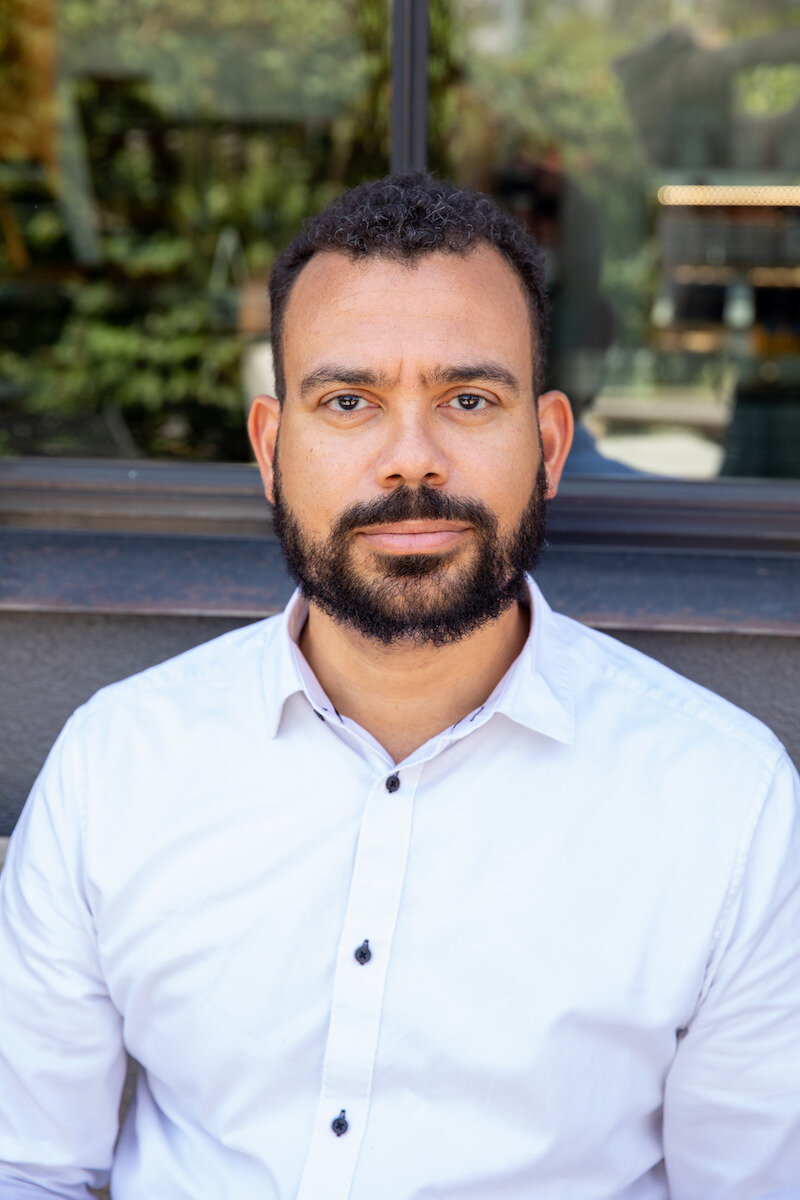
Connor Boyack is nothing short of prolific, most notably as the author of The Tuttle Twins books. They (the twins) teach young children the important values that schools won't—economics, civics, philosophy, and more!

ConnorBoyack.jpg

A Bit More About Connor Boyack

Connor Boyack is president of Libertas Institute, a free-market think tank in Utah. He is the author of over a dozen books on politics, education, and culture, along with hundreds of columns and articles championing individual liberty. He is also president of The Association for Teaching Kids Economics, a national non-profit helping K-8 students learn free-market ideas. A California native and Brigham Young University graduate, Connor currently resides in Lehi, Utah, with his wife and two children.

Here are Ed’s questions from the interview:

  • How are you and your family doing during the Great Suppression?

  • Ed told Connor how he was first introduced to his work. A book one of Ed’s brought home from school was The Rainbow Fish, the only banned book in the Kless household. As an antidote to that book, I came across another book, The Big Orange Splot, the most anti-homeowner association book ever written. Then, Amazon recommended one of your books, the first was The Tuttle Twins Learn About the Law, which is about Frédéric Bastiat’s work (see our Episode #125) and you bring it down to a K-8 level. I was thrilled to buy it, and even more amazed when I read it. Tell us how you got to writing children’s books that promote free market ideas.

  • I have five of your books, and perhaps two or three others. I don’t have the complete set. I was told by my son to tell you that his favorite book of yours is The Tuttle Twins Learn About the Law, and my daughter’s favorite is The Tuttle Twins and the Miraculous Pencil.

  • I’ve read a couple of them to my kid’s classes. Because of what’s going on with COVID-19, we almost need a reverse I, Pencil essay, to try to explain to people what we are doing by hitting the pause button on the economy.

  • The rhetoric we’re hearing about how this economic pause is a market failure is maddening.

  • The word unprecedented is thrown around a lot, but we truly never have had the snooze button hit on the economy.

  • Connor, I want to bring it up to a more adult level conversation, though many of things you write about in your blog are related back to your books. Shelly Luther, the salon owner in Dallas, who engaged in civil disobedience violating the Governor’s order, and a county judge’s order, was arrested and put in jail for seven day for opening her salon during the lock down. Governor Abbott then changed his mind about not wanting people to go to jail,  you wrote in a blog post called “Are All Laws Inherently Violent?” Could you unpack that for us?

  • Usually when I ask this question it is with irony in mind, but I am genuinely curious now, do you think taxation is theft?

  • I’ve often thought the best type of taxation would be on transactions, like a use tax. But that leads to the creature from Jekyll island, which is using the Federal Reserve currency. But I wanted to ask you, at the end of The Tuttle Twins and the Creature from Jekyll Island, you mention Bitcoin. What are your thoughts on alternative currencies, the gold standard, or would you rather see a system of privatized currencies that people use.

  • I’ve been a fan of the Brave browser for over a year, and anticipate making money from surfing the Internet. Another essay you recently wrote, in light of what’s happening with the Great Suppression—what do you think will happen with regard to homeschooling? Are we going to have a pick uptick in that, or will there be a backlash the other way?

…and here are Ron’s questions:

  • I have such respect for what you do because I’ve written nonfiction books, but children’s books are completely different. You probably know this,  William F. Buckley, Jr. who wrote 50-plus books over his career, and one children’s book. He said it was, without a doubt, the hardest to write. Rush Limbaugh also writes children’s books. I’m curious, did you find it harder, easier, what you expected?

  • The reason I could never write a children’s book, I can tell stories in a nonfiction book, but you only have to deal with what people think. But you have to plot—deal with what people do—which I think is really, really hard.

  • To prepare for this show, I went back and listened to some of your earlier interviews with Tom Woods and you had quoted Frederick Douglas (you think apocryphally): “It’s easier to build strong children than to repair broken men.” Was that the driver behind these books? Because that’s a profound line.

  • To concretize this, how do you, for example, teach the non-aggression principle to children (5-10 years of age, or at a Congressman’s level, as you say)?

  • Not only did you take on Frederick Bastiat in The Tuttle Twins Learn About the Law (April 2014), you’ve taken on Frederick Hayek in The Tuttle Twins and the Road to Surfdom (2017), and The Tuttle Twins and the Miraculous Pencil (Dec 2014), which I wish I would have read when I was a kid because I think it’s one of the most mind-blowing essays to read. You mentioned to Ed that The Tuttle Twins and the Creature from Jekyll Island is the most popular book, but I would imagine The Tuttle Twins and the Miraculous Pencil was really popular as well.

  • Have you ever run across a book called The Toaster Project? It’s about a UK design student who tries to build a toaster from scratch. He spends a ton of money, it takes him well over a year, and in the end it doesn’t work. It’s I, Pencil on steroids. A great story of how ridiculously complex it is to build something we can buy for $8.

  • Maybe I’ll ask you when we come back, you wrote The Tuttle Twins and the Search for Atlas (2017), which is about Ayn Rand’s ideas. What was the reaction to that book?

  • Connor, you take on so many great topics. Have you ever tackled the subjective vs. labor theory of value?

  • Another possible topic I wish I had known as a kid is negative vs. positive rights.

  • What’s your take on the Universal Basic Income? And have you ever thought about doing a book on that topic?

  • Tell us about your book Passion-Driven Education: How to Use Your Child’s Interests to Ignite a Lifelong Love of Learning (2016)?

  • It’s sort of like the motto of the Unschooling movement isn’t it?

  • And tell us about your book, Skip College (July 2019)?

  • Thank you so much, Connor, it’s been a pleasure to get to know you. Keep up the good work because it is vitally important!


Bonus Content is Available As Well

Did you know that each week after our live show, Ron and Ed take to the microphone for a bonus show? Typically, this bonus show is an extension of the live show topic (sometimes even with the same guest) and a few other pieces of news, current events, or things that have caught our attention.

Click the “FANATIC” image to learn more about pricing and member benefits. 

Here are a few topics discussed from the most recent bonus episode:

Episode #291: The Passion Economy — Adam Davidson

From Adam’s new book, The Passion Economy, we have rule #6: TECHNOLOGY SHOULD ALWAYS SUPPORT YOUR BUSINESS, NOT DRIVE IT.

We talk about this rule plus several others in the show. But first let’s learn more about Adam…

adam davidson.jpg

A Bit More About Adam Davidson

Adam Davidson has been a staff writer for The New Yorker since 2016. He founded, hosted, and ran NPR’s Planet Money from 2008 to 2013. He then became an economics writer and columnist for The New York Times Magazine. He has won the Peabody, Polk, and duPont-Columbia Awards. He hosts the Passion Economy podcast, based on the ideas in this book, for Luminary Media and cofounded Three Uncanny Four, a podcast company. Davidson was the technical adviser for the film The Big Short, working closely with its writer and director, Adam McKay. He and McKay were executive producers of the Amazon television program This Giant Beast That Is the Global Economy, starring Kal Penn. Davidson is married to the journalist and novelist Jen Banbury; they live with their son in Brooklyn, New York. You can listen to our first interview with Adam at Episode #26.

Here are Ron’s questions from the interview:

  • How are you, personally, holding up during this COVID crisis, the lockdown, lack of travel?

  • Adam, why did you write this book, which came out this year, and why did you write it now? [The Passion Economy: The New Rules for Thriving in the Twenty-First Century].

  • You start out the book with a story that I absolutely love—the conflict between two Stanleys. Can you explain that?

  • I was heartened to read what you wrote: “Simply pursuing one’s passion is not enough. We must pay close attention to the marketplace.” We’ve had Rabbi Daniel Lapin on the show a few times, and he believes the whole “follow your passion” that you get at commencement addresses is bad advice. He says, you have to do something that serves other people, something that they value, and then you learn to love it over time. Because if you just follow your passion, it can sink into narcissism. React to that.

  • Your passions can change, can’t they?

  • I get this question a lot from young people, “I haven’t found my passion. How do I find my passion?” How do you answer that to a high school or college student?

  • You were talking with Ed about your Rule #6 about technology, the most fascinating profiles in the book was Pioneer, the Amish company. What did you learn from them, since they aren’t known for being on the technological edge?

  • I love that story. You also spent some time at a winery, and I always say that wineries are farmers, but they are also incredible marketers, different price points, target markets, etc. But folks you’ll have to read the book to get some of these great profiles.

…and here are Ed’s questions:

  • You talk about the rules for the passion economy. The first one I found particularly interesting, because at first glance it appears that might be contradictory, and I hope you can unpack it for us: RULE #1: PURSUE INTIMACY AT SCALE.

  • I want to jump to your RULE #4: FEWER PASSIONATE CUSTOMERS ARE BETTER THAN A LOT OF INDIFFERENT ONES.

  • What’s interesting about that is, sure Mark Zuckerberg goes for the scale of the world, yet it’s his platform that allows us to get very specific with regards to our targeted ads.

  • And your RULE #6, this is really important because the folks I work with, especially in accounting: TECHNOLOGY SHOULD ALWAYS SUPPORT YOUR BUSINESS, NOT DRIVE IT. I think that’s been one of the big mistakes people have fallen for. They think technology is the business, and it’s not, it’s a supporter, a tool. Take that apart a bit more.

  • And RULE #8, which I also love, it is similar to number one because it sounds like an apparent contradiction, but I know it’s not. In fact, Ron and I have done at least one entire show on this topic [Episode #28]: NEVER BE IN THE COMMODITY BUSINESS, EVEN IF YOU SELL WHAT OTHER PEOPLE CONSIDER A COMMODITY.

  • Our favorite example of this is giveashare.com, which sells one share of stock, the very definition of a commodity.

  • Adam, I wanted to ask you about something that I notice that you repeat over and over in the book, and it’s certainly in the chapter about Jason Blumer with Ron and Tim Williams. At one point, you write that when Ron said “prices justify costs” this confounded Jason. And I’m going to ask you a question: were you also talking about yourself? Was that a discovery that you made in conversations with Ron as well?

  • I love that you’re a word guy, the word “transaction” itself has this notion that means “beyond the action” of an exchange of goods, there’s something beyond that, it’s deeper. You write “I happen to be an unobservant Jew and spend little time thinking about God or spiritual things. I found that the closer I adhere to a Passion Economy approach to my work, the more meaningful my work becomes.” Ron talked about Rabbi Lapin earlier, and something he says that the Hebrew word for work and worship are the same word. How incredibly profound that is, and it seems you’ve gotten to the essence of that without even knowing it?

  • What are your thoughts on The Passion Economy in the age of COVID-19?

  • Several pharmaceutical companies, some bitter rivals, are cooperating to come up with a vaccine. For COVID-19 and the technology that enables them to do that. I’ll let you react to that in the last 30 seconds.


Bonus Content is Available As Well

Did you know that each week after our live show, Ron and Ed take to the microphone for a bonus show? Typically, this bonus show is an extension of the live show topic (sometimes even with the same guest) and a few other pieces of news, current events, or things that have caught our attention.

Click the “FANATIC” image to learn more about pricing and member benefits. 

Here are a few topics discussed from the most recent bonus episode:

Episode #290: Interview with economist Dan Mitchell

Dan Mitchell fights for more freedom and less government (which is purposefully redundant).

dan mitchell - economist.jpg

A Bit More About Dan Mitchell

Daniel J. Mitchell is a co-founder of the Center for Freedom and Prosperity and the Center for Freedom and Prosperity Foundation. He is one of the nation’s leading experts on tax reform and supply-side tax policy. In addition to tax policy, Dr. Mitchell is a trenchant observer of economic developments and an expert on Social Security privatization – particularly the fiscal policy impact of reform and what the US can learn from other nations that have created personal retirement accounts. Dr. Mitchell’s by-line can be found in such national publications as the Wall Street Journal, New York Times, and Investor’s Business Daily. He holds a Ph.D. in Economics from George Mason University and master’s and bachelor’s degrees in economics from the University of Georgia. Mitchell was a senior fellow with the Cato Institute and The Heritage Foundation, and an economist for Senator Bob Packwood and the Senate Finance Committee. 

Ed and Ron were honored to have the chance to interview economist Dan Mitchell. As former Presidential candidate Steve Forbes said of Mitchell’s 1996 book, The Flat Tax: Freedom, Fairness, Jobs, and Growth, “Mitchell marvelously demonstrates how the flat tax will rip away the principal source of political pollution in Washington.” He also is the nation’s leading opponent of tax harmonization schemes developed by the Brussels-based European Union, the Paris-based Organization for Economic Cooperation and Development (OECD), and the United Nations. His September 2000 analysis of the OECD’s “harmful tax competition” initiative was the opening salvo in a campaign that ended with the United States announcing it could no longer support international proposals to persecute low-tax jurisdictions. He has now turned his attention to the EU’s infamous “Savings Tax Directive” and a UN proposal to undermine the sovereign right of nations to determine their own tax policy.

Here are Ed’s questions from the interview:

  • First, Dan, how are you doing in these crazy times before we get into tax policy?

  • What is your overall evaluation of the federal government’s reaction to the COVID-19 crisis? The spending seems to be a crazy mish-mosh of stuff, isn’t it?

  • The first stimulus was $2.1 trillion and the second was $2.3 Trillion, there was no conversation about all this spending.

  • You refuted a claim by Dana Milbank at the Washington Post, who wrote: “Our response to the Corona virus was hampered because our government is too small.”

  • And yet the states themselves, which are the smaller governments, their fiscal burdens run the gamut in terms of debt and unfunded liabilities. [Ed quotes from Dan’s blog post, “Coronavirus and the States: Spending Restraint, Bailouts, Default, or Bankruptcy?” May 1, 2020]. Can you unpack that, there’s a lot there?

  • On the unfunded liabilities, a lot of those were caused by guaranteed pension plans that the state employees got, is that correct?

  • Then the question becomes, are the good people of Texas willing to bail out the good people of New Jersey, that’s the challenge.

  • Dan, I wanted to ask you one more corona virus related questions, and then move on to some other random topics. What would have been better: assuming we had to do something, what should have been done. Would have been direct deposits to individuals, or what, I’ll let you go from there?

  • To steal a phrase, is it really the spending stupid? Does it ultimately come down to the size and scope of government that’s the problem, and then taxation just becomes the result of that?

  • One way that has been proposed by some Libertarians, such as Charles Murray’s idea of a Universal Basic Income, along with a Constitutional Amendment to remove all other spending programs. What are your thoughts on UBI?

  • On the subject of not trusting politicians, what are your thoughts on Justin Amash potentially declaring for the LP candidate for president?

…and here are Ron’s questions:

  • I’d like to talk with you about tax policy, one of your areas of expertise. When you look at all the different type of tax systems we could have, such as a VAT, National Sales Tax, Consumption Tax, Flat Tax, if you were king for a day—knowing you’d probably turn down that role—what tax system do you favor?

  • Look at the history of the VAT in Europe, which started fairly low, and now look at their rates, on top of their confiscatory income tax rates.

  • Dan, is it true from a technical economic point of view, no matter what you call the tax, aren’t all taxes at the end of day income taxes because that is how most people have control over resources?

  • What would you do with the corporate and capital gains taxes?

  • The corporate tax incidence debate, I remember reading Kevin Hasset, who I’m sure you know, he believes nearly all the corporate tax burden is actually paid by the workers. What’s your take on that? How much do the workers versus the shareholders versus the consumers pay of the corporate tax burden?

  • I wish more people understood exactly what you just said. It seems there’s a feeling out there that we can keep taxing the corporation, and it’s no, only people pay taxes.

  • I used to be really young and naïve back when Newt Gingrich took back the House in 1994, I really thought we were going to see major tax reform. What is your assessment of real tax reform. Do you think we’ll ever live long enough to see it?

  • I think you’re exactly right on that. It took me about a decade to learn that.

  • Dan, I know you have a worldwide grasp on tax policy, and I’d love your opinion how this country should we go about privatizing Social Security. Which model works? Is it Chile’s, Singapore’s, Great Britain’s? How should we deal with the Social Security Crisis?

  • So you’re saying you’ll be the Yankee’s pitcher before we even attempt to fix Social Security or Medicare?

  • Yes, Clinton could have got it done because he was a Democrat, rather than when George W. Bush tried it.

  • I know you’re a big opponent of the tax harmonization schemes of the EU and the UN, and this oxymoronic notion of “harmful tax competition,” where do you stand on the EU in general, and this ties into Brexit, too. I would imagine you were for Brexit, is that safe to say?

  • I’m just such a pessimist with respect to the EU, it’s just a meta-mess, with their regulations, I just can’t imagine a country like Great Britain transferring its sovereignty to the EU.

  • Dan, should we be worried about inequality or poverty?


Bonus Content is Available As Well

Did you know that each week after our live show, Ron and Ed take to the microphone for a bonus show? Typically, this bonus show is an extension of the live show topic (sometimes even with the same guest) and a few other pieces of news, current events, or things that have caught our attention.

Click the “FANATIC” image to learn more about pricing and member benefits. 

Here are a few topics discussed from the most recent bonus episode:

Episode #289: The War on Cancer — Interview with Dr. Azra Raza

A Profound and Moving Conversation About Cancer, Dr. Azra Raza’s Research, and Her Life Experiences

dr azra raza.jpg

A Bit More About Dr. Azra Raza

Dr. Azra Raza is the Chan Soon-Shiong Professor of Medicine and Director of the MDS Center at Columbia University in New York. She is considered an international authority on pre-leukemia (MDS) and acute leukemia and is one of those rare physician-scientists who divide their time equally between caring for patients and supervising a state-of-the-art basic research lab which is well-funded by multiple large grants.

Dr. Raza started collecting blood and marrow samples on her patients in 1984 and now her Tissue Bank, the largest and oldest in the country with >60,000 samples, is considered a unique national treasure. Dr. Raza has published her original clinical and basic research comprising over 300 peer-reviewed manuscripts in high profile journals like Nature, New England Journal of Medicine, Cell, Molecular Cell, Cancer Research, Blood, Leukemia. She is the author of The First Cell: And the Human Costs of Pursuing Cancer to the Last published October 2019.

Here are Ron’s questions from the interview:

  • Welcome to TSOE, Azra. It is such an honor to get to speak with you. Before we get into your book, during this COVID crisis, how are you holding up, personally?

  • Do you still have to see some patients for cancer treatments?

  • The First Cell: And the Human Costs of Pursuing Cancer to the Last, Amazons Best Science book of 2019.

  • Azra, we were introduced to you and your book from Russ Robert’s podcast, EconTalk, Ed’s and my favorite podcast. We jokingly refer to TSOE as the “poor man’s Econtalk.” I read your book after hearing the interview, and Russ Roberts said it best: Your book is hard to read, and harder to put down.” It is beautifully written. I had to stop to cry many times, I lost count. It’s so human, so profound, thank you for writing it and educating us lay people on the effects of cancer. Let’s start with what type of cancer you specialize in.

  • You actually started in pediatric oncology and couldn’t handle it, is that right?

  • You write, Today, one in two men and one in three women will get cancer. Nearly 18 million worldwide. You wrote:

    • My surroundings may not have changed much, but my perceptions have.

    • Like the difference between illness and disease; between what it means to cure and to heal; between what it means to feel no pain and to feel well.

    • I have felt like a fraud, a posturing intellectual phony. In the march to death, I have begun to catalog the tragedies of survival.

  • That is profoundly self-introspective. What brought on these feelings?

  • You write that “treatments for cancer haven’t changed in 50 years. Cancer treatment was just as primitive a century ago. With minor variations, a protocol of surgery, chemotherapy, and radiation—the slash-poison-burn approach to treating cancer—remains unchanged. It is an embarrassment. Equally embarrassing is the arrogant denial of that embarrassment.” Azra, why is that?

  • Azra, before we get into the more hopeful things, I just want to ask you one more thing. You say no one is winning the war on cancer. It is mostly hype. I would think most folks probably think since president Nixon declared a war on cancer progress we have been making progress. What’s the disconnect there?

  • Let’s pivot to your strategy and the name of your book. You think the strategy is to stop chasing after the last cancer cell and focus on eliminating the first. You believe experiments with animals, mice in particular, don’t teach us much on how treatments will work in humans. Is it really possible, Azra, with your strategy to reduce cancer deaths by 75 percent?

  • When you say the first cell, you quoted one of your colleagues who basically said that early detection screening for cancer has not fulfilled our expectations, PSA tests, things like that. You’re actually talking about things that are being worked on like a machine that automatically images your body while you are in the shower, or wearing a smart bra that has two hundred tiny biosensors, and other ways of measuring things from your urine, blood, and saliva. You’re optimistic that some of things they are working will come to fruition?

  • Azra, is a cancer vaccine possible?

  • Azra, this was painful for me to read: “I wish I felt like an exceptional oncologist. Most days, I feel like a complete failure.” I have to tell you, even though I know you work against great odds, my Mom is a three-time cancer survivor, she had Uterus, Breast, and liver cancer. Her oncologists are heroes to me, because she’s still living at 87. You tell a story at the end of the book about walking in the mall with your older sister and your brother, Tasnim, a cardiac surgeon at Buffalo General Hospital, and people were running up to him and hugging him. Your mother said: “You have been in Buffalo for almost ten years. I have never met any of your patients. Why are heart patients doing so much better than cancer patients?” Wow, that’s profound.

  • Azra, we’re at the end of our time together, and I just wanted to point out the other thing I learned from your book that I just loved, I didn’t know that “The response to a greeting from a younger person in Arabic is often, ‘May you live to bury me.’ That is beautiful. Ed will take you home, thank you so much for appearing on TSOE. 

…and here are Ed’s questions:

  • I learned so much about cancer from your book. The thing that struck me was the complexity of cancer. As a layperson, I think we look at disease as monolithic. You write in the book, “If you biopsy a patient with breast cancer twice in the same day, once in the breast and once in the lymph node, you can get cancer cells with different sequences.” So cancer is not the same in the same person even hours apart, or even in different parts of their body. I never realized the level of complexity, can you expound on that?

  • You mention the four different causes. Do we think those different causes cause the different forms of cancer, or could all four of those cause similar cancers?

  • The complexity of what is happening with COVID is an example of a macrocosm of the cancer cell. It is so complex, and you are talking about small little cells in the body, and now we are trying to figure this out for all of society. I just thought it was an interesting parallel.

  • Would you address the so-called CAR-T therapies that are being developed?

  • Another treatment going after the last cell rather than the first cell, hence the name of your book. Hopefully for the second half of our conversation we can begin to transition over to the positive side of things and what you’re doing to get people to think about this differently.

  • I wanted to take us in a different direction. I was intrigued about smart bras, etc., to detect cancer. Are there privacy concerns with this scanning, like with 23andMe worries about some insurance company is going to find about the results. Are there are any privacy concerns we have to worry ourselves with regards to this type of screening?

  • Talk a little about the research lab you run. You created this lab two decades ago, is that correct?

  • I wish I had $200 million to give you. Hopefully, we’ll help get your message out. Is there anyone else who has done anything similar?

  • One of the things that is also great about your book is it is peppered with great references to literature, I know it’s something you are very passionate about. I’m a word guy as well, and I found the whole thing about “pharmakon,” the Greek word meaning remedy, poison, and sacrifice. Do I have that right?

  • One of the things I wanted to share with you, is the importance of art and literature in the treatment of us as human beings. I also saw this in one of your videos as well, the whole notion of sacrifice came out, I was reminded of the William Butler Yeats poem, “Easter 1916,” I’m going to share part of it with you that I’ve committed to memory:

Too long a sacrifice
Can make a stone of the heart.   
O when may it suffice?
That is Heaven's part, our part   
To murmur name upon name,   
As a mother names her child   
When sleep at last has come   
On limbs that had run wild.   
What is it but nightfall?
No, no, not night but death;   
Was it needless death after all?
For England may keep faith   
For all that is done and said.   
We know their dream; enough
To know they dreamed and are dead;   
And what if excess of love   
Bewildered them till they died?   
I write it out in a verse—
MacDonagh and MacBride   
And Connolly and Pearse
Now and in time to be,
Wherever green is worn,
Are changed, changed utterly:   
A terrible beauty is born.

Dr. Raza ended by citing Emily Dickinson’s poem, “I measure every Grief I meet”:

I measure every Grief I meet
With analytic eyes – 
I wonder if It weighs like Mine – 
Or has a different size. 

I wonder if They bore it long – 
Or did it just begin – 
I cannot find the Date of Mine – 
It been so long a pain – 

I wonder if it hurts to live – 
And if They have to try – 
And whether – could They choose between – 
They would not rather – die – 


Bonus Content is Available As Well

Did you know that each week after our live show, Ron and Ed take to the microphone for a bonus show? Typically, this bonus show is an extension of the live show topic (sometimes even with the same guest) and a few other pieces of news, current events, or things that have caught our attention.

Click the “FANATIC” image to learn more about pricing and member benefits. 

Episode #288: Interview with Accounting Thought Leader Doug Sleeter

Blockchain, Bitcoin, and The Future of Accounting — This was a GREAT episode featuring Doug Sleeter

doug sleeter copy.png

A Bit More About Doug

DougSleeter (@dougsleeter) is the founder and former CEO of The Sleeter Group, an international network of accounting software consultants, and the former producer of SleeterCon, an annual conference for accounting professionals. As a CPA firm veteran and former Apple Computer Evangelist, he melded his two great passions (accounting and technology) to guide developers in the innovation of new products and to educate and lead accounting professionals who serve small businesses. He is currently focusing on digital currencies and blockchaintechnology. He was inducted into The CPA Practice Advisor Hall of Fame in the accounting profession, and named to Accounting Today's "Top 100 Most Influential People in Accounting," 2008-2015. Doug attended the University of California Santa Cruz and Santa Clara University, holds a Bachelor of Arts degree in Computer Information Systems, and lives in Pleasanton, CA.

Here are Ed’s questions from the interview:

  • Doug, welcome back to the show. You were on twice before (Episode #96 and #99), back in June 2016. Feels like that was an eon ago, doesn’t it?

  • Just to remind folks who don’t know, who’s this Doug Sleeter guy?

  • Let’s do a quick update on where you’re seeing blockchain. What’s your latest thinking around where blockchain is today?

  • There was use case with tuna, but we’re not talking about Internet of Things, it’s really more the process and production stage of things, correct

  • It’s similar to our fingerprint and facial recognition on our mobile devices today, that information is stored locally on the device, and not something the government is using to track us. We need airport security, but I think it should be run by the airlines and not the government.

  • Blockchain might be a partial answer to keep our data private and secure, which is part of the promise of the blockchain.

  • I tend to trust the private sector slightly more than the public sector just because as a customer I can change, whereas as a citizen I’m pretty stuck, unless I move to a different country.

  • I don’t think any of the three of us believes that COVID is no big deal, or less than the flu. But the unknowns with the data are a problem. A recent study by Stanford, on the “denominator” we could have missed it by a factor of 50-85 times. I just want to get your take on this. It’s furthering your point, but what are your thoughts on this? This is something we have to be on the lookout for, not just for COVID, but from a business perspective.

  • I want to pivot over to a book I recommended to you, which I mentioned on our show, Best Books of 2019 (Episode #275), and on my list was a book called The Case Against Reality by Donald Hoffman. I noticed just three days ago you posted a review on your GoodReads page.

  • In your review, you write at the end about how its helped you further your thinking about creativity and what does consciousness mean for robots, and the last sentence is “But I'm pretty sure we'll create robots that we won't be able to distinguish from conscious beings.” My question is what led you to that conclusion, because I’ve come to the exact opposite conclusion, which is pretty cool?

  • I don’t think we can get there, because I can’t prove your consciousness, so how do I go about proving the consciousness of this robot? I guess it could fool us, but we still wouldn’t know, because we can’t prove conscious in another being anyway.

  • I just love his notion that the fundamental element of the world is not space time, but rather consciousness. That’s the thing that just blew my mind about the book. He does a great job using evolution to prove his theory.

  • What are your thoughts on what you are seeing in the accounting market now? 


    …and here are Ron’s questions:

  • On blockchain, Bill Gates has that famous line: “We overestimate technology’s short-term impact, and under-estimate its long-term impact. Have we hit the long-term impact with blockchain [and Bitcoin], or are we still in the experimental, early stages?

  • George Gilder talks about blockchain being the 7th layer of the internet, that trust and transactions layer, it’s going to be built into the architecture. To get us over that hump, will this technology need to be taken on by an Amazon, Google, Facebook, combination thereof, to democratize it and make it more understandable, or is it something that will be just layered on the Internet and we’ll never talk about it?

  • Did you have an opinion on Facebook’s Libra?

  • Since we last spoke in 2016, have you changed your mind or evolved your thinking about Bitcoin or blockchain?

  • They have to work on that volatility of value, a currency has to be stable, it’s a measuring stick. You can’t float the ruler, a foot always has to be 12 inches.

  • I’m going to pivot to COVID-19. You’ve been talking since I’ve known you about Big Bad Data, and we are getting a real live example of that on just the numbers these various websites are tracking, number cases, number of deaths, mortality. What’s your take on all this, does it just confirm your priors about how dangerous data can be?

  • I couldn’t agree with you more that we need to blow the whole accounting infrastructure up and start over. Triple entry accounting made possible by blockchain is the route. But the other thing you said that I loved: When people roll their eyes you know you’re on to something. That is so true. When people are scared of a new idea, that’s how you know it’s a great idea. The dog barks at what he doesn’t understand.

  • Doug, one of our prior guests was economist Tyler Cowen (Episode #240) he does something he calls Overrated or Underrated, and Why on his podcast, Conversations with Tyler:

    • TED talks [Both]

    • Living in California [Overrated]

    • The Masters [Underrated]

    • Pebble Beach golf course [Underrated]

    • Retirement [Underrated]

    • Donald Trump [Underrated]

    • Apple, Inc. [Underrated]

    • Income inequality [Overrated]


Bonus Content is Available As Well

Did you know that each week after our live show, Ron and Ed take to the microphone for a bonus show? Typically, this bonus show is an extension of the live show topic (sometimes even with the same guest) and a few other pieces of news, current events, or things that have caught our attention.

Click the “FANATIC” image to learn more about pricing and member benefits. 

Here are some of the topics and links Ron and Ed discussed during the bonus episode this past week:

Episode #287: Second interview with Jody Thompson

The Results-Only Work Environment was co-created by our guest, Jody Thompson. Employees should be paid for results (output) rather than the number of hours worked.

jody thompson.png

A Bit More About Jody

Jody Thompson is a world-recognized future workplace expert and change-maker who has been featured on the covers of BusinessWeek, Workforce Management Magazine, HR Magazine, and HR Executive Magazine, as well as in the New York Times, TIME Magazine, USA Today, and on Good Morning America, CNBC, MSNBC and CNN. Jody is the co-creator of the proven management innovation system, the Results-Only Work Environment™ (ROWE™).

Here are Ron’s questions from the interview:

  • Welcome back Jody! You were on December 12, 2014 (Episode #24). How are you, personally, holding up during these interesting times?

  • You traveled quite a bit didn’t you?

  • Last time, we discussed your book with Cali Ressler, Why Work Sucks and How to Fix It. For new listeners, define the Results-Only Work Environment™ (ROWE™).

  • I don’t want to gloss over this. This is an important point. In your biography, it says that you are the co-creator of the proven management innovation system. Innovations in management have been far and few between. We’re still running on a lot of ideas developed in the 1880s to 1950. This is the great point Gary Hamel makes in his book, The Future of Management. Your innovation is an enormous accomplishment, so kudos for that; you’ve really contributed something that has legs for a long time.

  • When I first saw you and Cali Ressler speak, it was at a conference back in 2008, and in the restroom afterwards—where you get the real feedback from a presentation—people were saying things like, “Well, it’s interesting in theory, but it would never work in my organization.” How has ROWE™ been diffusing amongst the corporate world since the last time we spoke five-and-a-half years ago?

  • Here's a comment and question we got from one of our listeners, Wendy:

    • First thanks to Jody and Ed and Ron who opened my mind to so many possibilities I’m so grateful.

    • The question, now that organizations are forced to realize their thinking was flawed regarding the need to be in the office, how do you see the post Covid-19 landscape changing, do you anticipate that those organizations who insisted on face time will find justification to go back to their old ways?

  • You’re not just buying a block of time from an employee, but a group of work they can get done.

  • The whole presenteeism idea, I need to see you in a cubicle. It’s the illusion of control, isn’t it, for some of these managers?

  • In a knowledge economy, it’s much easier to slack off than if you worked in an auto factory. At least there, the person next to you on the line would know if you weren’t doing your job.

  • One of my favorite lines of yours: you manage the work, not the people.

  • Jody, I’ve been dying to ask you this question. I read the book by Eric Schmidt, How Google Works, and I’ve also read this about Apple, Pixar, and some other high-tech companies. They actually want people to be present because they think those serendipitous encounters lead to more innovation. I know we talk about working remotely, but ROWE™ is not just about working remotely. Wouldn’t ROWE™ work even in Google, or Apple, where your present but your focused on the outcomes?

  • I’m going to play the devil’s advocate, which is really hard since you’re preaching to the choir here. I can hear somebody say, “Yeah, but Jody, Apple and Google are two of the most successful companies on the planet (Pixar, too). Don’t you think they know what they are doing?

  • Gallup does that engagement poll every year, or every other, and they ask if employees feel connected to their organization’s strategies. So what you say has a lot of truth in it.

  • Another favorite term of mine that you developed—and the framework around it—can you describe is “Sludge.”

  • The other issue I’ve been curious about is government regulations. We have AB5 here in California that’s clamping down on Uber, Lyft, and even free-lance journalists. What about the regulations? Do you see the regulations loosening up to make ROWE™ more viable, such as overtime and other laws?

  • The whole work-life balance and flextime, it created a lot of confusion.

  • What has changed in your thinking since we last spoke?

  • Do you still hear the same objections? Have you heard any new objections? You had a whole chapter in the book of “Yeah, Buts.” Any new ones?

  • And you’ve shot all these objections down, and they keep coming back like termites!       

…and here are Ed’s questions from the interview from Jody

  • V.I. Lenin, the communist leader, said “That nothing happens for decades and then decades happen in weeks.” I think that’s what has happened to many of us. Like many organizations, Sage had a tele-work policy, and there were some positions which there was no way you could do this job from home, too much confidential information, etc. Very real concerns, I don’t want to dismiss them. When this COVID-19 thing came down, we really made a fantastic transition in two weeks to all of our colleagues working from home. Isn’t it funny. How long are you involved in making these transitions, but when it’s got to get done, we can get it done in two weeks?

  • You define the position by the results you need to achieve, it doesn’t matter how or where you get it done, we really don’t care. We ask people what they would do if we took away timesheets, and they say “We’d actually have to be clear about what we wanted.” We’d have to have clarity around what we expected from people.

  • Nowhere has this been made more apparent to me than with my fourteen-year-old son, who has moved into “remote learning” (why can’t it be just learning?). He’s in the 8th grade and gets his assignments on Monday, and he’s finished by noon on Wednesday. “I told you this was a colossal waste of time, dad.” That’s an experience companies are going to see as well. What if people actually performed better during this time period, what are we going to do then?

  • We’re going to do a future show on Price’s Law: In any system, the square root of the number of people do half the work. For example, in professional hockey, if you take the square root of the number of players in the NHL, that number of people score 50% or more of the goals. This pattern is repeated over and over, with composers, business organizations. It’s a flip on the Pareto principal, the 80/20 rule. Wouldn’t ROWE™ be a way to potentially smooth out Price’s Law a bit, since the focus in getting the work done, and working together to achieve results.

  • Here was the key learning for me: it begins in school. There’s absolutely presenteeism there.

  • With all this COVID-19 stuff that has happened, is there a tiny part of you that’s saying, “Told you so”?

  • Wendy has a follow-up question: could you address the notion of workplace specific roles. She thinks a lot of people get confused that ROWE™ means that nobody comes to work anymore.

  • What about the notion of workplace roles. There are certain roles that require some kind of presence at a particular place and time. For example, if you’re working in retail, you have to be at the store to get your work done?

  • One of the most important take-aways for me is not only do people need freedom—autonomy as you say—but they also participate in accountability as well. Peter Block—another guest on the show, see Episode #183—accountability and freedom are really the same thing. We choose to be accountable, it can’t be imposed on us. When people choose to be accountable, it really becomes clear that you have to produce the results, and if you don’t, you can’t participate in the payroll program.

  • All this leads to trust, right? Another maverick is Ricardo Semler out of Brazil, who wrote a book called Maverick. He has a great story about how when he gives out credit cards to his employees he says they don’t audit them, we just trust you. If you need something to do your job better, just buy it. People think he’s nuts, but employees can do millions of dollars of damage in a customer relationship, but I’m not going to trust them with a $500 monitor if they need it?


Bonus Content is Available As Well

Did you know that each week after our live show, Ron and Ed take to the microphone for a bonus show? Typically, this bonus show is an extension of the live show topic (sometimes even with the same guest) and a few other pieces of news, current events, or things that have caught our attention.

Click the “FANATIC” image to learn more about pricing and member benefits. 

Here are some of the topics and links Ron and Ed discussed during the bonus episode this past week:

Episode #286: Talking Coronavirus with Dr. Paul Thomas

Now with show notes! Thank you to our awesome listeners for being patient with us while we produced the audio early and then went back to add the show notes.

A Quick Bit About Dr. Paul Thomas

Dr. Paul Thomas is a board-certified family medicine physician practicing in Corktown Detroit. His practice is Plum Health DPC, a Direct Primary Care service that is the first of its kind in Detroit and Wayne County. His mission is to deliver affordable, accessible health care services in Detroit and beyond. He has been featured on WDIV-TV Channel 4, WXYZ Channel 7, Crain's Detroit Business and CBS Radio. He has been a speaker at TEDxDetroit. He is a graduate of Wayne State University School of Medicine and now a Clinical Assistant Professor. Finally, he is an author of the book Direct Primary Care: The Cure for Our Broken Healthcare System.

Here are Ed’s questions from the interview:

  • How are you?

  • What about the people in your local community, how’s it going there?

  • About 40% of hospital beds in Michigan are filled with COVID patients, does that sound right?

  • Is there a difference between intubation and being on a ventilator, or are they the same thing?

  • And that’s different from being on oxygen?

  • There are potentially long-term risks with being intubated, even after you come off it, such as challenges with your lung capacity coming back?

  • What has been the effect, if any, on your business model? Has there been any significant challenges with Direct Primary Care (DPC) model?

  • Are they waiving any regulations to be able to provide telemedicine, for example?

  • Do you think COVID-19 might lead to a significant increase in DPC?

  • Will doctors get acclimated to provide telemedicine?

  • The numbers we’re all seeing at John Hopkins or Worldometer, the numbers are pretty scary, but they are also are staggeringly incomplete. I don’t think we can really believe the number of cases in China being limited to 81,000, for instance.

  • You talked a little bit about the tests with Ron, what are your thoughts about the at-home tests? Will we all be able to test ourselves at home and get some better numbers about what’s happening?

  • The FDA and CDC sort of messed up the process with the test when all this began. What are your thoughts on that?

  • This is less political than governmental. The nature of bureaucracy that may have been the downfall, regardless of the administration.

  • On your website blog, you did a great job debunking the Vitamin C myth that’s out there. What about hydroxychloroquine as a possible treatment?

  • What about the potential vaccine for this? If one was quickly developed would we be able to get it out quick enough, or would that run into bureaucratic hurdles?

  • Does that 15-18 months include the testing and verification, or just the development of a vaccine?

  • What about links you’ve seen to diabetes or pre-diabetic condition, or does it mostly just affect those who are older?

  • Age and diabetes are correlated aren’t they?

…and here are Ron’s questions:

  • In times like this, do you think this business model has deepened your relationship with patients?

  • Do you think the subscription model helps you weather a storm like this rather than a more transactional business model?

  • Can you explain the protocol for a COVID-19 test? Don’t they test for the flu first, and only as a last resort test you for COVID-19?

  • We don’t have a clear idea of the “denominator,” we don’t how many people are walking around with asymptomatic symptoms, right?

  • Settle a big dispute: Should we be wearing masks when we go out? [Yes!]

  • Does it have to be an N95 mask? [No]

  • You probably remember that in 2009-10 we had the Swine Flu, and between April 12, 2009 and to April 10, 2010, 12,469 people died in the USA alone, with 87% being under age 65. What makes COVID-19 deadlier than the swine flu?

  • Can this can back in different strains? Can you get again once you’ve had it and recovered?

  • Have you seen any granular demographic, age, comorbidities information on the reported deaths and/or cases?

  • With older patients, there’s a difference between dying from and dying with corona virus. How do they make that distinction when they gather the death statistics?

  • The University of Pittsburgh has developed a vaccine, they say they’ve seen development antibodies in mice. And I just finished a book by the oncologist Dr. Azra Raza, who wrote The First Cell. She says, at least for cancer, having anything to do with mice doesn’t really work when translating to humans. But is that not true with vaccines? The fact it works with mice, is that promising for humans?

  • We say it takes 12-18 months to develop a vaccine. Is there a way for the FDA to expedite this process. What is the risk of a vaccine developed quickly?

  • On your website blog video from March 26, 2020 you answer the question, “How can I become immune?” You listed two ways:

    • Get Infected then Recover (your body produces IGM/IGG) and you now have the antibody

    • Vaccination

  • You said to create herd immunity you need 50-60% of people, can that immunity happen plasma transfusions from people who had the virus and recovered?

  • What about this virus running it course and achieving of herd immunity? How long does that process take without a vaccine?

  • Unless it comes back in a different strain?

  • I’m looking at Worldometer, and Michigan has now surpassed California in cases. We were taking flights from China during December and January, at the rate of at least 7,000 per day. There’s only 246 deaths in CA—each a tragedy—can you account for that? Why wasn’t CA hit has hard as New York, New Jersey, or even Michigan?

  • Could it be herd immunity, why CA wasn’t hit as hard?

  • Where do you see this ending? How and when?


Bonus Content is Available As Well

Did you know that each week after our live show, Ron and Ed take to the microphone for a bonus show? Typically, this bonus show is an extension of the live show topic (sometimes even with the same guest) and a few other pieces of news, current events, or things that have caught our attention.

Click the “FANATIC” image to learn more about pricing and member benefits. 

Here are some of the topics and links Ron and Ed discussed during the bonus episode this past week:

  • After spending an hour with Dr. Paul Thomas, Ron and Ed discuss the potential impact of "hitting the pause button" on a $30 trillion economy. Hint: We have no freaking clue and neither does anyone else.

Episode #285: Free-Rider Friday, March 2019

Live from Lockdown! This felt like the fastest Free-Rider Friday we’ve ever done. The topics just cruised by. Enjoy!


Bonus Content is Available As Well

Did you know that each week after our live show, Ron and Ed take to the microphone for a bonus show? Typically, this bonus show is an extension of the live show topic (sometimes even with the same guest) and a few other pieces of news, current events, or things that have caught our attention.

Click the “FANATIC” image to learn more about pricing and member benefits. 

Here are some of the topics and links Ron and Ed discussed during the bonus episode this past week:

  • Banter on why the COVID-19 crisis will spur even more folks to move to subscription and doubling down on relationships

  • Unbeknownst to us, Tien Tzou published a Subscribed newsletter on why you should…wait for it…double down on relationships

Episode #284: Beware the Precautionary Principle

Episode #284: Beware the Precautionary Principle

Freeman Dyson in the report from the 2001 World Economic Forum defined the Precautionary Principle as "that if some course of action carries even a remote chance of irreparable damage to the ecology, then you shouldn’t do it, no matter how great the possible advantages of the action may be. You are not allowed to balance costs against benefits when deciding what to do."

Episode #282: The Placebo and Nocebo Effects

Placebo (“I shall please”)

In the 14th century sham mourners were hired to wail and sob for the deceased at funerals. In 1785 the term appeared in New Medical Dictionary, and it first appears in English in 1832. One of the earliest placebo effects was discovered in 1794 by the Italian physician Gerbi, who rubbed worm secretions on an aching tooth, relieving pain for one year. The first clinical trials were done in 1832, in Russia.

The placebo effect has been documented to have 15% - 72% efficacy effect, documenting the power of suggestion.

David Wooten, author of Bad Medicine, estimates that one-third of the good done by modern medicine is the placebo effect. He adds, too bad bloodletting, purging, and emetics weren’t tested against the placebo effect, would have resulted in less harm.See Episode #178 for our show on Bad Medicine.

Nocebo (“I will harm”)

The Nocebo effect are the unpleasant symptoms patients may suffer as a result of being made aware of potential side effects of a treatment they are to receive or a procedure they are to undergo. Doctors hide their ignorance with impressive-sounding Latin terminology, such as idiopathic—the cause of the disease is unknown. We discussed this article from Cosmic Core, Article 241: Human Life—Health & Illness—Part 3—Placebo Effect & Health Studies, which discusses Dr. Lewis Thomas, among others. Dr. Lewis Thomas (1913-1993) was an American physician, poet, etymologist, essayist and researcher who became Dean of Yale Medical School and New York University School of Medicine and President at the Memorial Sloan-Kettering Cancer Center in New York. Dr. Thomas tells of one physician who regularly rid his patients of warts simply by painting a harmless purple dye on them. He feels that explaining this small miracle by saying it’s just the unconscious mind at work doesn’t begin to do the placebo effect justice.

The placebo effect is one of the most striking examples of idealism – that is, mind or consciousness creates reality; or physical reality is created by consciousness. We also discussed the article “The weird power of the placebo effect, explained,” from Vox, by Brian Resnick (July 7, 2017), documenting six placebo effects. In Dan Ariely’s book, Predictability Irrational, chapter 10 is: “The Power of Price: Why a 50-cent aspirin can do what a penny aspirin can’t.” See Episode #43 for our interview with Dan Ariely. Another book that contains information on the placebo and nocebo effects is A Pinch of Salt, by Theodore Dalrymple (real name: Anthony Malcolm Daniels). He has written many books on medical issues, and his time as a doctor working in a UK prison. The ethical dilemma for doctors of the nocebo effect: should the need for honesty trump the ethical injunction to do no harm? Rabbi Lapin points out that the 4-minute mile run by Roger Bannister in 1954, and the successful climb to the top of Mt. Everest in 1953 were both an example of how a lot of barriers are mental, not physical. He says: “We are predominantly spiritual creatures with a physical outfit—souls with a body.” Leading us to ask…

Are expensive consultants just a placebo?

Bonus Content is Available As Well

Did you know that each week after our live show, Ron and Ed take to the microphone for a bonus show? Typically, this bonus show is an extension of the live show topic (sometimes even with the same guest) and a few other pieces of news, current events, or things that have caught our attention.

Click the “FANATIC” image to learn more about pricing and member benefits. 

Here are some of the topics and links Ron and Ed discussed during the bonus episode this past week:

Episode #281: Free-Rider Friday, February 2020

What happens when there is just TOO MUCH news to talk about. We free-ride off of the best, most timely topics.

Let’s start off with Ed’s topics:

 Here are Ron’s topics:

Bonus Content is Available As Well

Did you know that each week after our live show, Ron and Ed take to the microphone for a bonus show? Typically, this bonus show is an extension of the live show topic (sometimes even with the same guest) and a few other pieces of news, current events, or things that have caught our attention.

Click the “FANATIC” image to learn more about pricing and member benefits. 

Here are some of the topics and links Ron and Ed discussed during the bonus episode this past week:

Episode #280: Subscription Pricing, Part III

What a show! The subscription pricing business model continues to evolve as do our thoughts on the topic.

Here are just a few of the topics and links we helped use to drive the conversation during Part III of our Subscription Pricing discussion.

  • Futurist Dan Burrus distinguishes between hard and soft trends. The Subscription Business Model is a hard trend, and every business is going to have to grapple with it, whether they adopt it or not.

  • Tien Tzuo dropped a “time bomb” on television—and the NFL—in his February 8, 2020 newsletter, titled “2022: The Last Year of Television?

  • You can see the decline in ESPN subscribers here.

  • During segment two and three of the show, we had on previous guest, Justin Lake, @jlaketx (see Episode #245). We discussed how his business is adopting subscription-based pricing.

  • Subscription pricing comes to architecture, at Schimberg Group Architects, calling it “concierge architecture.”

Bonus Content is Available As Well

Did you know that each week after our live show, Ron and Ed take to the microphone for a bonus show? Typically, this bonus show is an extension of the live show topic (sometimes even with the same guest) and a few other pieces of news, current events, or things that have caught our attention.

Click the “FANATIC” image to learn more about pricing and member benefits. 

Here are some of the topics and links Ron and Ed discussed during the bonus episode this past week:

Episode #279: Subscription Pricing in Law Firms Featuring Matthew Burgess

Is subscription pricing having an impact on the legal profession? Based on our guest — Matthew Burgess — the answer is a resounding YES!

Let’s Start with Matthew’s Biography:
Matthew Burgess co-founded View Legal in 2014, having been a partner and lawyer at one of Australia’s leading independent law firms for over 17 years. Matthew’s passion is helping clients to successfully achieve their goals. Matthew specialises in tax, estate and succession planning, providing strategic advice to business owners and high net worth individuals, and recognised in the ‘Best Lawyers’ list since 2014 in relation to trusts and estates and in ‘Doyles’ either personally or as part of View since 2015 in relation to taxation. In 2017 he was also nominated as Tax Partner of the Year (Lawyers Weekly). In part leveraging off the skills he has developed working in the SME market space, Matthew has been the catalyst in developing a number of innovative legal products for advisers and their clients. As an author, Matthew is widely recognised as an expert in his field, who constantly creates bespoke revenue related strategies for the growth, management and protection of wealth. Matthew is regularly published in Australia’s leading monthly tax journal, The Tax Institute’s Taxation in Australia (11 articles since 2012) and the leading weekly tax journal, Thomson Reuters’ Weekly Tax Bulletin (20 articles since 2012). He is the author of 23 books, and is a Practicing Fellow at VeraSage Institute.

Here are Ed’s Questions from the Episode:

  • You have an interesting LinkedIn profile, going all the way back to grade school. Give us the Matthew Burgess background story.

  • While you were at Big Law, you read The Firm of the Future and you said it was a two-year journey, what was that process like? Was it a sudden realization, or just over time that you concluded this 18-hours billable per day was nuts?

  • So did you try to change it inside the firm for a while?

  • Was that the build-up over time, or was there one incident that was the coup de grâce for you?

  • Talk to us about the transition, did you have a plan for creating your own firm?

  • You founded View Legal in August 2014. Were you solo or did you have a couple of partners?

  • Before we move on to talk about subscription, I wanted to ask you about one more bullet point under “Our Approach,” since it involves my experience in project management in the IT space, having to do with quality:

    • Old View: Quality is defined by the law firm

    • View Legal: Quality is defined by the customer

  • There are a lot of lawyers, and other professionals, who have a big problem with that one?

  • You were well ahead of even Ron and myself and other thinkers at VeraSage on this whole notion of subscription. One of the things I heard at VeraSage Down Under when I did my presentation on subscription pricing was that it could not work in law. What does subscription mean to you, and how is that different from pure value-based pricing?

  • What other adjustments did you need to make it sustainable for both you and your customers?

  • The whole notion of allowing your price to justify your expenditure of costs in the future, this allowed you to create, from a technological perspective, a better experience for those customers coming on?

  • We might have to combine subscription with something Ron has talked about for years, the TIP Clause.

  • If you to break your revenue down by percentage of subscription vs. standard fixed pricing, can you give me a percentage on that?

  • It’s a dual-gated model, the movie theater popcorn situation?

  • If you look at other industries, such as Amazon Prime, or other subscription models that are out there, are there any that you look to that you’re using to base your future on?

Here are Ron’s Questions for Matthew Burgess:

  • Your “Why” [Purpose] at View Legal is laid out on your website under “Our Approach.” Describe how you came to your Why:

    • “At View Legal our mantra is to build the firm our friends would choose.”

  • Also, “OUR VISION”:

    • “To achieve our vision, we have set out to fundamentally and radically revolutionise access to high quality legal advice, in our areas of deep specialisation – structuring, tax, trusts, asset protection, business sales, estate and succession planning.”

  • In a table below the Vision, you contrast the “Old View” of law firms with that of View Legal, with “significant inspiration provided by VeraSage. Partly adapted with permission of George Beaton, Beaton Capital, 2014.” We could spend the rest of the show on this table, but I just want to ask you about a few of the items.

    • Old View: Bill clients on hourly rates (or various, increasingly elaborate, permutations on the theme) and have no particular interest in client perception of value

    • View Legal: Customers provided up front ‘SPS Guarantee’ – that is service and price satisfaction is Guaranteed with all work undertaken following upfront fixed pricing

  • Explain how the guarantee works and what impact it has had on your customers.

  • When the trigger is pulled by a customer, and you do have to compensate the customer, one of the benefits is you get to fix the underlying problem that happened. Has that been your experience?

  • Having that guarantee does make you more selective about who you take on, doesn’t it?

  • Another item:

    • Old View: Revenue growth the #1 goal

    • View Legal: Exceeding customer expectations #1 goal

  • Another one on this table I just love, since diversity is such a hot topic right now in the professional firm space, you contrast:

    • Old View: Constant focus on the ‘need for diversity’ of gender

    • View Legal: Only focus on diversity of thought

  • And I love this one:

    • Old View: Intellectual property is how we make money and should be guarded jealously

    • View Legal: Intellectual property is how we create trust and should be shared freely

    • From Ron: I love that philosophy because I think Paul Arden wrote this in one of his books: I give away all of my intellectual capital because that forces me to replenish it.

  • View Legal participates in B1G1, 1.2 million+ impacts on your website, as of this morning. Our VeraSage colleague Paul Dunn is involved with B1G1. Describe that, and how it is seen by your customers, team members?

  • You’ve written 23 books. How many of those are children books?

  • One of those books, which I just loved, is The Dream Enabler (2014). Ed and I are going to do a show on inequality, and you point out in there that the most common problem faced by high net wealth families is alcoholism? Is that true?

  • You cite the rule “rags to rags in three generations:”

    • 1st generation makes the money

    • 2nd generation holds or keeps the money

    • 3rd generation loses the money

  • And you quote Warren Buffett: “A very rich person should leave their kids enough to do anything, but not enough to do nothing.” How do you think about inequality? Does it trouble you?

  • You also sent me a copy of your Best Ever 101 Lawyer Jokes [2015], and I love the Warning on the cover: “Content May be Considered Offensive (Particularly by lawyers!).” My favorite joke in there is: How many lawyer jokes are there? And people will inevitably respond with, “Millions, infinite.” No, there’s just one, the rest are true stories. 

Need more information?
This was a GREAT episode, no doubt. We also have another episode on a law firm that uses subscription pricing, #274.

Bonus Content is Available As Well

Did you know that each week after our live show, Ron and Ed take to the microphone for a bonus show? Typically, this bonus show is an extension of the live show topic (sometimes even with the same guest) and a few other pieces of news, current events, or things that have caught our attention.

The bonus episode after Matthew Burgess featured……..Matthew Burgess! He was able to stay on with us for an additional hour and it was just as great as the first hour.

Click the “FANATIC” image to learn more about bonus pricing and member benefits. 

Episode #278: Memorable Mentors — Clayton Christensen

We paid tribute to Clayton Christensen as a Memorable Mentor in this episode. Buckle up because his contributions were vast and made a big impact.

Clayton Christensen, R.I.P. [April 6, 1952 – January 23, 2020 (67)]

From Wikipedia:

After graduating from high school in 1970, Christensen matriculated at Brigham Young University (BYU). While at BYU, he took a two-year leave of absence from 1971 to 1973 to serve as a volunteer full-time missionary for the LDS Church. He was assigned to serve in South Korea and became a fluent speaker of Korean. Christensen returned to BYU after completing his missionary service, and in 1975 graduated with an Honors B.A. summa cum laude in economics. Upon graduating, he won a Rhodes Scholarship and spent two years studying applied econometrics at Oxford, receiving an M.Phil. in 1977. Christensen then returned to the United States and moved to Harvard University to pursue an MBA at HBS, which he earned with high distinction in 1979.  He was a professor since 1992 at HBS. He’s survived by his wife, Christine, and 5 children.

His eldest son, stands 6 ft 10 in tall and played college basketball at Duke University, where he was a member of Duke's 2001 National Championship team.

He wrote: Why I Belong, and Why I believe, about his Latter-day Saint faith, and also: The Power of Everyday Missionaries: The What and How of Sharing the Gospel.

In the spring 2010 he had been diagnosed with follicular lymphoma, a cancer similar to that which had killed my father. Immediately after starting to write his book, How Will You Measure Your Life?, with his cancer in remission, he suffered a stroke, and had to learn to speak again, one word at a time.   

Here are some of Ron’s favorite concepts from Clayton:

  • “You should not have an opinion, the theory should have an opinion.”

  • “A good theory doesn’t change its mind. It allows you to categorize, explain, and predict Trying to predict the future by collecting data is like driving a car only looking in the rear-view mirror.”

  • “Conclusive data is available only about the past. If you want to peer into the future, you need a theory.”

  • The appeal of easy answers—strapping on wings and feathers—is incredibly alluring. Ostriches have wings and feathers, can’t fly. Bats have wings, no feathers, great fliers. Flying squirrels have neither.

  • Look for the anomalies in your theories.

  • Investors need to be patient for growth but impatient for profit. Capital that seeks growth before profits is bad capital. Both types occur.  When a good strategy has been found, investors need to change: impatient for growth and patient for profit.

  • Culture in any organization is formed through repetition—it’s like an autopilot, you have to program it.

Here are the books by Clayton we discussed:

The Innovators Dilemma, 1997

  • Andy Grove stood up with a copy at COMDEX “most important he’d read in a decade.”

  • A true disruptive innovation, appealed only to a niche market, appeared less attractive to the incumbent it eventually usurped.

  • Steve Jobs regularly quoted the book, so did George Gilder.

  • The Economist named it one of the six best business books ever published.

Competing Against Luck, 2016

  • This is all about the "Jobs to be Done" theory of creating value.

  • I'm still processing it for professional knowledge firms, as it seems to be more focused on products than knowledge work.

  • I think it's a useful framework, and I'm trying to reconcile with Pine and Gilmore's The Experience Economy value curve, where the top is transformations.

  • Given Christensen definition of a "job" is customer progress, I think they might be talking about the same things. In summary, a job is defined as:

    • A progress that an individual seeks in the given circumstance.

    • Provides a solution where there are formerly inadequate or non-existent solutions;

    • It is more than simply being functional – there are important/emotional dimensions that are often more important than the functional aspects.

    • The cure in the flow of daily life. This is the key aspect – it is not about the characteristic of the customer, product attributes or new technology or trends.

    • Ongoing – it is not about a selling event.

  • The question then becomes, which language is more persuasive. I like transformations (or legacy) rather than jobs, at least for knowledge work.

The Prosperity Paradox, 2019

  • Alleviating poverty is not the same as creating prosperity. We can’t end poverty by focusing on poverty. I was bit surprised by how this book never just says that wealth is the only known antidote to poverty, and how poverty needs no explanation, it’s the natural condition of mankind. What needs explaining is wealth.

  • This book does explain how to create that wealth, by creating market-creating innovations that are sustainable. I believe Deirdre McCloskey, George Gilder, Michael Novak, among others, offer a better theory of how and why innovation occurs (McCloskey’s focus on rhetoric and Gilder’s on an information theory of capitalism, which is the most innovative theory I’ve ever read), at the macro level.

  • This book is more at the micro level, but it’s still a worthwhile contribution. I only wish it would have built a stronger moral and ethical case for free markets.

  • Extreme poverty has decreased from 35.3% in 1990 to 9.6% 2015, 730 million from China alone, 66.6% in 1990 to less than 2%. Yet in Sub-Saharan Africa poverty actually increased, from 1990, 282 million (55% of population), to 2013, 401 million (42% of population).

  • Since 1960, $4.3 trillion spent on developmental assistance in poor countries. Name one that’s developed because of aid? Not one, which I was also surprised the author’s never delved into.

  • I’ve always appreciated Clayton Christensen’s attachment to the importance of theory—there’s nothing more practical than a good theory! He’s also very precise in the words he uses, and in defining his terms, such as:

    • Prosperity: The process by which more and more people in a region improve their economic, social, and political well-being. A country can be rich, but not prosperous (e.g., the resource curse).

    • Innovation: A change in the processes by which an organization transforms labor, capital, materials, and information into products and services of greater value. They create jobs, profits, and change culture (innovation is not the same as invention, something new. Innovations are usually borrowed country to country).

  • Three types of innovation: Sustaining, efficiency, and market-creating

    • 1. Sustaining: improvements to existing solutions on the market. Substitutive in character (Lipton Tea flavors, Camry best-selling Toyota), but don’t represent major growth in economy. Most innovations are sustaining in nature.

    • 2. Efficiency: Do more with fewer resources, usually process innovations. Tend not to create jobs (resource extraction, fracking, fewer inputs, greater output). Both Sustaining and Efficiency free up cash for future investments.

    • 3. Market-creating: create new markets that serve people for whom either no products existed or existing products were neither affordable nor accessible for a variety of reasons.

  • There’s not just one strategy (theory) for development. Japan, South Korea ($200 per capita income 1950s, $27,000 today; high suicide rate, 2.5 times OECD average; highest hospitalization for mental illness), Singapore (60 years ago, 1/5 GDP of sub-Saharan Africa’s), Taiwan, Hong Kong, all developed in different paths, but the common denominator was market-creating innovation.

  • The authors point out that Mexico has been mostly efficiency and sustaining innovations, but a serious lack of market-creating innovations.

  • There are a lot of examples of entrepreneurs who are making a dent in these poor countries with market-creating, from mobile phone networks, electronic payments and banking, health care, food, flooring, and many others.

    • Ultimately, market creating innovators Identify opportunities where there seemed to be no customers. It is difficult to run your ruler over things you can't see. Often, you will not be competing with any existing product, rather you are competing against apathy or nonconsumption.

  • They also deal with infrastructure, which is more a medium for moving value rather than creating it, and corruption. Corruption, like poverty, needs no explanation. What needs to be explained is why some countries have less of it than others.

  • Entrepreneurs are good at identifying nonconsumption, which is the authors’ theory for market-creating innovations. They conclude that “We can solve this problem. Not because we’re eternal optimists, but because we have done it before.”

  • I agree, there’s simply no excuse since we have a much better understanding of how wealth is created. But the focus on the “root causes of poverty” persist, which has always amazed me. What would we do if we learned the “root causes” of poverty? Create more of it?

  • Ultimately, the book recommends a reframing of the problem for developing countries focused on the following five principles, namely:

    • Every nation has a potential for extraordinary growth within it – this is referred to as nonconsumption.

    • Most products on the market today have the potential to creating growth markets when they make them more affordable.

    • A market creating innovation is more than just a product or service. It is a whole system that often pulls in new infrastructure and regulations and it has the capability of creating jobs.

    • Focus on pulling, not pushing to solve problems.

    • With nonconsumption, scaling becomes inexpensive. Once the opportunity is identified in nonconsumption, a business model can be conceived to make a product or service available to a large population of non-consumers, and from there scaling is relatively inexpensive.

  • But the poverty bureaucracy is entrenched, as the great movie Poverty, Inc. explains. Perhaps this book will get more entrepreneurs to innovate rather than simply providing charity. I hope so.

How Will You Measure Your Life?, 2012, Clayton Christensen, James Allworth, Karen Dillon

  • How can I be sure that I will be successful and happy in my career? My relationships with my spouse, my children, and my extended family and close friends become an enduring source of happiness? I live a life of integrity—and stay out of jail? (Jeffrey Skilling I knew of from our years at HBS was a good man).

    • “There are no quick fixes for the fundamental problems of life. I can offer you tools that I’ll call theories in this book. If I had tried to tell Andy Grove what he should think about the microprocessor business, he would have eviscerated my argument. Instead of telling him what to think, I taught him how to think.”

  • Incentives are not the same as motivation.

  • “Is this work meaningful to me? Is this job going to give me a chance to develop? Am I going to learn new things? Will I have an opportunity for recognition and achievement? Am I going to be given responsibility? These are the things that will truly motivate you.”

  • “You have to balance the pursuit of aspirations and goals with taking advantage of unanticipated opportunities. An emergent strategy.”

  • “I’ve had three careers: first as a consultant, then as an entrepreneur and manager, and now as an academic—none of which I planned.”

  • In his Staying out of jail chapter he quotes C.S. Lewis

    • “The safest road to Hell is the gradual one—the gentle slope, soft underfoot, without sudden turnings, without milestones, without signposts. “

  • “God, in contrast to us, doesn’t need tools of statisticians and accountants. No need to aggregate. His only measure of achievement is the individual.

  • “The only metrics that truly matter to my life are the individuals whom I have been able to help, one by one.”

Here are a few other resources regarding Christensen:

Bonus Content is Available As Well

Did you know that each week after our live show, Ron and Ed take to the microphone for a bonus show? Typically, this bonus show is an extension of the live show topic (sometimes even with the same guest) and a few other pieces of news, current events, or things that have caught our attention.

Click the “FANATIC” image to learn more about pricing and member benefits. 

Here are some of the topics and links Ron and Ed discussed during the bonus episode this past week:

Episode #277: Free-Rider Friday, January 2020

Why does every Free-Rider Friday just FLY BY! This was a great show with LOTS of topics covered. Click play above to listen and use the show notes below to help guide you along.

Ed’s Topics For Free-Rider Friday

Ron’s Topics For Free-Rider Friday

Bonus Content is Available As Well

Did you know that each week after our live show, Ron and Ed take to the microphone for a bonus show? Typically, this bonus show is an extension of the live show topic (sometimes even with the same guest) and a few other pieces of news, current events, or things that have caught our attention.

Click the “FANATIC” image to learn more about pricing and member benefits. 

Here are some of the links Ron and Ed discussed during the bonus episode this past week:

Episode #276: More Metric Mania

Episode #276: More Metric Mania!

What you can measure you can manage. Tying metrics to strategy has become critical in business, and this can create all sorts of moral hazards. An article from the September-October 2019 issue of Harvard Business Review explored some of these hazards in “Don’t Let Metrics Undermine Your Business,” by Michael Harris and Bill Tayler. Ed and Ron dig into this article and continue a long-standing conversation about metrics. Below are a few key points. Click play above to listen to the episode.

  • Strategy is abstract: metrics give it form. Strategy is blueprint: metrics are concrete, wood, drywall, bricks

  • Trap: focusing on the metrics that represent the strategy.

Wells Fargo opened 3.5M deposit and CC accounts without customer consent—cross-selling strategy (“Eight is great”). This scandal led to the following costs:

  • Initial fines ($185M)

  • Reimburse customers: $6.1M

  • Class-action lawsuit: $142M

  • 2017, accrued $3.25B for future litigation expenses

  • 2018, Fine by Consumer Financial Protection Bureau (CFPB) $1B, and Office of the Comptroller of the Currency (OCC)

  • CEO Timothy Sloan resigned March 2019

Wells Fargo Bank never had a cross-selling strategy—it had a cross-selling metric! Its strategy was to build long-term relationships but it was hijacked by numbers.

The authors describe this as surrogation: mentally replace a strategy with metrics. They lay out three strategies for reducing surrogation:

  1. Get people responsible for implementing strategy to help formulate it

  2. Loosen the link between metrics and incentives/compensations

  3. Use multiple metrics—no single metric captures the strategy


As long as measurements are abused as a tool of control, measuring will remain the weakest area in a manager’s performance.
— Peter Drucker
 

Ed and Ron also answered the following email question from Jean:

Ron & Ed -

As a fan of your podcast, I thought I would reach out with my question. I co-founded a firm 3 years ago to provide accounting as a service. We target small & mid-size companies who need all the skill sets of a larger company accounting department without all the people. We are growing and would like to add profit sharing and/or bonus to our compensation.  I am interested in metrics that other firms use for measuring profitability in general and for compensation. Do you have any recommendations?

Regards, 

Jean

[See our Episode #243: Team Member Compensation for Ed’s formula on profit-sharing]

Other books and resources mentioned during the show include:

Bonus Content is Available As Well

Did you know that each week after our live show, Ron and Ed take to the microphone for a bonus show? Typically, this bonus show is an extension of the live show topic (sometimes even with the same guest) and a few other pieces of news, current events, or things that have caught our attention.

Click the “FANATIC” image to learn more about pricing and member benefits. 

Here are the books Ron and Ed discussed during the bonus episode this past week:

Episode #275: The Top 10 Books We Read In 2019

Did you read a good book in 2019? Ed and Ron sure did!

We read some GREAT books in 2019 and we went over them in detail during our show this past week. Click the audio link above to listen.

I think we ought to read only the kind of books that wound and stab us. If the book we are reading doesn’t wake us up with a blow on the head, what are we reading it for.
— Franz Kafka
A good book is the best of friends, the same today and forever.
— Ancient Chinese Cookie Proverb

Here we are! Starting with Ed’s top 5:

…and shifting to Ron’s top 5:

Bonus Content is Available As Well

Did you know that each week after our live show, Ron and Ed take to the microphone for a bonus show? Typically, this bonus show is an extension of the live show topic (sometimes even with the same guest) and a few other pieces of news, current events, or things that have caught our attention.

Click the “FANATIC” image to learn more about pricing and member benefits. 

Here are the books Ron and Ed discussed during the bonus episode this past week:

Episode #274: Subscription-Based Law Firm — Jon Tobin, Counsel for Creators

Certainly Lawyers Cannot Use The Subscription Business Model, Until They Can!

About Our Guest:
Jon Tobin is a graduate of the UCLA School of Law, where he studied intellectual property, business law and international law under the nation’s top-ranked practitioners. While at UCLA Law he served as one of two editors-in-chief of the UCLA Journal of International Law and Foreign Affairs. Before studying law he worked for years as a designer and software developer, so he knows what it means to work in creative industries and how things actually get done. He deals with matters involving copyrights, trademarks, software, design, licensing, business, art law and contracts. Jonathan speaks and writes regularly about legal issues facing technology and creative ventures and has given talks for the American Institute of Graphic Arts, the California Community Foundation, UCLA Law, and at a variety of design and technology conferences. Admitted to practice in California and before the federal court of the Central District of California.

Ron and Ed touched on a wide range of topics about Jon’s business model over the course of the hour-long show. Here are Ron’s questions:

  • Tell us about your history. You moved from a career in technology to law, and then saw how to combine them?

  • Did you ever work in a large firm before you started your firm?

  • You wrote a great article at Attorney at Work, “We Built an Affordable Subscription-Based Law Firm for Creatives,” where you discussed when you started practicing, you tried many things—seminars, consultations, etc.—but then landed on the subscription plans for businesses and created The Creators’ Legal Program. Where did you learn about the subscription model?

  • This model puts the relationship at the heart of the business doesn’t it?

  • Before we get into your pricing, one of the questions you must get from your colleagues is “How do you make money like this? What if people keep calling your, or camp out in your office? How do you answer their objections?

  • You set a $95 per month price level; it’s very reasonable, and it’s quite a constraint. That forced you to do some very innovative things, didn’t it?

  • You developed your own system to handle the volume of subscriptions. Did you develop your own applications, or were you able to buy program off-the-shelf?

  • You’re specialized—creative people/industries (writers, artists, app developers, clothing companies, architects). This is a great niche because it’s growing. Talk about how you market to them.

  • It’s easier to do subscription if you’re niched as opposed to a general practitioner, isn’t it?

  • Pricers have a saying: Innovate for growth and price for profit. In your article, you discussed adding additional services over time, such as live Q&A, free trademark services, and some services you’ve taken away. Talk about the process you use to decide what to keep and what to remove?

  • If one of your customers comes to you with a service that’s not covered by the subscription, how do you price for all the other services lawyers do?

  • What about litigation? [No chance!]

  • Could you see how it would be possible to do litigation under this model?

  • When you decide to provide the noncovered service for free, you’re pricing the relationship and not the services. You’re investing in the relationship and building lifetime value.

  • You also discussed metrics and KPIs. The subscription model demands different metrics/KPIs—they are future directed, not backward looking. You are obsessed with:

    • Lifetime customer value

    • Net Promoter Score

    • Churn rate

  • Are there any others you’ve found valuable?

  • Do you find that 20% of your customers utilize 80% of your resources, and many others are paying for that peace of mind?

  • Have you found other things you can provide to those who underutilize your services?

  • You wrote you want to move from hundreds of members to tens of thousands. How scalable is this model, Jon?

  • What advice would you give to a legal firm wanting to convert, or experiment, with this model?

 …and here are Ed’s questions:

  • Explain your customer in-take process? Do people come to you with an event, or do they just want access to a lawyer?

  • You have four services listed on your website, are the other three services included if you join the subscription service?

  • Have people come to you with an event, join, discuss the issue with you, and then leave?

  • You flipped the model, charging for the consultation rather than giving it away in order ot get the services.

  • Have you found that you don’t need a large customer base, or are you looking for a larger customer base given your price point?

  • Are you comfortable at the level you’re at, or do you and your partner have plans to expand

  • You’ll stay in your niche, and build additional services for creative people?

  • When you refer customers to other firms outside of your niche, do you get referral fees?

  • Are you trying to develop relationships with other firms that practice within this model?

  • Have you given any thought to offering different levels to your subscription pricing?

  • Options would allow you to innovate for growth.

  • What were some of the unintended benefits you found in practicing this way?

  • How long have you been around, when did you start your firm? [March 2013, brought partner on 2016, subscription revenue became significant part of the revenue around 2018].

  • I notice you have a blog on your website. Do you provide those posts to your members before they go public?

  • Let’s talk about one of your posts, “What Does California AB5 Do?” Give us the background of this law.

  • What should businesses do because of AB5?

  • The provisions that affect Uber and Lyft are delayed until 2023, is that right?

  • One of the articles you wrote talks about LegalZoom (“LegalZoom Alternative: Businesses Search for the Ultimate One”). What are your thoughts on LegalZoom?

Bonus Content is Available As Well

Did you know that each week after our live show, Ron and Ed take to the microphone for a bonus show? Typically, this bonus show is an extension of the live show topic (sometimes even with the same guest) and a few other pieces of news, current events, or things that have caught our attention.

Click the “FANATIC” image to learn more about pricing and member benefits. 

Episode #273: 2019 — The Year in Review

Ed and Ron looked back at 2019 and discussed their favorite TSOE shows, guests, and discussed notable people we lost during the year.

RIP: Gone, but not forgotten

  • Tim Conway, Conway died on May 14 at the age of 85.

  • Don Imus, 79, Dec 27th.

  • Georgia Engel, The Mary Tyler Moore Show star died on April 12, her talent agent Jackie Stander confirmed to PEOPLE. She was 70. Also on Everybody Loves Raymond.

  • Katherine Helmond, Helmond, who famously portrayed mother Mona Robinson in ABC’s Who’s The Boss? for eight years and Jessica Tate on Soap, died on Feb. 23 of complications from Alzheimer’s disease at her home in Los Angeles. Also on Everybody Loves Raymond.

  • Doris Day died on May 13She was 97.

  • Ken Kercheval, Kercheval, the actor best known for his longtime role as Texas businessman Cliff Barnes on the CBS soap opera Dallasdied on April 21. He was 83.

  • Carol Channing, the saucer-eyed, gravelly voiced Broadway barnstormer whose offbeat personality and marquee value fueled such Golden Age musicals as Gentleman Prefer Blondes and Hello, Dolly!, died on Jan. 15, her publicist B Harlan Boll confirmed in a statement to PEOPLE. She was 97.

  • Peter Tork, Peter Tork, the blues and folk musician who shot to stardom in 1966 as a member of the Monkeesdied on Feb. 21. He was 77.

  • Daryl Dragon, Daryl “Captain” Dragon — half of the legendary 1970s pop duo Captain & Tennille — died on Jan. 2, 76.

  • Denise Nickerson, The actress, best known for playing the gum-chewing Violet Beauregarde in 1971’s Willy Wonka & the Chocolate Factory, died on July 10. She was 62.

  • Beverley Owen, Owen, best known for playing the original Marilyn Munster on season 1 of The Munstersdied in late February. She was 81. Her costar Butch Patrick, who played Eddie Munster, announced the news on Facebook on Feb. 24, writing: “Beautiful Beverly Owen has left us. What a sweet soul. I had the biggest crush on her. RIP Bev and thanks for your 13 memorable Marilyn Munster episodes.”

  • Herb Kelleher, 87.

  • David Koch: The billionaire industrialist and philanthropist died on Aug. 23 at 79 after “many years of fighting various illnesses,” according to his obituary. Koch had assets worth nearly $50 billion.

  • T. Boone Pickens, 91.

  • Ross Perot, 89.

  • Lee Iacocca, 94.

  • John C. Bogle, 89, Mutual Fund Giant.

  • Henry Bloch, 96.

  • John Paul Stevens, The former Supreme Court Justice died on July 16. He was 99. Stevens, who was appointed by President Gerald Ford in 1975, 

  • Gloria Vanderbilt, CNN’s Anderson Cooper confirmed the death of his mother — the heiress, socialite and fashion icon Gloria Vanderbilt — on the network on June 17. She was 95.

  • Paul Volcker, 92.

  • John Dingell, a Michigan Democrat and the longest-serving member of Congress in U.S. history — who in recent years delighted his 264,000 followers on Twitter with biting commentary and wit — died on Feb. 7 at home in Dearborn. He was 92.

  • Carol Spinney, Big Bird, 85.

  • Ken Baker, Ron’s Brother, R.I.P.


Our Top 5 Favorite Shows with Guests

  1. Episode #257: Third Interview with George Gilder Sep 10, 2019

  2. Episode #262: Survivor’s Obligation — Interview with Chris Stricklin Oct 15, 2019

  3. Episode #263: Interview with Andy Armanino Oct 21, 2019

  4. Episode #267: The REALLY REAL Second Interview with Rory Sutherland Nov 19, 2019

  5. Episode #226: A Priest and a Rabbi... Jan 28, 2019

Our Top 5 Favorite Shows on Topics

  1. Episode #255: The Soul of Silicon Aug 26, 2019

  2. Episode #252: On Rory Sutherland's Book - Alchemy Aug 5, 2019

  3. Episode #233: Pricing at Starbucks March 18, 2019

  4. Episode #250: INFLUXUS RECIPROCI FALSUM Jul 22, 2019

  5. Episode #225: The Real Monopolies: Occupational Licensure Jan 21, 2019

Our Top 5 Most Popular Shows from the Audience

  1. Interview with Joe Woodard

  2. Lost Chapter of Implementing Value Pricing

  3. How to Fire a Customer

  4. Lawyering Up

  5. Interview with Tien Tzuo


Ron’s Podcast List

  • Uncommon Knowledge, Peter Robinson

  • Free Thoughts

  • The Tom Woods Show

  • Conversations with Bill Kristol

  • EconTalk

  • Conversations with Tyler [Cowen]

  • Hayek Program Podcast

  • Planet Money NPR

  • NPR On Point

  • Cato Events Podcast

  • The Remnant [Jonah Goldberg]

  • Rabbi Daniel Lapin Podcast

  • Reason Podcast

  • The Editors (NR)

  • Mad Dogs and Englishmen

  • Conversations with Nick

  • The SoHo Forum Debates

Bonus Content is Available As Well

Did you know that each week after our live show, Ron and Ed take to the microphone for a bonus show? Typically, this bonus show is an extension of the live show topic (sometimes even with the same guest) and a few other pieces of news, current events, or things that have caught our attention.

Click the “FANATIC” image to learn more about pricing and member benefits.